Image Source: UnpetitproleX
About Dzukou Valley
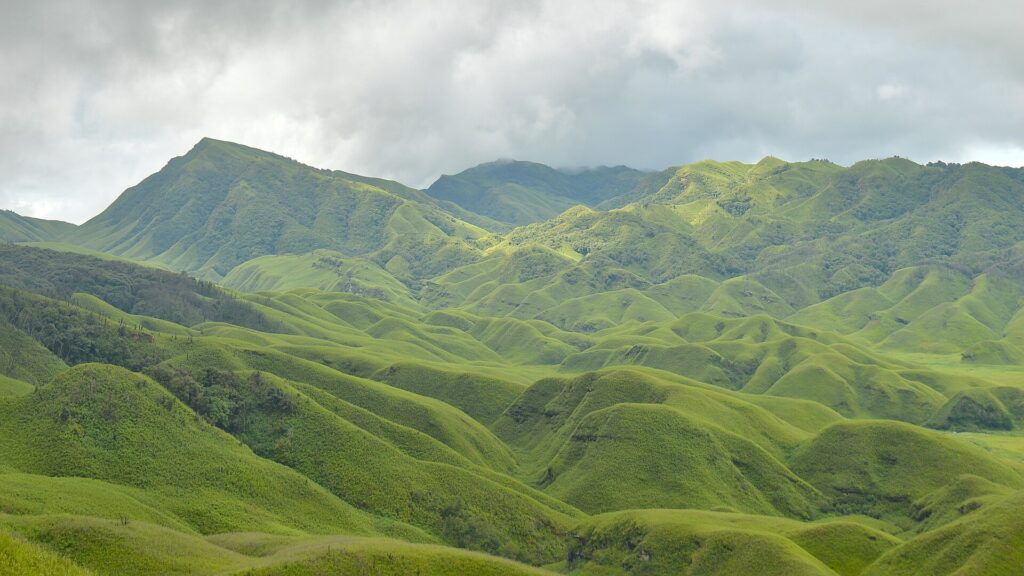
Nestled at the border of Nagaland and Manipur in Northeast India, Dzukou Valley is a pristine and breathtaking natural haven that captivates travelers with its lush greenery, vibrant wildflowers, and tranquil atmosphere.
Often referred to as the “Valley of Flowers of the East,” Dzukou Valley has emerged as a favored destination for trekkers, nature photographers, and those seeking an escape into untouched wilderness.
Location and Accessibility
Dzukou Valley lies approximately 30 kilometers from Kohima, the capital city of Nagaland, and about 50 kilometers from Imphal, the capital of Manipur. The valley is perched at an elevation of around 2,452 meters (8,048 feet) above sea level, making it a cool and refreshing retreat from the plains below. The region falls within the Dzukou range, part of the Japfü–Koubru mountain range, blending rich biodiversity from both states.
Travelers can reach Dzukou Valley via two main routes — from Viswema village in Nagaland or from Zakhama village in Manipur. The most popular and well-marked trekking trail begins at Viswema, a traditional Naga village known for its hospitality and cultural heritage.
The Trekking Experience
The trek to Dzukou Valley is moderately challenging, spanning approximately 10-12 kilometers one way depending on the route taken. Trekkers usually begin their journey early in the morning from Viswema. The trail winds through dense forests of pine and rhododendron, gradually ascending with breathtaking views of the surrounding hills and valleys.
Along the way, travelers encounter streams, moss-covered rocks, and a variety of native flora and fauna. The trail’s diversity includes towering oak trees, bamboo groves, and seasonal wildflowers. The trek is especially rewarding during the monsoon and post-monsoon months (July to October) when the valley is carpeted with blooming flowers.
Camping overnight in the valley is a popular choice, offering a unique chance to witness stunning sunrises and sunsets over the hills, and a star-studded sky free from urban light pollution. The valley’s cool climate, even in summer months, makes camping comfortable, but travelers should come prepared with warm clothing and camping gear.
Flora and Fauna
Dzukou Valley is renowned for its rich biodiversity. The valley is home to the rare and endemic Dzukou Lily (Lilium chitrangadae), which blooms during July and August and is one of the valley’s prime attractions. Other seasonal wildflowers such as the Rhododendron, Orchid varieties, and the Pink Rhododendron add vibrant colors to the landscape.
Wildlife enthusiasts may spot diverse species including the Blyth’s tragopan (a state bird of Nagaland), various butterflies, and small mammals native to the region. Birdwatchers often delight in sightings of endemic birds, making the valley a paradise for ornithologists.
Best Time to Visit
The ideal time to visit Dzukou Valley is during the summer and monsoon months, from June to September, when the valley is lush and the flowers are in full bloom. Post-monsoon months extend the floral spectacle into October. The winters (November to February) are cold and foggy, with occasional snowfall at higher elevations, creating a serene but challenging trekking environment.
Cultural Insights
The villages surrounding Dzukou Valley, such as Viswema and Zakhama, are inhabited by Naga tribes who maintain their rich cultural traditions, language, and crafts.
Visitors can interact with locals to gain insights into their customs, traditional attire, and cuisine. The warm hospitality of the Naga people adds a unique cultural dimension to the trekking experience.
Environmental Conservation and Responsible Tourism
Dzukou Valley is part of a sensitive ecosystem, and conservation efforts have been intensified to preserve its natural beauty. Due to past forest fires, which severely damaged parts of the valley, strict guidelines are in place to minimize human impact. Travelers are urged to follow eco-friendly practices, such as carrying back all waste, avoiding littering, and refraining from disturbing the wildlife and plants.
Nearby Attractions
Visitors often combine their Dzukou Valley trek with visits to nearby natural and cultural sites. These include the Japfü Peak, the highest peak in Nagaland offering panoramic views; Khonoma Village, famed for its ecological conservation model; and the historic Kohima War Cemetery, a solemn reminder of World War II.