Image Source: Rohit Agarwal
About Chausathi Yogini Temple
The Chausathi Yogini Temple at Hirapur, located about 15 km from Bhubaneswar in Odisha, is one of the rare and mystical 64 Yogini temples of India. Built in the 9th century CE, this circular open-air shrine is dedicated to the worship of the Chausathi Yoginis (sixty-four divine female manifestations of the Goddess Shakti).
Unlike the towering Kalinga-style temples of Bhubaneswar, this temple has a unique design, reflecting tantric traditions and the Shakta cult of Odisha. Hidden away in a quiet village, the temple is both a spiritual and archaeological wonder.
History
The temple was commissioned during the 9th century CE under the rule of the Bhaumakara dynasty, who were known patrons of Shaktism and Tantric practices in Odisha. The Bhaumakaras were instrumental in promoting female deities and tantric traditions, and the Chausathi Yogini Temple at Hirapur is believed to have served as a sacred site for esoteric rituals and worship.
Its location, away from the main temple clusters of Bhubaneswar, signifies its secretive and mystical nature, aligned with the practices of tantric sadhakas (practitioners).
Architecture
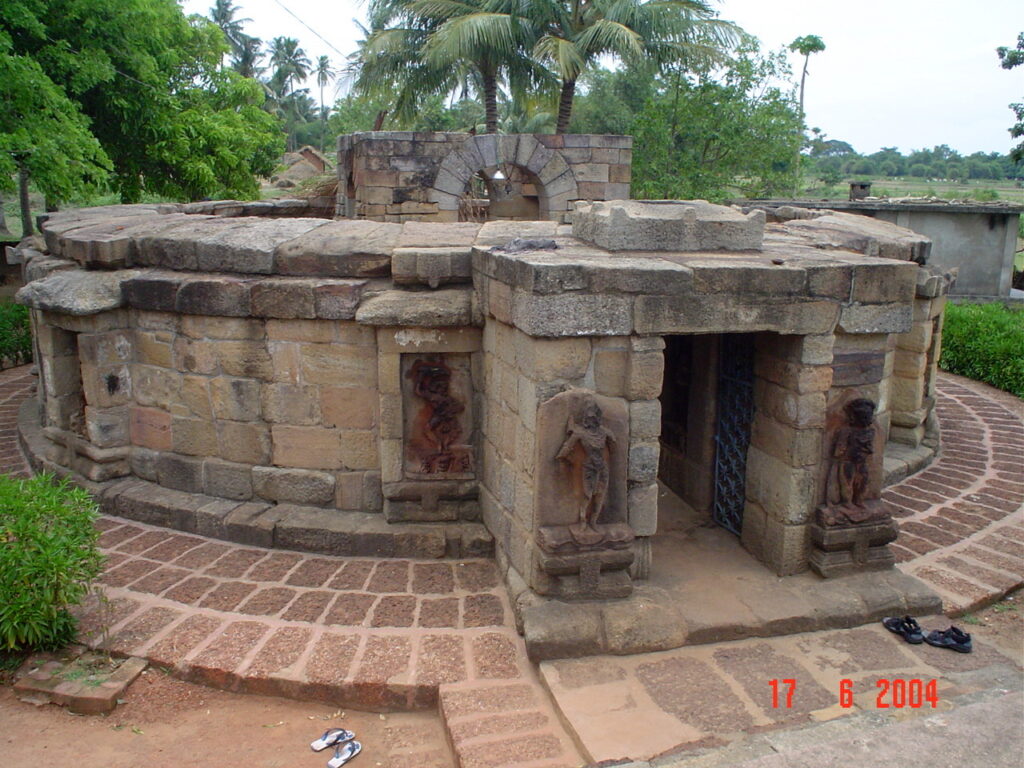
The temple is distinct from other Odishan temples because of its open circular design rather than the typical towering spire.
Structure: The temple is built in a circular plan with a diameter of about 8 meters, using locally available coarse grey sandstone.
Sanctum: The inner wall has 64 niches, each enshrining a beautifully carved image of a Yogini goddess. These Yoginis are depicted with different expressions, weapons, and vahanas (mounts), showcasing fierce, protective, and nurturing aspects of the divine feminine.
Central Shrine: In the middle of the circular courtyard lies a square platform housing images of Mahamaya, Kali, and Bhairava, representing the supreme power of Shakti.
Simplicity: Unlike the towering vimanas of Bhubaneswar temples, the Chausathi Yogini Temple has no roof, symbolizing an open connection with the sky, nature, and the cosmos—a key feature of Yogini shrines.
Religious Importance
The temple is dedicated to the Chausathi Yoginis, considered manifestations of the cosmic feminine energy. Each Yogini represents a different aspect of Shakti, embodying powers of protection, fertility, destruction, and transformation. The shrine served as a center for tantric rituals, meditation, and yogic practices, believed to grant mystical powers and spiritual liberation. Today, the temple is revered by devotees of Shaktism and is a reminder of Odisha’s rich tantric heritage.
Festivals and Rituals
Though not as widely celebrated as the larger temples of Bhubaneswar, the shrine is particularly significant during Durga Puja, Kali Puja, and Chaitra Purnima, when devotees gather to worship the Yoginis.
Rituals here are marked by simplicity, focusing on mantras, offerings, and meditation. The temple also attracts researchers, spiritual seekers, and history enthusiasts interested in the tantric traditions of Odisha.
Local Culture and Surroundings
Located in Hirapur village, about 15 km southeast of Bhubaneswar, the temple offers a tranquil escape from the city’s bustle. Surrounded by lush paddy fields, small ponds, and rustic Odia villages, the site retains an atmosphere of mystery and serenity. Visitors often combine the trip with a tour of nearby heritage spots like Dhauli Shanti Stupa, Lingaraja Temple, and Mukteshwar Temple, creating a diverse cultural experience. Local villagers maintain the temple premises and guide pilgrims with fascinating oral histories and legends of the Yoginis.
How to Reach
By Air: The nearest airport is Biju Patnaik International Airport (BBI), Bhubaneswar, about 12 km away. From the airport, taxis and auto-rickshaws can reach Hirapur within 30 minutes.
By Rail: Bhubaneswar Railway Station, located 15 km away, connects the city to major destinations in India. From the station, local cabs or rented vehicles are the best options.
By Road: Hirapur is well connected by local roads from Bhubaneswar via NH-316. Visitors can hire private cabs, auto-rickshaws, or even rented scooters to reach the temple. Odisha Tourism also organizes heritage tours covering the Yogini temple circuit.
Nearby Attractions
- Chausathi Yogini Temple – One of the oldest surviving Yogini temples in India, renowned for its unique circular, roofless design and 64 Yogini sculptures associated with the Tantric tradition.
- Lingaraj Temple (about 15 km) – The largest and most revered temple in Bhubaneswar, dedicated to Lord Shiva and celebrated for its magnificent Kalinga architecture.
- Ananta Vasudeva Temple (about 15 km) – A 13th-century temple dedicated to Lord Krishna, Balarama, and Subhadra, famous for its beautifully preserved sculptures and traditional temple kitchen.
- Bindu Sagar Lake (about 15 km) – A sacred lake surrounded by numerous ancient temples, making it an important spiritual and cultural landmark.
- Mukteswara Temple (about 16 km) – Often called the “Gem of Odisha Architecture,” this temple is admired for its exquisite stone carvings and ornate arched gateway.
- Rajarani Temple (about 17 km) – An elegant 11th-century monument known for its intricate sculptures and distinctive reddish-golden sandstone.
- Odisha State Museum (about 18 km) – A museum showcasing archaeological treasures, palm-leaf manuscripts, sculptures, coins, and Odisha’s rich cultural heritage.
- Dhauli Shanti Stupa (about 18 km) – A serene Buddhist peace pagoda marking the site where Emperor Ashoka is believed to have embraced Buddhism after the Kalinga War.
- Khandagiri and Udayagiri Caves (about 22 km) – Ancient Jain rock-cut caves dating to the 2nd century BCE, famous for their carvings, inscriptions, and panoramic city views.
- Nandankanan Zoological Park (about 30 km) – A renowned zoological park known for its white tigers, lion safari, botanical gardens, and conservation programmes.
Google Maps
FAQs
What is Chausathi Yogini Temple famous for?
The temple is famous for its roofless circular architecture, 64 Yogini sculptures, Tantric heritage, and its status as one of the few surviving Yogini temples in India. It is considered one of Odisha’s most unique archaeological monuments.
Who built the Chausathi Yogini Temple?
The temple is believed to have been built during the 9th century CE by Queen Hiradevi of the Bhauma (Bhaumakara) dynasty.
Which deity is worshipped at the temple?
The temple is dedicated to the 64 Yoginis, manifestations of the Divine Mother (Shakti), with Goddess Kali (Mahamaya) occupying the central shrine.
What is the best time to visit Chausathi Yogini Temple?
The ideal time to visit is October to March, when the weather is pleasant for sightseeing. Early morning and late afternoon are especially suitable for exploring the temple and appreciating its architecture.
What are the temple timings?
The temple is generally open daily from 6:00 AM to 6:00 PM.
How much time is needed to explore the temple?
Most visitors spend 30 minutes to 1 hour exploring the temple, observing the intricate Yogini sculptures, and learning about its historical and religious significance.
Is photography allowed inside the temple?
Yes. Photography is generally permitted within the temple complex for personal use. Visitors should avoid disturbing worshippers and follow any instructions issued by the Archaeological Survey of India or temple authorities.
Is Chausathi Yogini Temple suitable for families?
Yes. The temple is an excellent destination for families, history enthusiasts, photographers, architecture lovers, and those interested in Odisha’s ancient Tantric traditions. Its peaceful rural setting also makes it a rewarding excursion from Bhubaneswar.