
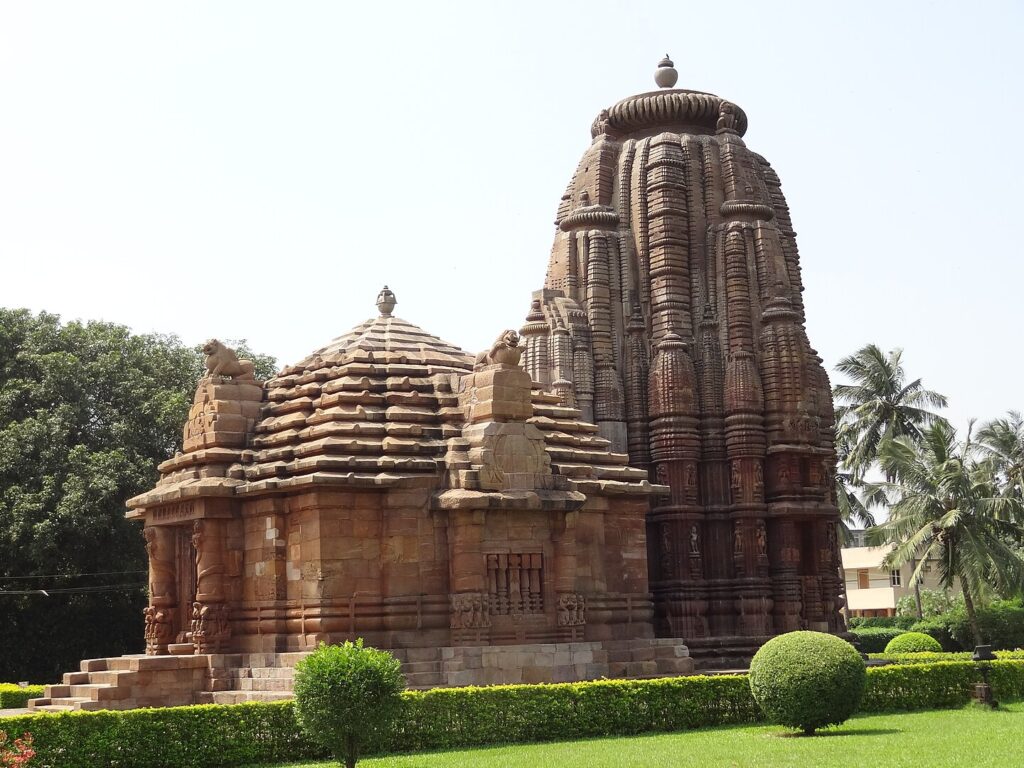
Image Source: Amartyabag
About Rajarani Temple
The Rajarani Temple in Bhubaneswar, Odisha, is celebrated for its exquisite sculptural artistry and graceful design. Built in the 11th century CE, the temple is unique because it does not house a presiding deity inside the sanctum, unlike other temples of the city.
Known locally as the “Love Temple” due to its sensuous carvings of couples and celestial beings, Rajarani is an architectural jewel of Kalinga heritage. Its serene setting and intricate ornamentation make it one of the most admired monuments in the City of Temples.
History
The Rajarani Temple is believed to have been constructed between the 10th and 11th centuries CE under the Somavamsi dynasty. Scholars associate it with Shaivism, given the architectural similarities to the Lingaraja Temple, though no deity image is enshrined here today.
The name “Rajarani” is derived from the reddish-golden sandstone used in its construction, locally called Rajarani stone. This gives the temple its distinctive glow, especially at sunrise and sunset.
Architecture
The Rajarani Temple is a fine specimen of the Kalinga style of temple architecture with elaborate carvings and graceful structures.
Vimana (Sanctum Tower): The sanctum rises about 18 meters with a curvilinear rekha deula style shikhara, showcasing vertical projections and intricate details.
Jagamohana (Assembly Hall): The rectangular hall has a pyramidal roof and beautifully carved doorways.
Sculptures and Carvings: The temple walls are adorned with stunning depictions of apsaras, gandharvas, dancers, musicians, and divine couples in alingan (embracing) poses. These sculptures reflect themes of love, beauty, and spirituality, blending both human and divine expressions.
Guardians and Deities: Impressive statues of dwarapalas (doorkeepers) guard the entrance, while panels depict scenes from Shaivism and Vaishnavism, along with elegant figures of women in various moods (nayikas).
Religious Importance
Though the temple no longer enshrines an active deity, it remains a sacred site reflecting the Shaivite traditions of medieval Odisha. The architectural similarity with Lingaraja Temple suggests its original dedication to Lord Shiva. For devotees and art enthusiasts, Rajarani represents the spiritual essence of bhakti (devotion) expressed through the language of sculpture and form.
Festivals and Cultural Events
One of the highlights of Rajarani Temple is the annual Rajarani Music Festival, organized every January. This cultural event celebrates classical and devotional music traditions of India, with performances in Hindustani, Carnatic, and Odissi styles. The illuminated temple backdrop during the festival creates a mesmerizing atmosphere, drawing both locals and tourists.
Local Culture and Surroundings
The temple is located amidst well-maintained gardens in Bhubaneswar’s heritage zone, offering a peaceful retreat from the city’s bustle. Nearby attractions include Mukteshwar Temple, Lingaraja Temple, and Bindu Sagar Lake, forming a vibrant cultural circuit of Old Town Bhubaneswar.
Visitors can also explore local handicraft markets, traditional Odia cuisine stalls, and shops selling pattachitra paintings, silver filigree work, and handloom sarees.
How to Reach
By Air: The temple is about 4 km from Biju Patnaik International Airport (BBI). Taxis and auto-rickshaws are readily available.
By Rail: Bhubaneswar Railway Station, around 5 km away, connects the city to major Indian metros. From the station, local transport like autos and cabs can reach the temple in 20 minutes.
By Road: Bhubaneswar is well linked by NH-16 and NH-316, with buses running from Puri, Konark, Cuttack, and other towns of Odisha. The Baramunda Bus Stand is about 9 km from the temple.