Image Source: usb1
About Pachmarhi Biosphere Reserve
Nestled in the rugged hills of the Satpura Range in Madhya Pradesh, the Pachmarhi Biosphere Reserve is one of Central India’s most ecologically rich and visually stunning protected landscapes. Spread across the districts of Betul, Chhindwara, and Narmadapuram, this vast reserve covers nearly 4,926 square kilometers and was established by the Government of India in 1999. Because of its exceptional biodiversity and cultural importance, it was later recognized by UNESCO in 2009 as a “Man and Biosphere Reserve.”
More than just a forested region, Pachmarhi is a unique ecological zone where wildlife, tribal culture, ancient history, waterfalls, caves, and highland forests come together. The reserve acts as an important transition zone between the forests of northern and southern India, allowing plant and animal species from different ecosystems to coexist in the same landscape.
Conservation Zones of the Reserve
The Pachmarhi Biosphere Reserve is made up of three major protected areas that together form an interconnected conservation network.
Satpura National Park
At the heart of the reserve lies the famous Satpura National Park, which forms the core zone of the biosphere reserve. Covering around 524 square kilometers, the park is known for its rugged terrain, dense forests, sandstone peaks, and thriving tiger population. Unlike many national parks in India, Satpura offers a quieter and less commercialized wildlife experience.
The park is surrounded by Pachmarhi and Bori Wildlife Sanctuaries, creating a large uninterrupted forest corridor that supports species such as leopards, sloth bears, Indian gaurs, wild dogs, giant squirrels, and several species of deer and birds.
Bori Wildlife Sanctuary
Bori Wildlife Sanctuary is one of India’s oldest forest reserves and spans approximately 518 square kilometers. The sanctuary is especially important for its teak forests and dry deciduous vegetation. It also provides habitat for vulnerable species like the four-horned antelope, locally known as the chousingha.
Pachmarhi Wildlife Sanctuary
Pachmarhi Wildlife Sanctuary covers nearly 461 square kilometers and includes some of the region’s most scenic landscapes, including waterfalls, deep valleys, caves, and dense forests. It forms the tourism and ecological buffer zone around the hill station of Pachmarhi.
Landscape and Geological Features
The biosphere reserve lies on the Satpura Plateau and is characterized by dramatic sandstone formations, steep cliffs, forested valleys, and winding streams. The terrain is primarily composed of ancient Triassic sandstone, commonly referred to as “Pachmarhi Sandstone.”
One of the most striking features of the region is its elevation. The reserve rises to around 1,350 meters at Dhoopgarh, the highest peak in Madhya Pradesh. These high-altitude plateaus create a cool and moist environment that is very different from the hot plains of Central India.
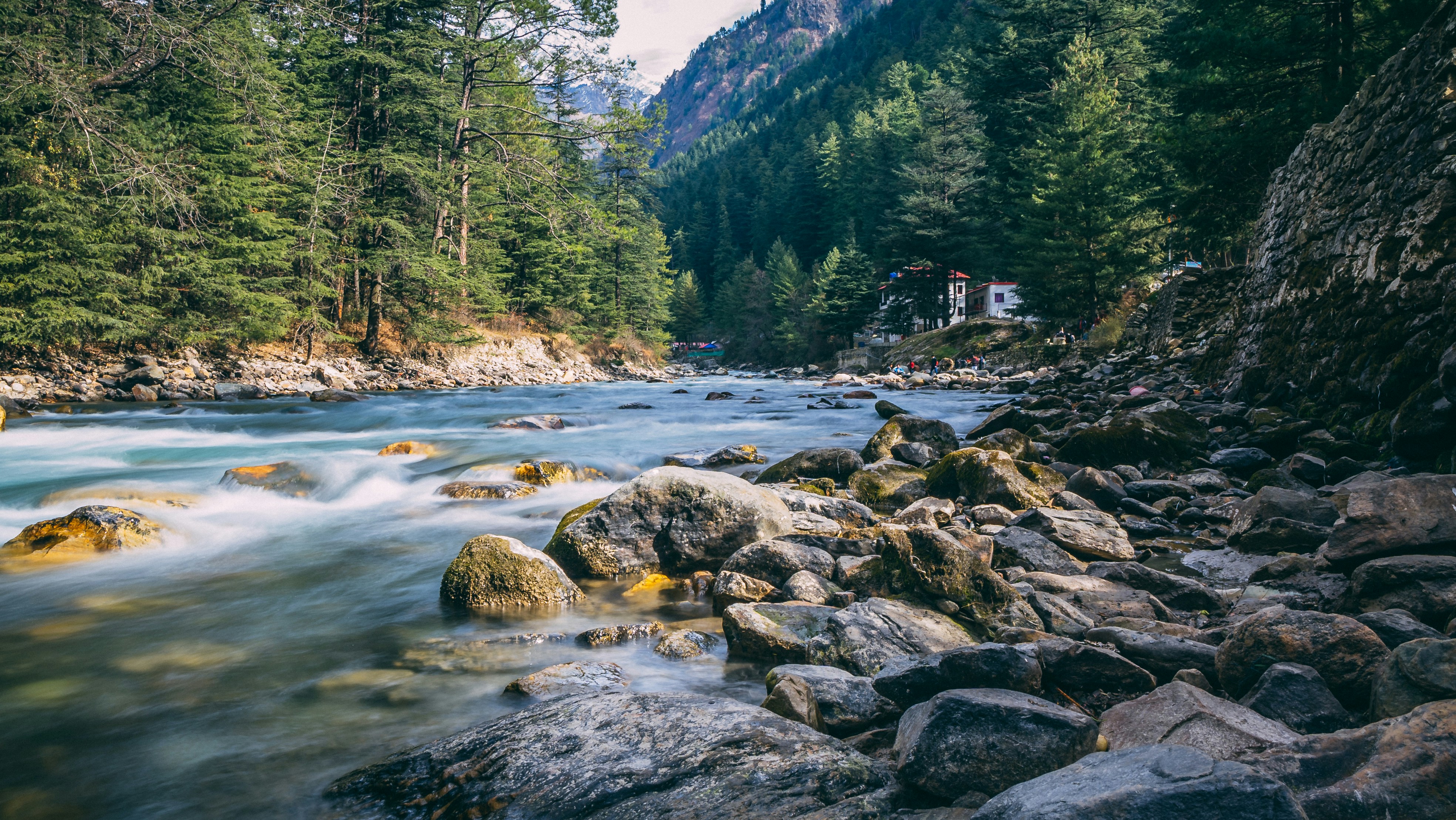
The landscape is dotted with waterfalls, natural pools, caves, ravines, and forest streams that eventually drain into the Narmada River basin. During the monsoon, the forests become intensely green, while winter brings misty mornings and crisp mountain air.
Unique Microclimate of Pachmarhi
One of the reasons Pachmarhi stands apart from other Central Indian forests is its rare highland microclimate. Even during scorching summers, areas around Bee Falls, Silver Falls, and Duchess Falls continue to hold flowing water and cool temperatures.
The combination of altitude, sandstone geology, forest cover, and moisture retention creates conditions that resemble ecosystems usually found in lower and wetter forest regions. This is why Pachmarhi supports plant species that are uncommon at such elevations.
The mist-covered valleys, cool streams, and shaded forests give Pachmarhi a climate that feels surprisingly refreshing compared to the dry heat experienced across much of Madhya Pradesh.
Flora and Forest Diversity
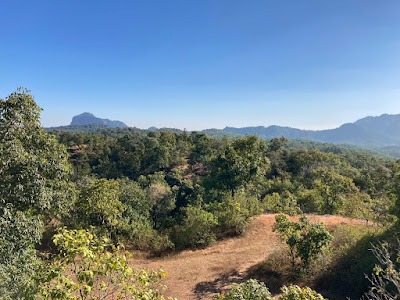
The forests of Pachmarhi Biosphere Reserve are dominated by dry and moist deciduous vegetation. Teak forests cover large sections of the reserve, while Sal forests — usually associated with eastern India — grow naturally in selected high-altitude valleys and slopes.
Places such as Dhoopgarh and Jatashankar Valley contain thriving groves of Sal trees despite being located at elevations above 1,000 meters. Botanists believe the local climate and soil conditions closely resemble lowland forest ecosystems, allowing these trees to survive.
The reserve acts as an ecological bridge between eastern and western Indian forests. Because of this, species from both biomes coexist here, creating remarkable biodiversity.
Common tree species found in the reserve include:
- Sal (Shorea robusta).
- Teak (Tectona grandis).
- Haldu.
- Arjun.
- Saaj.
- Mahua.
- Palash.
- Aonla.
- Bija.
- Chironji.
- Dhawda.
Bamboo thickets are also widespread, particularly in moist valleys and forested slopes. The forests are rich in medicinal plants such as Harra and Baheda, which have long been used in traditional tribal medicine and Ayurveda.
During spring, the bright orange-red blossoms of Palash trees transform parts of the forest into vibrant landscapes.
Waterfalls and Natural Attractions
Pachmarhi is famous for its waterfalls, forest pools, and caves hidden deep inside the hills. Some of the most popular natural attractions include:
- Bee Falls.
- Silver Falls.
- Duchess Falls.
- Apsara Vihar.
- Dhoopgarh.
- Jatashankar Cave.
These locations attract trekkers, photographers, birdwatchers, and nature lovers throughout the year.
Rock Shelters and Prehistoric Paintings
Pachmarhi is not only rich in biodiversity but also in human history. The hills contain several prehistoric rock shelters and cave paintings that date back nearly 10,000 years to the Mesolithic period.
These ancient paintings provide valuable insight into early human life, hunting traditions, rituals, and social activities.
Mahadeo Hills
Mahadeo Hills is known for rock art depicting hunting scenes, community gatherings, animals, and ceremonial dances. These paintings reveal how prehistoric communities once interacted with the forests around them.
Chhota Mahadeo
Chhota Mahadeo contains symbolic paintings, handprints, sun motifs, and animal figures. Many of these rock shelters remain important archaeological sites today.
Local mythology also connects Pachmarhi with the Pandavas from the Mahabharata. The name “Pachmarhi” is often interpreted as “five caves,” believed by some to refer to caves where the Pandavas once stayed during exile.
Wildlife of Pachmarhi Biosphere Reserve
The forests of Pachmarhi support an impressive range of wildlife species due to the reserve’s varied terrain and vegetation.
Indian Giant Flying Squirrel
One of the reserve’s most fascinating creatures is the Indian giant flying squirrel (Petaurista philippensis). This nocturnal mammal glides between trees using a membrane stretched between its limbs.
These squirrels are usually active after sunset and spend daytime hours resting inside tree hollows. Dense forest areas near Bee Falls and Apsara Vihar are among the best places to spot them.
Four-Horned Antelope
The rare four-horned antelope, or chousingha (Tetracerus quadricornis), is another remarkable species found in the reserve. It is one of the few mammals in the world with four horns.
Classified as vulnerable, this shy antelope prefers dry rocky forests and is most commonly seen in parts of Bori Wildlife Sanctuary and the outer forests of Satpura National Park.
Other Wildlife
The reserve is also home to:
- Bengal tigers.
- Leopards.
- Sloth bears.
- Indian gaurs.
- Sambar deer.
- Barking deer.
- Wild boars.
- Malabar giant squirrels.
- Hornbills.
- Eagles.
- Reptiles and amphibians.
The rich birdlife makes Pachmarhi an excellent destination for birdwatching as well.
Tribal Communities and Traditional Ecological Knowledge
The forests of Pachmarhi have long been inhabited by indigenous communities such as the Gond and Korku tribes. These communities possess deep knowledge of forest ecology, medicinal plants, seasonal cycles, and sustainable harvesting methods.
For generations, tribal communities have practiced forms of forest use that minimize ecological damage. Instead of cutting down entire trees, they carefully collect bark, leaves, fruits, and forest produce in ways that allow the vegetation to regenerate naturally.
Their traditional understanding of nature continues to play an important role in conservation and sustainable living in the region.
Best Time to Visit Pachmarhi Biosphere Reserve
The ideal time to visit Pachmarhi is between October and March, when the weather remains cool and pleasant. Winter mornings are often misty, making the forests especially beautiful.
The monsoon season from July to September transforms the landscape into lush greenery with powerful waterfalls, although trekking trails can become slippery.
Summer is relatively cooler here compared to surrounding plains due to the region’s elevation.
How to Reach
Pachmarhi Biosphere Reserve is located in the Satpura Range of Madhya Pradesh and is easily accessible by air, rail, and road. The reserve encompasses the famous hill station of Pachmarhi, which serves as the main gateway for visitors exploring its forests, wildlife, waterfalls, and scenic viewpoints.
By Air
The nearest airport is Raja Bhoj Airport in Bhopal, located approximately 200 km from Pachmarhi. The airport is well connected to major Indian cities such as Delhi, Mumbai, Bengaluru, and Hyderabad. From Bhopal, visitors can hire a taxi or take a bus to reach Pachmarhi.
By Train
The nearest railway station is Pipariya Railway Station, situated about 50 km from Pachmarhi. Pipariya lies on the important Delhi–Chennai rail route and is well connected to cities including Delhi, Bhopal, Jabalpur, Nagpur, and Mumbai. Taxis and regular buses are available from Pipariya to Pachmarhi, and the journey takes around 1 to 1.5 hours.
By Road
Pachmarhi enjoys good road connectivity with major cities in Madhya Pradesh and neighboring states.
- Bhopal to Pachmarhi: Approximately 200 km
- Jabalpur to Pachmarhi: Approximately 250 km
- Nagpur to Pachmarhi: Approximately 260 km
- Indore to Pachmarhi: Approximately 400 km
Regular state transport and private buses operate from Bhopal, Pipariya, Hoshangabad (Narmadapuram), Jabalpur, and Nagpur. Private taxis and self-drive vehicles are also popular options.
Reaching the Biosphere Reserve
Most visitors first arrive in Pachmarhi town, which serves as the base for exploring the Pachmarhi Biosphere Reserve. Entry points to various attractions within the reserve can be accessed through local jeeps, guided safaris, forest department vehicles, or trekking routes, depending on the destination.
Local Travel Tips
- The best time to visit is from October to March when the weather is pleasant and ideal for sightseeing.
- Monsoon months (July to September) transform the reserve into a lush green paradise, though some trekking trails may become slippery.
- Hiring a local guide or authorized safari vehicle is recommended for visiting wildlife zones and remote forest areas.
- Start your journey early in the day to comfortably cover major attractions such as Bee Falls, Dhupgarh, Jata Shankar, and Satpura National Park.
Nearby Attractions
The Pachmarhi Biosphere Reserve is one of India’s most ecologically rich regions, spread across the Satpura ranges of Madhya Pradesh. While the reserve itself is known for its diverse wildlife, dense forests, and unique biodiversity, several fascinating attractions nearby make a visit even more rewarding.
Satpura National Park
Located within the biosphere reserve, Satpura National Park is a paradise for wildlife enthusiasts. The park is home to leopards, sloth bears, Indian gaurs, crocodiles, and a wide variety of bird species. Unlike many other national parks, visitors can enjoy jeep safaris, boat rides, walking safaris, and canoeing experiences, offering a closer connection with nature.
Bee Falls
One of Pachmarhi’s most popular waterfalls, Bee Falls cascades down from a considerable height into a natural pool surrounded by lush greenery. The cool, crystal-clear water and scenic surroundings make it a favorite spot for nature lovers and photographers.
Dhupgarh
The highest peak in Madhya Pradesh, Dhupgarh offers spectacular panoramic views of the Satpura Hills. It is especially famous for its breathtaking sunrise and sunset views, attracting visitors throughout the year.
Pandav Caves
These ancient rock-cut caves are among Pachmarhi’s most significant historical attractions. According to local legends, the Pandavas from the Mahabharata spent part of their exile here. The caves also provide excellent views of the surrounding landscape.
Jata Shankar Cave
A revered natural cave shrine dedicated to Lord Shiva, Jata Shankar is known for its unique rock formations that resemble matted hair (jata). Surrounded by deep ravines and dense vegetation, the site offers both spiritual and natural appeal.
Handi Khoh
This dramatic V-shaped gorge is one of the most scenic viewpoints in Pachmarhi. Surrounded by dense forests and steep cliffs, Handi Khoh offers stunning views and is often associated with local mythological stories.
Rajat Prapat (Silver Fall)
One of the tallest waterfalls in the region, Rajat Prapat appears like a stream of silver when viewed from a distance. The waterfall is best seen during and after the monsoon season when water flow is at its peak.
Apsara Vihar
Also known as Fairy Pool, Apsara Vihar is a tranquil waterfall and natural swimming spot surrounded by forested landscapes. It is an excellent place to relax and enjoy the serene environment.
Mahadeo Hills and Cave Temple
This sacred site houses an ancient cave temple dedicated to Lord Shiva. The surrounding hills, forests, and trekking routes make it a popular destination for both pilgrims and adventure seekers.
Bison Lodge Museum
One of the oldest forest museums in India, Bison Lodge Museum showcases the history, biodiversity, tribal culture, and wildlife of the Pachmarhi Biosphere Reserve. It serves as an excellent introduction to the region’s natural heritage.
Whether you’re interested in wildlife, waterfalls, trekking, history, or spirituality, the attractions around Pachmarhi Biosphere Reserve offer a perfect blend of adventure and natural beauty, making the region one of Central India’s most rewarding travel destinations.
Maps
FAQs
1. Where is Pachmarhi Biosphere Reserve located?
Pachmarhi Biosphere Reserve is located in the Satpura Range of Madhya Pradesh and spreads across the districts of Betul, Chhindwara, and Narmadapuram.
2. Why is Pachmarhi Biosphere Reserve important?
The reserve is important because of its rich biodiversity, unique high-altitude microclimate, prehistoric rock paintings, tribal culture, and role as an ecological bridge between eastern and western Indian forests.
3. Is Pachmarhi Biosphere Reserve a UNESCO site?
Yes. In 2009, Pachmarhi Biosphere Reserve was recognized by UNESCO as a “Man and Biosphere Reserve.”
4. Which animals can be seen in Pachmarhi Biosphere Reserve?
Visitors may spot tigers, leopards, sloth bears, gaurs, giant flying squirrels, four-horned antelopes, deer species, and many birds and reptiles.
5. What is the best time to visit Pachmarhi?
The best time to visit is from October to March when the weather is pleasant and suitable for wildlife safaris, sightseeing, and trekking.
6. What are the famous waterfalls in Pachmarhi?
Bee Falls, Silver Falls, Duchess Falls, and Apsara Vihar are among the most famous waterfalls and natural attractions in the region.
7. Are there prehistoric caves in Pachmarhi?
Yes. Pachmarhi contains ancient rock shelters and cave paintings dating back thousands of years, especially around Mahadeo Hills and Chhota Mahadeo.
8. Which tribes live in Pachmarhi Biosphere Reserve?
The Gond and Korku tribes are the primary indigenous communities living in and around the reserve.