
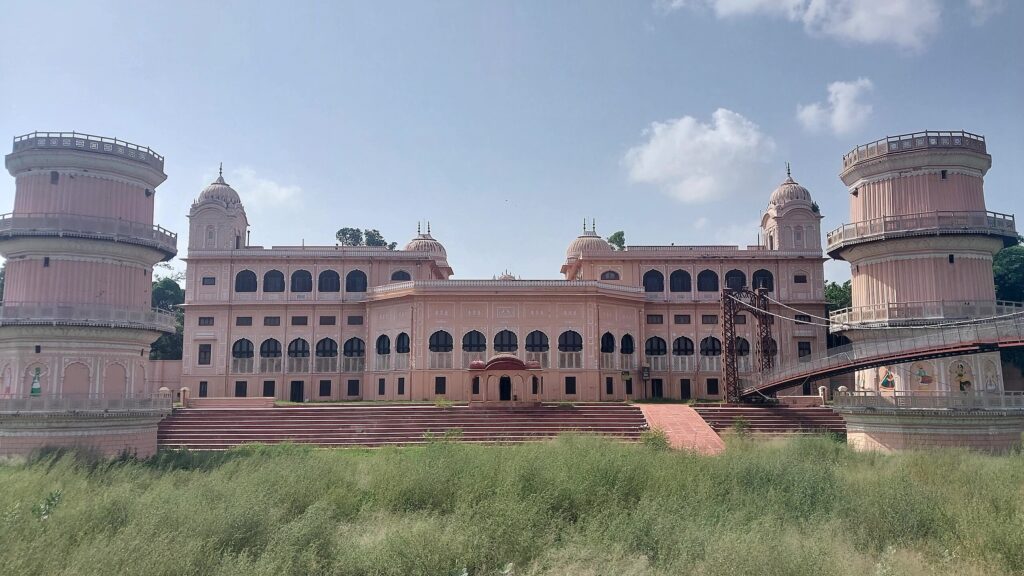
Image Source: Keshuseeker
About Sheesh Mahal
One of the grandest royal structures in Patiala, Sheesh Mahal is an iconic place to visit. Also known as the Palace of Mirrors, it was built during the zenith of the Phulkian dynasty. The palace embodies the opulence, cultural taste, and artistic finesse of Patiala’s Maharajas—particularly Maharaja Narinder Singh , who ruled from 1845 to 1862.
Historical Background
Maharaja Narinder Singh was known for his patronage of arts and architecture. He commissioned Sheesh mahal as a pleasure place and is unlike the older Qila Mubarak which is primarily a fort palace. It is ornate for relaxation, courtly entertainment and house the Maharaja’s precious art collection.
A grand place complex consists of lush gardens, artificial lakes, a suspension bridge, and adjacent structures for recreation and art.
Architecture
Sheesh Mahal is a perfect example of the blend of Mughal and Rajput architectural influences that the Sikh royalty of Patiala embraced.
The Hall of Mirrors
The main highlight is its elaborately decorated mirror work interiors . Small, finely cut mirrors are inlaid into intricate floral and geometric designs, creating dazzling reflections that amplify light and color throughout the chambers. This gives the palace its name — Sheesh Mahal.
Frescoes and Paintings
The palace walls and ceilings are covered with vivid frescoes depicting scenes from Hindu mythology , Persian poetry, Sikh history, and courtly life. Themes include the Rag Ragini musical modes, Kavi Darbar (court poets), and romantic scenes inspired by Indian epics.
Architectural Layout
Sheesh Mahal is built with a blend of archways, jharokhas (projecting balconies), stucco work, and decorative columns.
The palace complex originally included terraced gardens, fountains, and an artificial lake.
A unique iron suspension bridge, called the Lakshman Jhula , connects Sheesh Mahal to the Banasar Ghar (a garden house) across the lake — inspired by the Lakshman Jhula in Rishikesh.
Museum & Art Gallery
Today, Sheesh Mahal houses one of North India’s finest collections of:
Miniature paintings from the Kangra, Rajasthani, and Patiala schools.
Rare manuscripts.
Antique coins, sculptures, and precious metalwork.
An impressive collection of portraits of the Patiala royal family. What Makes It Fascinating for Travelers
Cultural Showcase: Sheesh Mahal brings alive the lavish tastes of Punjab’s royal courts — from dazzling mirror work to exquisite wall art.
Photography: Its ornate halls, painted ceilings, and reflections are a delight for heritage photographers.
Museum Experience: The attached museum’s miniatures, antique weapons, and artifacts add deep context to the palace’s historical legacy.
Tranquil Setting: The surrounding gardens, bridges, and old water channels offer a glimpse into how the royals integrated leisure and art. Location and Access
Where: In the old part of Patiala city, near Qila Mubarak and Banasar Ghar.
Distance: Easily accessible from Patiala Railway Station (about 2–3 km) and well-connected by local auto-rickshaws and taxis.
Nearby Attractions: Qila Mubarak, Moti Bagh Palace, Baradari Gardens, Gurudwara Dukh Nivaran Sahib. Visitor Information
Timings: Usually open from 10 AM to 5 PM; closed on Mondays and public holidays.
Entry Fee: A small nominal fee for Indian and foreign visitors. Additional camera charges may apply.
Guided Tours: Not always formally organized, but local guides can explain the murals and art pieces.
Best Time to Visit
October to March is ideal, when Patiala’s weather is pleasant.
Combine your visit with the Patiala Heritage Festival , if dates align, for cultural performances and folk art.
Traveler Tip
The mirror halls are dimly lit to preserve the frescoes and reflective work — so photography without flash is encouraged.
Spend time observing the details: tiny mirror inlays, floral motifs, and mythological scenes often missed at a quick glance.