Image Source: Vinayaraj
About Koundinya Wildlife Sanctuary
Koundinya Wildlife Sanctuary, also known locally as Kaundinya Sanctuary, is one of the most significant protected areas in Andhra Pradesh. Located in Chittoor district, close to the town of Palamaner, this sanctuary covers an expanse of 357.6 square kilometers (88,400 acres).
Declared a sanctuary in December 1990, it holds a special distinction as the only sanctuary in Andhra Pradesh that shelters Asian elephants. The region falls under IUCN Category IV, indicating its role as a habitat and species management area, and is managed by the Andhra Pradesh Forest Department.
Historical Background
The history of Koundinya is closely tied to the dramatic return of elephants after more than 200 years of absence. Between 1983 and 1986, elephants from Anekal-Hosur forests in Tamil Nadu and Bannerghatta in Karnataka migrated in search of new habitats. Out of these groups, thirty-nine elephants entered Andhra Pradesh, a state that had never been home to wild elephants before. Their arrival led to the declaration of the region as a sanctuary.
Today, the elephant population has steadily grown, with around 72–78 elephants roaming the forests, making the sanctuary a vital part of India’s Project Elephant initiative.
Geography and Landscape
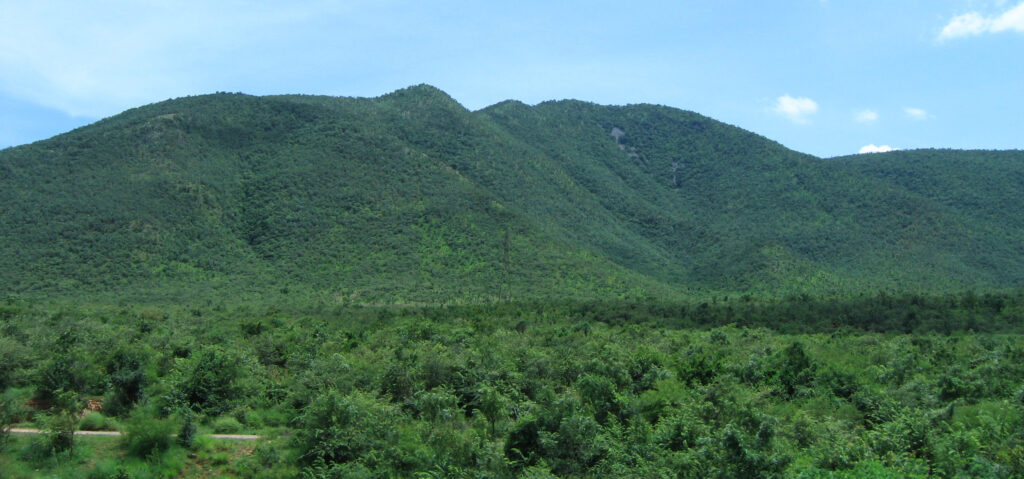
Koundinya Wildlife Sanctuary lies at the point where the Kolar Plateau of Karnataka slopes into the plains of Tamil Nadu, creating a rugged terrain with steep hills, deep valleys, and natural ghats. The landscape is dotted with dry deciduous forests, interspersed with thorny scrubs and tree cover.
The area is fed by the Kaindinya and Kaigal tributaries of the Palar River, along with natural ponds and tanks. Adding to its charm are the scenic Kaigal Waterfalls, located near Palamaner on the Palamaner–Kuppam highway, and the Kalyana Revu Falls, north of Palamaner, both of which enhance the sanctuary’s ecological richness and tourism appeal.
Flora and Fauna
The sanctuary is dominated by southern tropical dry deciduous and thorn forests. Vegetation includes species like Albizia amara, Acacia, Lagerstroemia, Ficus, bamboo groves, and regenerating patches of the precious sandalwood (Santalum album).
Among the fauna, the star attraction is undoubtedly the Indian elephant, with nearly 78 individuals recorded. Other animals include sloth bear, leopard (panther), cheetal (spotted deer), sambar, chowsingha (four-horned antelope), porcupine, wild boar, jungle cat, and jackal. Birdlife is also rich, with the yellow-throated bulbul, a vulnerable species, frequently spotted here. Reptiles like the starred tortoise and nocturnal creatures such as the slender loris add further diversity.
Conservation Challenges
Despite its ecological importance, Koundinya faces several threats. Man-animal conflict remains the most pressing issue, with elephants often straying into nearby farmlands to feed on crops like sugarcane, ragi, and sorghum. This has led to tragic incidents where, by 2002, 42 people had lost their lives, while 12 elephants were electrocuted by locals attempting to protect their fields.
Overgrazing by cattle and illegal wood collection have further stressed the habitat. To mitigate these challenges, a planned elephant corridor linking Koundinya Wildlife Sanctuary with Sri Venkateswara National Park is being developed, using the Kalyani Dam in Chamala Valley as a potential habitat to reduce elephant stress and encourage safe movement.
How to Reach Koundinya Wildlife Sanctuary
Koundinya Wildlife Sanctuary is located in the Chittoor district of Andhra Pradesh, close to the Karnataka and Tamil Nadu borders. The sanctuary lies around 50 km from Chittoor, 25 km from Palamaner, and approximately 120 km from Bengaluru, making it a convenient weekend destination for nature lovers.
The nearest railway station is Chittoor Railway Station, which is well connected to major cities like Tirupati, Chennai, Bengaluru, and Hyderabad. From the station, visitors can hire a taxi or board a local bus to reach the sanctuary. Another nearby railhead is Palamaner Railway Station, which is closer to the sanctuary.
The nearest airport is Tirupati Airport, about 110–120 km away. Kempegowda International Airport, Bengaluru, is another convenient option for visitors travelling from other parts of India.
The sanctuary is well connected by road through NH 75 (Bengaluru–Chittoor Highway). Regular buses operate from Chittoor, Palamaner, and Bengaluru to nearby towns, while taxis and private vehicles offer the most convenient way to explore the sanctuary and its surrounding attractions.
Nearby Attractions
Kaigal Falls: Also known as Dumukurallu Waterfalls, this beautiful cascade is located within the sanctuary and is especially spectacular during and after the monsoon. The lush surroundings make it a favourite spot for nature lovers and photographers.
Kalyana Revu Waterfalls: A lesser-known waterfall hidden inside the sanctuary, offering a peaceful setting amidst dense forests. It is ideal for visitors looking to enjoy the untouched beauty of the region.
Horsley Hills: Located about 70 km from the sanctuary, this scenic hill station is famous for its pleasant climate, panoramic viewpoints, trekking trails, and lush greenery.
Palamaner: A charming town that serves as the gateway to Koundinya Wildlife Sanctuary. Visitors can find accommodation, restaurants, and local markets here before heading into the forest.
Sri Venkateswara National Park: Situated near Tirupati, this protected forest is known for its rich biodiversity, scenic valleys, waterfalls, and trekking opportunities.
Kailasakona Waterfalls: A picturesque perennial waterfall near Tirupati, surrounded by forests and a small temple, making it a popular picnic and pilgrimage destination.
Google maps
FAQs
1. What is Koundinya Wildlife Sanctuary famous for?
Koundinya Wildlife Sanctuary is the only elephant reserve in Andhra Pradesh and is well known for its population of wild Asian elephants, scenic valleys, waterfalls, and rich biodiversity.
2. What is the best time to visit Koundinya Wildlife Sanctuary?
The ideal time to visit is between October and March, when the weather is pleasant and wildlife sightings are more common.
3. Are safaris available inside the sanctuary?
Jeep safaris may be available with prior permission from the Forest Department, depending on the season and forest regulations. Visitors should check locally before planning their trip.
4. Is Koundinya Wildlife Sanctuary suitable for families?
Yes. Families, wildlife enthusiasts, birdwatchers, and photographers can all enjoy the sanctuary. Visitors should follow forest guidelines and avoid disturbing the wildlife.
5. Which animals can be seen in the sanctuary?
Besides Asian elephants, the sanctuary is home to sloth bears, sambar deer, spotted deer, four-horned antelope, wild boar, jungle cats, jackals, porcupines, peafowl, and numerous bird species.