Image source: Bhuvanesh
About Hornbill viewpoint
Hornbill Viewpoint in Valparai, Tamil Nadu, is not a conventional tourist attraction but a quiet ecological vantage point embedded deep within the Anamalai Hills of the Western Ghats. Named after the frequent sightings of Malabar Grey Hornbills and Great Hornbills, the viewpoint offers an immersive experience of rainforest ecology rather than panoramic spectacle alone. It reflects Valparai’s identity as a landscape where tea plantations, tropical rainforests, wildlife corridors, and monsoon systems coexist in delicate balance.
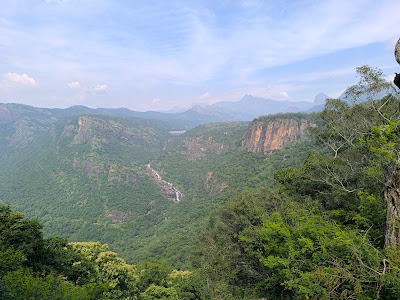
Hornbill viewpoint is a hotspot location for nature lovers and photographers. It’s a must-visit destination that offers breathtaking views of the lush green hills and valleys of the Western Ghats.
Location and Landscape Setting
Hornbill Viewpoint lies along the Valparai–Athirapally forest corridor, surrounded by dense evergreen and semi-evergreen forests interspersed with tea estates. The region forms part of the Anamalai Tiger Reserve buffer landscape, making it ecologically sensitive. The viewpoint overlooks layered valleys carved by seasonal streams that eventually feed the Aliyar–Sholayar river system, a lifeline for both wildlife and plantation settlements.
Ecological Significance of the Area
This part of Valparai lies within one of the world’s eight biodiversity hotspots. The surrounding forests support lion-tailed macaques, Nilgiri langurs, gaur, sambar deer, leopards, and elephants. The viewpoint itself functions as a natural observation point where canopy movement, bird calls, and mist patterns reveal the forest’s daily rhythm.
Tea Estates and Altered Landscapes
Unlike dense forests elsewhere in the Ghats, Valparai is defined by its colonial-era tea plantations. From Hornbill Viewpoint, one can clearly see the contrast between manicured tea slopes and untouched rainforest patches. This visual transition highlights the region’s ongoing human–nature negotiation, where wildlife corridors cut through plantation lands.
Climate, Mist, and Monsoon Dynamics
The viewpoint is deeply influenced by southwest monsoon winds, which bring heavy rainfall between June and September. Mist often rolls in suddenly, reducing visibility but enhancing the sensory experience—cool air, forest smells, and distant hornbill wing beats. These conditions shape both biodiversity and plantation life in Valparai.
Why Is It Called Hornbill Viewpoint?
The name originates from the regular presence of hornbill species, especially during fruiting seasons of native trees like fig (Ficus), wild jack, and rosewood. Hornbills play a crucial role as keystone seed dispersers in the Western Ghats. Locals and forest staff regard their appearance as an indicator of forest health, making the viewpoint symbolically important beyond tourism.
Nature’s Performers: The Breeding Rituals
When breeding season approaches, the forest of Valparai witnesses a spectacular natural drama. A special phenomenon called casque-butting happens where male Great Hornbills engage and clash their beaks with loud echoes to impress a prospective mate.
Once a pair is formed, an intimate ritual of courtship begins. The female hornbill chooses a natural tree cavity, often in towering trees, and seals herself inside using a cement-like mixture of mud and droppings, leaving just a narrow slit open. The male feeds the female and her chicks through this gap and displays an extraordinary example of trust and cooperation in the wild.
Survivors in a Changing Landscape
While Great Hornbills are associated with dense rainforests, the birds of Valparai have shown remarkable adaptability. Due to the increase in coffee plantations, many trees are cut in the region, so these birds have found nesting in the tall trees. To support the right ecological support in human-modified landscapes, many such shade-grown coffee plantations are necessary.
But despite all this, the unique behaviors of birds show resilience and also the importance of sustainable farming and conservation practices that integrate biodiversity into working landscapes.
Seed Dispersers of the Forest
Hornbills played a crucial role in maintaining the health of the ecosystem. They are often called the “farmers of the forest” because while consuming a wide variety of fruits, seeds are spread over long distances. It helps in the regeneration of the forest and creates a ripple effect that provides a delicate balance of the tropical ecosystem.
Conservation at a Crossroads
Despite their impressive adaptability, hornbills are facing the threat of habitat loss and human disturbance. During uncontrolled tourism, many people come to watch nesting sites, which can have unintended consequences. It discourages males from feeding their secluded partner, which risks the survival of the chicks. Conservationists emphasize the need for silence, distance, and respect during the hornbill breeding season.
Although several efforts are underway in Valparai to create awareness among tourists and locals. But other initiatives, like protecting key nesting trees and working alongside plantation owners to preserve essential habitats, are also necessary steps.
Otherwise, protecting these magnificent birds isn’t just about saving a species—it’s about preserving the soul of the rainforest itself.
Local Knowledge and Forest Awareness
Estate workers and local communities possess strong ecological awareness. Hornbill sightings are often casually reported as part of daily life, not as rare events. This reflects Valparai’s culture, where wildlife presence is normalized rather than exoticized, and coexistence is a lived reality.
Tourism Without Commercialization
Hornbill Viewpoint remains relatively undeveloped, with minimal infrastructure. There are no large viewing decks or commercial stalls, preserving the site’s raw character. This restraint helps protect sensitive species and prevents disturbance to wildlife movement along forest edges.
Responsible Visiting Practices
Visitors are expected to maintain silence, avoid littering, and refrain from feeding wildlife. The viewpoint is best experienced as a pause rather than a destination, encouraging observation rather than activity. Early mornings and late afternoons are ideal for bird activity.
Wildlife at Attakatti Checkpost
Attakatti Checkpost falls below 500 m before the Hornbill viewpoint. The checkpoint also serves as an entry point to the lush forests of Valparai.
Tips for Visitors
Best Time to Visit: The ideal time to visit is between October and March, when the weather is cool and the region is lush after the monsoon season.
How To Reach Hornbill viewpoint
At a distance of 10 km from Monkey Falls and 28 km from Valparai.
Anyone who is approaching on the scenic Pollachi-Valparai Road should reach this spot by passing through hairpin bends surrounded by tea plantations, dense forests, and mist-laden landscapes.
At a short distance from the viewpoint, Upper Aliyar Dam adds to the beauty of the area. Visitors can enjoy panoramic views of the reservoir and the surrounding hills, making it a perfect spot for photography and picnics.
Nearby Attractions to Hornbill Viewpoint, Valparai
Hornbill Viewpoint is one of the most picturesque viewpoints in Valparai, Tamil Nadu, offering sweeping views of the Anamalai Hills, dense forests, winding ghat roads, and sprawling tea estates. Located along the Pollachi–Valparai route, it is also a great place to spot the Great Hornbill, Malabar giant squirrels, and other wildlife. Here are some of the top attractions to visit nearby.
1. Monkey Falls (Approx. 10 km)
Located on the Pollachi–Valparai Road, Monkey Falls is a popular natural waterfall surrounded by lush forests. Visitors can enjoy the refreshing cascade and the scenic beauty of the Anamalai Hills.
2. Aliyar Dam (Approx. 18 km)
One of the major attractions near Valparai, Aliyar Dam is known for its tranquil reservoir, landscaped gardens, boating facilities, and beautiful mountain backdrop. It is an ideal stop for photography and relaxation.
3. Loam’s View Point (Approx. 20 km)
Famous for offering a panoramic view of the 40 hairpin bends on the Pollachi–Valparai Ghat Road, Loam’s View Point is a favourite destination for photographers and road-trip enthusiasts.
4. Nallamudi Poonjolai Viewpoint (Approx. 18 km from Valparai Town)
Surrounded by tea plantations, this viewpoint provides spectacular views of rolling hills, deep valleys, and mist-covered landscapes. It is one of the most scenic viewpoints in Valparai.
5. Balaji Temple (Approx. 15 km)
Owned and maintained by a tea estate, the Balaji Temple is a beautifully maintained shrine dedicated to Lord Venkateswara. The peaceful surroundings and landscaped gardens make it a popular spiritual attraction.
6. Chinna Kallar Falls (Approx. 26 km)
Often referred to as one of the wettest places in India, Chinna Kallar is famous for its dense rainforest, beautiful waterfalls, and rich biodiversity. It is a paradise for nature lovers.
7. Sholayar Dam (Approx. 30 km)
One of the largest dams in Asia, Sholayar Dam is surrounded by evergreen forests and scenic hills. The peaceful atmosphere makes it an excellent picnic and sightseeing destination.
8. Athirapally View Point (via Tamil Nadu–Kerala route)
Travellers continuing towards Kerala can visit the viewpoints overlooking the famous Athirapally region, known for its spectacular rainforest scenery and waterfalls.
9. Grass Hills (Permission Required)
Located within the Anamalai Tiger Reserve, Grass Hills is a protected eco-tourism destination featuring rolling grasslands, rare wildlife, and breathtaking panoramic views. Entry is permitted only with prior permission from the Forest Department.
10. Anamalai Tiger Reserve (Indira Gandhi Wildlife Sanctuary)
A biodiversity hotspot near Valparai, the reserve is home to elephants, gaurs, lion-tailed macaques, leopards, hornbills, and numerous bird species. Wildlife enthusiasts often explore the area through permitted eco-tourism activities.
Google Maps
FAQS
- Q: Where is Hornbill Viewpoint located?
Near Valparai, within the Anamalai Hills of Tamil Nadu.
- Q: Why is it called Hornbill Viewpoint?
Due to frequent sightings of hornbill species native to the Western Ghats.
- Q: Is it part of a protected forest area?
Yes, it lies within an ecologically sensitive zone near Anamalai Tiger Reserve.
- Q: What is the best time to visit?
Early morning or late afternoon, especially outside peak monsoon months.
- Q: Is it suitable for general tourists?
Yes, for nature-focused and responsible visitors.