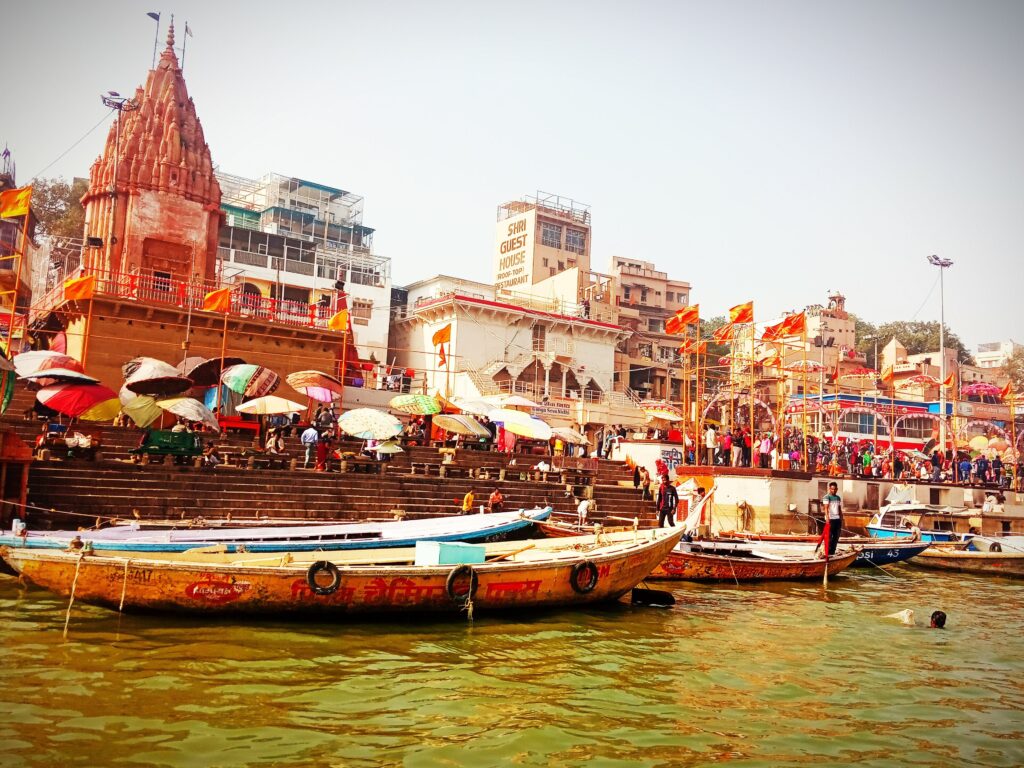
Image Source: Sulagna Halder/wikimedia
Where the City Touches the River
Dashashwamedh Ghat is not just a flight of stone steps leading into the Ganga. It is where Varanasi seems to breathe the loudest. From early morning to late night, the ghat is always awake. Priests chant, boats drift past, pilgrims bathe, and travelers stand still trying to understand what they are seeing. This is one of the oldest and most active ghats in the city, and for many visitors, it becomes their first and deepest introduction to Varanasi’s spiritual rhythm.
History and the Meaning of Its Name
The name “Dashashwamedh” comes from ancient Sanskrit words meaning “ten horse sacrifices.” According to legend, Lord Brahma performed ten Ashwamedha yajnas here to welcome Lord Shiva to the city. This story gives the ghat its sacred identity as a place blessed by divine presence.
Historically, the ghat has existed for centuries as a central riverfront space for ritual bathing and worship. Over time, it was rebuilt and maintained by various rulers and patrons, especially during the Maratha period in the 18th century. What remains today is not just a religious site but a historical stage where layers of mythology and human life overlap.
Spiritual Significance
Dashashwamedh Ghat is considered one of the most sacred bathing places in Varanasi. Devotees believe that bathing here cleanses sins and brings spiritual merit. Because it lies close to the Kashi Vishwanath Temple, pilgrims often move directly from the temple to the ghat, completing a symbolic journey from shrine to river.
Spiritually, the ghat represents connection. Between gods and humans. Between body and soul. Between prayer and water. It is not a silent meditation space but a place where faith is performed openly, loudly, and collectively.
The Famous Ganga Aarti
Every evening, Dashashwamedh Ghat transforms into a glowing ritual theatre. The Ganga Aarti begins after sunset when priests dressed in saffron robes step onto raised platforms holding large fire lamps. Bells ring, conch shells blow, and hundreds of small flames move in synchronized patterns facing the river.
The aarti is not only a religious ritual but an emotional experience. Locals fold their hands. Visitors watch in silence. The river reflects fire and prayer at the same time. It feels as if the city is offering light to the water and water is carrying those prayers away. This daily ceremony has become one of the most recognizable images of Varanasi.
Location and Setting
Dashashwamedh Ghat is located in the heart of old Varanasi, on the western bank of the Ganga River. It lies close to Vishwanath Gali, one of the busiest lanes in the city, and is only a short walking distance from the Kashi Vishwanath Temple. The ghat sits between Man Mandir Ghat and Rajendra Prasad Ghat and is easily noticeable because of its wide steps and constant activity. Its central location makes it both spiritually important and physically accessible.
How to Reach
Reaching Dashashwamedh Ghat is part of the experience.
From Varanasi Junction railway station or the main bus stand, one can take an auto rickshaw or taxi to Godowlia or Vishwanath area. From there, the ghat is reached on foot through narrow lanes filled with shops selling flowers, lamps, sweets, and religious items.
Another beautiful way to arrive is by boat. Early morning or evening boat rides along the Ganga allow visitors to approach the ghat slowly from the river, revealing its scale and energy from the water itself.
What to Experience at the Ghat
In the morning, Dashashwamedh Ghat feels gentle. People bathe in the river, priests perform small rituals, and the sun rises behind temple silhouettes. The river smells of flowers and incense.
In the afternoon, the ghat becomes practical. Boatmen wait for passengers. Vendors sell garlands and clay lamps. Tourists sit on the steps watching life pass by.
In the evening, the ghat becomes dramatic. The Ganga Aarti draws large crowds. The sound of bells, chants, and flowing water merges into one powerful atmosphere.
At night, after the crowds thin, the ghat becomes quieter again, with small groups sitting by the river and lamps floating on dark water.
What Is There to See Around
Near the ghat are several important temples and historic buildings. Vishwanath Gali nearby leads to the Kashi Vishwanath Temple complex. Shops around the ghat sell rudraksha beads, brass idols, silk scarves, and devotional music.
Boats at the ghat offer river rides to other famous ghats like Manikarnika and Assi, making Dashashwamedh a starting point for exploring the entire riverfront.
Human Life on the Steps
Beyond rituals and tourism, Dashashwamedh Ghat is also a workplace and a home. Priests earn their living here. Boatmen wait patiently for customers. Flower sellers arrange their offerings every morning. Children play near the water while elders sit watching the river as if it were an old friend.
For locals, the ghat is not a spectacle. It is routine. For visitors, it is unforgettable. This contrast gives the place its emotional depth.
Conclusion
Dashashwamedh Ghat is not just a religious site. It is the pulse of Varanasi’s river life. Its history ties it to ancient myths, its rituals connect it to daily faith, and its crowds link it to modern tourism.
To stand here is to witness how prayer, commerce, life, and death flow together like the river itself. Whether one comes to bathe, to pray, to watch the aarti, or simply to sit and observe, Dashashwamedh Ghat offers something rare. A place where spirituality is not hidden inside temples but lived openly on stone steps beside flowing water.
FAQs
1. What is Dashashwamedh Ghat famous for?
Dashashwamedh Ghat is best known for its vibrant Ganga Aarti ceremony held every evening. Priests perform synchronized rituals with lamps, chants, and conch sounds, creating one of the most spiritual and visually captivating experiences on the banks of the Ganges in Varanasi.
2. Where is Dashashwamedh Ghat located?
It is located in Varanasi, near the Kashi Vishwanath Temple. The ghat sits along the western bank of the River Ganga and is one of the oldest and busiest ghats in the city.
3. What is the best time to visit Dashashwamedh Ghat?
The best time to visit is early morning for a peaceful river view or evening around sunset to witness the famous Ganga Aarti. Winter months (October to March) are especially pleasant for exploring the ghat comfortably.
4. Is there any historical significance of Dashashwamedh Ghat?
According to legend, Lord Brahma performed ten Ashwamedha Yajnas here, which is how the ghat got its name. Over centuries, it has been rebuilt and renovated by various rulers, including the Marathas.
5. What activities can tourists do at Dashashwamedh Ghat?
Visitors can take boat rides on the Ganges, attend spiritual rituals, explore nearby temples, shop in local markets, and experience the cultural essence of Varanasi along the riverfront.