Image Source: Wikimapia
About Ghantasala Stupa
Nestled in the peaceful village of Ghantasala in Andhra Pradesh’s Krishna district, the Ghantasala Stupa stands as one of the most important reminders of the region’s rich Buddhist heritage. Dating back to the 2nd and 3rd centuries CE, this ancient monument was once part of a flourishing Buddhist settlement that attracted monks, scholars, merchants, and pilgrims from different parts of the Indian subcontinent.
Although less famous than the renowned Buddhist sites of Amaravati and Nagarjunakonda, Ghantasala played a significant role in the spread of Buddhism across South India. Archaeological discoveries have revealed that the village was a thriving center of religious learning and trade during the Satavahana period. Today, the site offers visitors a fascinating glimpse into an era when Buddhism flourished along the fertile plains of the Krishna River.
The tranquil surroundings, historical significance, and ancient ruins make Ghantasala an appealing destination for history enthusiasts, archaeology lovers, and travelers interested in Andhra Pradesh’s lesser-known heritage sites.
History
The history of Ghantasala can be traced back over 1,800 years. During the rule of the Satavahanas and later the Ikshvakus, Buddhism received extensive royal patronage throughout the Andhra region. Situated near important trade routes and close to the Krishna River, Ghantasala became an influential center where religion, commerce, and culture intersected.
Ancient traders traveling between inland settlements and coastal ports are believed to have passed through this area. The prosperity generated by trade helped support monasteries and religious institutions, allowing Buddhist teachings to flourish. Historical evidence suggests that Ghantasala maintained connections with other important Buddhist centers in India and may have contributed to the spread of Buddhism to Sri Lanka and parts of Southeast Asia through maritime networks.
Over the centuries, the site gradually declined, and many of its structures were buried beneath layers of soil. Modern archaeological excavations eventually brought its remarkable past back into the spotlight.
Architectural Features of the Stupa
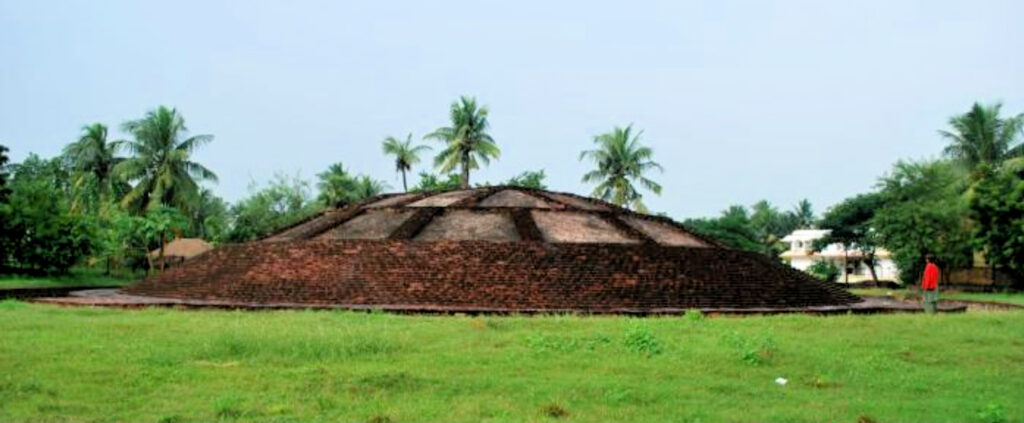
The Ghantasala Stupa is notable for its distinctive design and construction techniques. Archaeologists discovered that the main structure was built primarily with bricks and once formed an impressive monument dominating the surrounding landscape.
One of the most remarkable aspects of the stupa was its elaborate decorative work. Unlike many Buddhist stupas that relied mainly on stone embellishments, Ghantasala featured ornamental brick patterns and decorative architectural elements that showcased the craftsmanship of the period.
The central stupa is believed to have measured approximately 21 meters in diameter and may have risen to a considerable height. Some historians even suggest that it could have been taller than the famous Amaravati Stupa, though much of its original structure has not survived.
The architectural style reflects a unique blend of local artistic traditions and broader Buddhist influences that were prevalent across ancient South India.
Archaeological Discoveries
Excavations carried out at Ghantasala have uncovered several important remains that provide valuable insights into the site’s past.
Main Maha Stupa
The most significant discovery is the large brick-built Maha Stupa, which served as the spiritual heart of the settlement. Its surviving foundations reveal the scale and importance of the monument.
Sculptural Panels and Reliefs
Archaeologists found evidence suggesting that the drum portion of the stupa was once decorated with sculptural panels. These likely depicted Buddhist symbols, sacred motifs, and scenes inspired by the Jataka tales—the stories of the Buddha’s previous lives.
Monastic Complexes
The site has also yielded remains of viharas (monasteries), smaller votive stupas, and chaitya halls. These discoveries indicate that Ghantasala was much more than a single monument; it was an active monastic community where monks lived, studied, and taught.
Inscriptions and Relics
Several inscriptions discovered at the site confirm the presence of a flourishing Buddhist settlement. Archaeologists have also recovered relic caskets, beads, coins, pottery fragments, and other artifacts that help reconstruct the daily life of the ancient community.
Cultural and Religious Importance
Ghantasala occupies a special place in the history of Buddhism in Andhra Pradesh. During its peak, it served as a center for Buddhist philosophy, education, and religious practice. The site’s strategic location near waterways and trade routes enabled the exchange of ideas as well as goods.
The discovery of imported artifacts and trade-related objects highlights the cosmopolitan nature of the settlement. Merchants from different regions likely interacted with local communities, creating a vibrant cultural environment.
For followers of Buddhism, Ghantasala represents an important chapter in the religion’s development in southern India. For historians and archaeologists, it provides valuable evidence about the social, economic, and spiritual life of ancient Andhra.
Visiting Ghantasala Today
A visit to Ghantasala is a journey into Andhra Pradesh‘s ancient past. While much of the original structure has been lost to time, the excavated remains still offer a sense of the site’s historical importance.
The atmosphere is quiet and reflective, making it an ideal place for those who enjoy exploring lesser-known heritage destinations away from crowded tourist circuits. Visitors can walk around the archaeological remains, learn about the site’s history, and appreciate the role it once played in the Buddhist world.
Photography enthusiasts often find the site rewarding due to its peaceful rural setting and historical ambiance. The surrounding countryside also offers a glimpse into traditional village life in coastal Andhra Pradesh.
Local Culture and Village Life
The village of Ghantasala is known not only for its Buddhist heritage but also for its traditional Andhra culture. Agriculture remains the primary occupation in the region, with lush fields nourished by the fertile Krishna delta.
Visitors who spend time in the area can experience authentic rural Andhra life, sample local cuisine, and interact with residents who take pride in the village’s historical legacy. Festivals celebrated in nearby towns often showcase traditional music, dance, and regional customs that have been preserved for generations.
Best Time to Visit
The ideal time to visit Ghantasala is between October and March when the weather is relatively pleasant and suitable for sightseeing. Winter temperatures remain comfortable, making it easier to explore the archaeological site and nearby attractions.
The summer months from April to June can be quite hot, while the monsoon season brings occasional heavy rainfall that may affect travel plans.
How to Reach Ghantasala
By Road
Ghantasala is approximately 20 kilometers from Machilipatnam and around 60 kilometers from Vijayawada. The village is well connected by local roads, and visitors can easily hire taxis or use state transport buses from nearby towns.
By Rail
The nearest railway station is Machilipatnam Railway Station, located about 20 kilometers away. For broader connectivity, Vijayawada Junction serves as the nearest major rail hub with trains connecting to major Indian cities.
By Air
The nearest airport is Vijayawada International Airport at Gannavaram, situated roughly 50 kilometers from the site. Regular flights connect Vijayawada with cities such as Delhi, Hyderabad, Bengaluru, Chennai, and Mumbai.
Nearby Attractions
Amaravati Stupa
One of India’s most celebrated Buddhist sites, Amaravati is famous for its ancient stupa, museum, and remarkable sculptural heritage. It offers excellent context for understanding the broader Buddhist history of Andhra Pradesh.
Undavalli Caves
Located near Vijayawada, these rock-cut caves showcase impressive architecture, ancient sculptures, and a massive reclining Vishnu statue carved from a single rock.
Bhavani Island
Situated on the Krishna River near Vijayawada, Bhavani Island is a popular recreational destination known for boating, scenic views, and family-friendly activities.
Manginapudi Beach
Located near Machilipatnam, this coastal destination is known for its black-soil shoreline and peaceful atmosphere. It is an ideal stop for travelers exploring the Krishna district.
Machilipatnam
This historic port town offers cultural attractions, traditional Kalamkari art, old temples, and a glimpse into the maritime history of Andhra Pradesh.
Kondapalli Fort
Situated near Vijayawada, the fort provides panoramic views and an opportunity to explore a medieval hilltop stronghold associated with several South Indian dynasties.
Google Maps
Frequently Asked Questions (FAQs)
1. What is the historical significance of Ghantasala Stupa?
Ghantasala Stupa was an important Buddhist center during the Satavahana and Ikshvaku periods and played a significant role in religious learning, trade, and cultural exchange.
2. How old is the Ghantasala Stupa?
The stupa dates back to approximately the 2nd and 3rd centuries CE, making it nearly 1,800 years old.
3. Is Ghantasala Stupa suitable for history enthusiasts?
Yes. The site is particularly appealing to history lovers, archaeology enthusiasts, researchers, and travelers interested in Buddhist heritage.
4. How much time is required to explore the site?
Most visitors can comfortably explore the archaeological remains and surrounding area within one to two hours.
5. What is the best season to visit Ghantasala?
The period from October to March is considered the best time due to pleasant weather conditions.
6. Are guides available at the site?
Guides may not always be available on-site, so it is helpful to read about the site’s history beforehand or visit with a knowledgeable local guide.
7. Can Ghantasala be visited as a day trip from Vijayawada?
Yes. The site is easily accessible from Vijayawada and can be comfortably covered as a day excursion along with nearby historical attractions.
8. Why is Ghantasala important in Buddhist history?
Its archaeological remains, inscriptions, monastic structures, and trade connections indicate that it was once a major Buddhist center that contributed to the spread of Buddhist culture across the region and beyond.