
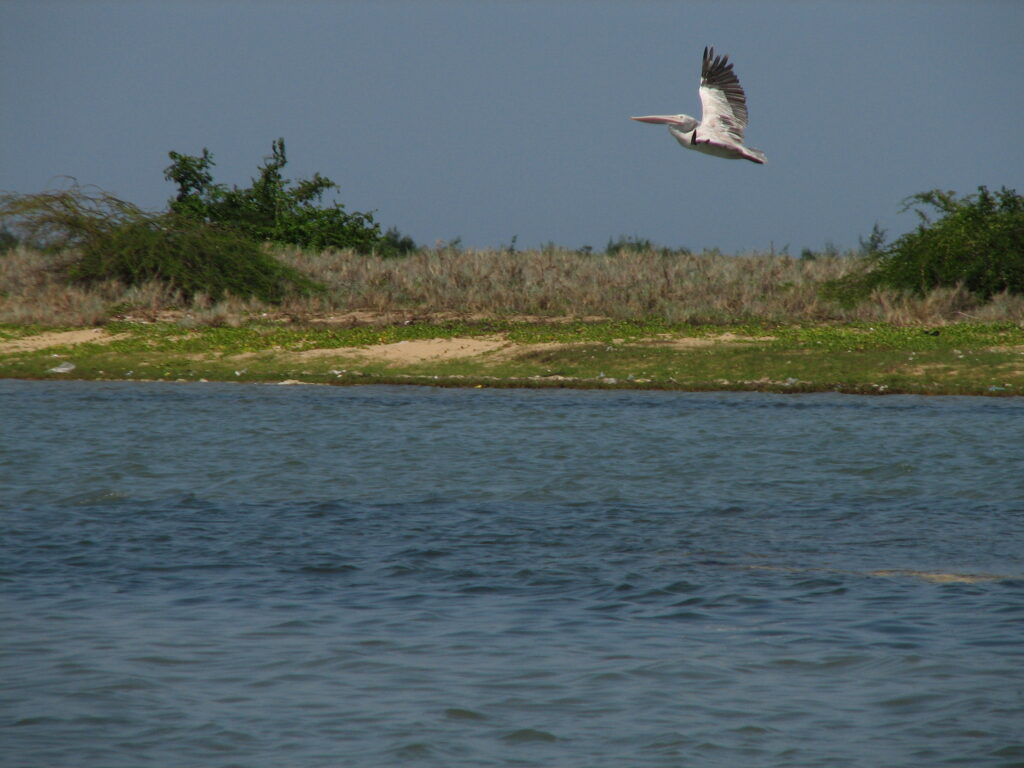
Image Source: McKay Savage
About Pulicat Lake Bird Sanctuary
Nestled along the border of Andhra Pradesh and Tamil Nadu, Pulicat Lake Bird Sanctuary is one of India’s most fascinating wetland ecosystems and an important haven for migratory birds. Spread around the vast Pulicat Lake, this sanctuary is a paradise for birdwatchers, nature lovers, photographers, and anyone seeking a peaceful escape from city life. The sanctuary is officially recognized by BirdLife International as an Important Bird Area (IBA Code: IN261) because of its immense ecological value and the large number of migratory birds that depend on it every year.
Established in 1976, the sanctuary protects a massive stretch of wetlands, mudflats, lagoons, marshes, and coastal habitats. Pulicat Lake itself is especially significant because it is India’s second-largest brackish-water lake after Chilika Lake. The mix of freshwater from rivers and saltwater from the Bay of Bengal creates a rare ecosystem that supports rich biodiversity throughout the year.
Geography and Natural Setting
Pulicat Lake Bird Sanctuary lies near the Coromandel Coast and stretches across both Andhra Pradesh and Tamil Nadu. The sanctuary covers an extensive landscape of lagoons, shallow waters, mudflats, sand bars, and mangrove patches. Its unique brackish-water environment plays a major role in supporting aquatic life and migratory bird populations.
The climate here remains tropical for most of the year. Summers can be warm and humid, while winters are relatively pleasant and ideal for tourism. Temperatures usually range between 14°C and 33°C, and the region receives annual rainfall from both the southwest and northeast monsoons. These seasonal changes influence water levels in the lake and affect the arrival of migratory birds.
One of the most remarkable features of Pulicat Lake is its constantly changing landscape. During certain seasons, the shallow waters expose mudflats that become feeding grounds for thousands of birds. The calm waters and open skies also make the sanctuary visually stunning, especially during sunrise and sunset.
Rich Flora of the Sanctuary
The sanctuary supports a wide variety of coastal and wetland vegetation. Around 132 species of plants are found here, including mangroves, salt-tolerant grasses, shrubs, and coastal trees. These plants are not only important for maintaining ecological balance but also provide nesting sites and shelter for birds and aquatic creatures.
Species such as Manilkara elengi, Spinifex littoreus, Excoecaria agallocha, and Calamus viminalis are commonly found in the region. Mangrove vegetation plays a particularly important role because it prevents coastal erosion, improves water quality, and serves as a breeding ground for fish and crustaceans.
The green patches surrounding the lake create a beautiful contrast against the blue waters and sandy stretches, adding to the sanctuary’s scenic appeal.
Birdlife and Wildlife
Pulicat Lake Bird Sanctuary is internationally famous for its incredible bird population. Every winter, thousands of migratory birds travel from distant regions such as Siberia, Central Asia, and parts of Europe to spend the season here. The sanctuary becomes a vibrant natural spectacle filled with color, movement, and bird calls.
The most iconic visitors are the greater flamingos, whose large flocks paint the lake in shades of pink. Watching flamingos feeding in the shallow waters is one of the biggest attractions of Pulicat Lake. Apart from flamingos, the sanctuary is home to painted storks, pelicans, spoonbills, herons, egrets, ducks, gulls, terns, and many species of waders.
Birdwatchers often visit the sanctuary between October and March, when migratory activity is at its peak. The calm environment and abundance of birds make it one of South India’s finest birdwatching destinations.
Beyond birds, the sanctuary also supports a variety of aquatic organisms and wildlife. Plankton, molluscs, crabs, prawns, insects, and fish form the base of the food chain and sustain the wetland ecosystem. Mammals such as jackals, jungle cats, and black-naped hares can occasionally be spotted in the surrounding areas.
Ecological Importance of Pulicat Lake
Pulicat Lake is not just a tourist attraction; it is an ecologically critical wetland system. The lake acts as a natural flood buffer, supports fisheries, and sustains the livelihoods of local fishing communities. The wetland also plays a major role in maintaining coastal biodiversity and regulating environmental balance in the region.
Migratory birds depend on the sanctuary for feeding, breeding, and resting during their long journeys across continents. Because of this, Pulicat Lake holds international importance under global bird conservation frameworks.
The lake is also valuable for scientific research, environmental education, and wetland conservation studies. Researchers and environmentalists frequently study the area to understand migratory patterns, climate impacts, and coastal ecology.
Threats Facing the Sanctuary
Despite its ecological importance, Pulicat Lake faces several environmental challenges. One of the biggest threats is siltation, which gradually reduces the depth and water-holding capacity of the lake. If left unchecked, experts warn that the ecosystem could shrink significantly over time.
Pollution, unregulated fishing, industrial activities, encroachment, and habitat degradation also affect the fragile wetland environment. Changes in tidal flow and reduced freshwater inflow have further impacted the ecological balance of the lake.
Conservation organizations and government departments are actively working to protect the sanctuary through awareness programs, habitat restoration, and sustainable management practices. Various NGOs and environmental groups also conduct educational campaigns to encourage responsible tourism and conservation.
Best Time to Visit
The best time to visit Pulicat Lake Bird Sanctuary is from October to March. During these months, migratory birds arrive in large numbers, and the weather remains comfortable for sightseeing and photography.
The annual Flamingo Festival, usually celebrated during the winter season, attracts bird enthusiasts and tourists from across the country. The festival highlights the ecological importance of the lake and promotes local culture and tourism.
Early mornings and evenings are considered the best times for birdwatching because birds are most active during these hours.
Things to Do at Polecat Lake
Visitors can enjoy several activities at the sanctuary, including:
- Birdwatching and wildlife photography.
- Boating on Pulicat Lake.
- Exploring nearby fishing villages.
- Watching flamingo gatherings during winter.
- Nature walks along the wetlands.
- Sunrise and sunset photography.
The peaceful atmosphere and scenic surroundings make the sanctuary ideal for eco-tourism and weekend trips from nearby cities.
How to Reach Pulicat Lake Bird Sanctuary
By Air
The nearest airport is Chennai International Airport, located about 60 km away. From the airport, visitors can hire taxis or use public transport to reach the sanctuary.
By Rail
The closest railway station is Sullurpeta Railway Station, which is well-connected to Chennai, Nellore, and Tirupati. Local transport is available from the station to the sanctuary.
By Road
Pulicat Lake Bird Sanctuary is easily accessible by road from Chennai, Tirupati, and Nellore. Private taxis, buses, and self-drive vehicles are commonly used by travelers. The drive along the coastal route is scenic and enjoyable.
Nearby Attractions
1. Pulicat Lake
The vast Pulicat Lake itself is the biggest attraction in the region. Visitors can enjoy boating, birdwatching, photography, and breathtaking sunrise and sunset views over the lagoon.
2. Dutch Cemetery
Located in Pulicat town, the historic Dutch Cemetery dates back to the 17th century and reflects the area’s colonial past under Dutch rule.
3. Dutch Fort (Fort Geldria)
The ruins of Fort Geldria offer a glimpse into the Dutch East India Company’s presence on the Coromandel Coast and are a favorite spot for history enthusiasts.
4. Nelapattu Bird Sanctuary
Located about 20 km away, Nelapattu Bird Sanctuary is famous for pelicans, herons, storks, and several migratory bird species.
5. Sriharikota
The island of Sriharikota is home to Indian Space Research Organisation‘s famous launch center, Satish Dhawan Space Centre. While public access is restricted, visitors can view parts of the island and learn about India’s space achievements.
6. Sullurpeta
The nearby town of Sullurpeta serves as the gateway to Pulicat Lake and offers local markets, restaurants, and accommodation facilities.
7. Chengalamma Parameswari Temple
The ancient Chengalamma Parameswari Temple is a revered pilgrimage site attracting devotees from Andhra Pradesh and Tamil Nadu.
8. Venadu Island
A scenic island within Pulicat Lake, Venadu Island is known for its tranquil atmosphere, bird habitats, and beautiful lagoon views.
9. Flamingo Viewpoints
Several viewpoints around Pulicat Lake provide excellent opportunities to observe thousands of migratory flamingos during the winter season.
10. Chennai
Located around 60 km away, Chennai offers beaches, temples, museums, shopping centers, and cultural attractions, making it an excellent addition to a Pulicat itinerary.
Google Maps
FAQ’s
1. Why is Pulicat Lake Bird Sanctuary famous?
The sanctuary is famous for its large population of migratory birds, especially greater flamingos. It is also known for being India’s second-largest brackish-water lake.
2. What is the best time to visit Pulicat Lake Bird Sanctuary?
The ideal time to visit is between October and March, when migratory birds arrive and the weather remains pleasant.
3. Is boating available at Pulicat Lake?
Yes, boating facilities are available in certain areas, allowing visitors to explore the lake and observe birds more closely.
4. How far is Pulicat Lake from Chennai?
Pulicat Lake is located approximately 60 kilometers from Chennai, making it a popular weekend getaway.
5. Which birds can be seen at Pulicat Lake Bird Sanctuary?
Visitors can spot flamingos, pelicans, painted storks, spoonbills, herons, egrets, ducks, gulls, and many migratory waterbirds.
6. Is Pulicat Lake suitable for photography?
Absolutely. The lake’s scenic landscapes, colorful birdlife, and beautiful sunrises and sunsets make it an excellent destination for photography.
7. Are there any conservation challenges at Pulicat Lake?
Yes, the sanctuary faces threats such as siltation, pollution, habitat degradation, and unregulated human activities, which impact the fragile ecosystem.
8. Can families and children visit the sanctuary?
Yes, Pulicat Lake Bird Sanctuary is a family-friendly destination and offers a great educational experience for children interested in wildlife and nature.


