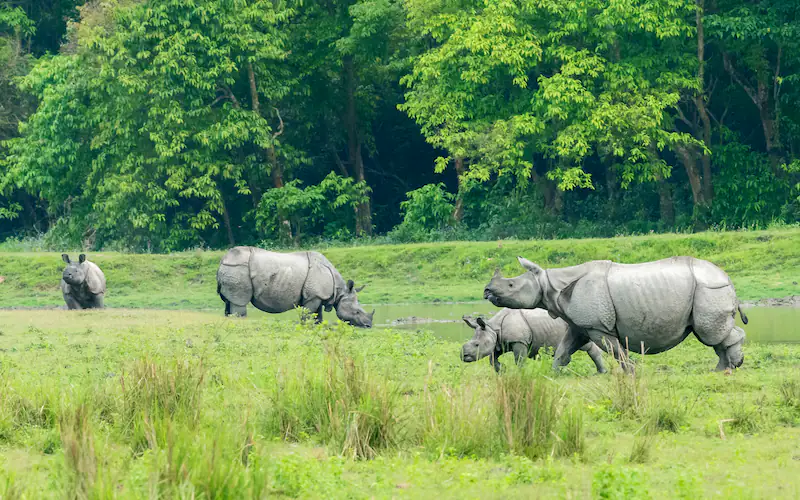
Image Source: Assam Higher Secondary Council
About Kaziranga National Park
If there’s one place that truly captures the wild heart of Assam, it’s Kaziranga National Park. Recognized as a UNESCO World Heritage Site, this park is one of India’s most iconic wildlife destinations—and for good reason.
Kaziranga is best known as the home of the rare one-horned rhinoceros, but there’s so much more to it than just rhinos. Spread across the fertile floodplains of the Brahmaputra River, the park is a beautiful mix of tall grasslands, wetlands, and dense forests. It’s the kind of place where every turn feels alive—with animals, birds, and raw, untamed nature.
Layout and Landscape
Kaziranga is divided into four main zones—Kohora, Bagori, Agoratoli, and Burapahar. Each range offers a slightly different experience, so no two safaris feel the same.
The landscape here is quite unique. Vast stretches of tall elephant grass dominate the scenery, broken up by marshes, shallow lakes, and river channels. These areas are regularly refreshed by seasonal floods from the Brahmaputra, which might sound harsh but actually play a huge role in keeping the ecosystem healthy and thriving.
It’s this ever-changing landscape that makes Kaziranga one of the most biodiverse regions in the country.
Flora and Fauna
Kaziranga is practically synonymous with the one-horned rhinoceros—it’s home to more than two-thirds of the world’s population of this incredible species.
But the wildlife doesn’t stop there. The park is also a designated Tiger Reserve and supports a strong population of Bengal Tiger. You’ll also find herds of Asiatic Elephant, wild water buffalo, and swamp deer moving across the grasslands.
For bird lovers, Kaziranga is a dream. With over 450 species recorded, including migratory birds, pelicans, and rare species like the Bengal Florican, there’s always something to spot—no matter the season.
Cultural and Historical Significance
Kaziranga isn’t just important for wildlife—it’s deeply woven into the cultural fabric of Assam. There’s even a local legend behind its name, linked to the story of two lovers, Kazi and Ranga, symbolizing eternal love.
For the people of Assam, Kaziranga is more than a national park—it’s a symbol of pride and a guardian of their natural heritage. You’ll often find it celebrated in local folklore, songs, and art, which adds a cultural depth to its already rich ecological importance.
How to Reach
By Air:
The nearest airport is Jorhat Airport (about 97 km away). Alternatively, Lokpriya Gopinath Bordoloi International Airport (around 217 km) is a major hub with better connectivity.
By Rail:
Furkating Junction is the closest railway station (about 75 km), while Guwahati Railway Station is more convenient for long-distance travelers.
By Road:
Kaziranga is well connected via NH37, with regular buses, taxis, and cabs available from Guwahati, Tezpur, and Jorhat.
Nearby Attractions of Kaziranga National Park
Located in the heart of Assam, Kaziranga National Park is one of India’s most celebrated wildlife destinations and a UNESCO World Heritage Site. Famous for its population of one-horned rhinoceroses, the park is surrounded by several natural, cultural, and historical attractions that make for excellent day trips and extended excursions.
1. Kakochang Waterfall
Situated near Bokakhat, Kakochang Waterfall is a scenic cascade surrounded by lush tea gardens and tropical forests. During the monsoon and post-monsoon seasons, the waterfall becomes particularly impressive. Visitors can enjoy nature walks, photography, and views of the nearby hills.
2. Panbari Reserve Forest
Located close to Kaziranga, Panbari Reserve Forest is a paradise for birdwatchers and wildlife enthusiasts. The forest is known for its rich biodiversity and is home to hornbills, woodpeckers, and several rare species of birds. Nature lovers often visit the reserve for trekking and wildlife photography.
3. Hollongapar Gibbon Wildlife Sanctuary
About 70–80 km from Kaziranga, Hollongapar Gibbon Wildlife Sanctuary is famous for being home to India’s only ape species, the hoolock gibbon. The sanctuary also shelters capped langurs, stump-tailed macaques, and numerous bird species, making it a rewarding destination for wildlife enthusiasts.
4. Majuli Island
Majuli, one of the world’s largest river islands, lies on the mighty Brahmaputra River. Known for its vibrant Assamese culture, Vaishnavite monasteries (Satras), traditional crafts, and scenic landscapes, Majuli offers a unique cultural experience beyond wildlife tourism.
5. Orang National Park
Often referred to as the “Mini Kaziranga of Assam,” Orang National Park is located on the northern bank of the Brahmaputra. The park is home to one-horned rhinoceroses, elephants, tigers, and numerous bird species, providing another excellent wildlife safari experience.
6. Nameri National Park
Nameri National Park is renowned for its pristine forests, river rafting opportunities, and rich birdlife. Visitors can enjoy nature trails along the Jia Bhoroli River and spot species such as hornbills, kingfishers, and the endangered white-winged wood duck.
7. Tea Gardens of Assam
The region around Kaziranga is dotted with picturesque tea estates. Visitors can take guided tours of tea plantations, learn about tea processing, interact with local workers, and enjoy fresh Assamese tea amid beautiful green landscapes.
8. Deoparbat Ruins
Located near Numaligarh, Deoparbat Ruins is an important archaeological site containing remnants of ancient temples and sculptures dating back several centuries. The site provides insight into Assam’s rich historical and architectural heritage.
9. Numaligarh
Numaligarh is known for its historical significance and scenic surroundings. The area features ancient fortifications associated with the Ahom kingdom and offers opportunities to explore local culture and history.
10. Brahmaputra River Excursions
A visit to Kaziranga can be complemented by a river excursion on the Brahmaputra. Boat rides provide opportunities to observe riverine landscapes, migratory birds, river dolphins, and stunning sunsets over one of Asia’s largest rivers.
11. Karbi Anglong Hills
The nearby Karbi Anglong hills offer a refreshing contrast to Kaziranga’s grasslands. Visitors can explore tribal villages, forested landscapes, viewpoints, and lesser-known trekking routes while learning about the traditions of the Karbi people.
12. Bordoibam-Bilmukh Bird Sanctuary
This wetland sanctuary is a haven for migratory birds and wetland species. Birdwatchers can spot storks, ducks, herons, and many other avian species during the winter months.
Google Maps
FAQs
1. What is Kaziranga National Park famous for?
It’s best known for the one-horned rhinoceros, but it’s also home to tigers, elephants, and a wide variety of bird species.
2. What is the best time to visit Kaziranga?
The best time is from November to April, when the weather is pleasant and wildlife sightings are more frequent.
3. Are safaris available in Kaziranga?
Yes, both jeep safaris and elephant safaris are available across different ranges of the park.
4. Is Kaziranga safe for tourists?
Yes, as long as you follow park rules and stay with authorized guides during safaris.
5. How many days are enough to explore Kaziranga?
Ideally, 2–3 days are enough to explore multiple ranges and enjoy different safari experiences.
6. Can I see tigers in Kaziranga?
Yes, but tiger sightings are rare compared to rhinos due to dense vegetation.
7. Is Kaziranga suitable for birdwatching?
Absolutely. With over 450 species, it’s one of the best birdwatching destinations in India.