Image Source: partha Buragohain
About Sivasagar
Sivasagar is one of the most historically important towns in Assam and stands as a living reminder of the grandeur of the Ahom Kingdom. Located in the heart of Upper Assam, the town is known for its royal monuments, massive man-made tanks, ancient temples, and deep cultural legacy. Unlike many historic capitals that disappeared with time, Sivasagar still preserves the physical and cultural memory of a powerful pre-colonial state. Its landscape, architecture, and traditions together narrate the story of Assam’s political strength, religious evolution, and artistic achievements over several centuries.
Geographical Setting and Natural Landscape
Sivasagar lies slightly south of the Brahmaputra floodplain and is surrounded by fertile alluvial land, wetlands, and low-lying plains. This geographical position played a major role in the rise of the city as the capital of the Ahom Kingdom. While the town remained close enough to important river systems for transportation and trade, it was also protected from the most destructive floods of the Brahmaputra. Tributaries such as the Disang and Dikhow rivers connected the region to wider riverine networks, allowing movement of goods, troops, and people across Upper Assam.
The natural environment of Sivasagar also reflects remarkable hydraulic planning carried out by the Ahoms. The large tanks, ponds, canals, and embankments found across the town were not built merely for decoration. They were carefully designed to regulate water, support agriculture, prevent waterlogging, and maintain urban stability. These water bodies became an essential part of the city’s planning and gave Sivasagar a unique environmental character. Even today, the presence of these historic tanks shapes the appearance and ecology of the town.
Sivasagar as the Capital of the Ahom Kingdom
The historical importance of Sivasagar comes primarily from its role as the principal capital of the Ahom Kingdom during the 17th and 18th centuries. Earlier Ahom capitals shifted frequently due to political and military reasons, but Sivasagar emerged as a more permanent and monumental center of power. The Ahom rulers transformed the region into a grand ceremonial city filled with palaces, temples, administrative complexes, and military structures.
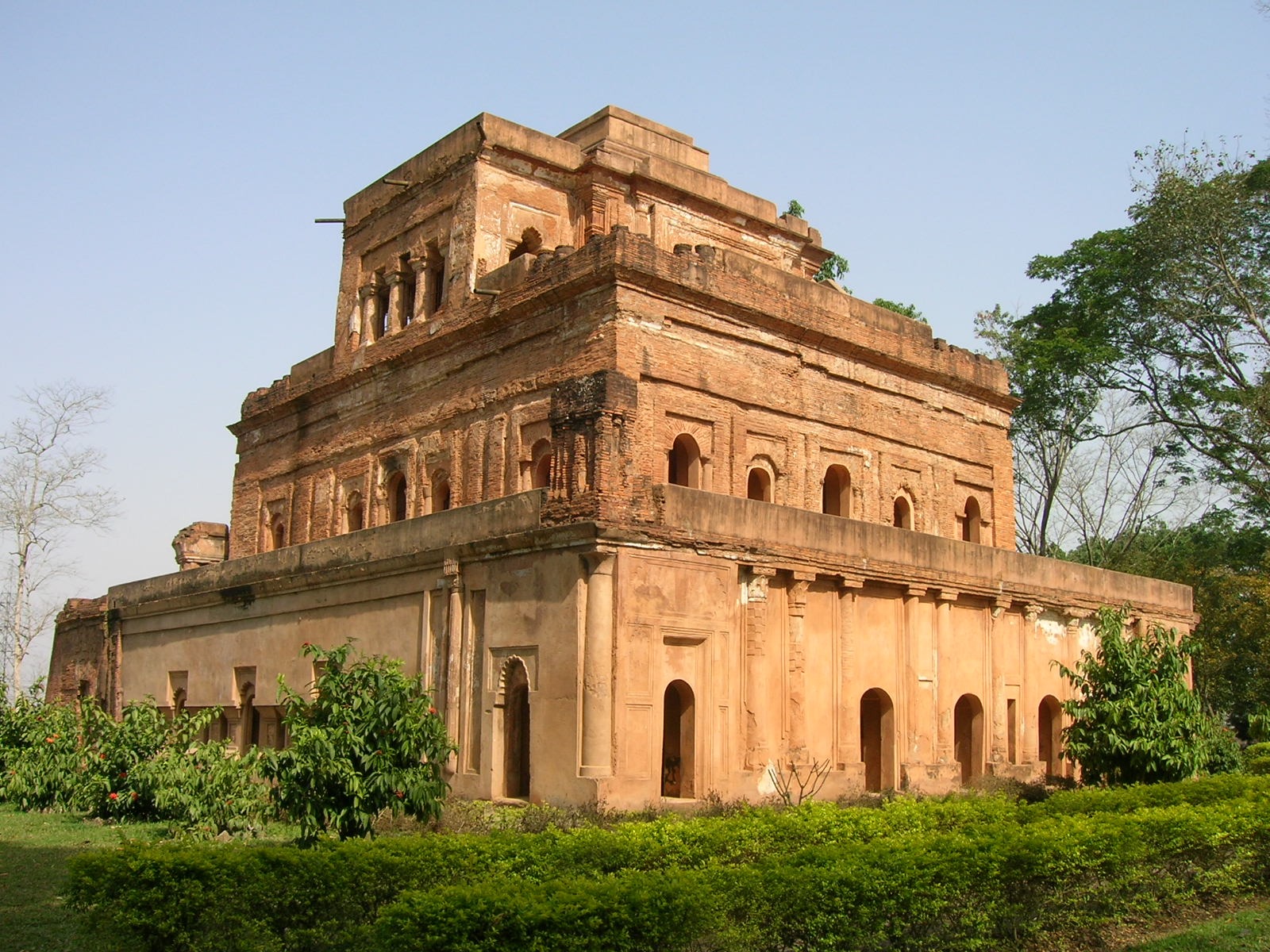
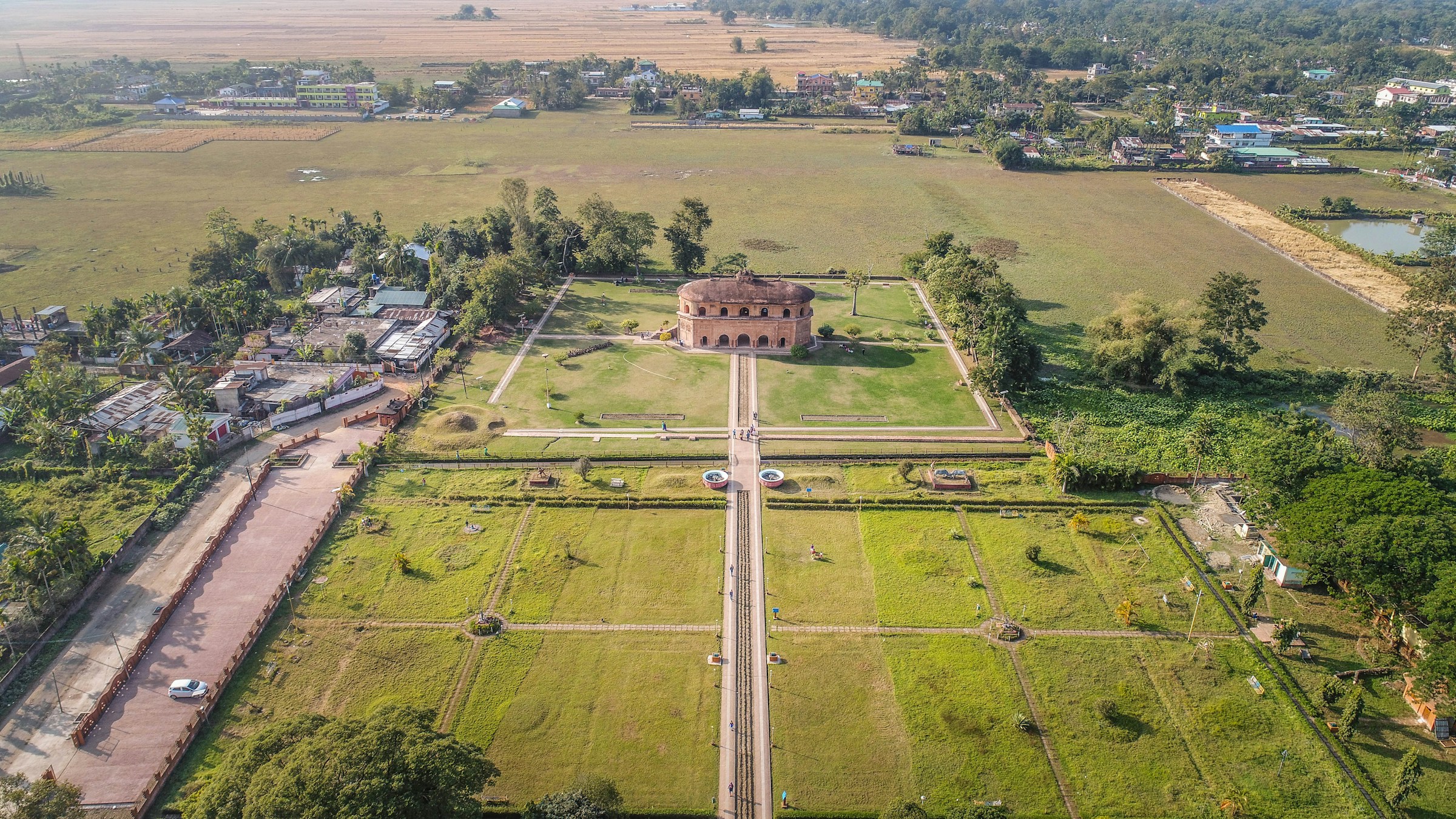
Some of the most famous monuments of the town include Rang Ghar, Talatal Ghar, and Kareng Ghar. These structures were not isolated buildings but parts of an integrated royal complex that reflected the authority and ceremonial grandeur of the Ahom monarchy. Rang Ghar, often described as one of Asia’s oldest surviving amphitheaters, was used for royal entertainment and public events. Talatal Ghar served both military and administrative purposes and is famous for its underground tunnels and secret passages. Kareng Ghar functioned as the royal palace and administrative center.
The gigantic Sivasagar Tank, locally called Borpukhuri, further enhanced the symbolic power of the city. The Ahoms viewed water as sacred and closely connected it with kingship, prosperity, and cosmological order. Thus, the urban design of Sivasagar represented not only political control but also spiritual authority.
Religious Harmony and Cultural Synthesis
One of the most remarkable features of Sivasagar is the blending of different cultural and religious traditions. The Ahoms originally followed Tai religious customs after migrating from Southeast Asia, but over time they gradually adopted Hindu traditions while preserving many indigenous rituals. This process created a unique cultural synthesis that became central to Assamese identity.
The famous temple complex surrounding the Sivasagar Tank includes Sivadol, Vishnudol, and Devidol. These temples demonstrate the influence of Hindu temple architecture while still reflecting local Assamese styles and Ahom patronage. Sivadol, dedicated to Lord Shiva, remains one of the tallest Shiva temples in India and continues to attract thousands of devotees during festivals like Mahashivaratri.
At the same time, the region was influenced by the neo-Vaishnavite movement initiated by the Assamese saint-scholar Srimanta Sankardeva. The presence of nearby satras, or Vaishnavite monasteries, connected Sivasagar to broader religious and cultural reforms occurring across Assam. As a result, the town evolved into a major center where royal traditions, Hindu beliefs, and indigenous customs merged into a distinct Assamese cultural identity.
Military and Strategic Importance
Sivasagar was not only a ceremonial and religious center but also a strategically important military headquarters. The town occupied a position that allowed the Ahoms to monitor routes coming from the eastern hills as well as the Brahmaputra Valley. Defensive planning was deeply integrated into the city’s layout.
Massive embankments, fortified palace complexes, and hidden tunnels reveal the military thinking behind Ahom urban design. Structures such as Talatal Ghar were equipped with secret escape routes and underground chambers that could be used during invasions or emergencies. The city also housed military settlements and storage facilities for weapons and supplies.
From Sivasagar, Ahom rulers coordinated important campaigns against Mughal invasions and later struggled against Burmese incursions in the early nineteenth century. The military resilience of the Ahoms became an important part of Assamese historical memory, especially because they successfully resisted Mughal expansion for centuries.
Colonial Rule and Transformation
The arrival of the British in Assam during the nineteenth century changed the political status of Sivasagar dramatically. After the fall of the Ahom Kingdom and the Burmese conflicts, British colonial administration gradually shifted power toward emerging commercial towns such as Jorhat and Dibrugarh. These towns became important because of tea plantations, trade, and colonial administration.
As a result, Sivasagar lost its role as a political capital. However, instead of disappearing, it acquired a new identity as a historical and cultural landscape. British officials and archaeologists became interested in its monuments, viewing them as relics of a once-powerful kingdom. The palaces and temples of Sivasagar gradually transformed into heritage structures that symbolized Assam’s pre-colonial sovereignty.
This shift marked an important transition in the town’s identity—from a living center of royal administration to a place of historical memory and cultural pride.
Urban Character and Historical Continuity
Unlike many modern cities that completely replaced older settlement patterns, Sivasagar still retains much of its historical urban structure. Ancient tanks, temple complexes, palace ruins, and old settlement zones continue to shape the spatial organization of the town. Markets, roads, and residential areas developed around these historical landmarks rather than erasing them.
This coexistence of everyday urban life with archaeological remains gives Sivasagar a distinctive atmosphere. In many parts of the town, centuries-old monuments stand alongside schools, shops, and modern homes. The continuity of this historical landscape makes Sivasagar one of the few places in Assam where traces of medieval urban planning remain clearly visible.
Sivasagar and Assamese Identity
In Assamese cultural memory, Sivasagar represents the golden age of Ahom rule. It is often associated with political stability, military strength, artistic achievement, and regional unity. Images of Rang Ghar and Sivadol frequently appear in textbooks, tourism campaigns, literature, and public discussions about Assamese heritage.
For many people in Assam, Sivasagar symbolizes indigenous statecraft and the long history of resistance against external invasions. Folk narratives, historical writings, and cultural festivals continue to celebrate the legacy of the Ahoms and their contribution to Assamese civilization. Because of this symbolic importance, Sivasagar occupies a special place not only in history but also in contemporary identity politics and regional consciousness.
Economy and Society in Modern Times
Modern Sivasagar is connected to the larger economic landscape of Upper Assam, especially the tea, oil, and natural gas industries. The district lies close to some of India’s important oil-producing regions, and many residents are employed in energy-related sectors. Tea plantations also contribute significantly to the local economy.
Despite industrial growth, agriculture still remains important in surrounding rural areas, where rice cultivation dominates the landscape. The town today reflects a blend of traditional Assamese society and modern industrial influence. Communities connected to tea gardens, oil industries, trade, and services coexist with older Assamese cultural institutions and practices.
Educational institutions, local markets, and cultural organizations continue to make Sivasagar an important regional center in Upper Assam.
Contemporary Relevance and Heritage Preservation
Today, Sivasagar remains politically and culturally significant in Assam. Discussions about Ahom heritage, indigenous rights, and cultural preservation frequently refer to the town as the symbolic heartland of the Ahom state. Preservation of monuments and water bodies has become an important concern, especially as urbanization and environmental pressures increase.
Tourism has also grown steadily, with visitors coming to explore the royal palaces, temples, and historical tanks. Heritage conservation projects aim to protect these structures while promoting awareness of Assam’s rich history. As a result, Sivasagar continues to bridge the past and present, functioning simultaneously as a modern town and a living museum of Assamese civilization.
Google Maps
FAQs
Where is Sivasagar located?
Sivasagar is located in Upper Assam in northeastern India. It lies south of the Brahmaputra River and is well connected to other major towns of Assam.
Why is Sivasagar historically important?
Sivasagar was the capital of the Ahom Kingdom during the 17th and 18th centuries. It served as the political, military, and cultural center of the Ahom rulers.
What are the famous monuments in Sivasagar?
Important monuments include Rang Ghar, Talatal Ghar, Kareng Ghar, and Sivadol.
What is the significance of Sivadol?
Sivadol is a famous Shiva temple built by the Ahom rulers. It is one of the tallest Shiva temples in India and an important religious landmark in Assam.
What language and culture are associated with Sivasagar?
Sivasagar is closely associated with Assamese culture, although its heritage also reflects Tai-Ahom traditions and Vaishnavite influences.
What is the economy of Sivasagar based on today?
The modern economy of Sivasagar is supported by oil and gas industries, tea plantations, agriculture, tourism, and service sectors.
Is Sivasagar a good tourist destination?
Yes, Sivasagar is one of Assam’s most important heritage destinations. It attracts visitors interested in history, architecture, culture, and Ahom civilization.