Image Source: Debuapriyo
About Tezpur
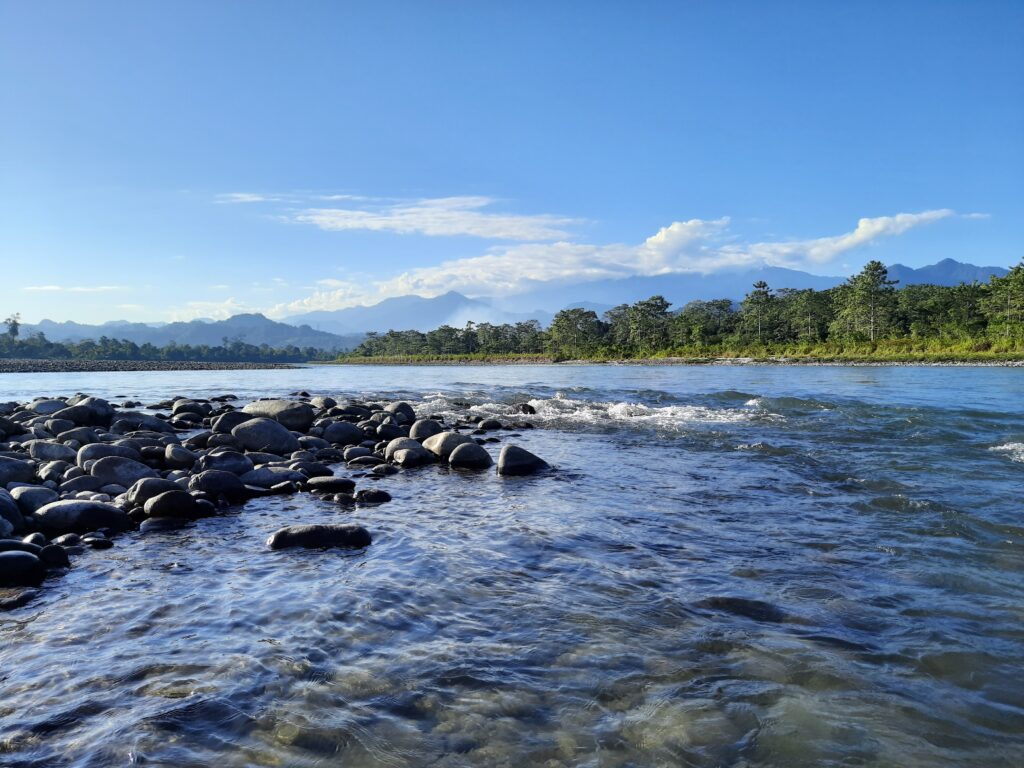
Tezpur is beautifully positioned on the northern bank of the mighty Brahmaputra River in the state of Assam. Its location is unique because it lies close to the foothills of Arunachal Pradesh, where the plains of Assam gradually rise toward the eastern Himalayas. Because of this geography, Tezpur has long acted as a natural gateway between the fertile Brahmaputra Valley and the mountainous regions to the north.
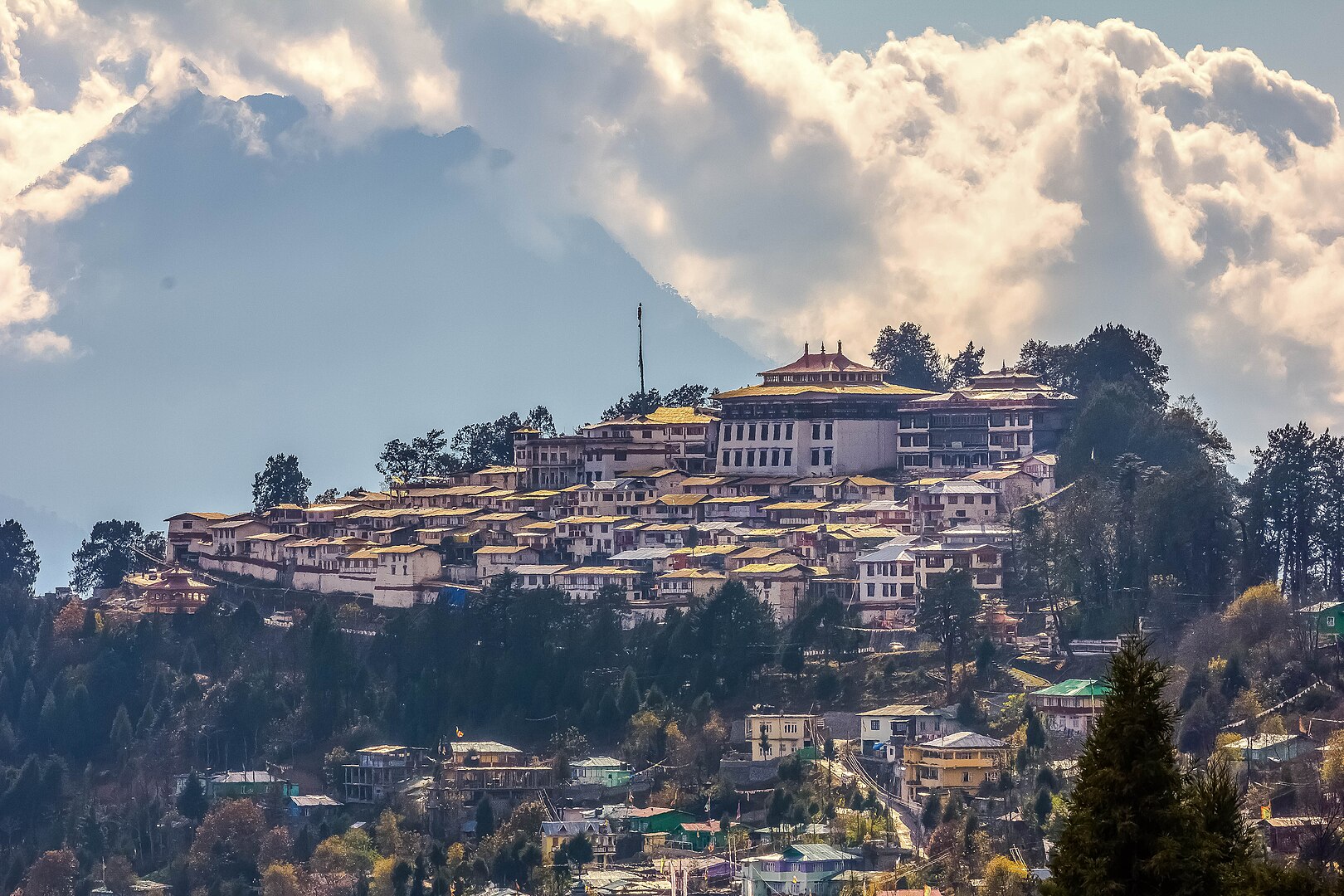
The Brahmaputra near Tezpur is broad and powerful, yet historically it remained stable enough to support ferry crossings, trade movement, and communication routes. For centuries, merchants, travelers, pilgrims, and armies used these river passages to move between different regions. Inland roads from Tezpur later became important links toward places such as Tawang and the Subansiri Valley, strengthening the town’s role as a strategic corridor connecting hills and plains.
This geographical position gave Tezpur both economic and military importance. It became a meeting point where river trade blended with mountain commerce, creating a landscape shaped by movement, interaction, and cultural exchange.
Mythological Landscape and Sacred Memory
Tezpur is often described as one of the most mythologically rich towns in Assam. According to popular legends from the Puranic tradition, the region is closely associated with the story of Princess Usha, Aniruddha, and the powerful demon king Banasura. These stories are deeply woven into the cultural memory of the town and continue to influence local identity even today.
The name “Tezpur” itself is believed to come from the Assamese word “tez,” meaning blood. Folklore says the area witnessed a fierce battle between the forces of Lord Krishna and Banasura, causing so much bloodshed that the town became known as the “City of Blood.” Whether viewed as mythology or symbolic storytelling, these legends transformed Tezpur into a sacred cultural landscape where history and imagination overlap.
Sites like Agnigarh are closely connected with these myths. Agnigarh Hill is traditionally believed to be the place where Princess Usha was kept in isolation by her father Banasura. Today, the hill stands as one of Tezpur’s most iconic landmarks and offers panoramic views of the Brahmaputra.
Scattered temple ruins, stone carvings, and ancient sculptures found around Tezpur also hint at its long-standing religious and artistic significance. These remains suggest that the region functioned as a cultural and spiritual center centuries before modern urban development began.
Ancient and Medieval Political Importance
Historically, Tezpur formed part of the ancient kingdom of Kamarupa, one of the earliest powerful kingdoms in northeastern India. Over time, it emerged as a frontier zone contested and influenced by several regional powers, including the Koch rulers, Ahoms, and neighboring Himalayan communities.
Its strategic value came largely from geography. Since Tezpur stood near the northern approaches into the Assam Valley, controlling the town meant controlling access routes from the hills into the plains. This made it an important defensive outpost and administrative center.
Unlike Sivasagar, which flourished mainly as a royal capital under the Ahoms, Tezpur developed more as a frontier settlement focused on security, communication, and regional exchange. Armies, traders, and local rulers all recognized its importance as a buffer between different political and cultural worlds.
The town therefore evolved not only as a military checkpoint but also as a place where people from the plains and the hills interacted regularly through trade, diplomacy, and social exchange.
Tezpur During British Rule
During British colonial rule, Tezpur underwent major administrative and urban transformation. Recognizing its strategic location near the Himalayan frontier, the British developed the town into an important cantonment and district headquarters.
Road networks were expanded toward the northern hill tracts, enabling better military movement and administrative control over frontier regions. Colonial officers stationed in Tezpur supervised surrounding tribal and hill areas, making the town an important center of frontier governance.
This period also introduced new educational and missionary institutions. Schools, churches, government offices, and military establishments began shaping Tezpur’s urban character. Wide roads, planned administrative zones, and cantonment-style layouts distinguished it from older Assamese settlements.
Yet despite these colonial influences, Tezpur retained its strong connection to mythology and regional heritage. Rather than replacing its earlier identity, British rule added another layer to the town’s historical evolution.
Cultural Capital of North Assam
Tezpur occupies a special place in Assamese cultural history and is often referred to as the cultural capital of North Assam. Over the years, the town became a vibrant center for literature, theatre, music, and intellectual activity.
Many Assamese writers, poets, dramatists, and artists found inspiration in Tezpur’s scenic beauty and rich historical atmosphere. Cultural movements in the town helped shape modern Assamese identity by blending romantic literary traditions with social reform and nationalist thought.
Institutions such as Tezpur University further strengthened the town’s role as an educational and intellectual hub. Theatre groups, literary gatherings, and festivals continue to keep this artistic tradition alive.
The cultural identity of Tezpur is deeply connected to its landscape. The river, hills, ruins, and legends together create an atmosphere that naturally inspires storytelling and creativity. This combination of mythological memory and modern artistic expression gives the town a unique cultural depth rarely found elsewhere.
Urban Growth and River-Oriented Development
The urban form of Tezpur evolved largely around the Brahmaputra River and the colonial cantonment system. Markets, ghats, and transport centers historically developed close to the riverbank because the Brahmaputra served as a major communication route.
Residential neighborhoods gradually expanded inland while administrative buildings occupied strategically planned spaces. Unlike heavily industrialized towns, Tezpur’s economy remained centered around education, services, administration, trade, and tourism.
This river-oriented growth pattern gave the town a relatively open and scenic urban layout. Even today, many parts of Tezpur retain a calm and less congested atmosphere compared to larger cities in Assam.
The riverfront remains an important social and cultural space where people gather for festivals, evening walks, and local trade activities.
Ethnic Diversity and Social Life
Tezpur’s frontier location naturally encouraged cultural interaction. Assamese-speaking communities live alongside tribal populations from nearby hill regions as well as migrant groups connected with trade, education, and administration.
This diversity has shaped the town’s social fabric in interesting ways. Food habits, language, dress styles, and festivals often reflect a blend of plains and hill traditions. Assamese cuisine exists alongside tribal culinary influences, while festivals celebrate both local customs and broader regional identities.
Rather than being sharply divided by ethnicity, Tezpur developed as a place of cultural mediation and coexistence. This multicultural environment contributed greatly to its creative and intellectual atmosphere.
Modern Strategic Importance
In contemporary India, Tezpur continues to hold major strategic importance because of its proximity to Arunachal Pradesh and the sensitive India–China border region. Military and air force establishments in and around the town reinforce its role as a key security hub in northeastern India.
Tezpur Air Force Station is among the important defense installations in the region. The town also acts as a logistics and transport center for movement toward the Himalayan frontier.
Apart from defense, Tezpur serves as an important urban center for surrounding districts by providing healthcare, higher education, administration, and commercial services to nearby rural and semi-urban areas.
Modern highways and bridges have improved connectivity, making Tezpur more accessible while strengthening its role in regional development.
Symbolic Importance in Assamese Identity
Symbolically, Tezpur represents a powerful blend of mythology, resilience, and cultural imagination within Assamese identity. If Sivasagar reflects royal Ahom heritage and Dibrugarh symbolizes industrial growth, Tezpur stands for artistic creativity and frontier strength.
The town embodies the idea of a meeting ground—between mountains and plains, mythology and history, defense and culture. Its stories continue to shape Assamese imagination, while its geography reminds people of the region’s historical role as a borderland civilization.
Tezpur is therefore remembered not just as a physical town but as a symbolic landscape where memory, struggle, and creativity coexist.
Why Tezpur Matters Beyond Tourism
Tezpur is far more than a scenic destination on the banks of the Brahmaputra. It is a place where mythology, geography, politics, and culture intersect in remarkable ways. Its strategic location shaped military history and trade routes, while its legends shaped cultural memory and identity.
From ancient temple ruins and frontier defense to colonial administration and modern artistic life, Tezpur reflects multiple layers of Assamese civilization. The town helps explain how Assam evolved both as a cultural heartland and as a frontier society connected to the eastern Himalayas.
To understand the deeper historical and cultural landscape of Assam, Tezpur becomes essential. It is not merely a town by a river—it is a living narrative shaped by myth, mountains, memory, and modernity.
Google Maps
FAQs
Where is Tezpur located?
Tezpur is located in the Indian state of Assam on the northern bank of the Brahmaputra River, near the foothills of Arunachal Pradesh.
Why is Tezpur called the “City of Blood”?
According to mythology, the town witnessed a massive battle between Lord Krishna and Banasura. The bloodshed from the battle is believed to have inspired the name “Tezpur,” where “tez” means blood.
What is Tezpur famous for?
Tezpur is famous for its mythology, ancient ruins, scenic Brahmaputra views, cultural heritage, and strategic importance in northeastern India.
Which mythological story is associated with Tezpur?
The town is closely associated with the legend of Usha and Aniruddha, linked to the demon king Banasura in Hindu mythology.
Is Tezpur important strategically?
Yes. Due to its location near Arunachal Pradesh and the India–China border region, Tezpur has major military and logistical importance.
What are the main tourist attractions in Tezpur?
Popular attractions include Agnigarh, Bamuni Hills, Mahabhairab Temple, Cole Park, and the scenic Brahmaputra riverfront.
Why is Tezpur called the cultural capital of North Assam?
Tezpur earned this title because of its contribution to Assamese literature, theatre, music, education, and modern cultural movements.
What is the best time to visit Tezpur?
The best time to visit Tezpur is between October and April, when the weather remains pleasant and suitable for sightseeing and outdoor activities.