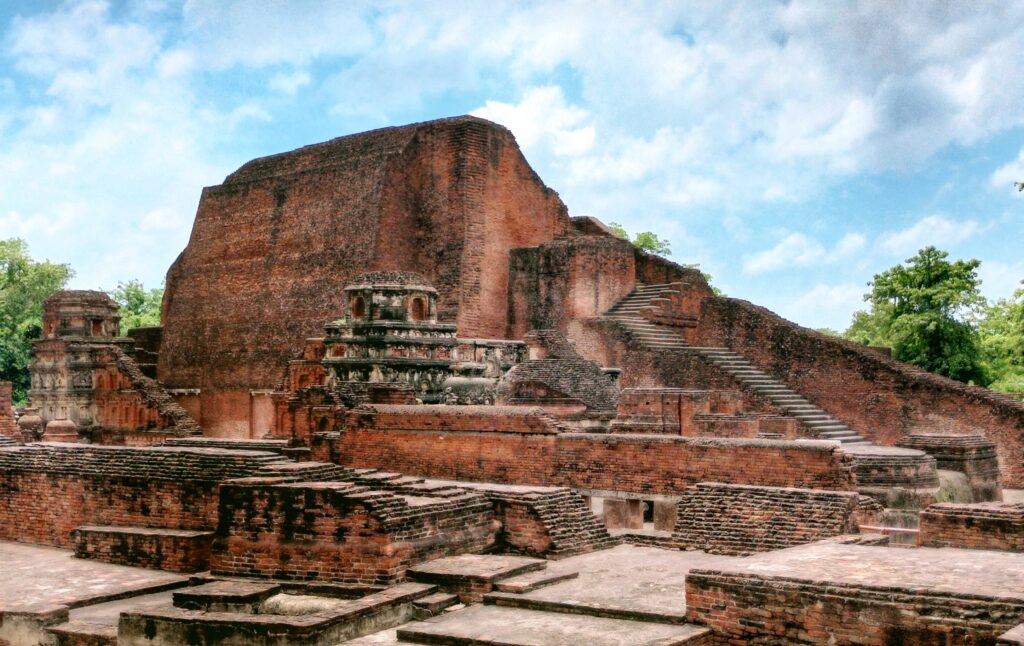
Image Source: Odantapuribs
About Nalanda University Ruins
The ruins of Nalanda University, located in Bihar’s Nalanda district, are a powerful reminder of India’s rich intellectual past. Once a world-famous centre of learning, Nalanda wasn’t just important to ancient Magadha—it was a global hub that attracted scholars from across Asia.
Today, these ruins are recognized as a UNESCO World Heritage Site and draw history lovers, researchers, and curious travellers who want to experience the legacy of one of the world’s earliest universities.
History
Nalanda University dates back to the 5th century CE, during the rule of the Gupta dynasty, and is often regarded as the world’s first residential university. It thrived under rulers like Kumaragupta I, Harshavardhana, and later the Pala kings.
At its peak, Nalanda was home to over 10,000 students and around 2,000 teachers. It offered a wide range of subjects—from Buddhist philosophy and logic to medicine, mathematics, astronomy, and grammar.
What made Nalanda truly special was its international character. Students and scholars came from places like China, Tibet, Korea, and Southeast Asia, turning it into a vibrant centre of cultural and intellectual exchange.
Travelers like Xuanzang and Yijing left detailed accounts of Nalanda’s grandeur—its vast libraries, organized monasteries, and the lively academic environment that made it stand out in the ancient world.
Architecture
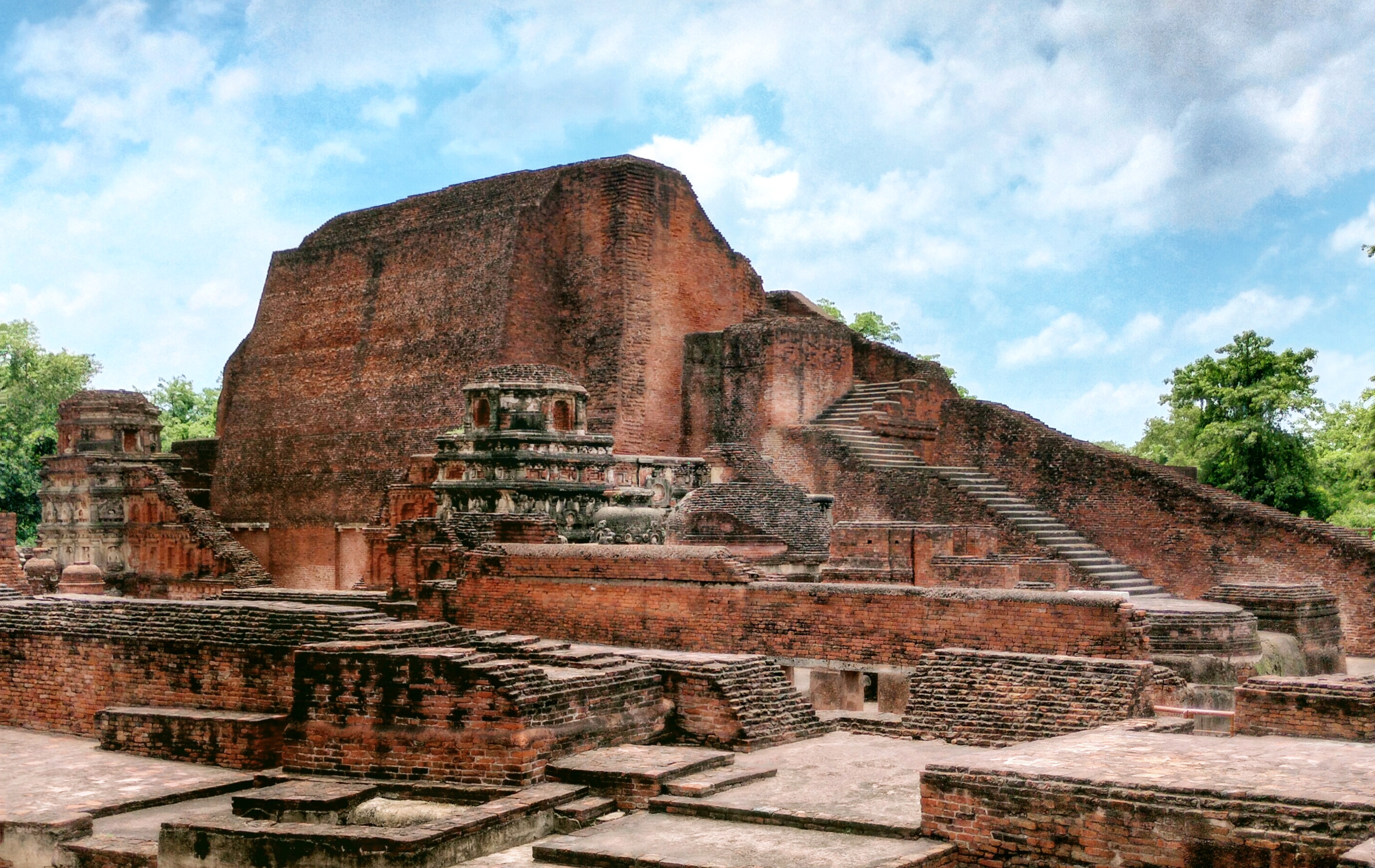
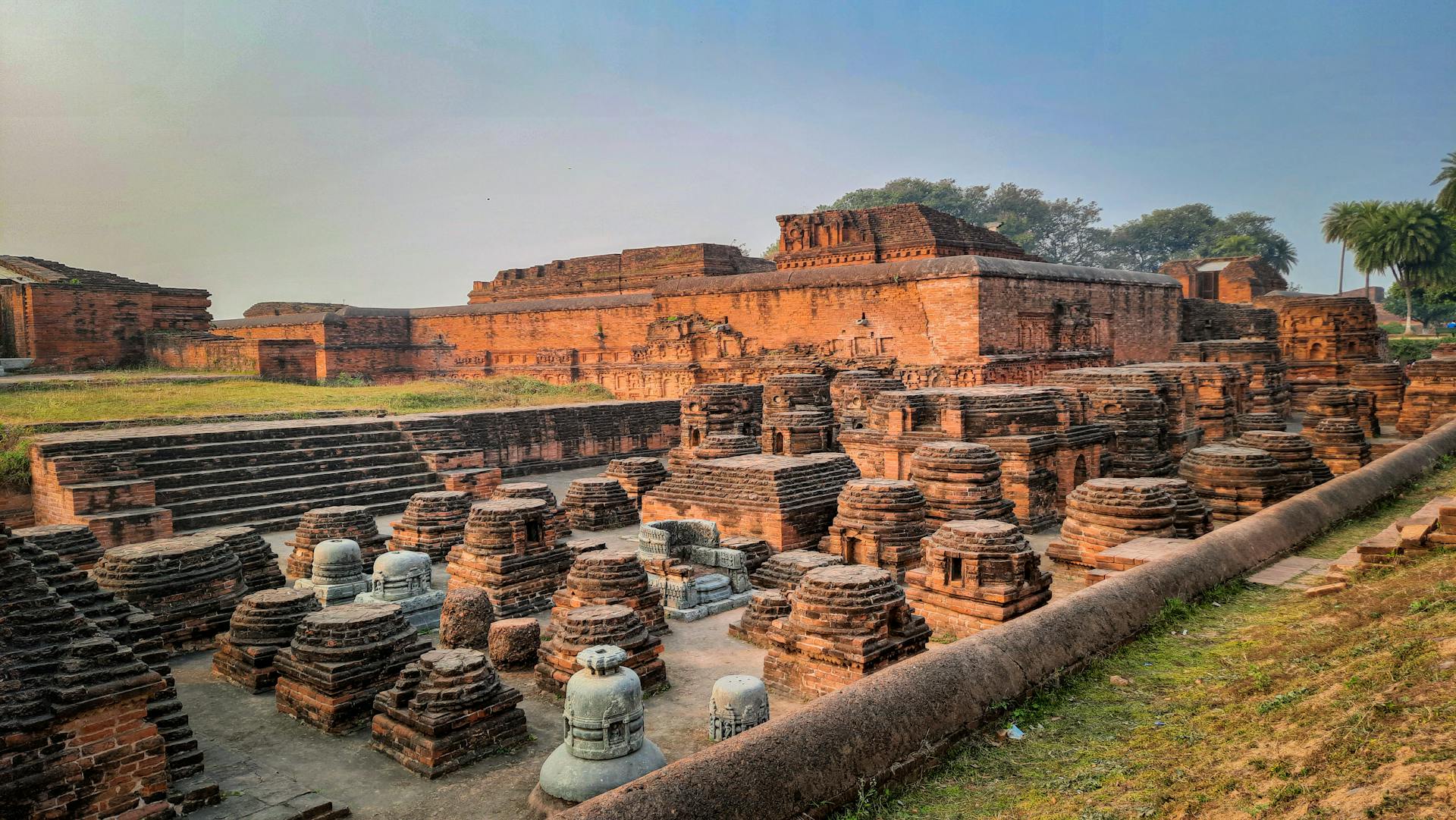
Spread across nearly 14 hectares, the Nalanda ruins reveal a thoughtfully planned educational and monastic complex.
- Viharas (Monasteries): These were living and study spaces for monks and students, usually built around open courtyards.
- Chaityas (Temples and Stupas): Dedicated to worship and meditation, often decorated with intricate carvings.
- Libraries: Nalanda’s famous library, known as Dharmaganja, once held an enormous collection of manuscripts. Sadly, it was destroyed in the 12th century.
- Red Brick Structures: The site showcases classic Gupta-era brickwork, along with sculptures and motifs of Buddha and Bodhisattvas.
One of the most striking structures here is Temple No. 3, built on a raised platform and surrounded by smaller stupas and shrines—giving a glimpse into the scale and significance of Nalanda in its prime.
Decline and Destruction
Nalanda’s golden era came to an abrupt end in the late 12th century when Bakhtiyar Khilji invaded the region. The university was destroyed, and its legendary library was set on fire.
It is said that the flames from the burning manuscripts lasted for months, wiping out centuries of knowledge in philosophy, science, and religion. This marked the fall of one of the greatest learning centres in history.
Rediscovery and Excavation
The site remained forgotten for centuries until it was rediscovered in the 19th century by Alexander Cunningham, the founder of the Archaeological Survey of India.
Excavations in the early 20th century uncovered monasteries, temples, sculptures, and inscriptions, helping historians piece together Nalanda’s remarkable story. Today, the nearby Nalanda Archaeological Museum displays many of these findings, including Buddha statues, seals, and ancient artefacts.
Nalanda in Modern Times
Nalanda’s legacy hasn’t faded—it’s been revived in a modern form. The new Nalanda University, located near Rajgir, aims to bring back the spirit of global learning.
Supported by countries like India, China, Japan, and Singapore, the university continues Nalanda’s tradition of international collaboration and academic excellence.
Visiting Nalanda University Ruins
The ruins are easy to reach and can be combined with nearby destinations.
- Distance: Around 85 km from Patna and just 12 km from Rajgir
- Best Time to Visit: October to March, when the weather is pleasant
Nearby Attractions
The ancient Nalanda University Ruins are among the most important historical and archaeological sites in India. Once a renowned center of learning that attracted scholars from across Asia, the ruins today form a UNESCO World Heritage Site and are surrounded by several fascinating cultural, religious, and historical attractions.
1. Nalanda Archaeological Museum
Located directly opposite the ruins, this museum houses an impressive collection of artifacts excavated from the ancient university complex. Visitors can explore Buddhist sculptures, bronze images, terracotta objects, inscriptions, coins, and ancient pottery that offer insights into Nalanda’s glorious past. It is an ideal stop for history enthusiasts wishing to better understand the university’s heritage.
2. Hiuen Tsang Memorial Hall
Dedicated to the famous Chinese scholar and traveler Xuanzang (Hiuen Tsang), this memorial commemorates his years of study and teaching at Nalanda. The hall contains photographs, manuscripts, paintings, and exhibits related to his journey across India and his contribution to preserving Buddhist knowledge.
3. Nava Nalanda Mahavihara
Established as a modern center for the study of Buddhism and Pali literature, this institute continues the scholarly legacy of ancient Nalanda. Students and researchers from various countries visit the institution, making it an important destination for those interested in Buddhist studies.
4. Kundalpur
Believed to be the birthplace of the 24th Jain Tirthankara, Lord Mahavira, Kundalpur is an important pilgrimage destination for Jains. The peaceful temples and spiritual atmosphere attract devotees and travelers alike.
5. Rajgir
Situated about 12 km from Nalanda, Rajgir is one of Bihar’s most significant historical and religious destinations. Surrounded by hills, it served as the ancient capital of Magadha and is associated with both Buddhism and Jainism.
6. Vishwa Shanti Stupa
Located on Ratnagiri Hill in Rajgir, this gleaming white peace pagoda offers panoramic views of the surrounding landscape. Visitors can reach the stupa by ropeway and enjoy a serene spiritual experience.
7. Venu Vana
This tranquil bamboo grove was gifted to Lord Buddha by King Bimbisara. It features peaceful gardens, a pond, and meditation areas, making it a popular spot for visitors seeking relaxation and spiritual reflection.
8. Pawapuri Jal Mandir
Located around 25–30 km from Nalanda, this beautiful marble temple stands in the middle of a lotus-filled lake. It marks the site where Lord Mahavira attained nirvana and is one of the holiest Jain pilgrimage centers in India.
9. Silao
The small town of Silao is famous for its traditional sweet called Khaja. Travelers often stop here while visiting Nalanda and Rajgir to sample the local delicacy and experience the region’s culinary heritage.
10. Surya Temple, Bargaon
This ancient Sun Temple attracts devotees throughout the year, especially during Chhath Puja. The adjoining sacred pond and temple complex add to its religious significance.
Suggested Day Trip
A well-planned visit can include the Nalanda University Ruins, Nalanda Archaeological Museum, Hiuen Tsang Memorial Hall, Nava Nalanda Mahavihara, and Rajgir’s major attractions such as Vishwa Shanti Stupa and Venu Vana. Together, these sites provide a comprehensive understanding of Bihar’s rich educational, religious, and cultural heritage.
FAQs
1. Why is Nalanda University so famous?
Nalanda is considered one of the world’s first residential universities and was a major centre of learning that attracted students from across Asia.
2. Is Nalanda a UNESCO World Heritage Site?
Yes, the ruins are recognized as a UNESCO World Heritage Site.
3. How much time is needed to explore Nalanda?
You’ll need around 2–3 hours to properly explore the ruins and nearby museum.
4. What is the best time to visit?
Winter (October to March) is the best time, as the weather is comfortable for walking around the site.
5. Can Nalanda be visited along with Rajgir?
Yes, Rajgir is very close, and both places are often explored together in a single trip.
6. What happened to Nalanda University?
It was destroyed in the 12th century during the invasion of Bakhtiyar Khilji, leading to the loss of its vast libraries and knowledge.