Introduction
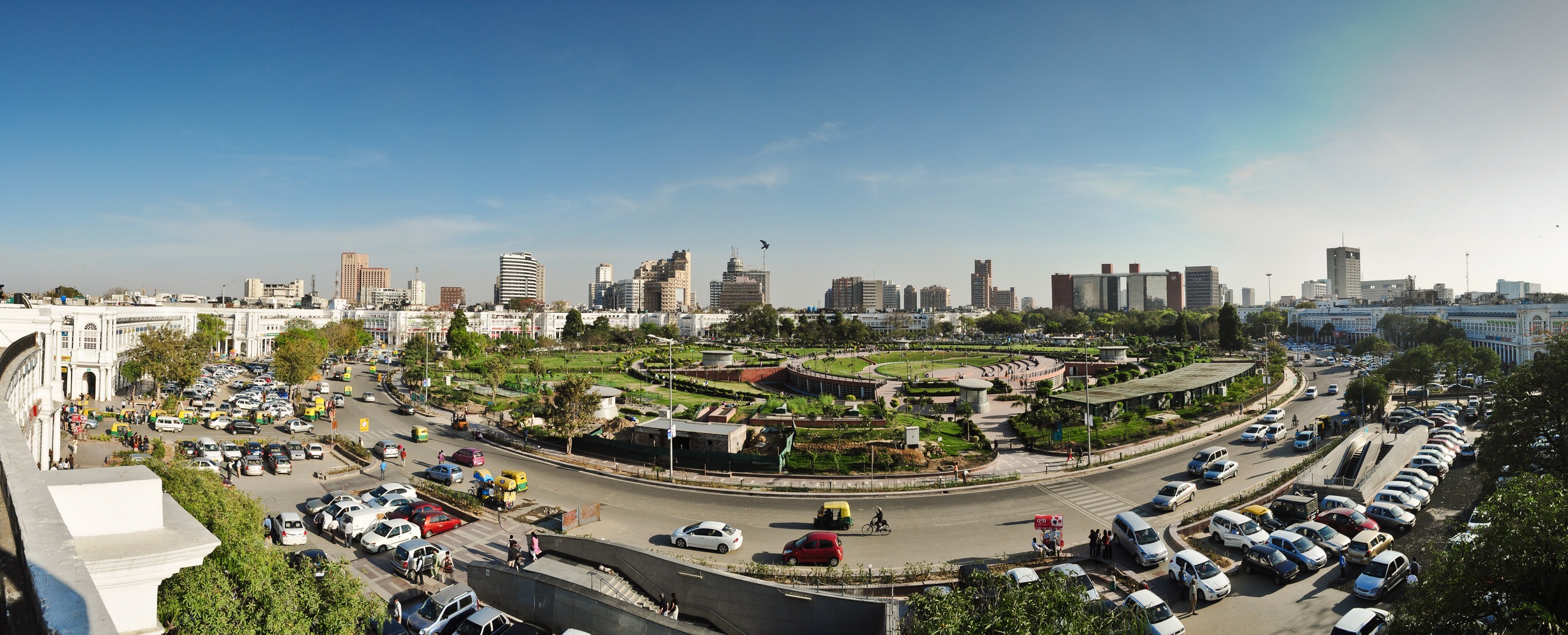
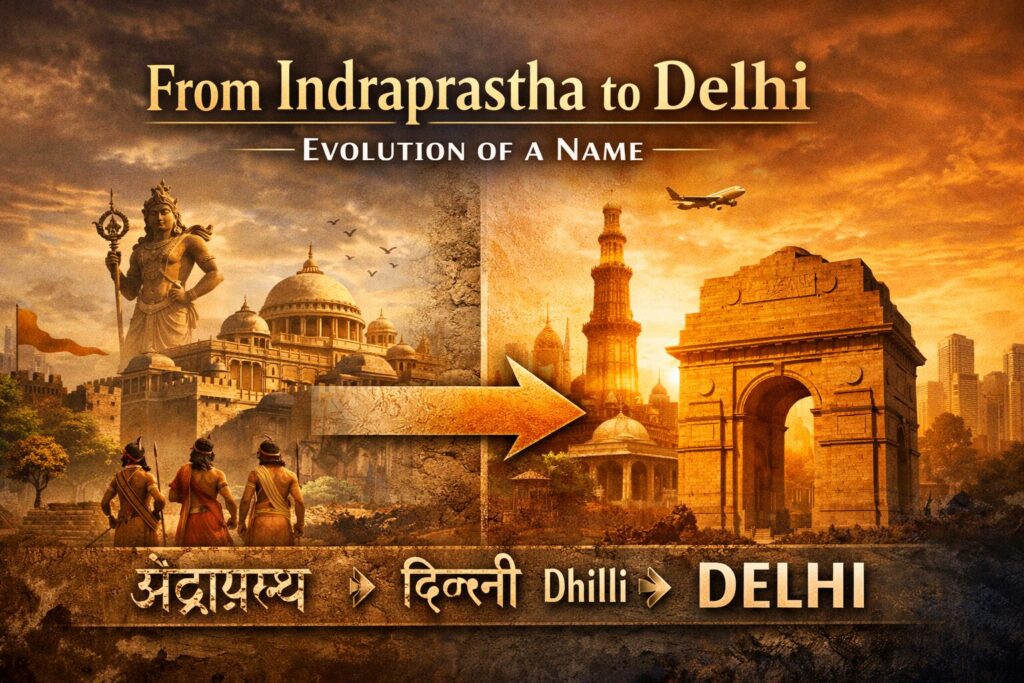
The city known today as Delhi carries within its name a long and layered history. Long before it became the capital of empires and of modern India, this region was remembered in ancient literature as Indraprastha. The transformation from Indraprastha to Delhi was not sudden; it was the result of centuries of linguistic change, political shifts, and cultural layering. Studying this evolution reveals how myth gradually gave way to history, and how sacred geography became administrative reality.
Indraprastha: The Mythological Beginning
The earliest known name associated with the Delhi region is Indraprastha, mentioned in the Mahabharata. According to the epic, Indraprastha was established by the Pandavas as their capital after receiving a tract of forest land from the Kauravas. The name derives from Sanskrit: Indra (king of the gods) and prastha (plain or settlement), meaning “City of Indra.”
In literary tradition, Indraprastha was depicted as a grand and orderly city with palaces, roads, and halls of assembly. Though the Mahabharata is not a historical document in the modern sense, archaeological findings around the Purana Qila region indicate continuous settlement in this area since the early Iron Age. Thus, Indraprastha represents the symbolic and cultural origin of the city’s identity.
Disappearance of the Name Indraprastha
As political power shifted and new populations settled in the region, the epic name gradually faded from everyday usage. This was largely due to three factors. First, the decline of Sanskrit as a spoken language led to the replacement of classical names with vernacular forms. Second, political authority changed hands frequently, preventing any single dynasty from preserving the epic association. Third, as the city became more administrative than symbolic, practical names replaced mythological ones. By the early medieval period, Indraprastha survived mainly in literary memory rather than as a living place-name.
Dhillika and the Tomara Phase
By the 8th to 10th centuries CE, inscriptions and regional traditions began referring to a city called Dhillika or Dhillipura. This name is linked to the Tomara Rajput dynasty, especially King Anangpal Tomar, who is credited with fortifying the city. Their capital was located at Lal Kot, the earliest known fortified settlement in the Delhi region.
The word Dhillika likely emerged from local Prakrit and Apabhramsha speech patterns, representing a linguistic simplification of older Sanskrit forms. This phase marks the city’s transition from epic memory to documented political existence.
From Dilli to Delhi: Persian and Colonial Influence
With the establishment of Muslim rule in North India in the late 12th century, Persian became the language of administration and historiography. In Persian sources, the city’s name appeared as Dilli or Dehli. A popular theory links this form to the Persian word dehleez, meaning “threshold” or “gateway,” reflecting the city’s strategic position between Central Asia and the Indo-Gangetic plains.
During British rule, the anglicized spelling “Delhi” became standard in official usage. This version entered global geography and diplomacy, while “Dilli” continued as the colloquial form in local speech. Thus, the modern name Delhi is essentially a Persianized and Anglicized form of the earlier Dhillika.
Why the Name Changed
Unlike some ancient cities that retained their classical names, Delhi underwent repeated renaming because of political and cultural discontinuity. Each ruling power sought legitimacy through new symbols and narratives. Language also played a crucial role: Sanskrit gave way to Prakrit, which gave way to Persian and later English. In this process, long and complex names such as Indraprastha were naturally shortened and reshaped to suit evolving speech patterns. The transformation of the name mirrors the transformation of the city itself—from sacred epic capital to imperial metropolis.
Symbolic Meaning of the Transformation
The evolution from Indraprastha to Delhi reflects a deeper civilizational journey. Indraprastha belongs to the realm of myth and divine association, where the city is linked to gods and heroes. Delhi belongs to the realm of history and power, shaped by sultans, emperors, and colonial rulers. The name change therefore represents a shift from sacred imagination to political reality, from epic tradition to administrative permanence.