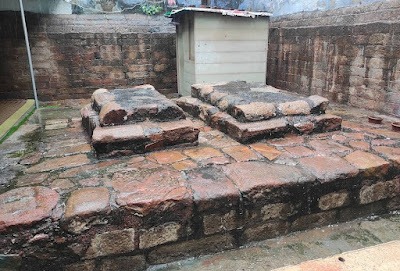
Image Source: Harshit Tiwari
About the Tomb of Razia Sultan
The Tomb of Razia Sultan in Kaithal, Haryana, is a historically significant monument connected to one of medieval India’s most remarkable rulers—Razia Sultan, the first and only woman to sit on the throne of the Delhi Sultanate. Unlike many royal mausoleums built as grand memorials by later rulers, this site carries a deeper sense of authenticity. It is believed to mark the very place where Razia Sultan lost her life during a fierce political conflict in the 13th century. The tomb stands not only as her resting place but also as a reminder of her courage, ambition, and the turbulent politics of the Delhi Sultanate.
Although modest in appearance compared to the elaborate Mughal monuments that followed centuries later, the tomb holds immense historical value. For visitors and historians alike, it represents both the tragic downfall of a pioneering queen and the enduring memory of her extraordinary legacy.
Historical Background
Razia Sultan, also known as Razia Sultana, was the daughter of Sultan Shams-ud-Din Iltutmish, one of the most influential rulers of the Slave or Mamluk dynasty of the Delhi Sultanate. Unlike many rulers of his time, Iltutmish recognized Razia’s intelligence, leadership skills, and administrative abilities. Impressed by her capability, he nominated her as his successor—an unusual and bold decision in a period when women were rarely considered for sovereign authority.
After the death of Iltutmish, Razia ascended the throne in 1236 AD. Her rise to power was historic, as she ruled not as a symbolic figure or regent but as an independent monarch. She appeared in public court, led military campaigns, and made important administrative decisions. Razia attempted to strengthen central authority and reduce the dominance of powerful Turkish nobles, often referred to as the Chahalgani or the “Group of Forty.”
However, her reign faced constant opposition. Many members of the Turkish nobility were unwilling to accept a woman exercising full political power. Their resistance gradually intensified into rebellion. Eventually, these nobles succeeded in removing Razia from power and placing her brother, Mohin-ud-Din Bahram Shah, on the throne.
Determined to reclaim her kingdom, Razia sought support from Malik Altunia, the Governor of Bhatinda, whom she later married. Together, they organized a military campaign toward Delhi in hopes of restoring her authority. Unfortunately, their forces were intercepted near Kaithal by Bahram Shah’s army. The battle ended in defeat, and Razia Sultan was killed on October 14, 1240 AD.
Her death marked the end of a brief yet groundbreaking chapter in Indian history. She was buried at the place where she fell, making the site in Kaithal not merely a memorial but a direct witness to a defining political and social moment of the Delhi Sultanate era.
Architectural Features and Monument Design
While Razia Sultan’s burial dates back to the 13th century, historians believe that the existing tomb structure was built much later, during the late 16th century. This later construction suggests that her memory continued to inspire respect long after her death.
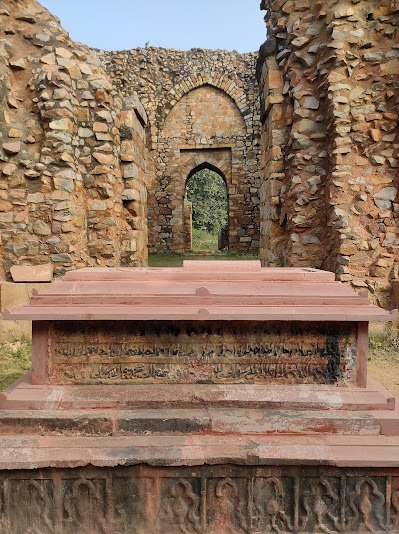
Architecturally, the tomb reflects simplicity rather than grandeur. Constructed with baked bricks joined by lime mortar, the monument follows building techniques common to northern India during the medieval period. Unlike the ornate domes, intricate marble work, and decorative gardens associated with later Mughal tombs, Razia Sultan’s tomb possesses a restrained and austere character.
The complex is enclosed by a boundary wall, creating a protected space around the burial site. A sealed arched opening is located on the western side, while a small gateway on the eastern side provides entry. The structure lacks lavish ornamentation, which gives it a solemn atmosphere and emphasizes its role as a memorial rather than a royal display of power.
During the later development of the site, a small mosque and a nearby well were also added. These features suggest that the tomb functioned as a modest religious and commemorative complex, serving travelers and local worshippers in addition to preserving Razia Sultan’s memory.
Razia Sultan’s Legacy and Historical Importance
Razia Sultan’s importance extends far beyond the boundaries of Kaithal or the Delhi Sultanate. She remains a powerful symbol of leadership, resilience, and resistance to restrictive social norms.
At a time when political authority was overwhelmingly male-dominated, Razia demonstrated that administrative competence and military leadership were not limited by gender. Her reign challenged prevailing assumptions about women’s roles in governance and inspired later generations to reconsider historical narratives often dominated by male rulers.
Though her rule lasted only a few years, her story continues to attract historians, scholars, and travelers interested in medieval Indian history and women’s contributions to politics. The tomb, therefore, is not merely an archaeological site but also a monument to a ruler who dared to challenge the conventions of her age.
Location and Preservation
The Tomb of Razia Sultan is situated near Kaithal city in Haryana, along the Kaithal–Manas Road. Despite being less famous than the monumental sites of Delhi, the tomb occupies an important place in the historical landscape of northern India.
The monument is currently protected by the Haryana Government, which helps ensure its conservation and maintenance as a valuable cultural heritage site. Preservation efforts are essential because smaller medieval monuments often face challenges such as weathering, urban expansion, and limited public awareness.
For researchers and heritage enthusiasts, the tomb offers valuable insights into Sultanate-period history, medieval funerary architecture, and the political struggles surrounding succession and power.
Visitor Experience
A visit to the Tomb of Razia Sultan offers a quieter and more reflective historical experience compared to heavily crowded tourist destinations. The monument’s peaceful surroundings and modest architecture encourage visitors to focus on the story behind the site rather than architectural extravagance alone.
History enthusiasts often appreciate the tomb for its emotional and historical depth. Standing at a place associated directly with Razia Sultan’s final battle creates a powerful connection with the past. Visitors may also explore nearby heritage sites in Kaithal, making the trip part of a broader cultural journey through Haryana’s medieval history.
How to Reach
By Road
Kaithal is well connected by road to major cities in Haryana and neighboring states. Regular buses and private vehicles operate from Delhi, Chandigarh, Kurukshetra, Karnal, and nearby towns. Once in Kaithal, local transport such as auto-rickshaws, taxis, and private vehicles can take visitors to the tomb via the Kaithal–Manas Road.
By Rail
The nearest railway station is Kaithal Railway Station, which connects the town with several regional cities, including Delhi and Kurukshetra. From the station, travelers can hire auto-rickshaws or taxis to reach the monument comfortably.
By Air
The nearest major airport is Chandigarh International Airport, located approximately 140 kilometers away. From Chandigarh, visitors can continue their journey to Kaithal by road or rail.
Google Maps
FAQs
1. Who was Razia Sultan?
Razia Sultan was the daughter of Sultan Iltutmish and the first and only woman to rule the Delhi Sultanate. She ruled from 1236 to 1240 AD and is remembered for her leadership and administrative abilities.
2. Why is the Tomb of Razia Sultan historically important?
The tomb is believed to mark the exact location where Razia Sultan was killed and buried after a battle in 1240 AD, giving it exceptional historical significance.
3. Where is the Tomb of Razia Sultan located?
The tomb is located near Kaithal city in Haryana, along the Kaithal–Manas Road.
4. Is the current tomb structure original to Razia Sultan’s time?
No. While Razia Sultan was buried there in the 13th century, the existing mausoleum was likely constructed later, during the late 16th century.
5. What architectural style does the tomb follow?
The tomb features simple medieval architecture built with baked bricks and lime mortar. Its design is modest and lacks the elaborate decoration seen in later Mughal monuments.
6. Is the monument protected today?
Yes. The Tomb of Razia Sultan is protected by the Haryana Government as an important cultural and historical heritage site.
7. What is the best time to visit?
The cooler months between October and March are generally considered the most comfortable time to visit Kaithal and explore the monument.
8. Are there other attractions near the tomb?
Kaithal and surrounding regions contain several historical and religious sites, making the area suitable for visitors interested in heritage tourism and medieval history.