The Birthplace of the True Arch in Indo-Islamic Architecture
About Balban’s Tomb
Hidden inside the historic landscape of Mehrauli in South Delhi, Balban’s Tomb is one of the most significant yet often overlooked monuments of medieval India. While Delhi is famous for its magnificent Mughal structures, this 13th-century tomb quietly represents a turning point in the history of Indian architecture. It belongs to Sultan Ghiyasuddin Balban, one of the strongest rulers of the Delhi Sultanate’s Mamluk or Slave Dynasty, and is widely recognized as the place where the concept of the “true arch” and possibly one of India’s earliest true domes was first introduced.
Today, the monument stands in ruins within the beautiful surroundings of the Mehrauli Archaeological Park, but its historical importance remains immense. For historians, architects, students, and heritage enthusiasts, Balban’s Tomb is not just a burial site—it is a milestone in the evolution of Indo-Islamic architecture in India.
Location and Geographical Setting
Balban’s Tomb is located inside the historic Mehrauli Archaeological Park in South Delhi, close to the famous Qutub Minar complex. Mehrauli is one of the oldest continuously inhabited regions of Delhi and has witnessed the rise and fall of several dynasties over centuries.
The region lies along the rocky Aravalli Ridge, which historically provided natural defense and access to water reservoirs, stepwells, and tanks. Because of its strategic location, Mehrauli became the center of Delhi’s earliest urban settlements, including Lal Kot and Qila Rai Pithora. Over time, it evolved into a political, spiritual, and cultural hub filled with mosques, tombs, gardens, and palaces.
Even today, the atmosphere around Balban’s Tomb reflects this layered history. Dense greenery, scattered medieval ruins, stone pathways, and ancient structures create a unique environment that transports visitors back to the Delhi Sultanate era. Nearby monuments such as Jamali Kamali Mosque and Tomb, Adham Khan’s Tomb, and Rajon Ki Baoli further enhance the historical richness of the area.
Who Was Sultan Balban?
Ghiyasuddin Balban was one of the most powerful rulers of the Delhi Sultanate. Born as a Turkic slave, he was brought to India and later became part of the elite military group known as the “Forty Nobles” under the Mamluk rulers. Through intelligence, military skill, and political strategy, Balban gradually rose to power and eventually became the Sultan of Delhi in 1266 CE.
His reign lasted until 1287 CE and is remembered for restoring stability to the Sultanate during a period of internal rebellions and external threats. Balban believed strongly in centralized authority and royal dignity. He introduced strict administrative reforms, strengthened the army, and established a highly disciplined court system.
Unlike some rulers who focused heavily on art and luxury, Balban emphasized order, law, and authority. His policies laid the groundwork for later Delhi Sultanate rulers and helped strengthen the institution of kingship in medieval India.
After his death in 1287 CE, he was buried in Mehrauli, which at the time remained an important royal and ceremonial zone of Delhi.
Historical Importance of the Tomb
Although Balban’s Tomb appears modest compared to later Mughal monuments, its historical significance is extraordinary. The structure represents an important phase in the development of Islamic architecture in India.
Before this period, many early Indo-Islamic buildings relied heavily on construction methods borrowed from existing Hindu and Jain temple traditions. Arches were often “corbelled,” meaning stones were stacked inward step by step until they met at the top. These arches looked impressive but did not function as true structural arches.
Balban’s Tomb changed this architectural approach. It is widely regarded as the first surviving monument in India to successfully use a “true arch,” built using wedge-shaped stones called voussoirs. This technique distributed weight more efficiently and opened the path for larger, more sophisticated Islamic structures in the centuries that followed.
Because of this innovation, Balban’s Tomb occupies a foundational place in the architectural history of India.
Architectural Features of Balban’s Tomb
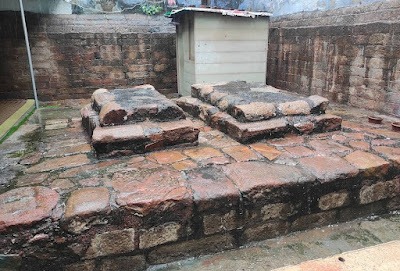
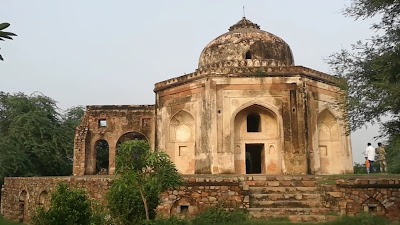
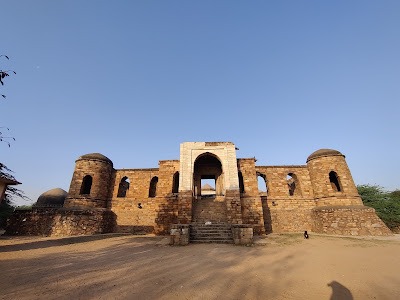
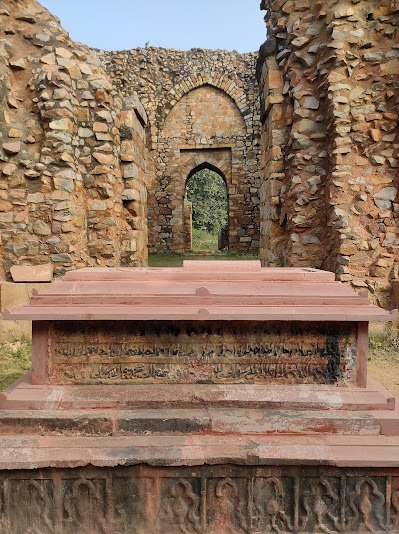
Architecturally, the tomb is simple yet revolutionary. Built mainly with red sandstone and rubble masonry, the structure follows a rectangular layout typical of early Sultanate tombs. Though much of the monument has collapsed over time, the surviving portions still reveal remarkable engineering advancements.
The most striking feature is the true arch visible at the entrance. Unlike earlier corbelled designs, the arch here demonstrates proper load-bearing principles that later became central to Indo-Islamic and Mughal architecture. Historians consider this innovation a major turning point in medieval Indian construction techniques.
Archaeological studies also suggest that the monument may once have supported one of the earliest true domes in India. The dome no longer survives, but its existence is considered highly significant because it reflects early experimentation with Islamic architectural forms in the Indian subcontinent.
The interior of the tomb is noticeably austere. There is very little ornamentation, carving, or decorative detailing. This simplicity reflects both the early stage of Sultanate architecture and Balban’s own stern personality. The focus was clearly on structural strength and functionality rather than visual luxury.
Even in its ruined condition, the monument conveys a powerful sense of solidity and historical depth.
Cultural and Architectural Significance
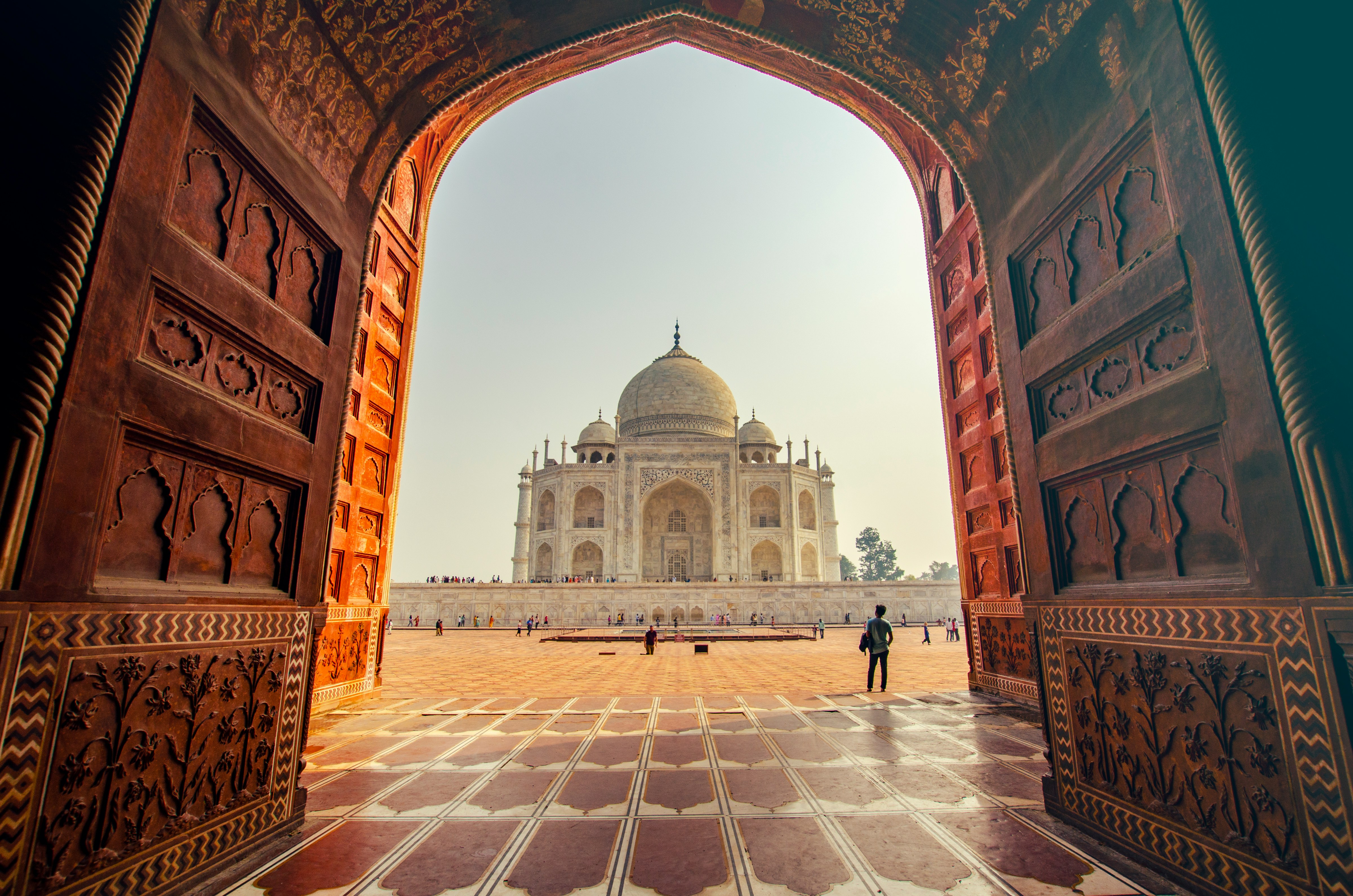
Balban’s Tomb holds immense value for students of architecture, archaeology, and medieval history. It marks the beginning of a major transformation in Indian architecture that would eventually lead to masterpieces such as the Alai Darwaza and later Mughal monuments like Humayun’s Tomb and the Taj Mahal.
The monument symbolizes the blending of Central Asian Islamic architectural ideas with local Indian construction practices. This fusion eventually shaped the unique Indo-Islamic architectural style that became one of India’s defining artistic traditions.
For visitors, the tomb also offers a quieter and more reflective experience compared to Delhi’s crowded tourist sites. Since it remains relatively less visited, heritage walkers and photographers often appreciate its peaceful surroundings and atmospheric ruins.
Exploring Balban’s Tomb within Mehrauli Archaeological Park also helps visitors understand how Delhi evolved over centuries—from Rajput strongholds to Sultanate capitals and later Mughal cities.
Experience of Visiting Balban’s Tomb
Walking through Mehrauli Archaeological Park toward Balban’s Tomb feels like entering a forgotten chapter of Delhi’s history. Stone pathways lined with trees lead visitors past ancient ruins, stepwells, mosques, and tombs scattered across the landscape.
The tomb itself stands quietly amidst greenery, partially ruined yet deeply evocative. Broken walls, weathered arches, and open skies create a hauntingly beautiful atmosphere. During winter mornings or late afternoons, the soft sunlight falling on the stone ruins makes the site particularly photogenic.
The monument is especially popular among history enthusiasts, architecture students, researchers, photographers, and travelers looking to explore lesser-known heritage locations in Delhi.
How to Reach Balban’s Tomb
By Metro
The nearest metro station is Delhi Metro Yellow Line at Qutub Minar Metro Station. From there, visitors can hire an auto-rickshaw, cab, or even walk toward Mehrauli Archaeological Park depending on the preferred route.
By Road
Mehrauli is well connected through major roads such as Mehrauli–Gurgaon Road. The site is easily accessible from Saket, Chhatarpur, Hauz Khas, Vasant Kunj, and Gurgaon. Limited parking facilities are available near the park entrance.
By Bus
Several DTC buses connect Mehrauli with different parts of Delhi. Visitors can get down near the Qutub complex or Mehrauli village and continue toward the archaeological park.
Best Time to Visit
The ideal time to visit Balban’s Tomb is between October and March, when Delhi experiences cooler and more pleasant weather. Early mornings and late afternoons are especially suitable for exploring the archaeological park comfortably.
Summers in Delhi can become extremely hot, making long walks through the park difficult during midday hours.
Visitor Information
- Entry Fee: Free
- Timings: Usually open during daylight hours
- Photography: Allowed
- Best For: Heritage walks, photography, architecture studies, cultural exploration, and peaceful historical outings
Google Maps
FAQs
Why is Balban’s Tomb historically important?
Balban’s Tomb is historically important because it contains one of the earliest examples of a true arch in India. It marks a major transition in Indo-Islamic architecture and influenced later Sultanate and Mughal structures.
Who was Balban?
Ghiyasuddin Balban was a powerful ruler of the Delhi Sultanate’s Mamluk Dynasty who ruled from 1266 to 1287 CE. He was known for strengthening royal authority and establishing strict administrative systems.
Where is Balban’s Tomb located?
The tomb is located inside Mehrauli Archaeological Park in South Delhi, near the Qutub Minar complex.
Is Balban’s Tomb part of the Qutub complex?
No, the tomb is not officially part of the Qutub Minar complex, but it is located nearby within the broader Mehrauli heritage zone.
What architectural innovation is associated with Balban’s Tomb?
The monument is famous for introducing the true arch technique in Indian architecture. It may also have supported one of the earliest true domes built in India.
Is there an entry fee for visiting Balban’s Tomb?
No, visitors can explore Balban’s Tomb and Mehrauli Archaeological Park free of cost.
How much time is needed to explore the site?
Visitors usually spend around 1–2 hours exploring Balban’s Tomb along with nearby monuments inside Mehrauli Archaeological Park.
What other monuments can be visited nearby?
Nearby attractions include Qutub Minar, Jamali Kamali Mosque and Tomb, Rajon Ki Baoli, and Adham Khan’s Tomb.