Image Source: Rippy Bedi
A Modest Mughal-Era Memorial in Delhi’s Oldest Inhabited Landscape
About Quli Khan’s Tomb
Hidden amid the historic lanes and centuries-old ruins of Mehrauli in South Delhi, Quli Khan’s Tomb is one of the city’s quieter Mughal-era monuments. Unlike Delhi’s grand architectural icons that attract large crowds, this tomb carries a calm and understated charm that appeals to travelers who enjoy discovering forgotten corners of history. Surrounded by crumbling walls, ancient pathways, and remnants of several dynasties, the monument reflects the layered heritage that makes Mehrauli one of Delhi’s most historically rich regions.
Though lesser known than nearby landmarks such as Qutub Minar or Adham Khan’s Tomb, the tomb remains an important part of Mehrauli’s vast funerary landscape. For history lovers, photographers, heritage walkers, and offbeat explorers, it offers an opportunity to experience a quieter side of Delhi’s Mughal past.
Historical Background
Quli Khan’s Tomb is believed to have been built in memory of Quli Khan, a nobleman or military officer associated with the Mughal administration. Although detailed historical records about his life are limited, the existence of a dedicated tomb suggests that he held a respected position within the Mughal hierarchy.
During the Mughal era, Mehrauli continued to remain an important ceremonial and burial site even after the imperial capital shifted to Shahjahanabad (Old Delhi). The region had already earned immense historical and spiritual significance from earlier Rajput and Sultanate rulers. Because of this prestige, many Mughal nobles and officials preferred to build their tombs here.
Quli Khan’s Tomb forms part of a larger network of medieval and Mughal-era monuments spread across Mehrauli, including Jamali Kamali Mosque and Tomb, Balban’s Tomb, and Adham Khan’s Tomb. Together, these monuments tell the story of Delhi’s transformation across multiple dynasties.
Geographical Setting
The tomb is situated in the historic locality of Mehrauli, one of the oldest continuously inhabited areas in Delhi. This region once formed the core of several ancient cities, including Lal Kot and Qila Rai Pithora. Today, Mehrauli remains famous for its archaeological richness, dotted with medieval ruins, mosques, stepwells, tombs, and remnants of fortified settlements.
The surrounding landscape is shaped by the rocky outcrops of the ancient Aravalli Range, which influenced settlement patterns for centuries. These elevated terrains provided natural defense and access to water systems, making Mehrauli a preferred location for rulers and nobility alike.
Located close to Mehrauli Archaeological Park, Quli Khan’s Tomb sits within an environment where history appears at every turn. Walking through this area feels like moving through different periods of Delhi’s past, from the Rajput era to the Delhi Sultanate and the Mughal Empire.
Architectural Features
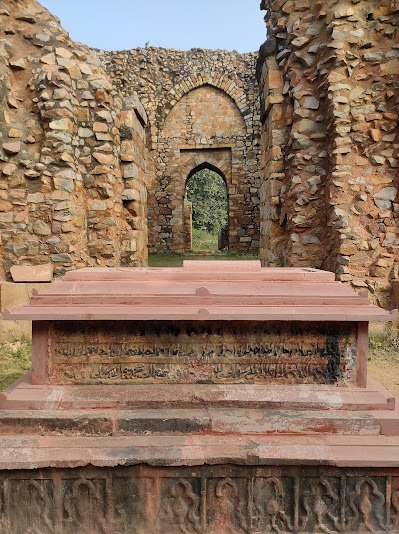
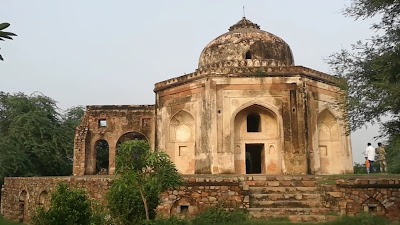
Architecturally, Quli Khan’s Tomb represents the simpler and more restrained side of Mughal funerary design. Unlike imperial mausoleums decorated with marble inlay work and intricate carvings, this monument focuses on balance, symmetry, and structural elegance.
The tomb is primarily constructed using local stone masonry, with traces of plaster that may once have been coated with lime wash. Its square-shaped structure is crowned by a single hemispherical dome, a characteristic feature commonly seen in Mughal tomb architecture.
Arched openings on all four sides allow sunlight and airflow into the inner chamber, creating a naturally ventilated and peaceful atmosphere. The central chamber contains the cenotaph, while the actual grave lies below ground level in accordance with Islamic burial traditions.
Although the monument lacks elaborate ornamentation, its simplicity gives it a solemn and dignified appearance. The minimalistic style also reflects the architectural preferences often associated with tombs built for nobles rather than members of the royal family.
Cultural and Heritage Importance
Quli Khan’s Tomb contributes significantly to Mehrauli’s identity as one of Delhi’s most archaeologically dense heritage zones. The monument may not be widely promoted in mainstream tourism, but it plays an important role in preserving the continuity of Delhi’s medieval history.
Today, the tomb is often included in local heritage walks and cultural tours conducted through Mehrauli. Researchers, historians, and architecture enthusiasts frequently visit the area to study the evolution of Indo-Islamic architecture and urban development in Delhi.
Its peaceful surroundings also make it attractive for travelers looking to escape crowded tourist spots and explore lesser-known historical sites. The monument stands as a reminder that Delhi’s history is not limited to its famous landmarks alone—many smaller structures like this quietly preserve stories from the city’s imperial past.
Best Time to Visit
The ideal time to visit Quli Khan’s Tomb is between October and March, when Delhi experiences cooler and more pleasant weather. Early mornings and late afternoons are especially suitable for exploring Mehrauli’s monuments, as the lighting is ideal for photography and the temperatures remain comfortable.
During summers, the area can become quite hot, particularly in the afternoon, so winter months are generally recommended for heritage walks.
How to Reach Quli Khan’s Tomb
By Metro
The nearest metro station is Delhi Metro Yellow Line’s Qutub Minar Metro Station. From there, visitors can take an auto-rickshaw, cab, or even walk through parts of Mehrauli depending on the chosen route.
By Road
Mehrauli is well connected through Mehrauli–Gurgaon Road and can be easily accessed from Saket, Chhatarpur, Vasant Kunj, and other parts of South Delhi. App-based taxis and local autos are readily available.
By Bus
Several DTC buses operate around Mehrauli and the Qutub complex, making public transport a convenient option for visitors.
Visitor Information
- Location: Mehrauli, South Delhi.
- Entry Fee: Free.
- Photography: Allowed.
- Best For: Heritage walks, architecture photography, history enthusiasts, and offbeat travelers.
- Nearby Attractions: Qutub Minar, Mehrauli Archaeological Park, Jamali Kamali, Balban’s Tomb, Rajon Ki Baoli.