Image Source: Manglesh Saurabh
About Dainkund
Dainkund, the highest point in the Dalhousie region, is famous not just for its stunning panoramas but also for the folk legends and beliefs that swirl around it.
In Himachal Pradesh mountains are more than just lofty heights; they are worshipped in religious and local legends. Dainkund Peak, which is often called the Singing Hills because of the musical sound created when winds sweep through its forests and meadows, is one such peak. Dainkund’s very name and spiritual aura are deeply rooted in local mythology and folklore.
Where Is Dainkund Peak?
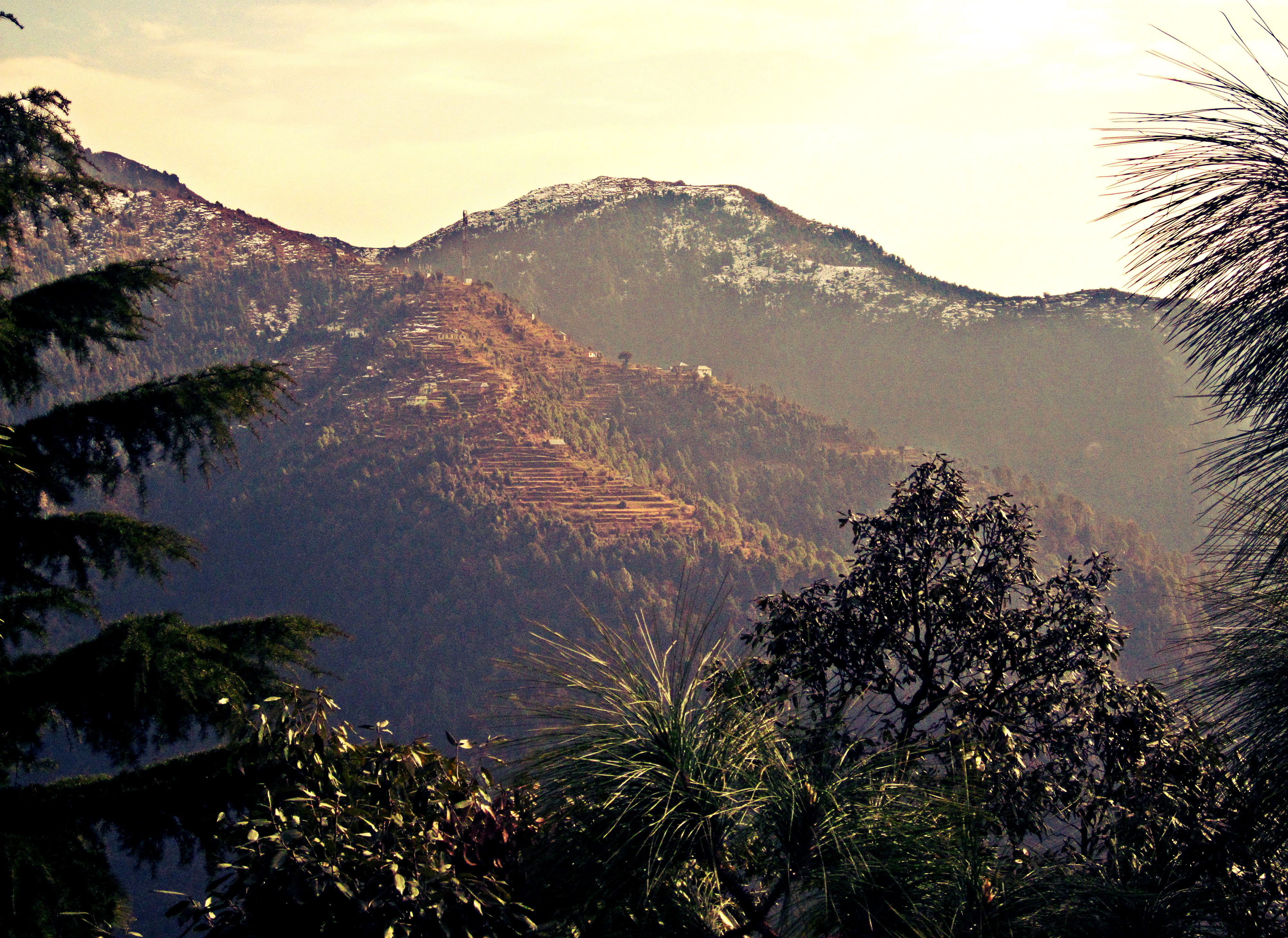
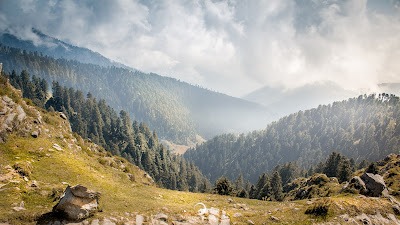
Rising to a height of 2,755 meters (9,038 feet), Dainkund is located about 12 km from Dalhousie town, in Himachal Pradesh’s Chamba district. The peak is part of the western Dhauladhar range and offers commanding views of the snow-capped Himalayas, the valleys of Beas, Ravi, and Chenab rivers, and on clear days, even glimpses of distant Punjab plains.
The Origin of the Name: Dainkund
The name Dainkund comes from two Hindi words: ‘Dain’ (witch) and ‘kund’ (lake or pond). According to legend, this peak was once the haunt of a powerful witch who spread terror among the local villagers. They believed the witch and her minions dwelt on the peak and caused storms and misfortune.
The folklore goes that villagers often heard eerie noises carried down by the winds—groans, shrieks, and cackles—which strengthened their belief that the hill was bewitched.
The Goddess Who Defeated the Witch
The main legend tells of how the locals prayed to the divine mother—Pohlani Devi—for deliverance. Answering their prayers, the goddess descended to the peak and vanquished the witch, freeing the hill and surrounding villages from evil influences.
To honor this victory of good over evil, the locals built a shrine known as Pholani Mata Temple, which stands just below the summit. Even today, pilgrims and trekkers visit this modest temple, offering prayers and tying threads of faith on its iron trident.
Interestingly, the temple does not have an idol inside—only a trishul (trident) symbolizing the goddess’s power. This simplicity adds to its mystical charm.
Winds That Sing & Spirits That Whisper
The ‘singing’ phenomenon of Dainkund is partly scientific and partly mythical. Strong winds rush through the tall pine and deodar trees and the rocky slopes, creating a whistling hum that sounds like an otherworldly choir.
Many villagers once believed these haunting tunes were the echoes of the defeated witch’s spirit, forever trapped in the swirling winds, while others see it as the goddess’s protective voice reminding people of her victory.
Other Local Beliefs and Practices
Sacred Flora and Fauna
The forests around Dainkund are believed to be protected by the goddess. Locals traditionally avoided cutting trees or hunting in this area without rituals and offerings. Even today, shepherds and villagers often stop by the Pholani Mata shrine to seek blessings for safe passage when grazing their flocks in the high meadows.
Connection to the Mahabharata
Some old oral traditions claim that during their exile, the Pandavas passed through these hills on their way to the higher Himalayas. While not backed by documented scripture, many local elders keep these stories alive through folklore and village songs.
How the Myth Enhances the Trekking Experience
Walking up to Dainkund feels like a journey through these age-old stories. The trail passes through misty woods, wildflower-strewn meadows, and isolated clearings that still carry an aura of mystery. The climb is easy to moderate, with a final stretch of stairs leading to the temple.
Standing at the top, with the wind humming its ancient song and prayer flags fluttering near the temple, it’s easy to see why this peak is considered sacred and mystical.
Unknown Fascinations
Hidden Natural Ponds: Some locals speak of hidden seasonal ponds (kunds) near Dainkund, which appear during monsoons and are said to be blessed by the goddess’s presence. Only a handful of shepherds know exactly where they are.
🌙 Full Moon Nights: On clear full moon nights, the peak takes on an almost surreal glow. Older villagers say it is an auspicious time to pay respects to the goddess as she is believed to visit her devotees’ dreams from her abode here.
🗡️ Symbolic Weapon Offerings: Some devotees, especially from shepherd communities, offer small iron tridents or miniature swords at the temple as a token of gratitude for protection against wild animals and misfortune.
Best Time to Visit Dainkund
The peak is accessible year-round:
Summer (April to June): Pleasant weather, clear skies.
Monsoon (July to September): Misty and lush, but trails can be slippery.
Autumn & Winter (October to February): Snow transforms the peak into a pristine wonderland, though the winds can be biting.
How to Reach
Base: Dalhousie
Distance: About 12 km by road till the Air Force base check post. From there, it’s a scenic 1.5 km walk along a paved path to the summit.
Permit: Part of the route passes near an Air Force radar station, so entry may be regulated. Always carry ID.
Nearby Attractions of Dainkund Peak
Dainkund Peak, often called the “Singing Hill” because of the unique sound created by winds passing through the deodar forests, is one of the most scenic viewpoints near Dalhousie. Standing at an elevation of about 2,755 meters, the peak offers breathtaking views of the surrounding Himalayan ranges, valleys, and rivers.
1. Khajjiar
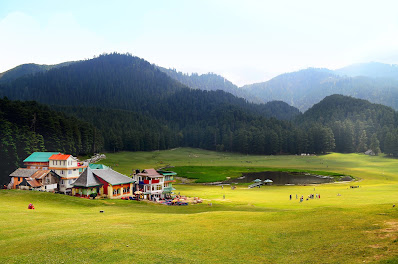
Located around 16 km from Dainkund Peak, Khajjiar is popularly known as the “Mini Switzerland of India.” The vast green meadow, surrounded by dense cedar forests and a small lake at its center, makes it one of the most picturesque destinations in Himachal Pradesh. Visitors can enjoy horse riding, zorbing, nature walks, and photography.
2. Kalatop Wildlife Sanctuary
A paradise for wildlife lovers and trekkers, Kalatop Wildlife Sanctuary is famous for its thick deodar forests, Himalayan black bears, barking deer, pheasants, and numerous bird species. The forest trails provide excellent opportunities for hiking and nature photography.
3. Pholani Devi Temple
Situated near the summit of Dainkund Peak, this sacred temple is dedicated to Goddess Pholani. Unlike most temples, it contains a trident rather than a traditional idol. The peaceful surroundings and panoramic mountain views make it a spiritual as well as scenic attraction.
4. Dalhousie
The colonial-era hill station of Dalhousie lies a short drive away and is known for its charming churches, heritage buildings, scenic viewpoints, and bustling markets. Gandhi Chowk and Subhash Chowk are popular places to explore local culture and cuisine.
5. Panchpula
A beautiful picnic spot known for its waterfalls, streams, and memorial dedicated to freedom fighter Sardar Ajit Singh. It is a refreshing stop for families and nature lovers.
6. Satdhara Falls
Famous for its mineral-rich water and serene atmosphere, Satdhara Falls is surrounded by lush greenery and offers a peaceful retreat away from crowds.
7. St. John’s Church
One of the oldest churches in Dalhousie, this historic structure showcases beautiful colonial architecture and tranquil surroundings.
Google Maps
FAQs
1. Why is Dainkund Peak called the Singing Hill?
The peak is known as the Singing Hill because strong winds passing through the pine and deodar trees create a melodious whistling sound.
2. What is the height of Dainkund Peak?
Dainkund Peak stands at approximately 2,755 meters (9,035 feet) above sea level.
3. How far is Dainkund Peak from Dalhousie?
The peak is located about 10–15 km from Dalhousie, depending on the route taken.
4. Is trekking required to reach Dainkund Peak?
Yes, visitors usually undertake a short and easy trek of around 1–3 km from the parking area to reach the summit.
5. Is Dainkund Peak suitable for beginners?
Yes. The trek is considered easy to moderate and is suitable for beginners, families, and casual hikers.
6. What is the best time to visit Dainkund Peak?
March to June and September to November offer pleasant weather and clear views. Winter visitors may also experience snowfall.
7. Are there food facilities available at the peak?
Small tea and snack stalls may be available near the trekking route and summit area during the tourist season, but visitors should carry water and light snacks.
8. Is there an entry fee for Dainkund Peak?
The peak itself generally has no significant entry fee, though parking or local tourism charges may apply depending on current regulations.
9. Can I visit Dainkund Peak during winter?
Yes, winter visits are popular because the area often receives snowfall, creating spectacular landscapes. However, roads may occasionally be affected by snow.
10. What are the main highlights of Dainkund Peak?
The major attractions include panoramic Himalayan views, the Pholani Devi Temple, deodar forests, photography opportunities, and the unique singing sound of the wind.