
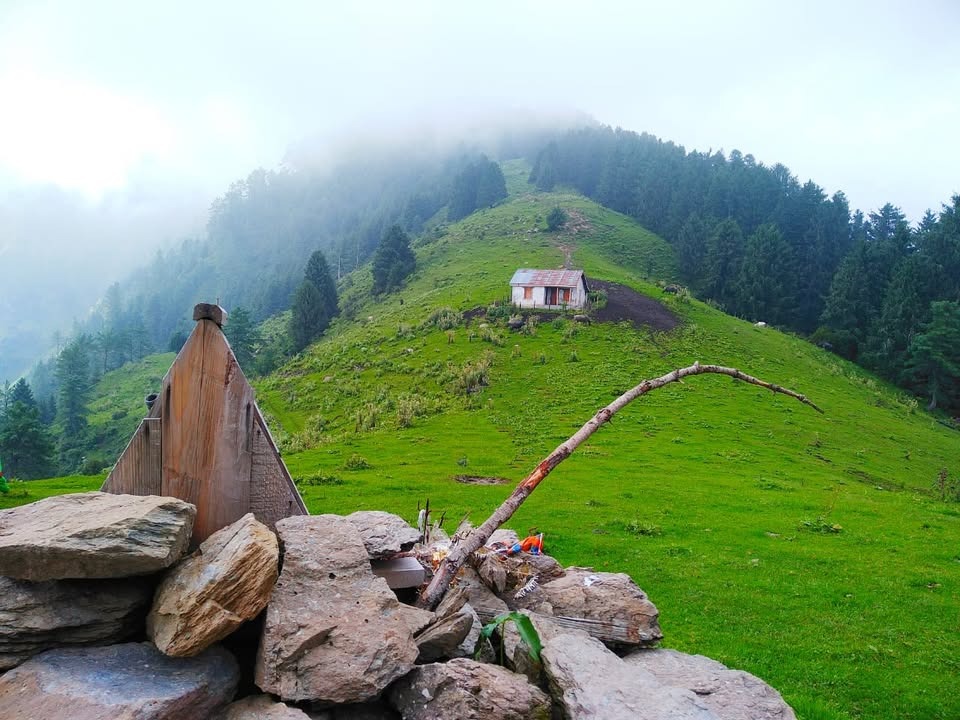
Image Source: Facebook/GamgulSiyabehiWildlifeSanctuary
About Gamgul Siyabehi Wildlife Sanctuary
Gamgul Siyabehi Wildlife Sanctuary is situated in the Bhandal Valley region of the Chamba district, right at the border of Himachal Pradesh and Jammu & Kashmir (now the Union Territory of Jammu & Kashmir and Ladakh).
A vital role in preserving rare Himalayan wildlife, the sanctuary is a paradise for nature lovers, wildlife enthusiasts and trekkers seeking an offbeat wilderness experience.
Geography and Location
The sanctuary spread over an area of 108 square kilometers. Its altitude ranges roughly between 2,400 meters and 4,300 meters above sea level, covering temperate forests, subalpine pastures, and rugged high-altitude terrains. The sanctuary forms part of the Pir Panjal Range, which acts as a natural divide between Chamba and the remote Pangi Valley.
The landscape is dramatic—steep ridges, alpine meadows, gushing streams, and snow-bound peaks create habitats for a variety of endangered Himalayan species.
Ecological Significance and Wildlife
Gamgul Siyabehi is the only sanctuary in Himachal Pradesh where the endangered Kashmir Stag (Hangul) is believed to be found, although sightings are extremely rare today. This makes it ecologically significant, as the Hangul’s primary population is otherwise confined to the Dachigam National Park near Srinagar.
Apart from the Hangul, the sanctuary is home to other important Himalayan fauna:
Himalayan Musk Deer: A rare and highly protected species prized for its musk pod.
Himalayan Tahr: Found grazing in the higher reaches.
Serow, Goral, and Bharal (Blue Sheep): Commonly spotted in rocky alpine areas.
Himalayan Black Bear and Brown Bear: Roam the forests and meadows.
Leopard and Snow Leopard: The elusive apex predators of these remote mountains.
Birdlife: The sanctuary supports many pheasants, like the Western Tragopan, Monal (state bird of Himachal Pradesh), Koklass Pheasant, and Himalayan Snowcock.
Dense coniferous forests of deodar, pine, fir, and birch, along with alpine pastures, provide the perfect habitat for this wildlife diversity.
History and Conservation
Gamgul Siyabehi Wildlife Sanctuary was notified in 1962 to protect the Hangul and other rare Himalayan species. The sanctuary’s remoteness and challenging terrain have kept it relatively undisturbed compared to other protected areas in the state. However, this remoteness also means less active conservation management and limited research.
Local Gaddi shepherds and villagers have traditionally used the meadows and forest fringes for grazing, which has coexisted with the wildlife for centuries.
Visiting Gamgul Siyabehi: What to See and Do
Due to its remoteness, Gamgul Siyabehi is not a typical tourist sanctuary with established safari trails. It’s a destination for serious nature enthusiasts, trekkers, and researchers who prefer rugged, offbeat Himalayan wilderness.
Things to do:
Wildlife Trekking: Explore the sanctuary on foot with a local guide. Spotting large mammals may require patience and luck due to the dense forests and elusive nature of the animals.
Photography: The sanctuary’s pristine landscapes and chance sightings of rare birds and animals make it a rewarding experience for wildlife photographers.
Village Experience: Visit nearby remote villages like Gamgul and Siyabehi to see the traditional Gaddi way of life.
Nature Walks: Hike along forest trails, alpine meadows, and streams to experience the diverse flora.
Camping: Camping is possible with proper permissions and local arrangements, offering unmatched Himalayan solitude under a canopy of stars.
Best Time to Visit
The best time to visit Gamgul Siyabehi is May to October, when the snow has melted and trails are accessible. Winter months are harsh, with heavy snowfall cutting off the area.
How to Reach
Nearest Town: The sanctuary is closest to Tissa or Bairagarh in Chamba district.
By Road: The route is challenging. One must reach Bharmour or Tissa and then proceed by local jeeps or on foot. Local trekking arrangements are recommended.
By Rail: Pathankot is the nearest railway station.
By Air: Gaggal Airport (Kangra) is the nearest airport, about 250–300 km away depending on the route.
Due to limited infrastructure, local guidance and pre-arranged logistics are necessary for any visit.