
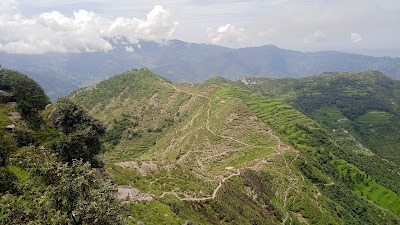
Image Source: Pankaj Ligga
Where is Kihar Valley?
Kihar Valley is nestled deep within the Chamba region, situated at a moderate altitude surrounded by lush pine forests, terraced fields, and quaint villages. It lies around 30–40 km from the main town of Chamba and is accessed through winding mountain roads that connect it to nearby areas like Tissa, Churah, and Bhandal Valley.
Unlike the tourist-heavy landscapes of Dalhousie or Khajjiar, Kihar Valley offers a more grounded experience. It is defined by traditional hill settlements, local deities, and the dramatic terrain of the Ravi basin.
Geography and Landscape
Kihar Valley lies in the upper Ravi River catchment, close to the Himachal–Jammu border, forming a transitional zone between the Pir Panjal and Dhauladhar mountain systems. The valley is marked by steep slopes, narrow ridgelines, forested spurs, and deep ravines, making it visually striking yet geographically demanding.
The climate here is typically cool temperate—with cold winters, pleasant summers, and a strong monsoon influence. Dense forests of pine, deodar, oak, and mixed Himalayan species dominate the slopes, while lower areas are shaped by terraced agriculture, a hallmark of Chamba’s mountain farming tradition.
Culture and People
At the center of the valley lies Kihar town, a small yet important settlement that functions as the administrative, commercial, and cultural hub for surrounding villages. Weekly markets, local schools, and small temples make Kihar a focal point for social life in the valley.
Nearby Attractions
Kihar Local Temples
Scattered around Kihar town and nearby villages, these temples dedicated to local Devtas and village goddesses reflect the valley’s living spiritual traditions and are best experienced during festivals.
Ravi River Valley Viewpoints
Several high ridges near Kihar offer panoramic views of the Ravi River gorge, especially dramatic during monsoon and post-monsoon months.
Chamba Town
Located at a distance but culturally connected, Chamba provides access to classical temples like Lakshmi Narayan Temple, museums, and historic bazaars.
Bharmour Region
For travelers venturing further, Bharmour offers high-altitude landscapes, ancient temples, and Gaddi culture, complementing the lower-altitude charm of Kihar Valley.
Forest Trails and Village Walks
Walking trails between villages allow visitors to experience traditional farming landscapes, forest paths, and everyday rural life in upper Chamba.
How to Reach
* By Road: Kihar is connected by road from Chamba via Tissa or Bhanjraru. The road conditions can be rough in patches.
* Nearest Town: Chamba is the main hub with hotels, ATMs, and transport facilities.
* Best time to visit: Spring (March–May) and autumn (September–November) for pleasant weather.
Google Maps
- Q: Where is Kihar Valley located?
Kihar Valley is located in northwestern Chamba district of Himachal Pradesh, near the upper Ravi River basin and close to the Himachal–Jammu border.
- Q: What is Kihar Valley known for?
The valley is known for its remote Himalayan landscape, traditional village culture, forested hills, and local deity worship.
- Q: Is Kihar Valley suitable for tourism?
Kihar Valley is best suited for offbeat travelers, cultural explorers, and nature enthusiasts, rather than conventional tourists seeking resorts or luxury facilities.
- Q: What language is spoken in Kihar Valley?
Local people primarily speak Chambyali and related regional dialects, with influences from Dogri due to geographic proximity.
- Q: Are there important temples in Kihar Valley?
Yes, the valley has several village temples dedicated to local deities, Shiva, and Shakti, which play a central role in community life.
- Q: How is the climate of Kihar Valley?
The climate is cool temperate, with cold winters, mild summers, and significant monsoon rainfall.
- Q: What makes Kihar Valley culturally unique?
Its strong Devta traditions, agricultural rituals, and preserved village lifestyle make it culturally distinct within the Chamba district.
- Q: Can Kihar Valley be combined with other Chamba destinations?
Yes, it can be explored alongside Chamba town, Bharmour, and upper Ravi valley areas for a deeper regional experience.