Image Source: Vikram Inje
About Tipu Sultan’s Palace
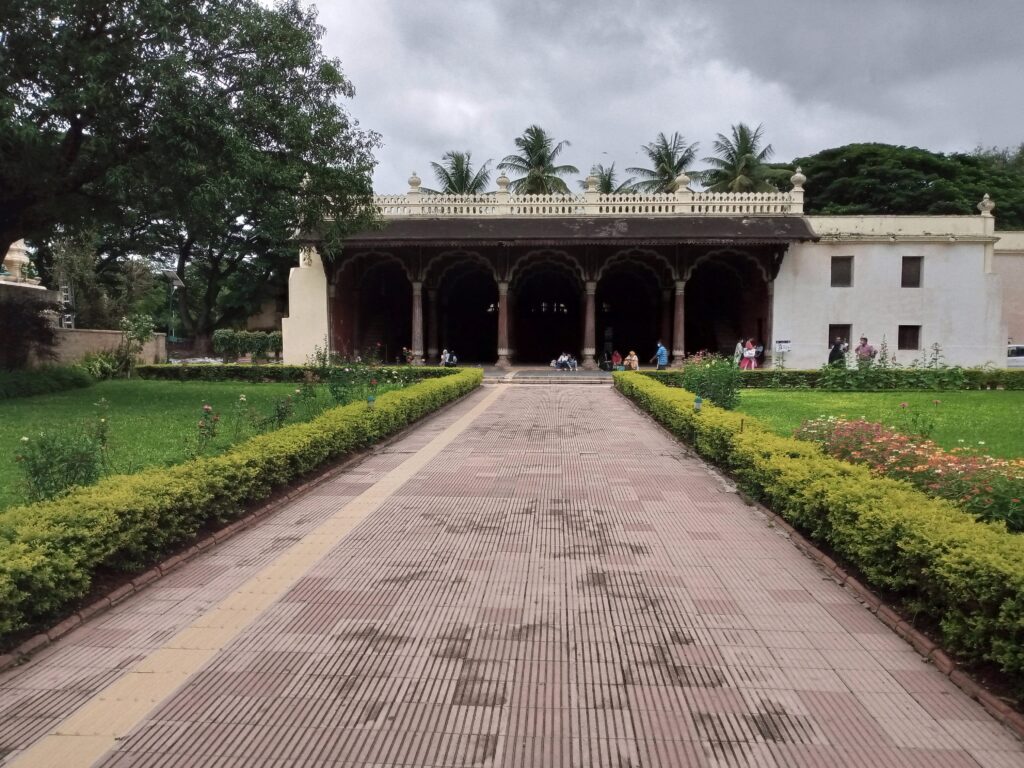
Nestled in the heart of Bengaluru near the historic Tipu Sultan Fort on Albert Victor Road, Tipu Sultan’s Palace—popularly known as Tipu’s Summer Palace—is one of the city’s most treasured historical landmarks. This elegant structure stands as a reminder of the grandeur and legacy of the Mysore ruler, Tipu Sultan, who played a significant role in South Indian history. Surrounded by the bustling markets of old Bengaluru, the palace offers visitors a fascinating glimpse into the royal lifestyle of the 18th century.
History and Architecture
Built primarily as a summer retreat for the Mysore rulers, the palace is an exquisite example of Indo-Islamic architecture. Construction began during the reign of Hyder Ali and was completed by his son, Tipu Sultan, in 1791. So impressed was Tipu by its beauty that he affectionately named it Rash-e-Jannat, meaning “Envy of Heaven.”
The two-story palace is constructed using teak wood, stone, mortar, and plaster. It rests on a sturdy stone base and is supported by beautifully carved wooden pillars that showcase exceptional craftsmanship. The upper floors feature elegant balconies and corridors overlooking lush courtyards, while the central hall once hosted the Sultan’s royal durbar. Intricate floral motifs, arches, and ornamental details add to the palace’s timeless charm.
Museum and Cultural Heritage
Today, a section of the palace functions as a museum that preserves the legacy of Tipu Sultan and his father, Hyder Ali. Visitors can explore an impressive collection of historical artifacts, portraits, paintings, coins, manuscripts, and photographs that narrate the story of the Mysore kingdom and its administration.
One of the major highlights is the replica of Tipu’s Tiger, the famous mechanical tiger that symbolized Tipu Sultan’s resistance against British rule. The original artifact is housed in London’s Victoria and Albert Museum. The museum also displays replicas of royal attire and depictions of the Sultan’s grandeur.
A particularly intriguing exhibit is the painting of Tipu Sultan’s magnificent throne, which was said to be decorated with gold sheets and precious emeralds. Historical accounts suggest that Tipu vowed not to sit on the throne until he had defeated the British—a vow that remained unfulfilled.
Art Gallery and Preservation
The palace also houses an art gallery featuring numerous historical photographs, paintings, and records from Tipu Sultan’s era. These exhibits offer valuable insights into the political, military, and cultural history of Mysore. The monument is carefully preserved and maintained by the Archaeological Survey of India (ASI), ensuring that future generations can continue to appreciate this remarkable piece of history.
Visitor Information
Tipu Sultan’s Palace remains one of Bengaluru’s most visited heritage attractions. Photography is permitted without any additional charges, making it a favorite spot for history enthusiasts and photographers alike.
Entry Fee:
- Indian Visitors: ₹5 per person
- Foreign Nationals: ₹100 per person
Timings:
Open from 10:00 AM to 6:00 PM. It is generally open throughout the week, though visitors are advised to check for holiday schedules before planning their trip.
How to Reach
Tipu Sultan’s Palace is centrally located in old Bengaluru and is easily accessible by road and public transport.
- By Metro: The nearest metro station is Krishna Rajendra Market (K.R. Market) on the Green Line, located about 1 km from the palace. From there, visitors can take an auto-rickshaw or enjoy a short walk.
- By Bus: Numerous BMTC buses connect the area to different parts of Bengaluru. The City Market bus stop is within walking distance.
- By Train: The Krantivira Sangolli Rayanna (Bengaluru City Railway Station) is approximately 4 km away.
- By Air: The Kempegowda International Airport lies around 35 km from the palace, with taxis and airport buses readily available.
Nearby Attractions
A visit to Tipu Sultan’s Palace can easily be combined with several nearby attractions:
- Tipu Sultan Fort – Located adjacent to the palace and rich in military history.
- K.R. Market (Krishnarajendra Market) – One of Asia’s largest flower and wholesale markets.
- Bangalore Fort – A remnant of the original fort built by Kempe Gowda.
- Lalbagh Botanical Garden – Famous for its centuries-old trees, glass house, and flower shows.
- Bull Temple (Dodda Basavana Gudi) – A revered temple dedicated to Nandi, the sacred bull of Lord Shiva.
- Cubbon Park – A lush green retreat in the heart of Bengaluru.
FAQs
1. Why is Tipu Sultan’s Palace famous?
The palace is renowned for its beautiful Indo-Islamic architecture and its historical association with Tipu Sultan, one of India’s most celebrated rulers.
2. How much time is needed to explore the palace?
Most visitors spend about 1 to 2 hours exploring the palace and museum.
3. Is photography allowed inside the palace?
Yes, photography is generally allowed without any extra fee.
4. What is the best time to visit?
The best time to visit is between October and February when Bengaluru enjoys pleasant weather.
5. Is the palace suitable for children?
Yes, the palace is an excellent educational destination for children interested in history and architecture.
6. Can I visit Tipu Sultan’s Palace and Bangalore Fort on the same day?
Absolutely. Since both attractions are located close to each other, they can easily be explored during a single visit.