Image Source: Sukalyan Naskar
About Hazara Rama Temple
Nestled within the royal enclosure of Hampi, the Hazara Rama Temple is one of the most remarkable monuments of the Vijayanagara Empire. Unlike many temples built for public worship, this temple was primarily reserved for the royal family, making it unique in both purpose and design. Dedicated to Lord Rama, the temple derives its name from the Kannada word “Hazara,” meaning “thousand,” referring to the countless depictions of Lord Rama and scenes from the Ramayana carved across its walls.
What sets the temple apart is its extraordinary storytelling through stone. Every panel, pillar, and wall narrates episodes from the Ramayana, transforming the temple into a visual chronicle of one of India’s greatest epics. For history enthusiasts, architecture lovers, and spiritual travelers alike, the Hazara Rama Temple offers a fascinating glimpse into the artistic brilliance of medieval South India.
History of Hazara Rama Temple
The Hazara Rama Temple was commissioned during the early 15th century by King Devaraya II of the Vijayanagara Empire. Historians believe that it served as the private place of worship for the kings and members of the royal household. Its location within the Royal Enclosure further reinforces its close association with the rulers of Vijayanagara.
Over the centuries, although the empire declined, the temple endured as a silent witness to the grandeur and cultural sophistication of one of South India’s greatest kingdoms. Today, it stands as an important archaeological monument and a treasured part of the UNESCO World Heritage Site of Hampi.
Architecture of Hazara Rama Temple
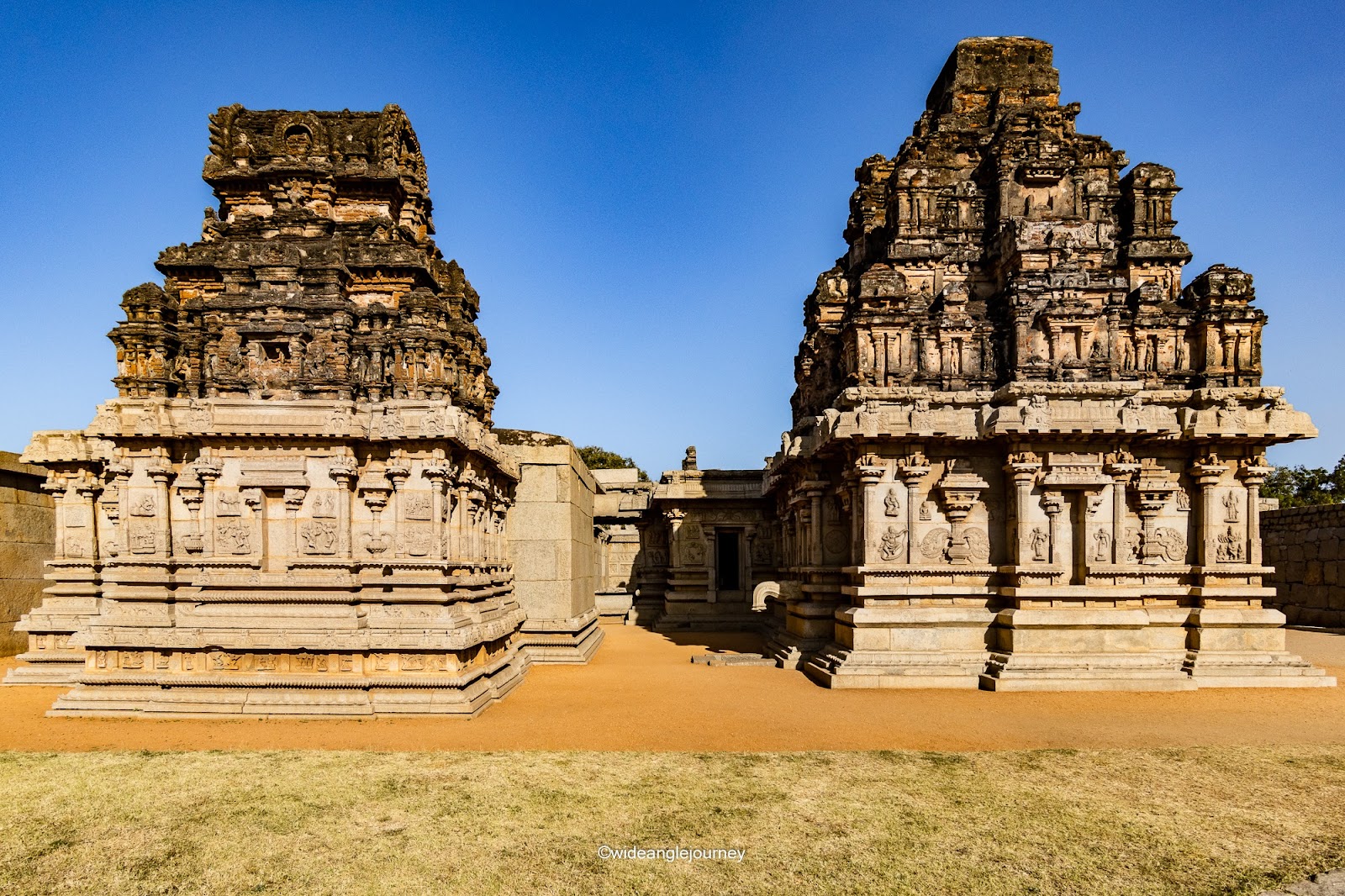
The temple is a fine example of Vijayanagara architecture, combining simplicity with artistic excellence. Initially, the structure consisted of a sanctum (garbhagriha), an ardha-mandapa (entrance hall), and a pillared assembly hall. Later additions included an open porch and intricately carved pillars that enhanced its grandeur.
Built on a raised stone platform, the temple features distinctive black stone pillars that immediately catch the eye. The main entrance faces east and opens toward what was once the royal durbar area. Inside, beautifully ornamented columns display exquisite carvings of deities, dancers, and mythological figures.
Originally, idols of Lord Rama, Lakshmana, and Sita were housed in the sanctum. Though the idols are no longer present, an empty pedestal with three holes remains, preserving the memory of the temple’s sacred past.
The surrounding lawns add to the serenity of the site, offering visitors a peaceful place to pause and admire the monument’s timeless beauty.
Intricate Bas-Reliefs: The Ramayana in Stone
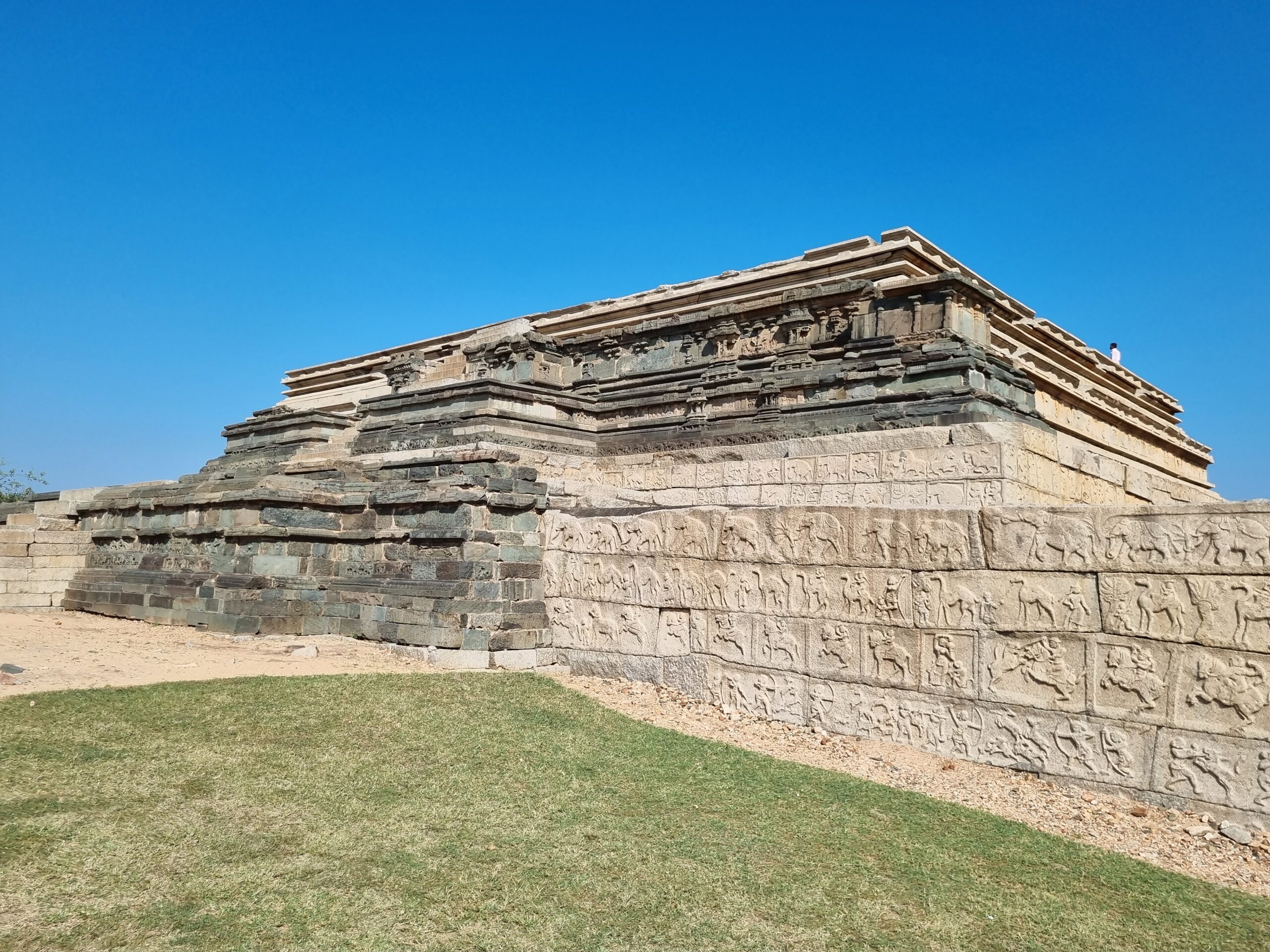
The greatest attraction of Hazara Rama Temple is undoubtedly its magnificent bas-reliefs. The temple walls depict the entire Ramayana in stunning detail—from the birth of Rama and his marriage to Sita, to their exile, the abduction of Sita by Ravana, and the climactic battle in Lanka.
Beyond mythological scenes, the carvings also portray royal processions, warriors, elephants, horses, camels, and dancers. These intricate sculptures provide valuable insights into the culture, warfare, and courtly life of the Vijayanagara period.
As sunlight falls upon the carved panels, the stories seem to come alive, making every visit a memorable experience.
Enclosed Tranquility
Surrounded by the remains of the once-magnificent royal city, the Hazara Rama Temple offers a tranquil atmosphere that contrasts with the grandeur of its artistic details. The monument invites visitors to immerse themselves in history, spirituality, and storytelling all at once.
Its strategic location within Hampi makes it easy to explore several nearby attractions, allowing travelers to experience the rich heritage of the Vijayanagara Empire in a single visit.
Timings: 6:00 AM to 6:00 PM.
How to Reach Hazara Rama Temple
Hazara Rama Temple is located within the Royal Enclosure of Hampi in Karnataka’s Vijayanagara district.
By Air
The nearest airport is Jindal Vijaynagar Airport, approximately 40 km away. Alternatively, Hubballi Airport is around 165 km from Hampi. Taxis and private cabs are readily available from both airports.
By Rail
The nearest railway station is Hosapete (Hospet) Junction, situated about 13 km from Hampi. Auto-rickshaws, taxis, and local buses connect the station to the temple complex.
By Road
Hampi is well connected by road to major cities such as Bengaluru, Hubballi, and Ballari. State-run KSRTC buses and private buses operate regularly to Hosapete and Hampi. Visitors can hire bicycles, scooters, or auto-rickshaws to explore the monuments within Hampi.
Nearby Attractions
Virupaksha Temple
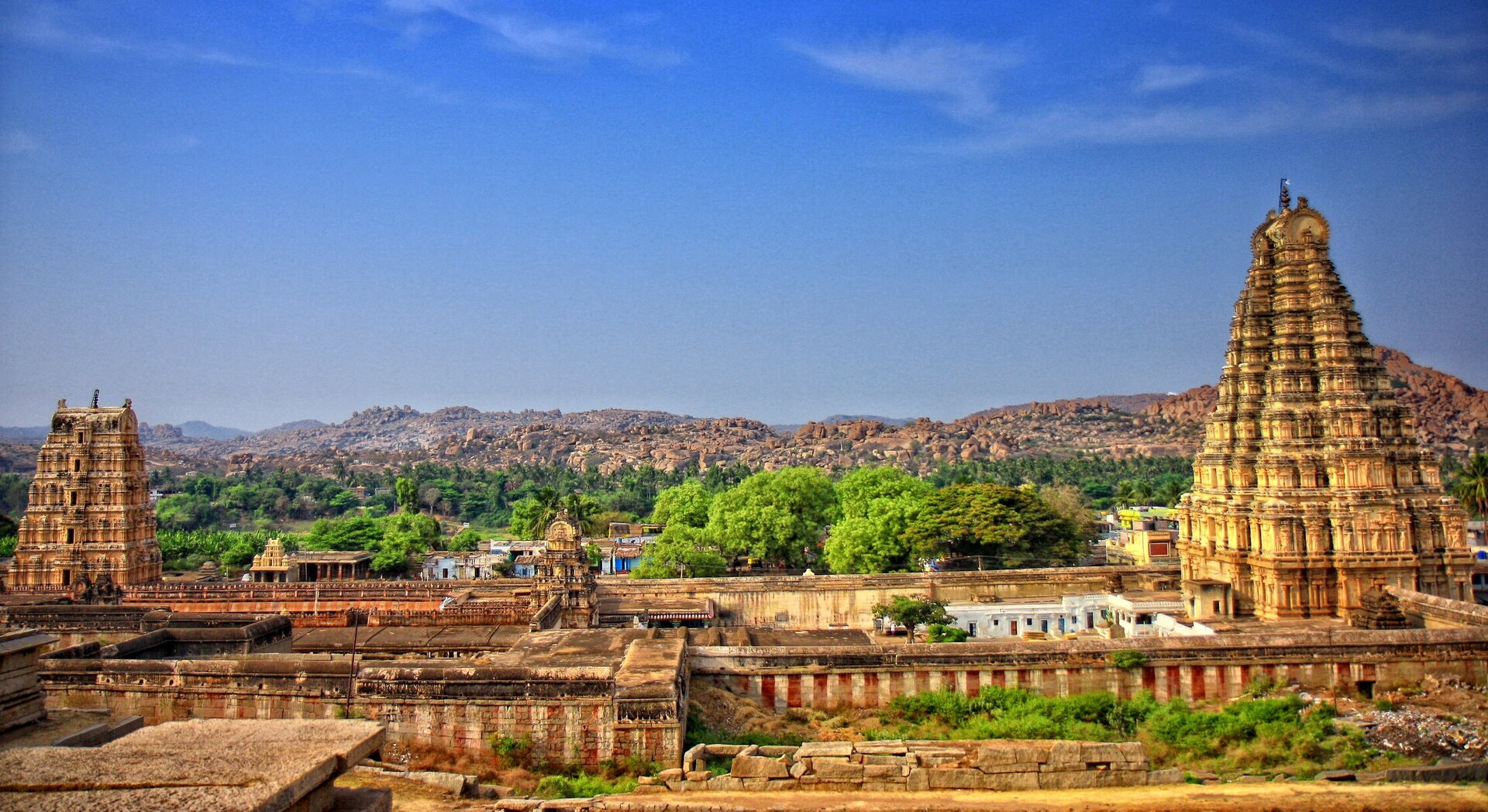
One of the oldest functioning temples in India, dedicated to Lord Shiva and considered the spiritual heart of Hampi.
Lotus Mahal
Famous for its elegant Indo-Islamic architecture, the Lotus Mahal once served as a royal pavilion for the queens of Vijayanagara.
Zenana Enclosure
A historic royal complex believed to have housed the women of the royal family.
Elephant Stables
An impressive structure that once sheltered the royal elephants of the Vijayanagara Empire.
Mahanavami Dibba
A massive ceremonial platform used by Vijayanagara kings during royal celebrations and festivals.
Queen’s Bath
A unique bathing complex showcasing Indo-Islamic architectural influences.
Vittala Temple
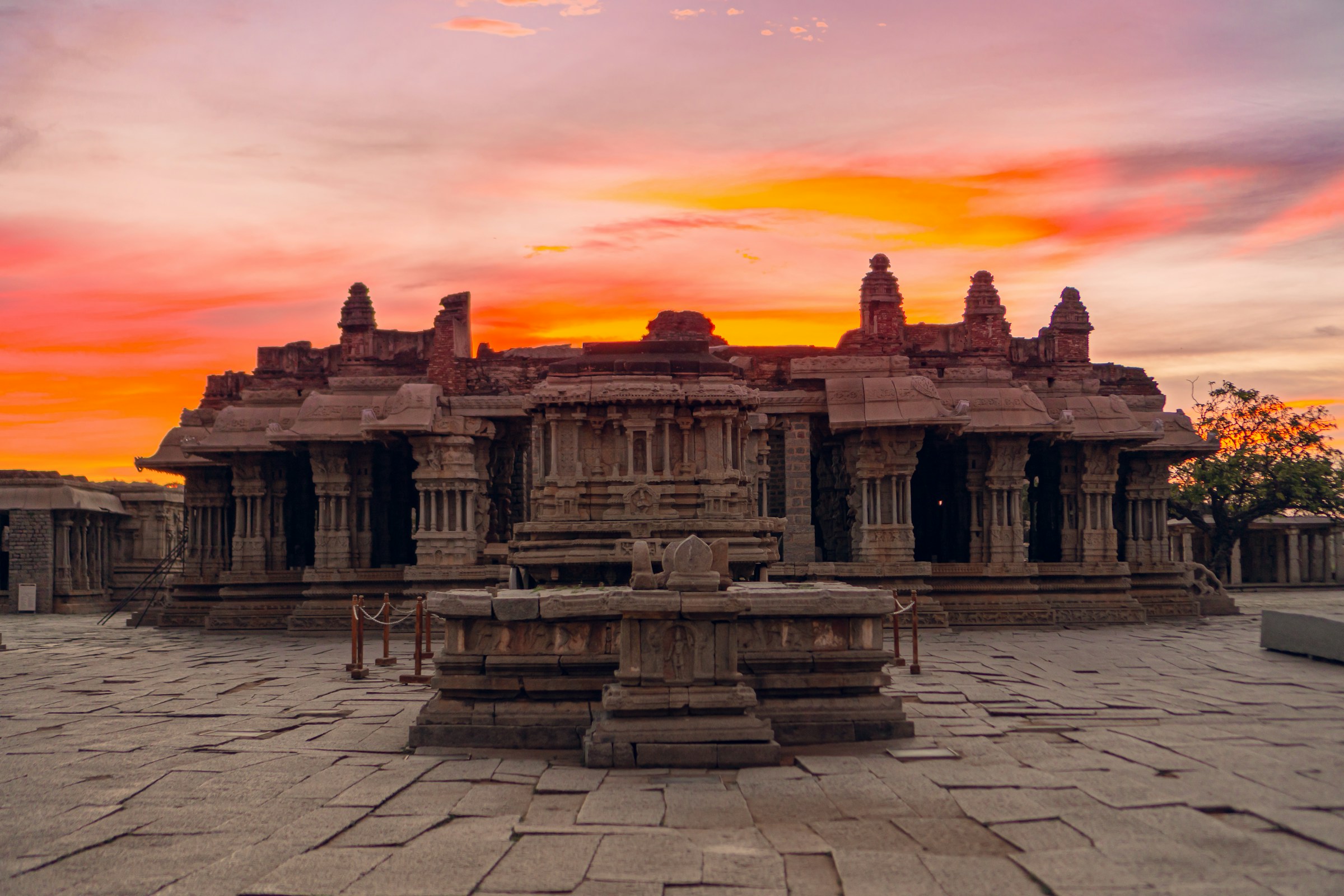
Home to the iconic stone chariot and renowned musical pillars, this temple is among Hampi’s most famous landmarks.
Maps
The temple is situated at the heart of the royal enclosure in Hampi.
FAQs
1. Why is it called Hazara Rama Temple?
The temple gets its name from the numerous carvings depicting Lord Rama and scenes from the Ramayana. “Hazara” means “thousand,” symbolizing the abundance of these depictions.
2. Who built the Hazara Rama Temple?
The temple was built by King Devaraya II of the Vijayanagara Empire during the early 15th century.
3. Is there an entry fee for the temple?
The temple is part of the Hampi monument complex, and visitors may need to purchase an entry ticket applicable to protected monuments in the area.
4. How much time is needed to explore the temple?
Most visitors spend around 30 minutes to 1 hour exploring the temple and admiring its carvings.
5. What is the best time to visit Hazara Rama Temple?
The ideal time to visit is between October and February, when the weather in Hampi is pleasant for sightseeing.
6. Can photography be done inside the temple complex?
Yes, photography is generally allowed, making it a favorite spot for history and architecture enthusiasts.
7. Is Hazara Rama Temple a UNESCO World Heritage Site?
The temple is part of the Group of Monuments at Hampi, which is recognized as a UNESCO World Heritage Site.