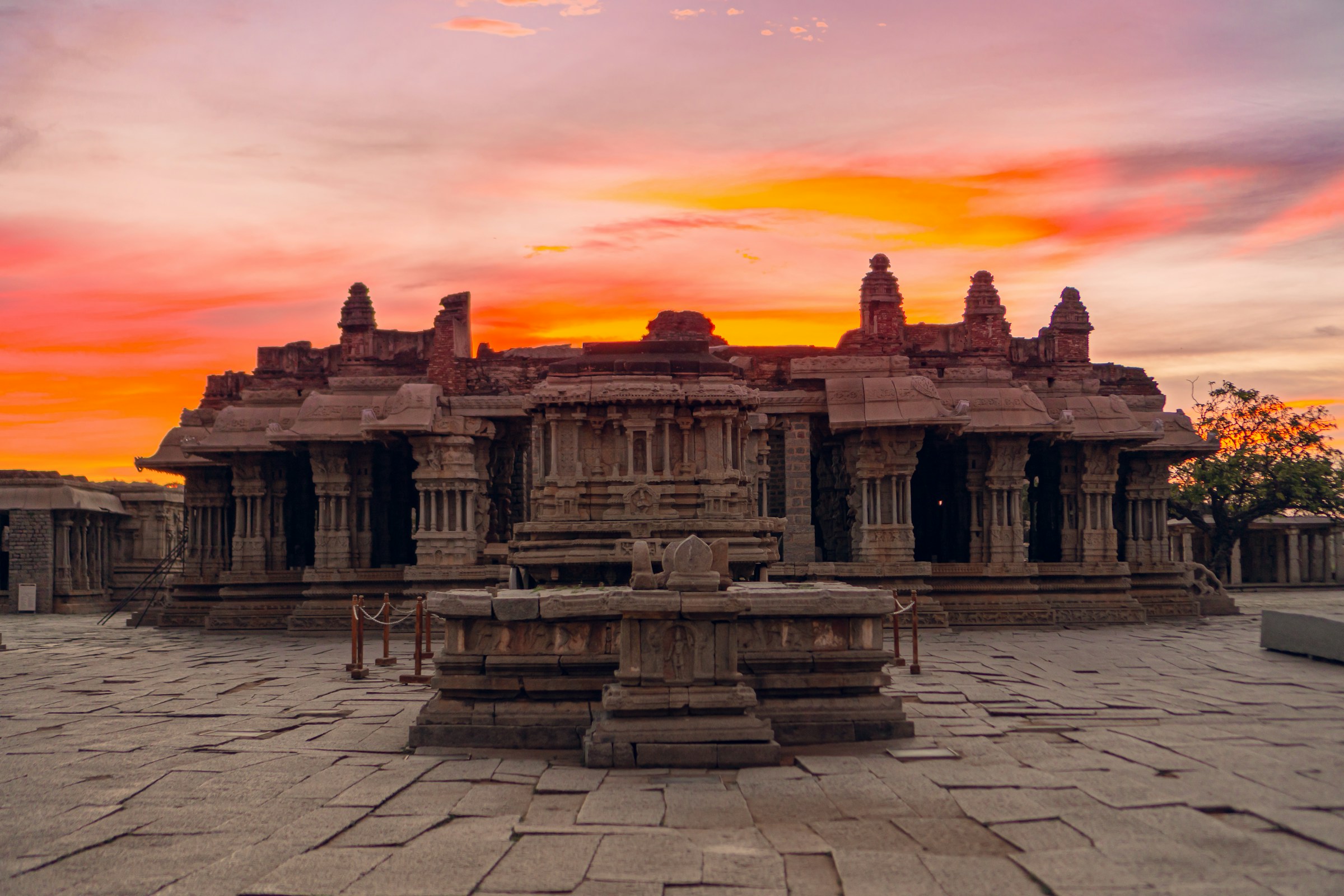
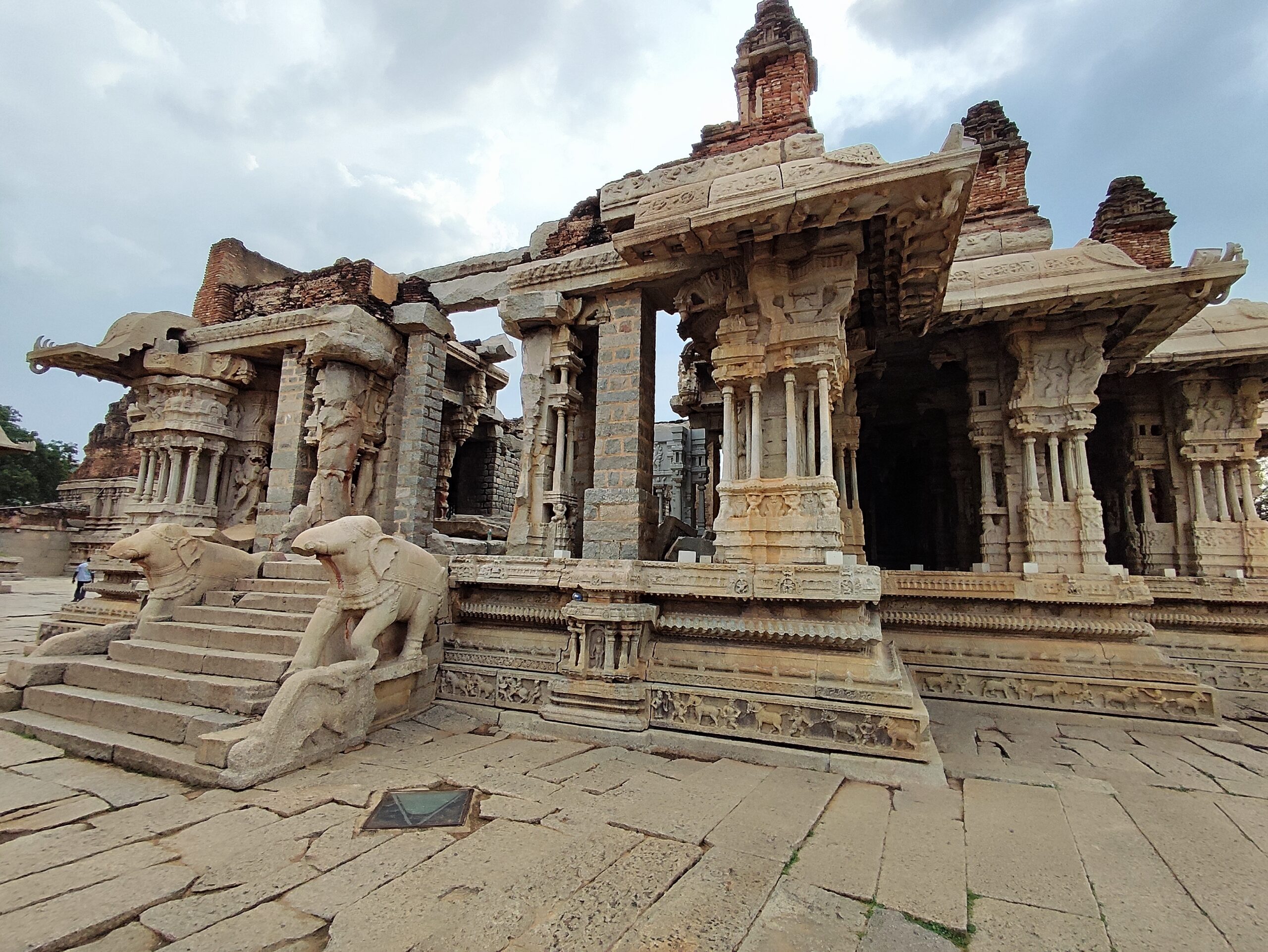
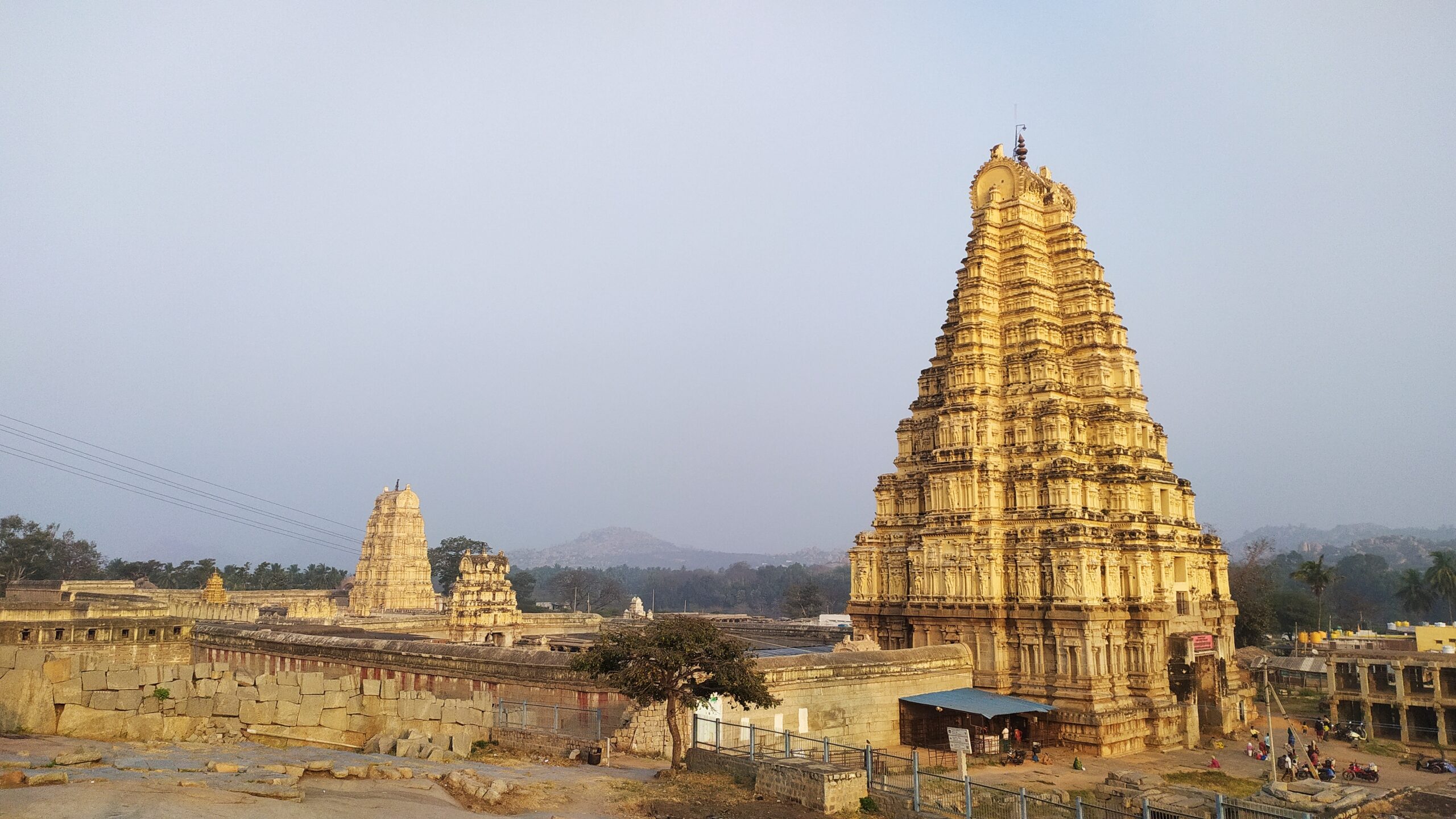
Image Source: Kunal Gaikwad
About Pattabhirama Temple
Located near the ASI Museum in Kamalapura, about 1.2 km from the Kamalapura Bus Stand, the Pattabhirama Temple is one of the lesser-known yet architecturally significant monuments of Hampi. Though often overshadowed by the famous Virupaksha and Vittala temples, this magnificent structure offers visitors a quieter and more immersive glimpse into the grandeur of the Vijayanagara Empire.
Dedicated to Lord Rama, the temple stands as a remarkable example of the artistic excellence and religious devotion that flourished under Vijayanagara rule. Two inscriptions associated with King Achyuta Raya have been discovered here, though historians believe the temple was likely constructed even before his reign. Today, the temple remains a silent witness to centuries of history, preserving the legacy of one of South India’s greatest empires.
Architectural Grandeur
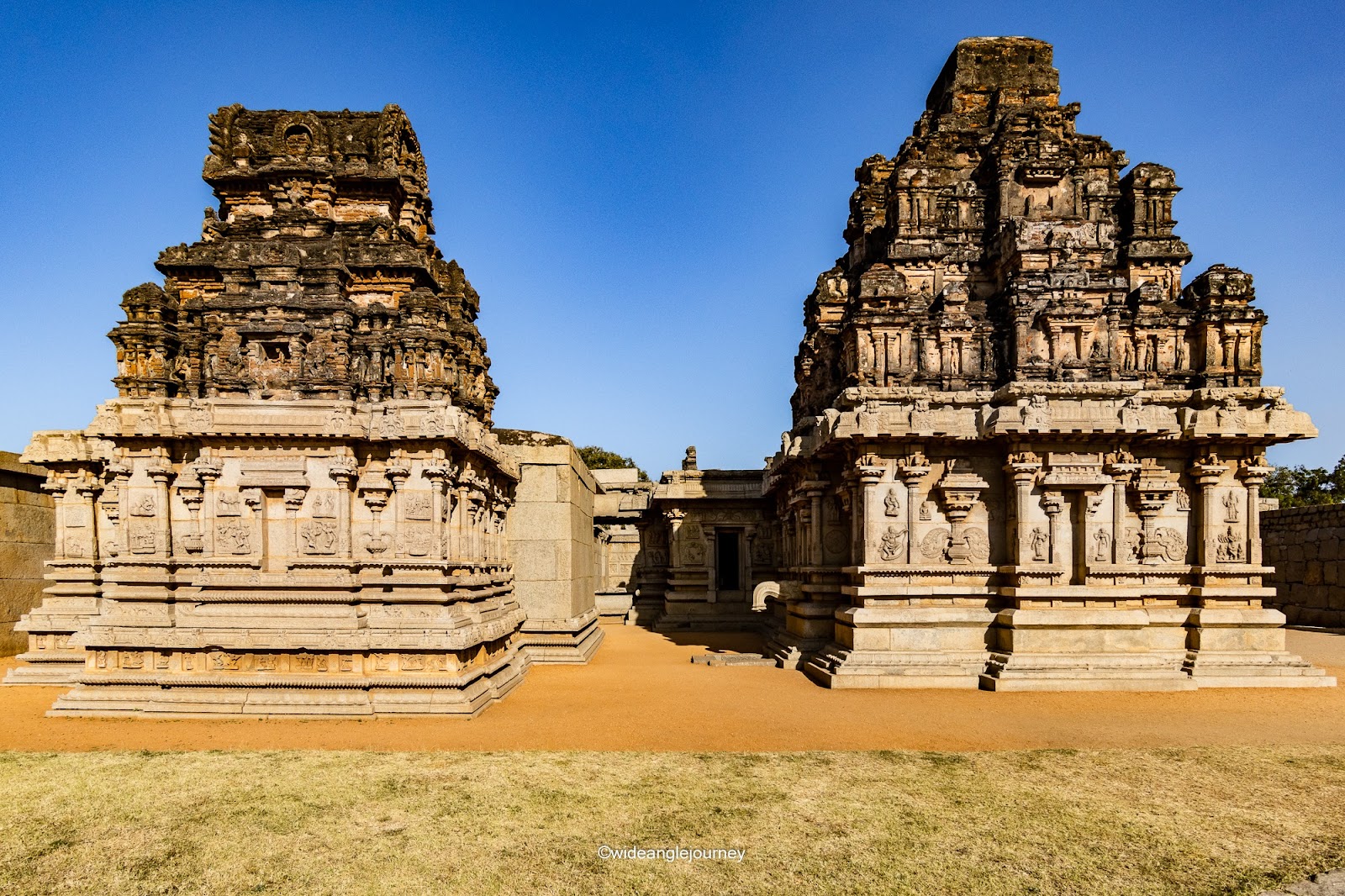
The Pattabhirama Temple is spread across a vast rectangular enclosure and showcases the characteristic Dravidian style of architecture. The main shrine consists of a garbha-griha (sanctum), antarala (vestibule), maha-mandapa (great hall), and ardha-mandapa (entrance hall), all crowned by an elegant three-tiered vimana.
A covered pradakshinapatha (circumambulatory path) surrounds the sanctum and antarala, allowing devotees to perform ritual circumambulation. Although the principal idol is no longer present in the sanctum, the temple complex still houses a shrine dedicated to the goddess, preserving its spiritual significance.
The spacious maha-mandapa is particularly impressive, featuring tall and slender composite pillars carved with intricate designs. On the eastern side of the complex stands an Amman shrine crowned with a two-tier vimana. To the southeast lies the kalyana mandapa, or marriage hall, whose pillars are beautifully adorned with sculptures of Yalis—mythical lion-like creatures commonly seen in Vijayanagara art.
The temple grounds were once paved with granite slabs, reflecting the magnificence and ceremonial importance the site held during its heyday.
Fortified Beauty and Gopuras
What sets Pattabhirama Temple apart is its fortified layout. The temple complex is enclosed by walls and gateway towers on all four sides—east, west, north, and south. The eastern gateway is especially noteworthy, featuring a granite base topped by a brick superstructure.
The lower portions of the gateway contain terracotta decorations and the crescent boar emblem associated with the Vijayanagara kings. Although the eastern gopura now stands in a partially ruined state, it still hints at the grandeur the temple once possessed.
Walking through the silent courtyards and pillared halls, visitors can almost imagine the rituals, festivals, and daily life that once animated this sacred space centuries ago.
Historical Significance
Unlike some of Hampi’s more crowded monuments, Pattabhirama Temple offers a peaceful atmosphere, making it ideal for history enthusiasts, photographers, and travelers seeking a deeper connection with the heritage of the Vijayanagara Empire. The temple’s scale and craftsmanship reflect the empire’s prosperity and devotion to temple architecture.
Today, under the protection of the Archaeological Survey of India (ASI), the temple remains one of Hampi’s hidden treasures waiting to be explored.
Timings: 6:00 AM – 6:00 PM.
How to Reach Pattabhirama Temple
Pattabhirama Temple is situated in Kamalapura, close to the ASI Museum and approximately 4 km from the main Hampi ruins. The nearest town is Kamalapura, which serves as an important gateway to Hampi’s heritage sites.
- By Air: The nearest airport is Jindal Vijayanagar Airport in Toranagallu, about 35 km away. The nearest major airport is Hubballi Airport, around 160 km from Hampi.
- By Train: The closest railway station is Hospet Junction (Hosapete), located about 12 km from the temple. Taxis, auto-rickshaws, and local buses are readily available from the station.
- By Road: Hampi and Kamalapura are well connected by road to Bengaluru, Hubballi, and Ballari. Visitors can hire bicycles, scooters, auto-rickshaws, or taxis to reach the temple from Hampi Bazaar or Kamalapura.
- Local Transport: Since the temple lies near the ASI Museum, many travelers combine both attractions in a single visit.
Nearby Attractions
Virupaksha Temple
One of the oldest functioning temples in India, dedicated to Lord Shiva and located in the heart of Hampi.
Vittala Temple
Famous for its iconic stone chariot and musical pillars, this UNESCO World Heritage monument is a must-visit.
Lotus Mahal
A beautiful Indo-Islamic structure situated within the Zenana Enclosure, believed to have served as a royal pavilion.
Elephant Stables
An impressive structure that once housed the royal elephants of the Vijayanagara Empire.
Hazara Rama Temple
Renowned for its intricate Ramayana carvings and exquisite bas-relief panels.
Archaeological Museum, Kamalapura
Located close to the temple, the museum displays sculptures, coins, inscriptions, and artifacts excavated from Hampi.
Mahanavami Dibba
A massive ceremonial platform where royal celebrations and festivals were once held.
Maps
FAQs
1. What is Pattabhirama Temple famous for?
Pattabhirama Temple is known for its grand Vijayanagara architecture, massive enclosure walls, ornate pillars, and peaceful setting away from the crowds.
2. Who is the temple dedicated to?
The temple is dedicated to Lord Rama, one of the most revered deities in Hinduism.
3. Is there an idol inside the main sanctum?
No, the original idol is no longer present in the sanctum, though a goddess shrine exists within the complex.
4. How much time is needed to explore the temple?
Visitors typically spend 30–45 minutes exploring the temple complex and its surroundings.
5. Is there an entry fee?
As part of the Hampi UNESCO World Heritage region, entry regulations may be subject to ASI guidelines. Visitors should check current ticket policies before visiting.
6. What is the best time to visit Pattabhirama Temple?
The ideal time to visit is between October and February when the weather is pleasant for sightseeing.
7. Can photography be done at the temple?
Yes, photography is generally allowed, making it a great spot for heritage and architectural photography.