Image Source: Shrikanth Bharadwaj
About Sri Anantha Padmanabha Temple
Nestled amidst the peaceful surroundings of Kudupu, on the outskirts of Mangalore, Sri Anantha Padmanabha Temple is a revered spiritual destination dedicated to Lord Vishnu. Surrounded by lush greenery and a serene atmosphere, the temple offers devotees a tranquil retreat away from the noise of city life. Its spiritual significance, ancient traditions, and beautiful architecture attract pilgrims and visitors from across Karnataka and beyond.
The temple is especially known for its connection to serpent worship, sacred rituals, and annual religious festivals that have been observed for generations. Whether you are a devotee seeking blessings or a traveler interested in exploring the cultural heritage of coastal Karnataka, a visit to Sri Anantha Padmanabha Temple is a deeply enriching experience.
Naga Bana – The Sacred Serpent Grove
One of the most unique features of the temple complex is the Naga Bana, located on the eastern side of the temple premises. This sacred grove is dedicated to serpent deities and holds immense religious importance among devotees.
The grove houses numerous serpent idols that are worshipped with great devotion. According to local beliefs, offering prayers at Naga Bana helps remove obstacles, bring prosperity, and seek blessings for family well-being. Many devotees perform special rituals here, particularly during Nagapanchami and other auspicious occasions dedicated to serpent worship.
The shaded surroundings and ancient atmosphere of the grove add to its spiritual charm, making it one of the most visited sections of the temple complex.
Bhadra Saraswathi Thirtha
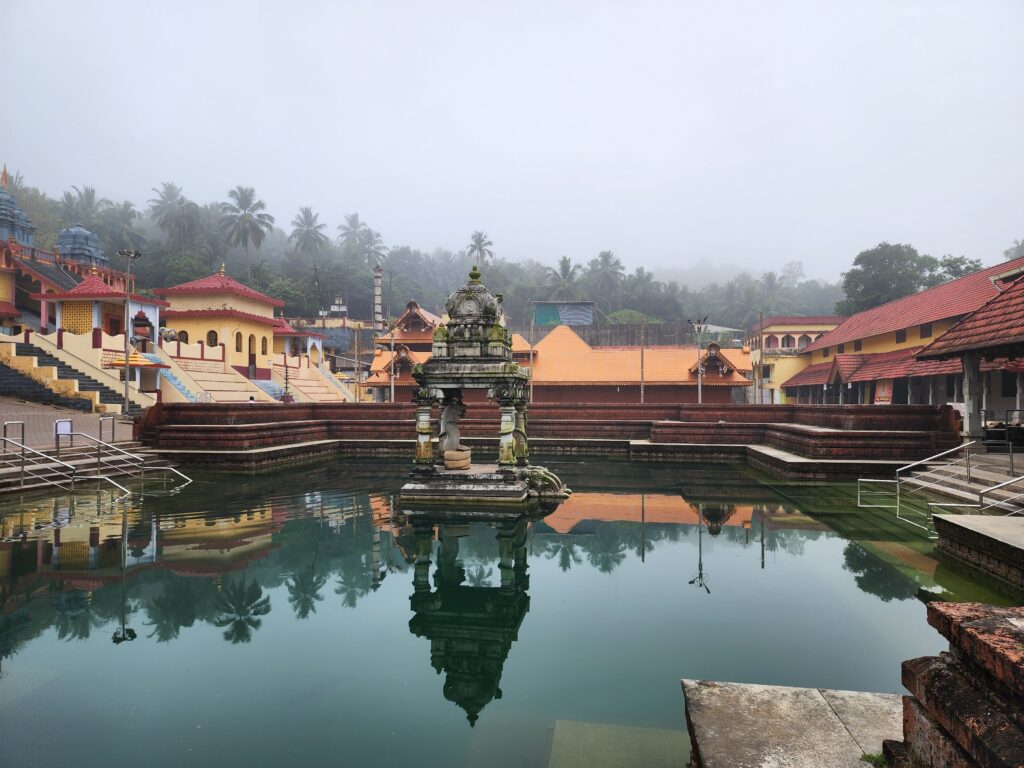
Situated on the left side of the temple is the sacred Bhadra Saraswathi Thirtha, a holy pond that holds special significance for devotees. Pilgrims from different parts of the region visit this sacred water body to perform ritual baths and offer prayers before entering the main temple.
According to local tradition, bathing in the holy waters is believed to cleanse the mind and body while bringing divine blessings. The pond remains an integral part of the temple’s religious practices and continues to be a place of faith and spiritual reflection.
The Main Deity and Sub-Shrines
At the heart of the temple is Lord Sri Anantha Padmanabha Swamy, a form of Lord Vishnu depicted reclining on the celestial serpent Anantha. The deity is worshipped with great devotion and is considered the protector and preserver of the universe.
Alongside the main deity, the temple houses several important sub-shrines dedicated to:
- Goddess Sri Devi.
- Lord Ganapathi.
- Lord Subramanya.
- Jaya.
- Vijaya.
These deities collectively enhance the spiritual significance of the temple and provide devotees with an opportunity to seek blessings from multiple divine manifestations within a single sacred complex.
Vibrant Festivals and Religious Traditions
Sri Anantha Padmanabha Temple comes alive during its annual religious celebrations, drawing thousands of devotees. One of the most important festivals celebrated here is Shashti, observed during December with great enthusiasm and devotion. Special prayers, cultural programs, and religious ceremonies are conducted throughout the festival period.
Another major celebration is Nagapanchami, a festival dedicated to serpent deities. On this auspicious day, devotees offer milk, flowers, and prayers to the sacred serpent idols housed within the Naga Bana. The temple atmosphere becomes especially vibrant as chants, hymns, devotional songs, and traditional rituals fill the air.
These festivals provide visitors with a wonderful opportunity to witness the rich spiritual traditions and cultural heritage of coastal Karnataka.
Temple Architecture and Atmosphere
The temple reflects the traditional architectural style commonly seen in the temples of the Tulunadu region. The peaceful surroundings, ancient trees, sacred shrines, and well-maintained premises create a calm and meditative environment.
Many visitors spend time walking around the complex, participating in prayers, and enjoying the spiritual serenity that characterizes the temple. The early morning and evening hours are particularly peaceful and ideal for worship.
Temple Timings
Sri Anantha Padmanabha Temple is generally open to devotees and visitors from:
6:30 AM to 7:30 PM
Visitors are advised to check with temple authorities during major festivals and special occasions, as timings may vary.
How to Reach
By Air
The nearest airport is Mangalore International Airport, located approximately 12 kilometers from the temple. Taxis and app-based cab services are readily available from the airport.
By Rail
The temple is about 8 kilometers from Mangalore Central Railway Station and can be easily reached by taxi, auto-rickshaw, or local bus.
By Road
Kudupu is well connected to Mangalore city through a network of roads. Regular city buses operate between Mangalore and Kudupu. Visitors traveling by private vehicle can reach the temple within 20–30 minutes from the city center, depending on traffic conditions.
Nearby Attractions
Kudupu Sri Anantheshwara Temple
Located nearby, this ancient temple is another important spiritual site known for its traditional rituals and religious significance.
Kadri Manjunath Temple
One of the oldest temples in Mangalore, dedicated to Lord Manjunatha, featuring beautiful architecture and historic importance.
Pilikula Nisargadhama
A popular eco-tourism destination featuring a biological park, botanical garden, lake, heritage village, and science center.
St. Aloysius Chapel
Famous for its stunning fresco paintings and remarkable European-style artwork, this chapel is one of Mangalore’s most iconic landmarks.
Panambur Beach
A beautiful beach known for its clean shoreline, water activities, and spectacular sunsets along the Arabian Sea.
Sultan Battery
A historic watchtower built during the reign of Tipu Sultan that offers panoramic views of the surrounding river and landscape.
Maps
Located a mere 9 kilometers from the bustling Mangalore Railway Station.
FAQs
1. Where is Sri Anantha Padmanabha Temple located?
The temple is located in Kudupu, a peaceful suburb on the outskirts of Mangalore in Karnataka.
2. Which deity is worshipped in the temple?
The temple is dedicated to Lord Sri Anantha Padmanabha Swamy, a revered form of Lord Vishnu.
3. What is Naga Bana?
Naga Bana is a sacred serpent grove within the temple complex that houses numerous serpent idols worshipped by devotees.
4. What is the significance of Bhadra Saraswathi Thirtha?
It is a sacred pond where devotees perform ritual bathing and prayers, believing the holy waters bring purification and divine blessings.
5. What are the temple timings?
The temple is generally open from 6:30 AM to 7:30 PM.
6. Which festivals are celebrated at the temple?
Shashti and Nagapanchami are among the most important festivals celebrated with great devotion and traditional rituals.
7. Is there an entry fee to visit the temple?
No, entry to the temple is generally free for devotees and visitors.
8. What is the best time to visit?
The temple can be visited throughout the year, but festival periods such as Shashti and Nagapanchami offer a unique opportunity to experience its vibrant religious traditions.