Image Source: Rameshgraphix
About Thang Ta
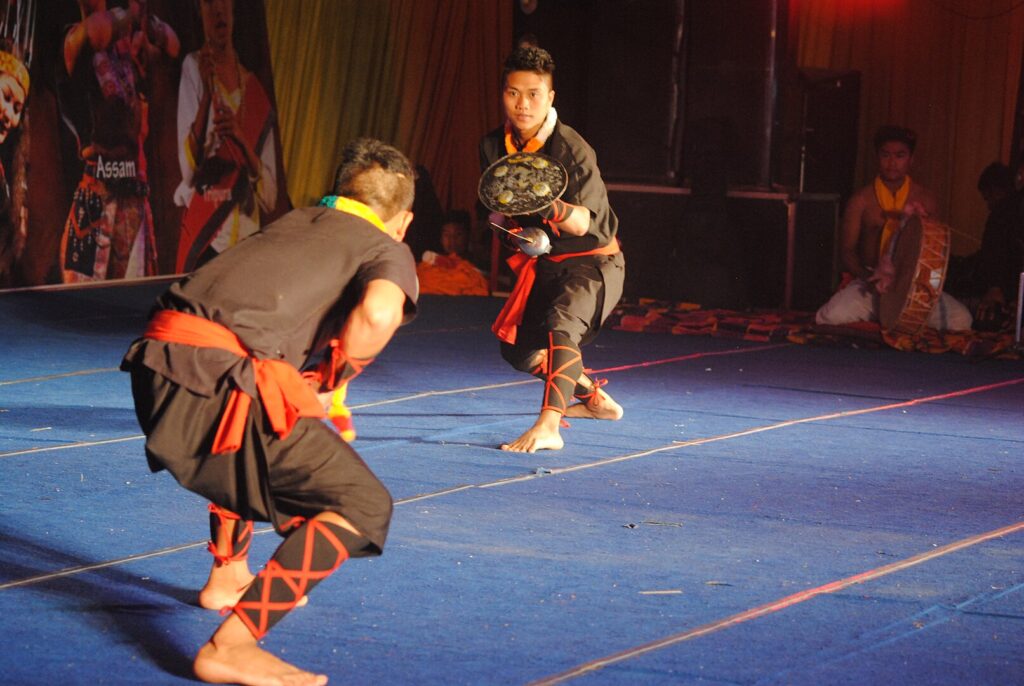
Thang Ta, literally meaning “Sword and Spear” in the Meitei language, is one of the most iconic traditional martial arts of Manipur. This ancient combat form has been practiced for centuries by Manipuri warriors, blending warfare techniques with deep spiritual and cultural significance. It is more than just a fighting style—it is a disciplined way of life, reflecting the courage, precision, and cultural pride of the Meitei people.
Historical & Cultural Significance
Historically, Thang Ta evolved as a defensive and offensive martial system during Manipur’s frequent conflicts with neighboring kingdoms. Warriors were trained in close-combat techniques, mastery of the sword (thang) and spear (ta), and fluid hand-to-hand combat.
Over time, it became a ceremonial art, performed during festivals such as Lai Haraoba and other cultural events, where its movements symbolize harmony between strength and spirituality.
Performance & Techniques
The martial art is characterized by swift footwork, elegant body movements, and precise weapon handling. Practitioners demonstrate battle-ready stances, coordinated attacks, and defensive maneuvers, often set to rhythmic beats and traditional Manipuri music.
The visual spectacle is a blend of athleticism, artistry, and storytelling, narrating the bravery of Manipuri warriors.
Travel Experience
For travelers exploring Manipur, watching a live Thang Ta performance offers a rare glimpse into the state’s warrior past. Such performances are often showcased in Imphal, during cultural festivals, or in traditional Meitei villages.
Observing this martial art amidst the vibrant cultural backdrop of Manipur not only reveals the state’s martial heritage but also connects visitors to its deep-rooted traditions, making it an unmissable cultural experience.