Image Source: Bitan Roy
About Chaturbhuj Temple
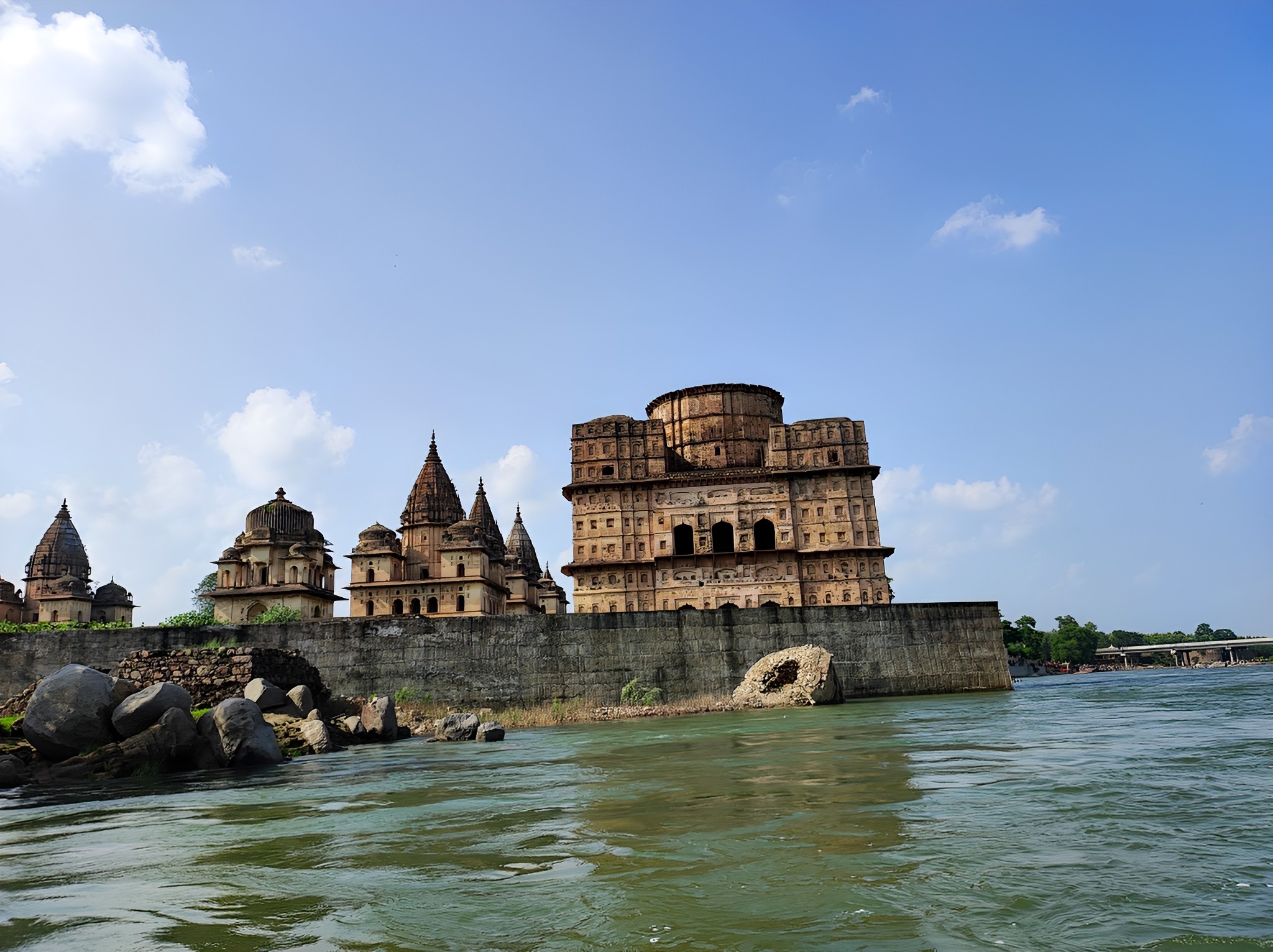
Nestled in the historic town of Orchha, the Chaturbhuj Temple is one of the most remarkable architectural and spiritual landmarks of central India. The temple is not only admired for its towering structure and unique design but also for the fascinating legend associated with its origin. Standing majestically above the skyline of Orchha, the temple beautifully reflects the blend of devotion, royal history, and medieval craftsmanship.
Fascinating Story
The story of the Chaturbhuj Temple is deeply connected with faith and devotion. According to local legends, Queen Ganeshkuwari, the wife of King Madhukar Shah of Orchha, was an ardent devotee of Lord Rama. Her husband, however, worshipped Lord Krishna. One day, the queen is believed to have had a divine dream in which Lord Rama instructed her to build a temple dedicated to him.
Determined to fulfill the divine command, the queen travelled all the way to Ayodhya to bring back an idol of Lord Rama. When she returned to Orchha, the grand Chaturbhuj Temple was still under construction. Until the temple was completed, the idol was temporarily placed inside her palace.
However, when the construction finally ended and the idol was to be moved to the temple sanctum, it is said that the idol refused to move from its place. Devotees considered this a divine sign, and the idol remained in the palace itself. That palace later became the famous Ram Raja Temple, where Lord Rama is worshipped as a king even today. As a result, the Chaturbhuj Temple was left without its intended main idol, making its history unique among Indian temples.
Architecture of Chaturbhuj Temple
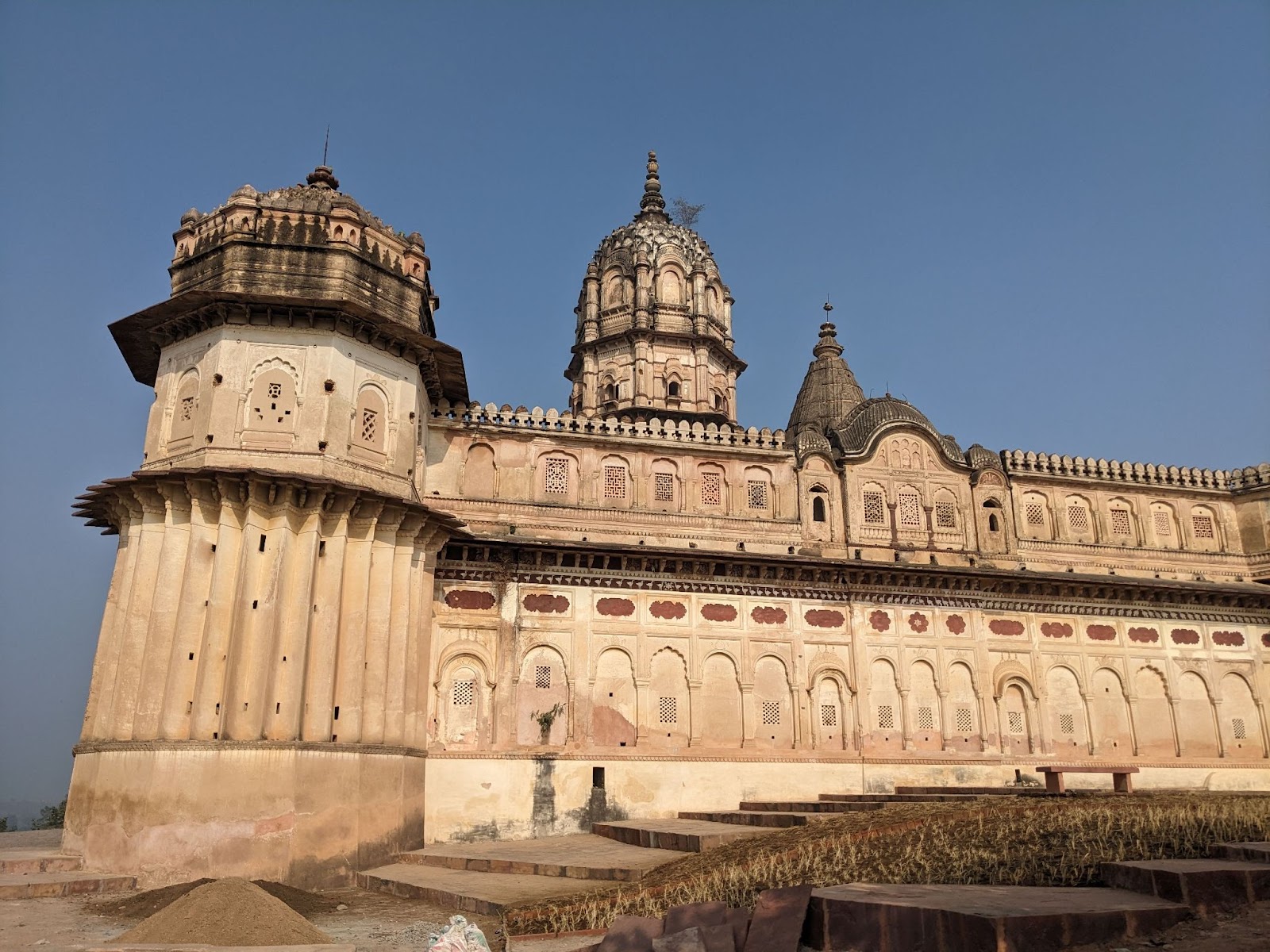
The Chaturbhuj Temple is an extraordinary example of medieval Indian architecture. Built on a massive raised platform nearly 4.5 meters high, the temple dominates the landscape of Orchha with its imposing height and striking appearance. Its towering spires resemble pine cones and create a silhouette that can be seen from different parts of the town.
The temple rises to an impressive height of around 105 meters, giving it an almost palace-like appearance. Interestingly, its grand structure often reminds visitors of European basilicas because of its spacious interiors, tall towers, and symmetrical planning. The temple’s name, “Chaturbhuj,” refers to the four-armed form of Lord Vishnu.
Reaching the entrance requires climbing a steep and winding staircase consisting of 67 steps, each approximately one meter high. Although the climb can feel demanding, the views from the upper sections of the temple are rewarding and unforgettable.
The main hall, or mandapa, is designed in a cruciform shape, with arms extending at right angles to the vestibule. The structure reflects a fusion of temple and fort-style architecture along with elements of the Maru-Gurjara architectural tradition. The design showcases both strength and elegance, making the temple architecturally distinct from many other temples in India.
Interior and Exterior Design
The exterior walls of the temple are adorned with lotus motifs, geometric carvings, and decorative stone moldings that enhance its grandeur. Beautiful cornices supported by lotus-bud brackets and ornamental balcony projections further add to the visual appeal of the structure.
Inside, the temple has a relatively simple yet spiritually calming atmosphere. Unlike many heavily decorated temples, the Chaturbhuj Temple focuses more on structural magnificence than excessive ornamentation. The ceilings of the central shrine area are decorated with blossoming lotus designs, while small kiosks and high arches create a majestic interior space filled with natural light and ventilation.
One of the lesser-known historical details about the temple is that its roof was once covered with gold plating. Over the centuries, much of it disappeared due to weathering and pilferage, but the temple still retains its royal aura.
Scenic Views from the Temple
One of the highlights of visiting Chaturbhuj Temple is the panoramic view from its upper levels. From the rooftop, visitors can enjoy breathtaking views of Orchha, the winding Betwa River, and nearby historical monuments.
Important landmarks visible from the temple include the Ram Raja Temple, Lakshmi Narayan Temple, and the famous Sawan Bhadon towers. The eastern alignment of the temple also connects visually with the Orchha Fort complex, adding to the town’s architectural harmony.
Best Time to Visit
The best time to visit Chaturbhuj Temple is during the winter and monsoon seasons, generally between July and March. During these months, the weather remains pleasant and comfortable for sightseeing. The monsoon season adds lush greenery around Orchha, while winter offers cool temperatures ideal for exploring the temples and forts of the region.
Summer months can become quite hot, especially during the afternoon, so early morning or evening visits are recommended if travelling during that period.
Temple Timings
The temple is generally open to visitors from:
9:00 AM to 5:00 PM
It is advisable to visit during daylight hours to fully appreciate the architectural details and scenic views from the upper sections.
How to Reach Chaturbhuj Temple
By Train
- The nearest major railway station is Jhansi Junction (Uttar Pradesh), about 15 km from Orchha.
- Jhansi is well connected to Delhi, Bhopal, Gwalior, Agra, and other major cities.
- From Jhansi, you can hire a taxi, auto-rickshaw, or take a local bus to Orchha.
By Air
- The nearest airport is Gwalior Airport, around 120 km away.
- Another option is Khajuraho Airport (~180 km), which has limited but direct connections to major cities like Delhi.
- From either airport, taxis are available to reach Orchha.
By Road
- Orchha is well connected by road to nearby cities:
- Jhansi – 15 km
- Gwalior – 120 km
- Khajuraho – 170–180 km
- Regular state transport buses and private taxis operate on these routes.
Local Travel in Orchha
- Once in Orchha, the Chaturbhuj Temple is easily reachable:
- Located on a hill inside the Orchha Fort complex area
- You can walk from Ram Raja Temple (1–2 km) or take a short auto ride
- A small climb is required to reach the temple platform, offering great views of the Betwa River and surrounding cenotaphs
Nearby Attractions
While visiting Chaturbhuj Temple, travelers can also explore several nearby attractions in Orchha:
- Orchha Fort Complex – A magnificent complex of palaces, temples, and courtyards built by Bundela rulers.
- Ram Raja Temple – The only temple in India where Lord Rama is worshipped as a king.
- Jahangir Mahal – Known for its Indo-Islamic architecture and royal history.
- Lakshmi Narayan Temple – Famous for its murals and fort-like structure.
- Betwa River – Ideal for peaceful riverside walks and photography.
Google Maps and Location
FAQs
Why is Chaturbhuj Temple famous?
Chaturbhuj Temple is famous for its unique architecture, towering spires, and the fascinating legend associated with Lord Rama’s idol that was never moved into the temple sanctum.
Who built the Chaturbhuj Temple?
The temple was built during the Bundela dynasty under the patronage of Queen Ganeshkuwari and King Madhukar Shah of Orchha.
Which deity is associated with Chaturbhuj Temple?
The temple was originally intended for Lord Rama, but it is associated with the four-armed form of Lord Vishnu, which is reflected in the temple’s name “Chaturbhuj.”
How many steps are there in Chaturbhuj Temple?
Visitors must climb around 67 steep steps to reach the temple’s main entrance.
Is photography allowed inside the temple?
Yes, photography is generally allowed in most areas of the temple, especially the outer sections and rooftop viewpoints.
How much time is needed to explore the temple?
A visit usually takes around 1 to 2 hours, especially if you wish to admire the architecture and enjoy the panoramic views from the top.
What is the best season to visit Orchha?
Winter and monsoon are considered the best seasons to visit Orchha because of the pleasant weather and scenic surroundings.