Image Source: Neha 02
Inside the golden city of Rajasthan, Jaisalmer is widely admired for its living heritage, sandstone architecture, and deeply rooted spiritual traditions. Among its many attractions, the Jain temples located within the historic Jaisalmer Fort stand out as some of the finest examples of craftsmanship and devotion. These temples are not just places of worship but also living museums of art, history, and philosophy that reflect centuries of Jain cultural influence in the region.
Overview of the Jain Temples in Jaisalmer
The Jain temple complex inside Jaisalmer Fort is a remarkable cluster of seven temples dedicated to different Tirthankaras of Jainism. Built between the 12th and 15th centuries, these temples are known for their intricate carvings, golden-yellow sandstone structures, and peaceful spiritual atmosphere. Walking through them feels like stepping into a different era where art and devotion blended seamlessly.
What makes these temples especially unique is their location inside a functioning fort city. Unlike isolated temple complexes, these shrines are woven into the everyday fabric of the fort, making them both historically and spiritually significant.
History
The Jain temples of Jaisalmer trace their origins back to the medieval period when the city was a flourishing trade center. Wealthy Jain merchants played a major role in funding the construction of these temples as acts of devotion and cultural contribution.
Most of these temples were dedicated to different Tirthankaras and built over several centuries, primarily between the 12th and 15th centuries CE. The architecture shows strong influence from the famous Dilwara temples of Mount Abu, especially in the use of fine marble-like detailing and highly polished stone carvings.
The use of yellow sandstone not only matches the fort’s aesthetic but also gives the entire complex a glowing golden appearance, especially during sunrise and sunset.
Architecture
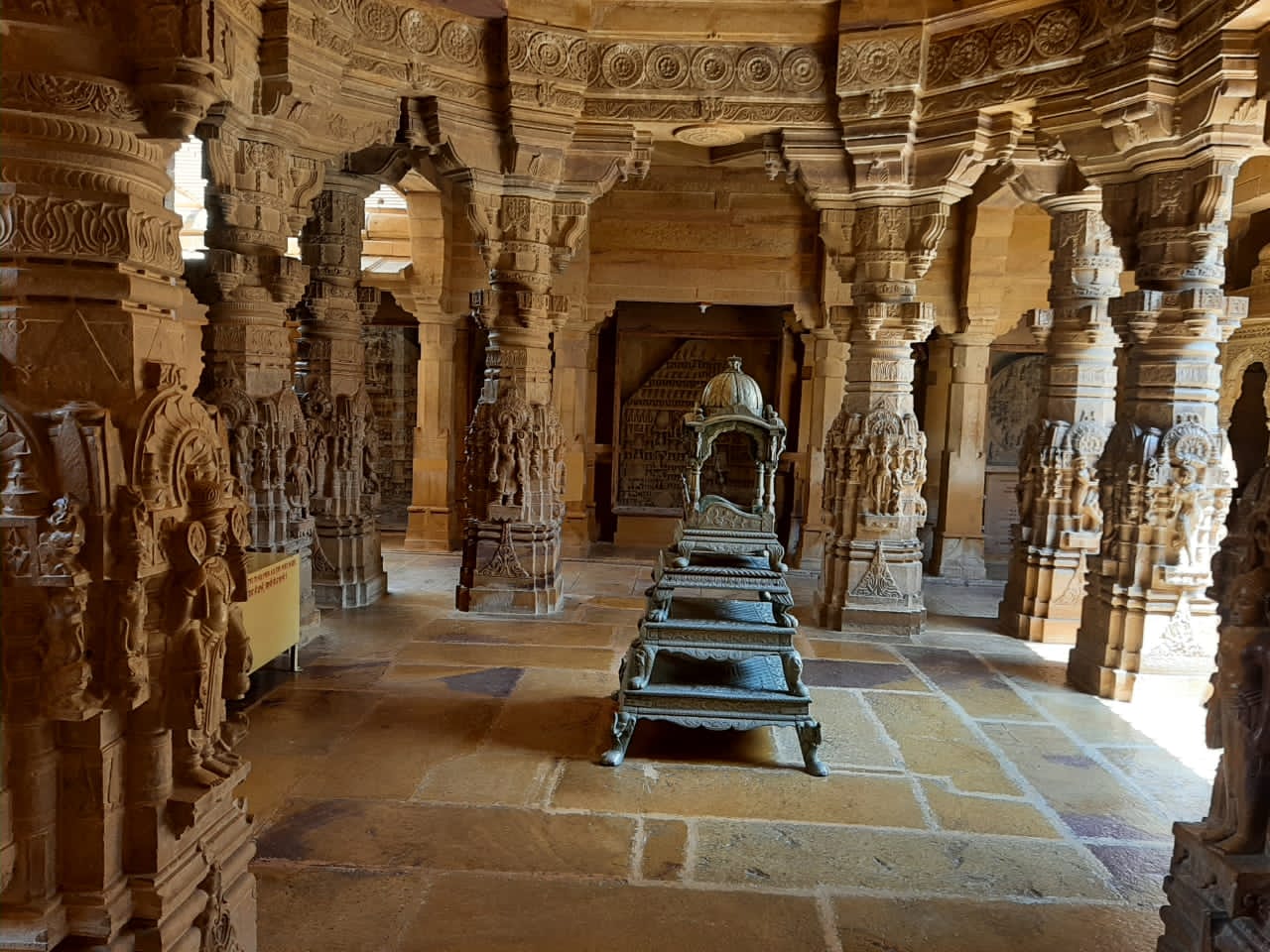
The architecture of the Jain temples is what truly leaves visitors spellbound. The entire complex is interconnected through narrow corridors, pillared halls, and intricately carved gateways.
Every surface seems to tell a story—whether it is scenes from Jain mythology, depictions of celestial beings, or symbolic patterns representing spiritual teachings. The level of detail is astonishing, with even the smallest pillars carrying delicate carvings.
Paintings and stone reliefs inside the temples illustrate Jain legends, moral lessons, and the lives of the Tirthankaras. The combination of light filtering through carved stone jalis and the soft golden hue of the sandstone creates a calm, almost divine ambiance.
Major Temples Inside the Complex
Chandraprabhu Temple
Built in 1509, the Chandraprabhu Temple is dedicated to the eighth Tirthankara, Chandraprabhu. It is known for its beautifully sculpted pillars arranged in elegant toranas (arches). The mandapa is richly decorated, showcasing fine stone artistry that reflects the craftsmanship of the era.
Rishabdev Temple
Located close to Chandraprabhu Temple, this shrine is dedicated to Rishabdev, the first Tirthankara. The temple walls are adorned with finely detailed sculptures, many of which are preserved behind glass for protection. The pillars feature celestial figures, including gods and nymphs, adding a divine artistic touch.
Parsvanath Temple
Dedicated to Lord Parshvanath, the 23rd Tirthankara, this temple is a peaceful space for reflection and prayer. Located near Chandraprabhu Temple, it is admired for its serene atmosphere and spiritual energy. A passage from here leads toward the Shitalnath Temple, which houses a unique idol made from eight precious metals, adding to its sacred importance.
Kunthanath Temple
Considered one of the most prominent temples in the complex, Kunthanath Temple is admired for its architectural grandeur. It is believed to be inspired by ancient temple designs from Hastinapur, the birthplace associated with Lord Kunthanath. Its intricate structure and detailed carvings make it a highlight for both pilgrims and architecture enthusiasts.
Shantinath Temple
Dedicated to the 16th Tirthankara, Shantinath, this temple was constructed in 1536 CE. The beautifully carved idol of Lord Shantinath is the central attraction here. The temple structure itself reflects a balanced blend of simplicity and artistic richness, making it spiritually uplifting.
Gyan Bhandar Library
One of the most fascinating parts of the temple complex is the Gyan Bhandar library. This ancient manuscript collection is a treasure for researchers and scholars interested in Jain philosophy, literature, and history.
The library houses rare palm-leaf manuscripts and ancient texts that offer deep insights into Jain teachings, ethics, and cosmology. It reflects how Jains not only contributed to religious architecture but also played a key role in preserving knowledge and education.
Visiting Information
Visiting the Jain temples inside Jaisalmer Fort is a memorable experience for travelers.
Location: Inside Jaisalmer Fort complex
Accessibility: Easily reachable by rickshaw or shared auto from any part of Jaisalmer city
Timings: Generally open from 5:00 AM to 12:00 PM
Entry: Nominal entry fee may apply for foreigners and camera use
Since the temples are inside a living fort, visitors should be mindful of local residents and follow modest dress codes while exploring.
Why You Should Visit
A visit to these Jain temples is not just about sightseeing—it’s about experiencing centuries of devotion carved in stone. Whether you are interested in history, architecture, spirituality, or photography, the temples offer something meaningful for everyone. The calm atmosphere inside the fort provides a striking contrast to the bustling streets of Jaisalmer outside.
Location
FAQs
1. How many Jain temples are inside Jaisalmer Fort?
There are seven main Jain temples inside the Jaisalmer Fort complex, each dedicated to different Tirthankaras.
2. What are the Jain temples made of?
They are primarily built using golden-yellow sandstone, which gives them their iconic glowing appearance.
3. Who built the Jain temples in Jaisalmer?
They were built by wealthy Jain merchants between the 12th and 15th centuries as acts of devotion and community contribution.
4. Is photography allowed inside the temples?
Photography rules may vary. In some areas, it is restricted to protect ancient manuscripts and carvings, especially inside the Gyan Bhandar library.
5. What is special about the Gyan Bhandar library?
It contains rare Jain manuscripts and ancient texts that are important for understanding Jain philosophy and history.
6. What is the best time to visit the temples?
Early morning hours are ideal, as the temples are peaceful and the lighting enhances the beauty of the sandstone carvings.