Image Source: Girish Kumar
About Jaisalmer Fort
Perched dramatically on the rocky Trikuta Hill in the heart of Jaisalmer, Jaisalmer Fort is one of the most iconic landmarks in Rajasthan. Popularly known as the Golden Fort or Sonar Quila, the fort rises like a giant sandcastle from the middle of the Thar Desert. Built from yellow sandstone, the structure glows with a magical golden hue under the sunlight, especially during sunrise and sunset, which is how it earned its famous nickname.
Recognized as a UNESCO World Heritage Site, the fort is not just a historical monument but a living fort where people still reside within its walls. Narrow lanes filled with traditional houses, handicraft shops, rooftop cafés, temples, and centuries-old havelis give visitors the feeling of stepping into another era. Located around 1.5 kilometers from the Jaisalmer Railway Station, the fort remains one of the most visited attractions in Rajasthan and an essential stop for travelers exploring the desert city.
History of Jaisalmer Fort
Jaisalmer Fort was established in 1156 AD by the Rajput ruler Maharawal Jaisal Singh, after whom the city of Jaisalmer was named. The fort served as the capital of the Bhati Rajputs and became an important center for trade because of its strategic location along ancient caravan routes connecting India with Central Asia and the Middle East.
Over the centuries, the fort witnessed numerous invasions and battles. Powerful rulers and armies, including Alauddin Khilji of the Delhi Sultanate, attempted to capture the fort due to its wealth and importance in trade. Despite repeated attacks, the fort survived and continued to flourish. During the height of the Silk Route trade, merchants, travelers, and caravans carrying silk, spices, and precious goods often halted here for rest and business.
The fort also carries stories of Rajput bravery, sacrifice, and resilience. Several historical accounts mention acts of jauhar and fierce resistance during enemy sieges, reflecting the warrior spirit of the Rajput rulers who defended the fort for generations.
Architecture of Jaisalmer Fort
Jaisalmer Fort is considered one of the finest examples of Rajput military architecture blended with subtle Islamic influences. Spread across approximately 1,500 feet in length and 750 feet in width, the massive structure stands proudly atop a hill rising nearly 250 feet above the surrounding city.
The fort’s defensive design is remarkable. It is protected by huge outer walls, double fortification systems, and 99 bastions, many of which were added during the 17th century to strengthen its security. These bastions once housed cannons and guards who protected the kingdom from invading forces.
Inside the fort lies a maze of narrow winding lanes that connect homes, temples, palaces, and courtyards. Unlike many forts in India that stand empty today, Jaisalmer Fort still has a living community, with families continuing to reside within its ancient walls. Nearly one-fourth of the city’s population once lived inside the fort complex.
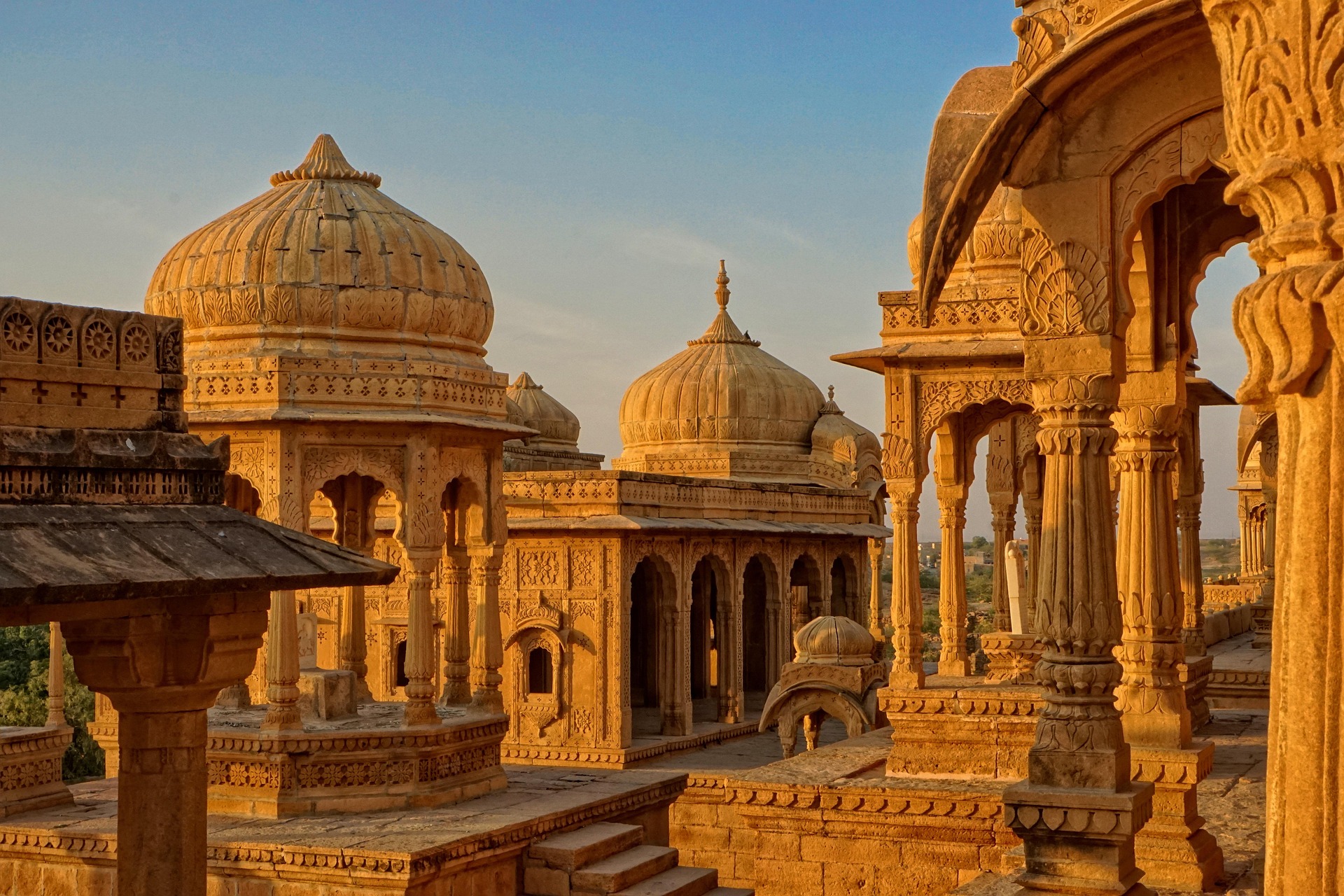
The golden-yellow sandstone used throughout the fort gives the entire structure a warm and glowing appearance. Intricately carved balconies, jharokhas, latticed windows, and beautifully decorated gateways showcase the artistic excellence of medieval Rajasthan.
The Four Grand Gateways
Entry into the fort takes visitors through four massive gateways that were strategically designed for defense. These include:
Ganesh Pol
Suraj Pol
Bhoota Pol
Hawa Pol
Each gate has historical significance and reflects the fort’s architectural brilliance. The curved approach paths between the gates were intentionally constructed to slow down enemy elephants and invading armies.
As you walk through these gateways, the atmosphere changes completely. The bustling streets, sandstone buildings, colorful shops, and echoes of folk music create an unforgettable cultural experience.
Maharawal Palace and Museum
One of the main attractions inside the fort is the magnificent Maharawal Palace, once home to the royal rulers of Jaisalmer. The palace features intricately carved balconies, royal chambers, courtyards, and panoramic viewpoints overlooking the golden city.
A section of the palace has been converted into a museum displaying artifacts from the royal era. Visitors can explore collections of ancient weapons, royal costumes, utensils, manuscripts, paintings, ornaments, and traditional furnishings that offer a glimpse into the lifestyle of the Rajput kings and queens.
The palace rooftop also provides breathtaking views of Jaisalmer city, especially during sunset when the entire landscape turns golden.
Jain Temples Inside the Fort
Jaisalmer Fort is home to a group of beautifully carved Jain temples dating back to the 12th and 15th centuries. Dedicated to Jain Tirthankaras, these temples are renowned for their stunning architecture and detailed stone carvings.
The interiors feature elaborate sculptures, pillars, domes, and intricate artwork that demonstrate the exceptional craftsmanship of medieval artisans. The temples are not only places of worship but also important cultural and historical treasures that preserve Jain heritage in Rajasthan.
The peaceful atmosphere inside the temples offers a striking contrast to the lively streets outside.
Lakshmi Temple and Spiritual Importance
Another important religious site within the fort complex is the Lakshmi Temple, dedicated to Goddess Lakshmi, the Hindu goddess of wealth and prosperity. Devotees and tourists visit the temple to seek blessings and admire its traditional architecture.
The presence of Hindu and Jain temples together within the fort reflects the region’s rich cultural harmony and spiritual diversity.
Tazia Tower – A Unique Architectural Marvel
Standing close to the royal palace is the impressive Tazia Tower, a five-story structure known for its delicate craftsmanship and distinctive design. Built by Muslim artisans, the tower features beautifully carved balconies and decorative roofs inspired by Bengali architecture.
Each level of the tower becomes progressively smaller, creating a graceful appearance that adds to the fort’s skyline. The detailed stonework and artistic design make it one of the most photographed attractions within the complex.
Life Inside the Living Fort
One of the most fascinating aspects of Jaisalmer Fort is that it remains a living fort even today. Local families continue to live inside the fort walls, running guesthouses, handicraft shops, restaurants, and traditional businesses.
Walking through the narrow streets, visitors can experience authentic Rajasthani culture firsthand. From local musicians and puppet shows to handcrafted textiles, jewelry, leather goods, and traditional cuisine, the fort offers a vibrant cultural experience beyond its historical significance.
The fort becomes especially lively during festivals and cultural celebrations when folk dances, music performances, and local traditions fill the streets with energy.
Best Time to Visit Jaisalmer Fort
The ideal time to visit Jaisalmer Fort is between October and March, when the weather remains pleasant and suitable for sightseeing. Summers in Jaisalmer can be extremely hot, with temperatures rising above 40°C, making daytime exploration difficult.
Winter evenings are especially beautiful, as the cool desert breeze and illuminated sandstone buildings create a magical atmosphere around the fort.
Visiting Hours and Entry Information
Jaisalmer Fort is generally open to visitors from 9:00 AM to 6:00 PM daily. While entry to certain areas of the fort is free, separate tickets may be required for attractions such as the palace museum and Jain temples.
Hiring a local guide can greatly enhance the experience, as guides often share fascinating stories, legends, and historical details that bring the fort’s past to life.
How to Reach Jaisalmer Fort
The fort is centrally located in Jaisalmer city and can easily be reached by auto-rickshaw, taxi, or even on foot from many nearby hotels.
Nearest Railway Station: Jaisalmer Railway Station (about 1.5 km away).
Nearest Airport: Jaisalmer Airport.
Nearest Major Airport: Jodhpur.
Road connectivity to Jaisalmer is excellent, with buses and taxis available from major cities in Rajasthan.
Location of Jaisalmer Fort
FAQs
Why is Jaisalmer Fort called the Golden Fort?
The fort is built using yellow sandstone that glows golden under sunlight, especially during sunrise and sunset. This golden appearance earned it the nickname “Golden Fort” or “Sonar Quila.”
Is Jaisalmer Fort a UNESCO World Heritage Site?
Yes, Jaisalmer Fort is recognized as part of the UNESCO World Heritage Sites under the group known as the Hill Forts of Rajasthan.
Can people still live inside Jaisalmer Fort?
Yes, Jaisalmer Fort is one of the few “living forts” in the world where local residents still live and work within the fort complex.
How much time is needed to explore the fort?
Most visitors spend around 2 to 4 hours exploring the fort, temples, palace museum, local markets, and viewpoints.
What are the main attractions inside Jaisalmer Fort?
Major attractions include the Maharawal Palace, Jain Temples, Lakshmi Temple, Tazia Tower, fort gateways, museums, local markets, and rooftop viewpoints.
What is the best time to visit Jaisalmer Fort?
The best time to visit is during winter, from October to March, when the weather remains cool and pleasant.
Are guides available inside the fort?
Yes, local guides are available near the entrance and can provide detailed historical and cultural information about the fort and its attractions.
Is photography allowed inside the fort?
Photography is generally allowed in most outdoor areas, although some museums and temples may charge additional camera fees or restrict photography in certain sections.