Image Source: SOURABH KHAMBRA
About Andher Stupas
Hidden among the quiet hills of Madhya Pradesh, the Andher Stupas offer a fascinating journey into the Buddhist heritage of ancient India. Located in the Raisen district near Kharod village, these stupas may not be as widely known as Sanchi Stupa, but they hold immense historical and spiritual importance. For travelers who enjoy archaeology, ancient architecture, and peaceful heritage sites away from crowded tourist spots, Andher is a rewarding destination.
The Andher Stupas are closely connected to the great Buddhist center of Sanchi. As Buddhism spread across central India, several monastic communities developed around Sanchi within a radius of about 20 kilometers. These communities constructed their own stupas and monasteries while remaining spiritually linked to the main Buddhist complex at Sanchi. Over time, clusters of stupas emerged in different directions — Bhojpur and Murel Khurd in the southeast, Sonari in the southwest, Satdhara in the west, and Andher in the southeast region.
Historical Importance of Andher Stupas
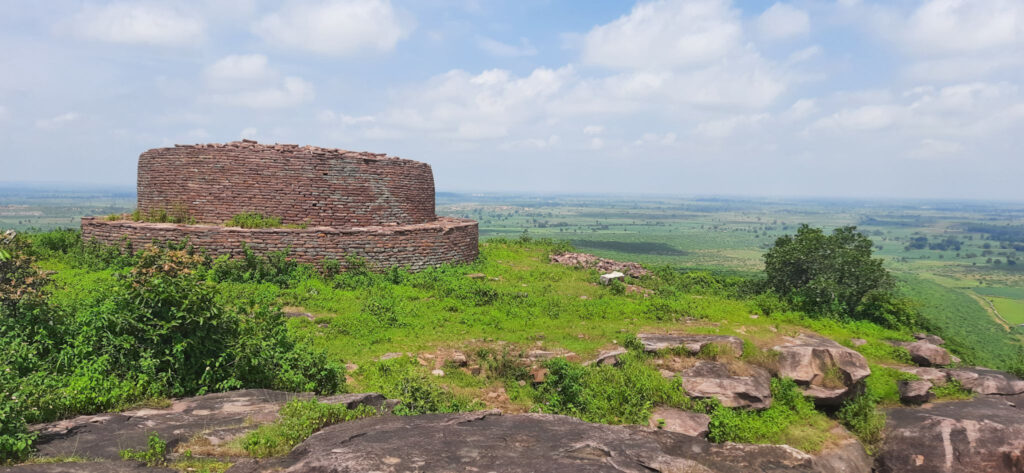
The Andher complex consists of three ancient stupas built on a hilltop overlooking the surrounding countryside. The elevated location gives visitors panoramic views of nearby historical sites, especially the Murel Khurd stupas near Bhojpur. The calm atmosphere and scenic landscape add to the spiritual character of the place.
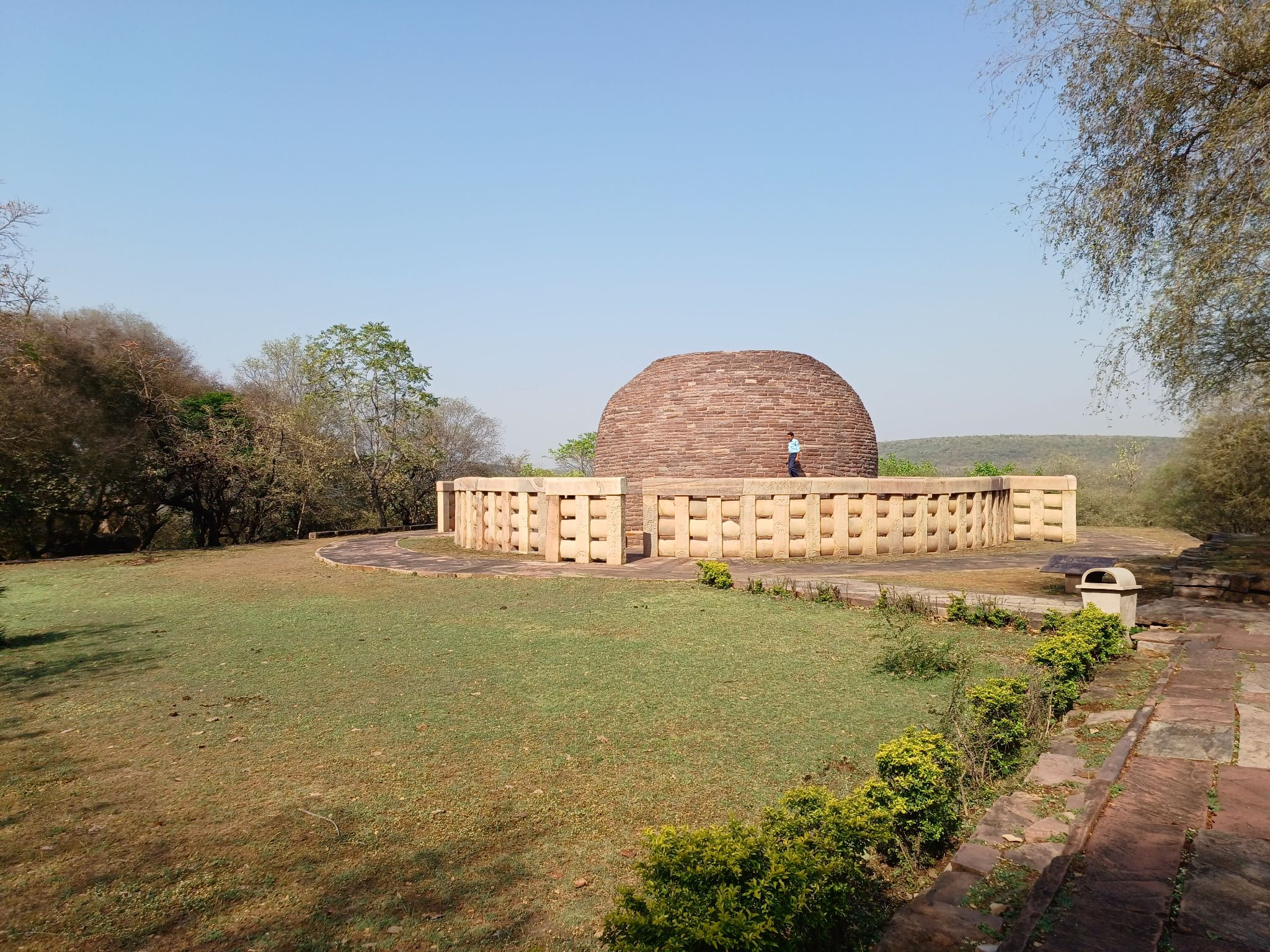
Among the three structures, Stupa No. 1 is the largest and most significant. Historians believe it dates back to around 150 BCE, making it over two thousand years old. The stupa is enclosed by a stone railing, a characteristic feature commonly seen in early Buddhist architecture. These railings once marked sacred boundaries and guided devotees during ritual circumambulation.
One of the most remarkable discoveries at Andher is the presence of Brahmi script inscriptions on Stupas No. 2 and No. 3. These inscriptions mention monks whose relics were also found at other important Buddhist sites such as Sanchi and Sonari. This connection highlights how closely linked these Buddhist centers were during ancient times. Archaeologists believe the stupas were built not only as monuments of worship but also as reliquaries preserving the remains of respected Buddhist monks.
Architecture and Design
Although smaller than the grand structures at Sanchi, the Andher Stupas beautifully reflect the simplicity and elegance of early Buddhist architecture. Built primarily using stone and brick, the stupas originally featured hemispherical domes symbolizing the universe and the spiritual journey toward enlightenment.
The stone railings surrounding the structures demonstrate the craftsmanship of the period. Even today, visitors can notice remnants of carvings and inscriptions that provide valuable insight into Buddhist traditions, monastic life, and ancient Indian scripts. The hilltop setting further enhances the site’s visual appeal, making it both historically important and naturally serene.
Connection with the Buddhist Circuit of Madhya Pradesh
The Andher Stupas form part of a larger network of Buddhist heritage sites in Madhya Pradesh. Together with Sonari, Satdhara, Bhojpur, and Sanchi, they illustrate the spread of Buddhism across central India during the Mauryan and post-Mauryan periods. These sites collectively show how Buddhist communities flourished through trade routes, monastic learning, and royal patronage.
For history enthusiasts, visiting Andher alongside Sanchi provides a deeper understanding of how Buddhism evolved beyond major urban centers into smaller regional communities.
Best Time to Visit
The ideal time to visit the Andher Stupas is during the monsoon and winter seasons, generally from July to February. During the monsoon months, the surrounding hills become lush and green, creating a beautiful natural backdrop for the ancient ruins. Winter offers pleasant weather, making exploration more comfortable.
Summers in this region can be extremely hot, especially during April and May, so daytime travel during those months is best avoided.
How to Reach Andher Stupas
By Road
The Andher Stupas are well connected by road and can be reached from nearby cities such as Bhopal and Vidisha. Visitors can hire taxis, drive private vehicles, or use local buses to travel toward the site. The journey through the rural landscape of Madhya Pradesh is scenic and enjoyable.
By Train
The nearest major railway station is Bhopal Junction Railway Station, which is well connected to major Indian cities including Delhi, Mumbai, Chennai, and Kolkata. From Bhopal, travelers can continue by taxi or bus toward Raisen district and Kharod village.
By Air
The nearest airport is Raja Bhoj Airport. The airport receives regular domestic flights from several major Indian cities. From the airport, taxis and local transportation options are available for reaching the Andher Stupas.
Nearby Attractions to Andher Stupas
Located within the scenic Sanchi archaeological region of Madhya Pradesh, the Andher Stupas are among the lesser-known yet historically significant Buddhist monuments in India. While visiting these ancient stupas, travelers can also explore several fascinating attractions nearby that showcase the rich Buddhist, historical, and cultural heritage of the region.
1. Sanchi Stupa
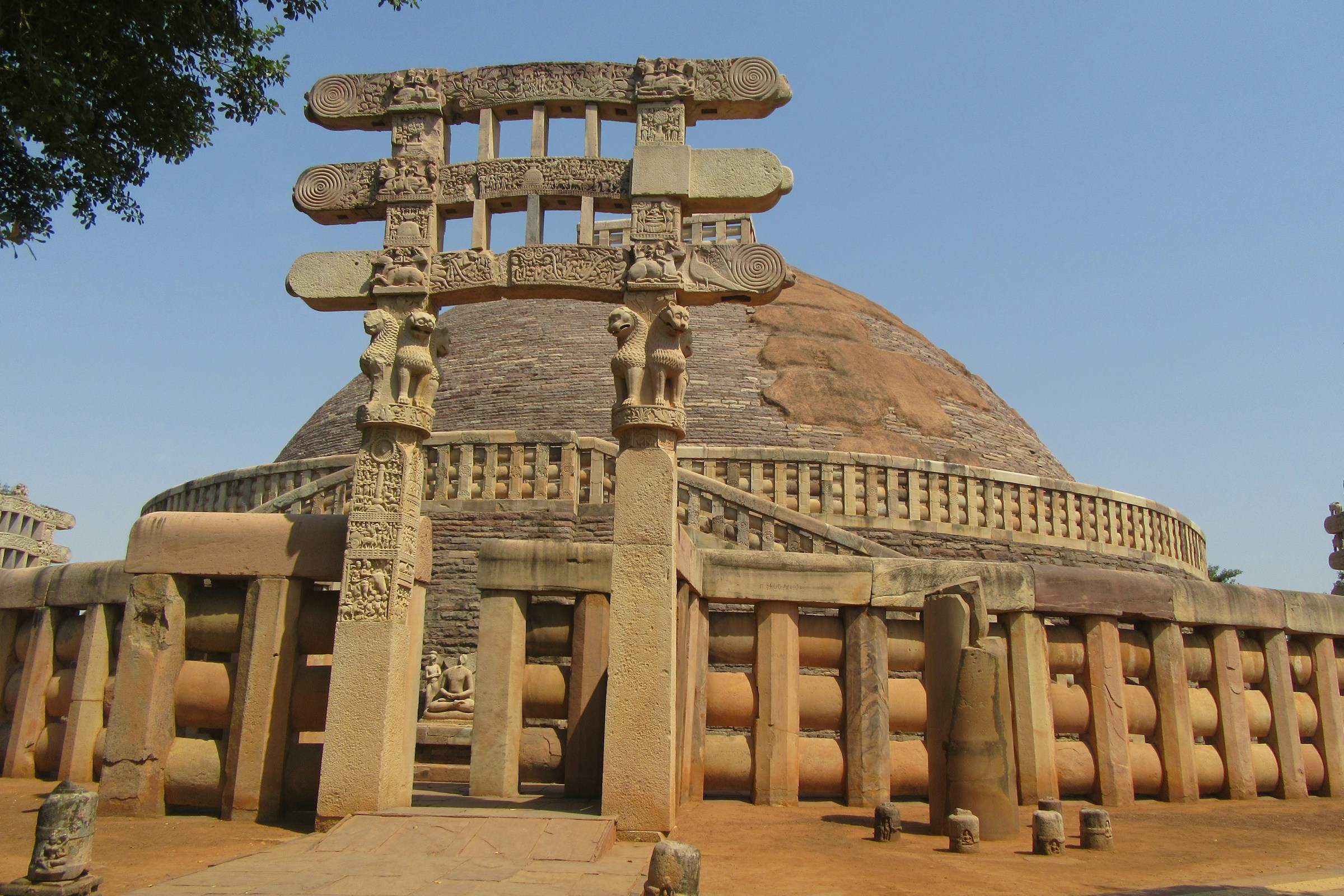
Just a short distance from the Andher Stupas, the Great Stupa at Sanchi is one of India’s most important Buddhist monuments and a UNESCO World Heritage Site. Built by Emperor Ashoka in the 3rd century BCE, it is renowned for its beautifully carved gateways, ancient relics, and remarkable architecture.
2. Udayagiri Caves
Located about 13 kilometers from Sanchi, the Udayagiri Caves are famous for their rock-cut chambers and exquisite Gupta-era sculptures. The massive Varaha (Boar) incarnation of Lord Vishnu carved into the rock face is a major highlight and attracts history enthusiasts from across the country.
3. Sanchi Archaeological Museum
Situated near the Sanchi Stupa complex, this museum houses an impressive collection of sculptures, inscriptions, pillars, and artifacts recovered from the Buddhist sites of Sanchi and its surroundings. It provides valuable insights into the region’s ancient history and Buddhist heritage.
4. Sonari Stupas
Around 10 kilometers from Sanchi, the Sonari Stupas form another important Buddhist archaeological site. These ancient stupas are believed to contain relics of early Buddhist monks and offer a quieter, less-crowded experience for visitors interested in Buddhist history.
5. Satdhara Stupas
Located approximately 11 kilometers from Sanchi, Satdhara is a group of Buddhist stupas spread across a hilltop. The site offers panoramic countryside views and is known for relics associated with prominent Buddhist disciples.
6. Bhojpur Temple
About 45 kilometers from Sanchi, Bhojpur is home to the magnificent Bhojeshwar Temple, dedicated to Lord Shiva. The temple houses one of the largest Shiva Lingas in India and is admired for its unfinished yet grand architectural design.
7. Raisen Fort
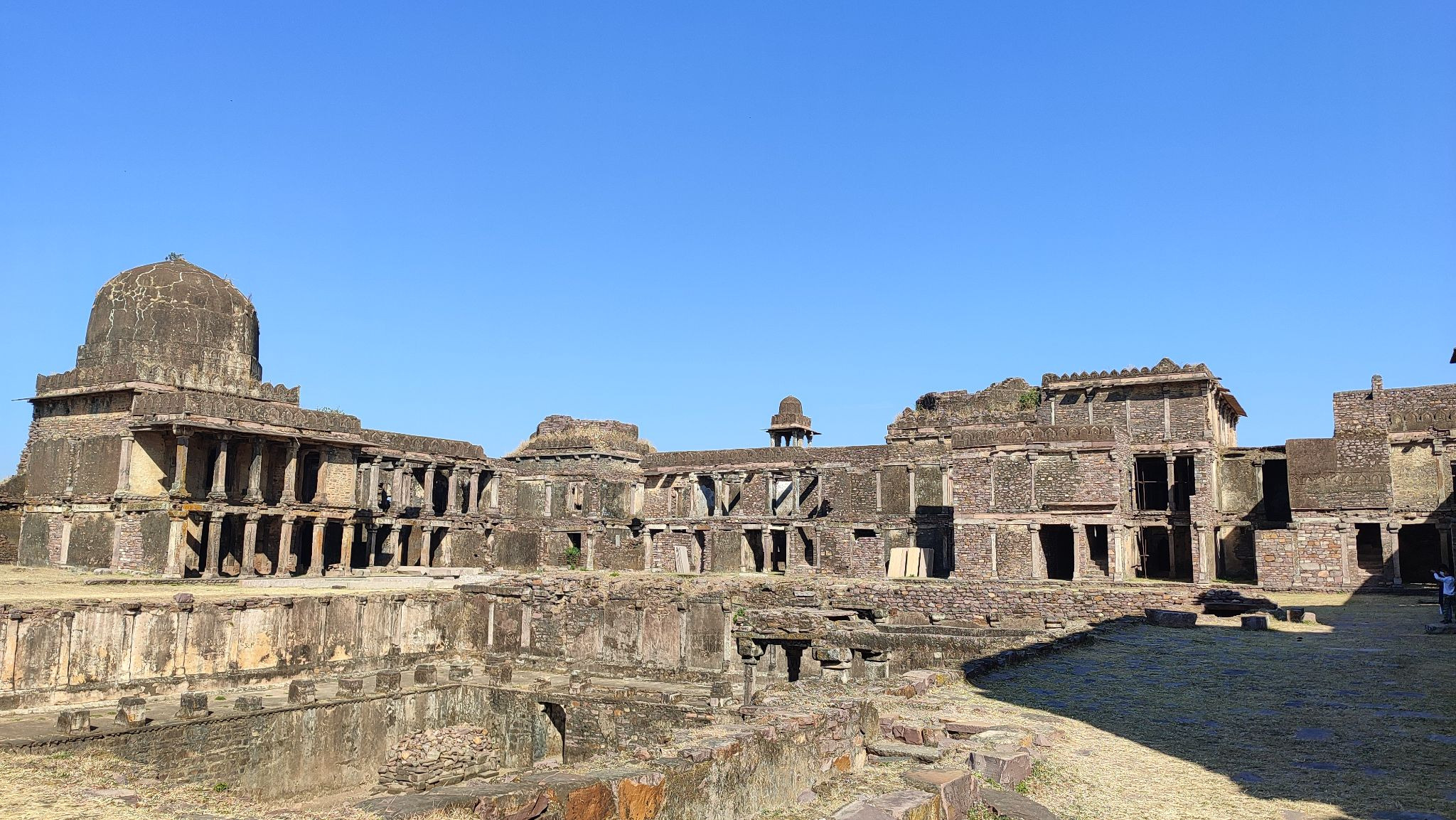
Perched atop a hill around 25 kilometers from Sanchi, Raisen Fort is a historic stronghold dating back several centuries. The fort offers beautiful views of the surrounding landscape and features ancient temples, reservoirs, and fortifications.
8. Vidisha
The historic town of Vidisha lies about 10 kilometers from Sanchi and was once an important trading and cultural center. Visitors can explore ancient temples, monuments, and archaeological remains that reflect the town’s rich past.
9. Heliodorus Pillar
Located near Vidisha, this ancient stone column was erected by Heliodorus, a Greek ambassador to an Indian king in the 2nd century BCE. It is one of the earliest known monuments associated with Vaishnavism in India and is of great historical significance.
10. Gyaraspur
Situated about 35 kilometers from Sanchi, Gyaraspur is known for its medieval temples and archaeological remains. The Maladevi Temple and other ancient structures make it an excellent destination for history lovers.
Travel Tip
For the best experience, plan a full-day excursion covering the Andher Stupas, Sanchi Stupa, Sonari, Satdhara, and Vidisha. Together, these sites offer a fascinating journey through the Buddhist heritage and ancient history of central India.
Why Visit Andher Stupas?
Unlike more crowded tourist attractions, the Andher Stupas offer a quiet and reflective experience. The site combines history, archaeology, spirituality, and nature in a unique way. It is ideal for travelers interested in ancient India, Buddhist heritage, and lesser-known historical destinations.
Walking among these centuries-old stupas allows visitors to connect with a chapter of Indian history that shaped religious thought, architecture, and cultural exchange across Asia
Google Maps
FAQs
Where are the Andher Stupas located?
The Andher Stupas are located near Kharod village in the Raisen district of Madhya Pradesh, India.
How old are the Andher Stupas?
The main stupa is believed to date back to around 150 BCE, making the site more than 2,000 years old.
What is the significance of the Brahmi inscriptions?
The Brahmi inscriptions mention monks whose relics were also found at Sanchi and Sonari, showing the close connection between ancient Buddhist communities in the region.
Are the Andher Stupas connected to Sanchi?
Yes, the Andher Stupas were part of the wider Buddhist network centered around Sanchi and were spiritually linked to the main stupa complex there.
What is the best season to visit?
The best time to visit is during the monsoon and winter months when the weather is pleasant and the landscape becomes greener and more scenic.
Is the site suitable for history lovers?
Absolutely. The Andher Stupas are an excellent destination for people interested in archaeology, Buddhist history, ancient architecture, and heritage tourism.
Can the Andher Stupas be visited in a day trip from Bhopal?
Yes, the site can easily be covered as a day trip from Bhopal along with nearby Buddhist heritage sites.