Image Source: Prime Minister’s Office
About Ram Mandir
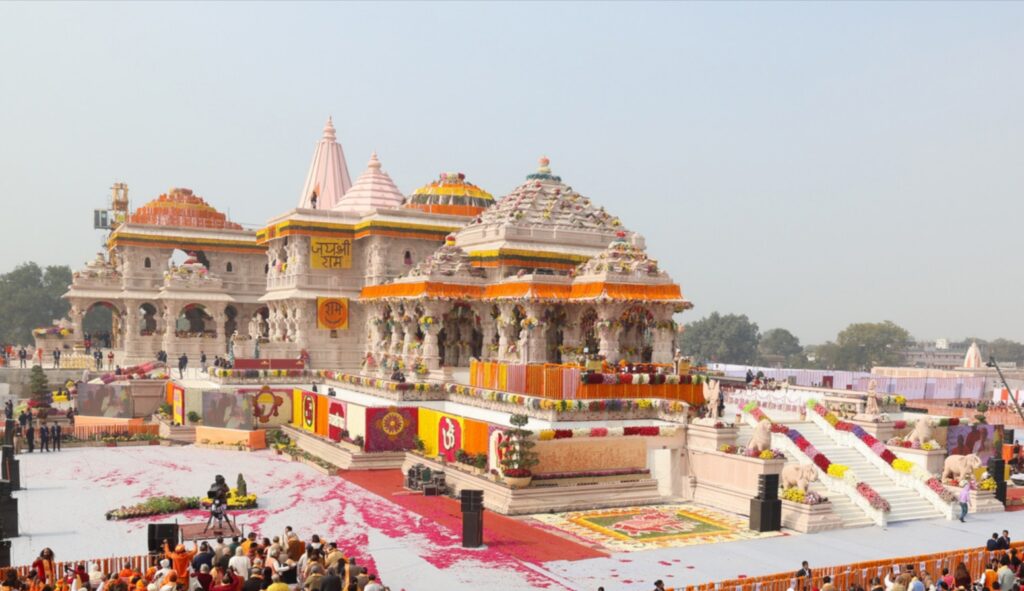
Ram Mandir in Ayodhya, Uttar Pradesh, is one of the most sacred Hindu pilgrimage sites in India, believed to be the birthplace of Lord Rama, the seventh avatar of Lord Vishnu.
Located on the banks of the Sarayu River, Ayodhya has been a center of devotion, culture, and history for centuries. The site attracts millions of pilgrims, scholars, and tourists each year, eager to experience its spiritual significance and witness the ongoing development of the Ram Mandir, a symbol of faith and heritage.
Historical and Religious Significance
Ram Janmabhoomi is central to Hindu religious beliefs as the birthplace of Lord Rama, the hero of the Ramayana. According to ancient texts, Lord Rama was born in a palace located at this very site. Over centuries, the area has seen numerous constructions, destructions, and reconstructions due to historical and political events.
The Ram Janmabhoomi Temple Trust is currently overseeing the construction of a grand temple complex, designed to honor Lord Rama and accommodate pilgrims from across the world. The site is also significant for its association with numerous festivals, rituals, and cultural narratives of the Ramayana.
Architecture
The ongoing construction of the Ram Mandir emphasizes traditional North Indian temple architecture, featuring intricately carved sandstone pillars, spires, and sanctums. The temple complex will include the sanctum sanctorum, halls for congregational prayers, museum spaces, and landscaped gardens.
The architecture is inspired by ancient Hindu design principles, aiming to combine devotion, cultural preservation, and visitor convenience. Once completed, it will be one of the largest temple complexes in India, symbolizing spiritual grandeur and architectural excellence.
Pilgrim and Visitor Experience
Pilgrims visiting Ram Janmabhoomi participate in daily prayers, rituals, and aarti ceremonies, particularly during festivals such as Rama Navami, Diwali, and Chaitra Navratri.
The site offers devotees a deep spiritual connection with Lord Rama, along with opportunities to explore nearby holy spots, including Hanuman Garhi, Kanak Bhawan, and Saryu River Ghats. Visitors also witness cultural programs, religious discourses, and traditional rituals that enrich the pilgrimage experience.
How to Reach
By Air: The nearest airport is Ayodhya International Airport (Maryada Purushottam Ram Airport), recently inaugurated and connected to major Indian cities. The airport is approximately 15 km from the temple site.
By Rail: Ayodhya Junction and Faizabad Junction are the nearest railway stations, well connected to Delhi, Lucknow, Varanasi, and other cities. Local transport options are available to reach the temple.
By Road: Ayodhya is connected via NH 27 and NH 330, with regular buses, taxis, and private vehicles operating from Lucknow, Varanasi, and other nearby cities.
Nearby Attractions
1. Hanuman Garhi
Located about 1 km from Ram Mandir, Hanuman Garhi is one of Ayodhya’s most revered temples. Dedicated to Lord Hanuman, the temple sits atop a hill and is reached by climbing around 76 steps. It is believed that Hanuman guarded Ayodhya from this very spot after Lord Rama’s return.
2. Kanak Bhawan
Situated close to Ram Mandir, Kanak Bhawan is dedicated to Lord Rama and Goddess Sita. According to tradition, this magnificent temple was gifted to Sita by Queen Kaikeyi after her marriage. The beautifully adorned idols and peaceful atmosphere make it one of Ayodhya’s most visited temples.
3. Dashrath Mahal
Believed to have been the royal residence of King Dashrath, the father of Lord Rama, Dashrath Mahal is an important religious site. Its colorful architecture, devotional music, and festive ambiance attract pilgrims throughout the year.
4. Ram Ki Paidi
Located on the banks of the Sarayu River, Ram Ki Paidi is a series of beautifully constructed ghats where devotees gather for ritual bathing and evening aarti. The illuminated ghats create a mesmerizing atmosphere after sunset.
5. Sarayu Ghat
The sacred Sarayu Ghat is one of the holiest places in Ayodhya. Pilgrims take a dip in the river believing it purifies the soul. Sunrise and sunset offer particularly beautiful views of the river.
6. Nageshwarnath Temple
Dedicated to Lord Shiva, Nageshwarnath Temple is believed to have been established by Kush, the son of Lord Rama. It is especially popular during Mahashivaratri and holds great religious significance.
7. Tulsi Smarak Bhawan
This cultural center commemorates the life and works of Goswami Tulsidas, the author of the Ramcharitmanas. It houses a museum, research institute, and hosts regular devotional and cultural performances.
8. Treta Ke Thakur
This ancient temple is believed to stand on the site where Lord Rama performed the Ashwamedha Yajna after returning from exile. It is known for its historic black stone idols of Lord Rama and his family.
9. Guptar Ghat
Located on the banks of the Sarayu River, Guptar Ghat is traditionally believed to be the place where Lord Rama took Jal Samadhi and departed from his earthly life. The serene surroundings make it a peaceful spiritual destination.
10. Mani Parvat
Associated with the Ramayana, Mani Parvat is believed to be a fragment of the Sanjeevani mountain carried by Lord Hanuman. The hill offers panoramic views of Ayodhya and is home to several small temples.
Google Maps
FAQs
1. What is Ram Mandir in Ayodhya famous for?
Ram Mandir is revered as the birthplace of Lord Rama and is one of the most significant pilgrimage destinations for Hindus. The grand temple showcases traditional Nagara-style architecture and attracts millions of devotees from India and abroad.
2. What are the temple timings?
The temple is generally open from early morning until late evening, with breaks for rituals and prayers. Timings may vary during festivals and special religious occasions.
3. Is there an entry fee for Ram Mandir?
No, entry to Ram Mandir is free for all visitors.
4. What is the best time to visit Ram Mandir?
The best time to visit is between October and March, when the weather is pleasant. Visiting early in the morning or during the evening helps avoid large crowds and the afternoon heat.
5. How much time is required to visit Ram Mandir?
Most visitors spend 1–2 hours exploring the temple complex and participating in darshan. If you plan to visit nearby attractions, set aside a full day.
6. Are mobile phones and cameras allowed inside the temple?
Security regulations may restrict mobile phones, cameras, and other electronic devices inside certain parts of the temple complex. Visitors should check the latest guidelines before entering.
7. Is parking available near Ram Mandir?
Yes, designated parking facilities are available near the temple, along with shuttle services and pedestrian access routes during busy periods.
8. Are guides available for visitors?
Yes, local guides and authorized tour operators are available to explain the history, architecture, and religious significance of Ram Mandir and nearby attractions.
9. Which airport and railway station are nearest to Ram Mandir?
The nearest airport is Maharishi Valmiki International Airport, while the nearest railway station is Ayodhya Dham Junction, both offering convenient access to the temple.
10. Can Ram Mandir be visited along with other attractions in one day?
Yes. Most of Ayodhya’s major religious and historical sites, including Hanuman Garhi, Kanak Bhawan, Dashrath Mahal, Ram Ki Paidi, and Nageshwarnath Temple, are located within a short distance of Ram Mandir, making them easy to cover in a single day.