Image Source: Merumala
About ISKCON Vrindavan
The ISKCON Vrindavan Temple, also known as Sri Krishna-Balaram Mandir, is a prominent spiritual and cultural center in Vrindavan, Uttar Pradesh. Established by the International Society for Krishna Consciousness (ISKCON), the temple is dedicated to Lord Krishna and his brother Balarama, serving as a hub for devotion, education, and cultural exchange.
Renowned for its serene atmosphere, magnificent architecture, and vibrant festivals, ISKCON Vrindavan attracts devotees and tourists from across India and around the world.
Historical and Religious Significance
The temple was inaugurated in the 1970s under the guidance of A.C. Bhaktivedanta Swami Prabhupada, founder of ISKCON, with the aim of promoting Krishna devotion (Bhakti Yoga) and Vedic culture. Vrindavan itself is historically significant as the place where Lord Krishna spent his childhood, and ISKCON Vrindavan plays a vital role in reviving and preserving these ancient traditions.
The temple hosts daily rituals, lectures, and spiritual programs that educate devotees about Krishna’s life, teachings, and the practice of Bhakti.
Architectural and Cultural Features
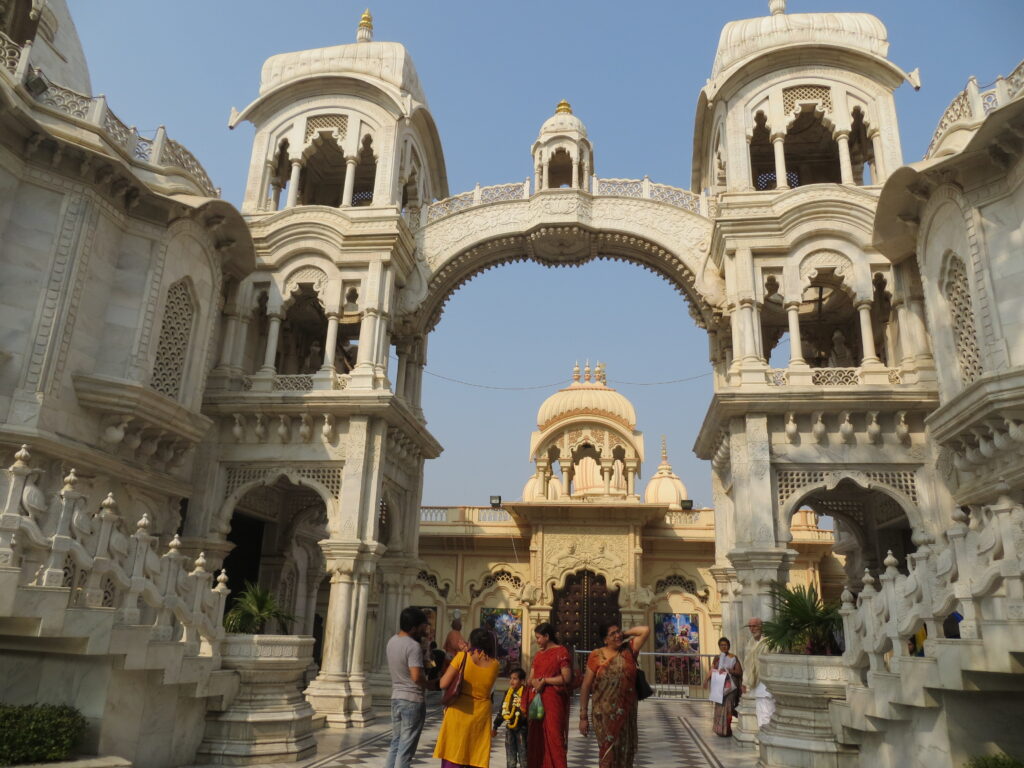
ISKCON Vrindavan Temple showcases a blend of modern and traditional North Indian temple architecture. The main shrine houses exquisitely adorned idols of Sri Sri Krishna-Balaram, with elaborate decorations, golden ornaments, and vibrant floral arrangements.
The temple complex includes a guesthouse, library, and restaurant serving prasadam (sanctified food), along with landscaped gardens that offer a tranquil setting for meditation and reflection. The temple is particularly famous for its large dome, intricate carvings, and colorful frescoes depicting scenes from Krishna’s life.
Pilgrim and Visitor Experience
Visitors to ISKCON Vrindavan Temple can participate in daily aarti, kirtans, and devotional lectures, immersing themselves in the atmosphere of devotion and learning. The temple becomes especially lively during Janmashtami and other Krishna-centric festivals, with elaborate processions, cultural programs, and lighting decorations.
Pilgrims often enjoy prasadam meals while exploring the temple gardens and participating in spiritual discourses. ISKCON’s emphasis on education, community service, and cultural preservation makes the temple a unique combination of faith, learning, and cultural experience.
How to Reach
By Air: The nearest airport is Agra Airport (approx. 90 km) or Delhi International Airport (approx. 160 km). From the airport, taxis or buses can take visitors to Vrindavan.
By Rail: Mathura Junction is the nearest major railway station, about 15 km from Vrindavan. Regular auto-rickshaws, taxis, and buses operate between Mathura and Vrindavan.
By Road: Vrindavan is well connected via NH 19 and state highways. Buses and taxis are readily available from Mathura, Delhi, and Agra, making it easily accessible for pilgrims and tourists.
Nearby Attractions
A visit to ISKCON Vrindavan can easily be combined with several of Vrindavan’s most important spiritual and cultural landmarks, many of which are located within a short distance of the temple.
Prem Mandir is one of the most spectacular attractions near ISKCON Vrindavan, located just a few minutes away. Built entirely of white Italian marble, the temple is renowned for its intricate carvings, beautifully landscaped gardens, musical fountain shows, and stunning evening illumination. The temple depicts scenes from the life of Lord Krishna and attracts thousands of visitors every day.
Banke Bihari Temple is among the most revered temples in Vrindavan and is dedicated to Lord Krishna in his childlike form. The temple is famous for its unique darshan tradition, where the curtain before the deity is opened and closed repeatedly, creating an intimate connection between the deity and devotees. It becomes especially vibrant during Janmashtami, Holi, and Jhulan Yatra.
Nidhivan is one of the most mysterious and sacred places in Vrindavan. According to local belief, Lord Krishna and Radha perform the divine Raas Leela here every night. The grove remains closed after sunset, and devotees visit during the day to experience its spiritual atmosphere and learn about the legends associated with this holy site.
Seva Kunj is another sacred grove closely linked to the divine pastimes of Radha and Krishna. It is believed to be the place where Krishna lovingly adorned Radha after the Raas Leela. The peaceful surroundings, ancient trees, and devotional ambiance make it an ideal place for meditation and quiet reflection.
Radha Raman Temple is one of Vrindavan’s oldest and most respected temples. The self-manifested deity of Radha Raman is worshipped according to centuries-old Vaishnava traditions. The temple is admired for its simple yet deeply devotional atmosphere and attracts pilgrims from around the world.
Shri Rangji Temple stands out for its magnificent South Indian Dravidian-style architecture. Dedicated to Lord Ranganatha, a reclining form of Lord Vishnu, the temple features towering gopurams, spacious courtyards, and a magnificent gold-plated flagpole. Its annual Brahmotsavam festival is celebrated with great enthusiasm.
Keshi Ghat is one of the most scenic and sacred ghats on the banks of the Yamuna River. According to tradition, this is where Lord Krishna defeated the demon Keshi. Visitors can enjoy the peaceful riverfront, witness the evening Yamuna Aarti, or take a boat ride while soaking in the spiritual atmosphere.
Radha Vallabh Temple is one of the oldest temples in Vrindavan and is known for its unique worship tradition that emphasizes the divine love between Radha and Krishna. Its historic architecture and devotional music create a deeply spiritual experience.
Krishna Janmabhoomi Temple, Mathura, located about 12 km from ISKCON Vrindavan, is believed to be the birthplace of Lord Krishna. Many pilgrims include Mathura and Vrindavan in the same itinerary to explore the most sacred sites associated with Lord Krishna’s life.
Google Maps
FAQs
1. Why is ISKCON Vrindavan famous?
ISKCON Vrindavan, also known as the Sri Krishna Balaram Mandir, is famous for its beautiful white marble architecture, continuous kirtans, Bhagavad Gita teachings, and vibrant spiritual atmosphere. It is one of the most important ISKCON temples in the world.
2. What are the temple timings?
The temple is generally open from 4:30 AM to 1:00 PM and again from 4:00 PM to 8:30 PM. Timings may vary slightly during festivals and special occasions.
3. Is there an entry fee to visit ISKCON Vrindavan?
No. Entry to the temple is completely free for all visitors.
4. Can visitors attend the aarti and kirtan?
Yes. Everyone is welcome to participate in the daily Mangala Aarti, Guru Puja, Sandhya Aarti, and the devotional kirtans held throughout the day.
5. Is photography allowed inside the temple?
Photography is generally permitted in the temple complex and gardens, but photography inside the main prayer hall or sanctum may be restricted. Visitors should follow the temple’s guidelines.
6. Is accommodation available near the temple?
Yes. ISKCON Vrindavan has guest house facilities, and the surrounding area offers numerous hotels, dharamshalas, and budget accommodations suitable for pilgrims and tourists.
7. What is the best time to visit ISKCON Vrindavan?
The most pleasant time to visit is between October and March. Festivals such as Janmashtami, Radhashtami, Gaura Purnima, and the colorful Braj Holi celebrations offer an especially memorable spiritual experience.
8. How much time is needed to explore ISKCON Vrindavan?
Most visitors spend 1–2 hours exploring the temple, attending aarti, visiting the gardens, browsing the bookshop, and enjoying prasadam at the temple restaurant.