Image Source: Wikimedia
About Keshav Dev Temple (Krishna Janmasthan Temple)
Keshav Dev Temple, also known as the Krishna Janmasthan Temple Complex, is one of the holiest pilgrimage sites in India. Located in the heart of Mathura, Uttar Pradesh, the temple is revered as the birthplace of Lord Krishna. According to Hindu tradition, this is the exact spot where Lord Krishna was born to Devaki and Vasudeva inside a prison cell during the reign of the tyrant King Kansa. Every year, millions of devotees visit this sacred shrine to seek blessings and experience the spiritual atmosphere associated with one of Hinduism’s most beloved deities.
The temple complex is much more than a single shrine. It combines centuries of religious devotion, historical significance, and architectural heritage, making it one of the most important destinations in the Braj region. During festivals such as Janmashtami, the birthplace of Lord Krishna comes alive with devotional songs, elaborate decorations, cultural performances, and midnight celebrations that recreate the divine birth of Krishna.
Architecture
The Krishna Janmasthan Temple Complex is divided into three main sections: the Keshav Dev Temple, the Garbhagriha (Sanctum of Birth), and the Bhagavata Bhavan.
The Garbhagriha is the spiritual heart of the complex. It is believed to be the original prison cell where Devaki gave birth to Lord Krishna while imprisoned by King Kansa. Devotees descend into this simple stone chamber to offer prayers, making it one of the most emotionally significant places in the temple.
Adjacent to the temple stands the historic Shahi Eidgah Mosque, constructed during the reign of Mughal emperor Aurangzeb in the 17th century. Historical records suggest that the mosque was built on a portion of the earlier temple complex, while the sacred birthplace area continued to be preserved and worshipped by devotees.
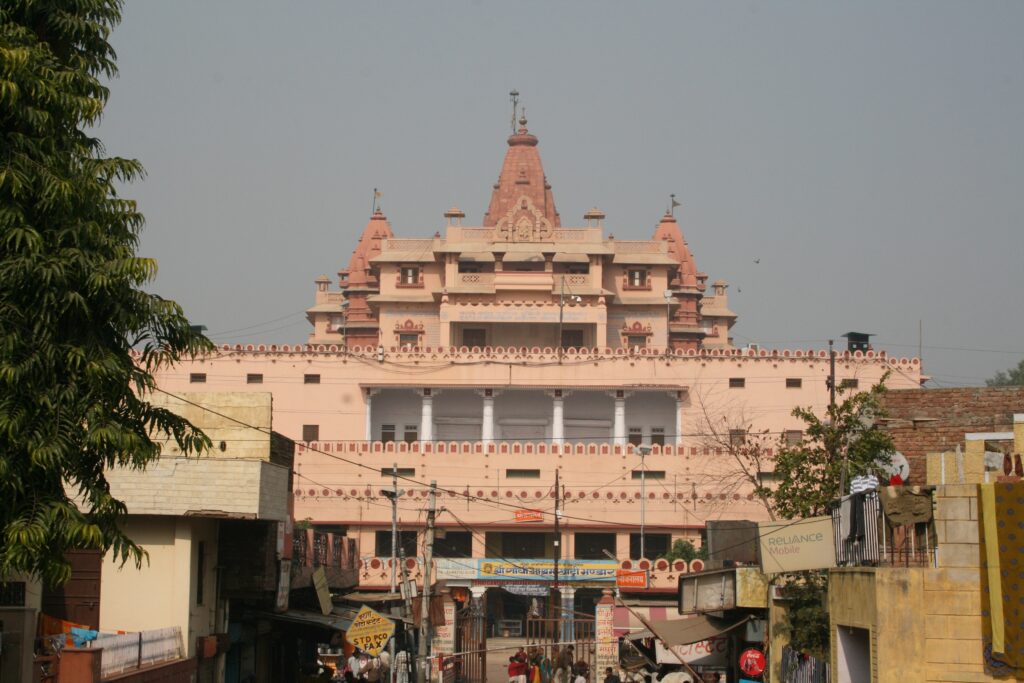
The present-day Keshav Dev Temple was built in 1957 by industrialist Ramkrishna Dalmia in memory of his mother, Jadia Devi Dalmia. The temple showcases elegant North Indian temple architecture with beautifully carved pillars, spacious prayer halls, and peaceful courtyards.
Another prominent structure within the complex is Bhagavata Bhavan, which houses several important shrines dedicated to different Hindu deities. The main sanctum enshrines Radha and Krishna, while separate shrines are dedicated to Balarama, Subhadra, and Jagannath, Lord Rama, Lakshmana, and Sita, Lord Hanuman, Goddess Durga, Lord Shiva, and Chaitanya Mahaprabhu. A magnificent Garuda Stambha stands prominently within the complex, enhancing its architectural grandeur.
Mythological Significance
According to Hindu scriptures, King Kansa imprisoned his sister Devaki and her husband Vasudeva after hearing a prophecy that Devaki’s eighth son would one day end his tyranny. Kansa killed each of their first seven children, but when Krishna was born, divine intervention enabled Vasudeva to carry the infant safely across the Yamuna River to Gokul, where he was raised by Nanda and Yashoda.
The Garbhagriha at Krishna Janmasthan is traditionally believed to be the very prison where this miraculous birth took place. For devotees, visiting this sacred chamber is considered a deeply spiritual experience and an opportunity to connect with one of the most important events in Hindu mythology.
Historical Background
The site of Krishna Janmasthan has a long and fascinating history that stretches back more than two thousand years. Archaeological excavations around the temple have uncovered pottery, terracotta figurines, sculptures, and other artifacts dating to around the 6th century BCE, indicating that the area has been an important settlement and place of worship since ancient times.
Historical records suggest that temples dedicated to Lord Krishna stood here during different periods, receiving patronage from several dynasties, including the Rashtrakutas and later rulers of northern India. During the 4th century CE, a grand temple is believed to have been constructed during the reign of Chandragupta II Vikramaditya, further strengthening the site’s religious importance.
The Medieval Period
The temple faced repeated destruction during the medieval period as successive invasions targeted wealthy religious centers across northern India.
In 1018 CE, the invading army of Mahmud of Ghazni attacked the Mathura region, causing widespread destruction to many temples. Over time, the Keshav Dev Temple was rebuilt by local rulers, including King Vijay Pal Deva, but it was later demolished again during the reign of Sikandar Lodi in the late 15th and early 16th centuries.
A magnificent new temple was commissioned in 1618 CE by Raja Veer Singh Deo Bundela during the reign of Mughal emperor Jahangir. This temple became one of the grandest religious structures in northern India before it was demolished in 1670 CE on the orders of Emperor Aurangzeb, who subsequently built the adjacent Shahi Eidgah Mosque.
The Modern Temple
The revival of Krishna Janmasthan began during the British period. Although parts of the land changed ownership, no major temple could be constructed for many years.
In 1944, educationist and nationalist leader Madan Mohan Malaviya, with support from industrialist Jugal Kishore Birla and other philanthropists, initiated efforts to reclaim and redevelop the sacred site. Various charitable trusts and prominent industrial families, including the Dalmia family, contributed generously to the project.
Construction of the present Krishna Janmasthan Temple Complex continued through the 1950s and 1960s, and the modern complex was largely completed by 1965. Today, it stands as one of the most important pilgrimage destinations in India and welcomes millions of devotees every year.
Best Time to Visit
The temple remains open throughout the year, but the most memorable time to visit is during Janmashtami, when the entire complex is beautifully decorated with flowers and lights. Thousands of devotees gather for devotional singing, cultural performances, and the midnight celebration marking Lord Krishna’s birth.
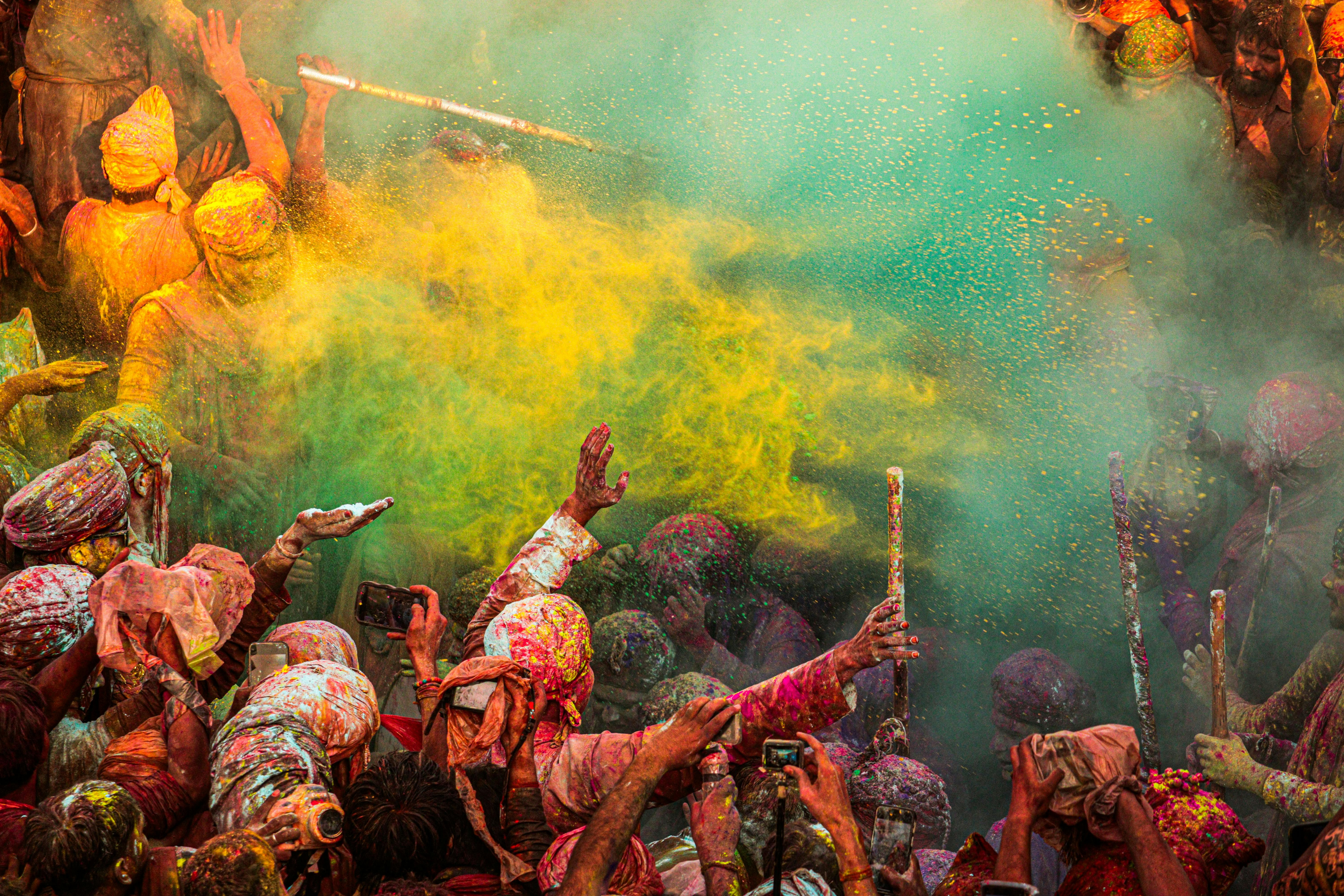
The Holi festival is another wonderful time to experience the vibrant traditions of Braj. For comfortable sightseeing and pleasant weather, the period from October to March is considered the best time to visit Mathura.
How to Reach
Keshav Dev Temple is centrally located in Mathura and is easily accessible by road, rail, and air.
By Air: The nearest airport is Agra Airport, about 60 km away. Indira Gandhi International Airport, Delhi, approximately 170 km away, offers better domestic and international connectivity. Taxis and buses are available from both airports.
By Train: Mathura Junction Railway Station is around 3 km from the temple and is one of North India’s major railway stations. Auto-rickshaws, taxis, and e-rickshaws are readily available for the short journey to the temple.
By Road: Mathura is well connected via the Yamuna Expressway and National Highway 44. Frequent buses operate from Delhi, Agra, Jaipur, Noida, and other nearby cities. Local transport, including auto-rickshaws and battery-operated rickshaws, makes reaching the temple convenient from anywhere in Mathura.
Nearby Attractions
After visiting Keshav Dev Temple, travelers can explore several other important attractions in Mathura and nearby Vrindavan.
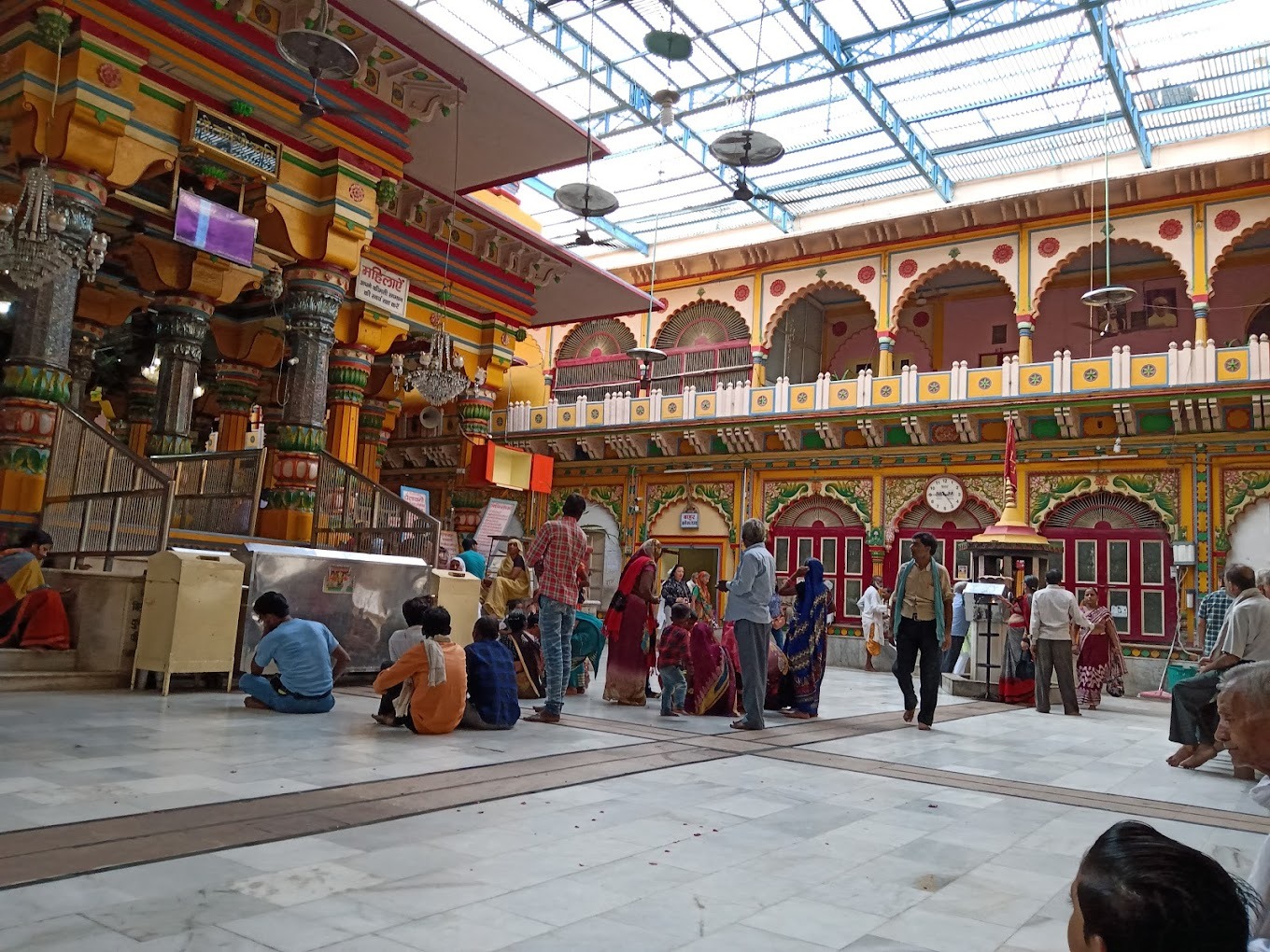
Dwarkadhish Temple is one of Mathura’s oldest and most revered temples, famous for its beautiful Rajasthani architecture and grand Janmashtami celebrations.
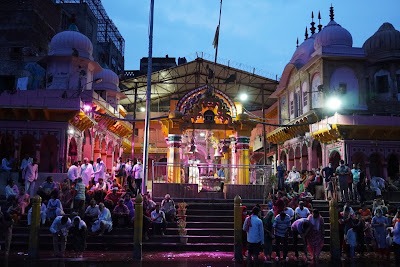
Vishram Ghat, situated on the banks of the Yamuna River, is believed to be the place where Lord Krishna rested after defeating King Kansa. The evening Yamuna Aarti here is a deeply spiritual experience.
Gita Mandir (Birla Mandir), located on the Mathura–Vrindavan Road, is known for its red sandstone architecture and pillars engraved with all 18 chapters of the Bhagavad Gita.
Government Museum, Mathura houses an exceptional collection of sculptures from the ancient Mathura School of Art, along with coins, inscriptions, and archaeological artifacts that offer insight into the city’s rich history.
About 12 km away, Prem Mandir in Vrindavan attracts visitors with its magnificent white marble architecture, beautifully landscaped gardens, and spectacular musical fountain show.
Banke Bihari Temple is another major pilgrimage site in nearby Vrindavan, renowned for its lively devotional atmosphere and unique darshan traditions.
Maps
FAQs
1. Why is Keshav Dev Temple famous?
Keshav Dev Temple is revered as the birthplace of Lord Krishna and is one of the holiest pilgrimage sites in Hinduism.
2. Is the Garbhagriha the actual birthplace of Lord Krishna?
According to Hindu tradition, the Garbhagriha marks the exact prison cell where Lord Krishna was born to Devaki and Vasudeva.
3. What are the temple timings?
The temple generally remains open from early morning until evening. Timings may vary during festivals, so visitors should confirm before planning their visit.
4. Is there an entry fee?
No. Entry to the temple is free for all devotees and visitors.
5. Why is the Shahi Eidgah Mosque located beside the temple?
The mosque was built during the reign of Mughal emperor Aurangzeb in the 17th century on part of the earlier temple complex. Today, both structures stand adjacent to each other and represent an important chapter in the site’s long history.
6. What is the best time to visit Krishna Janmasthan?
The ideal time is between October and March, while Janmashtami offers the most vibrant and spiritually significant experience.
7. How much time should visitors spend at the temple?
Most visitors spend 2 to 3 hours exploring the temple complex, visiting the Garbhagriha, attending prayers, and exploring the nearby attractions in Mathura.