Image Source: Biswarup Ganguly
About Nashipur Rajbari
Nashipur Rajbari is one of the grandest heritage palaces in Murshidabad, located along the eastern bank of the Bhagirathi River in West Bengal. Built in the mid-19th century by Raja Kirtichand Bahadur, the palace reflects the wealth, influence, and lifestyle of Bengal’s powerful zamindar families during the colonial period. Even today, the Rajbari stands as a reminder of Murshidabad’s royal past, attracting travelers, history enthusiasts, and architecture lovers from across the country.
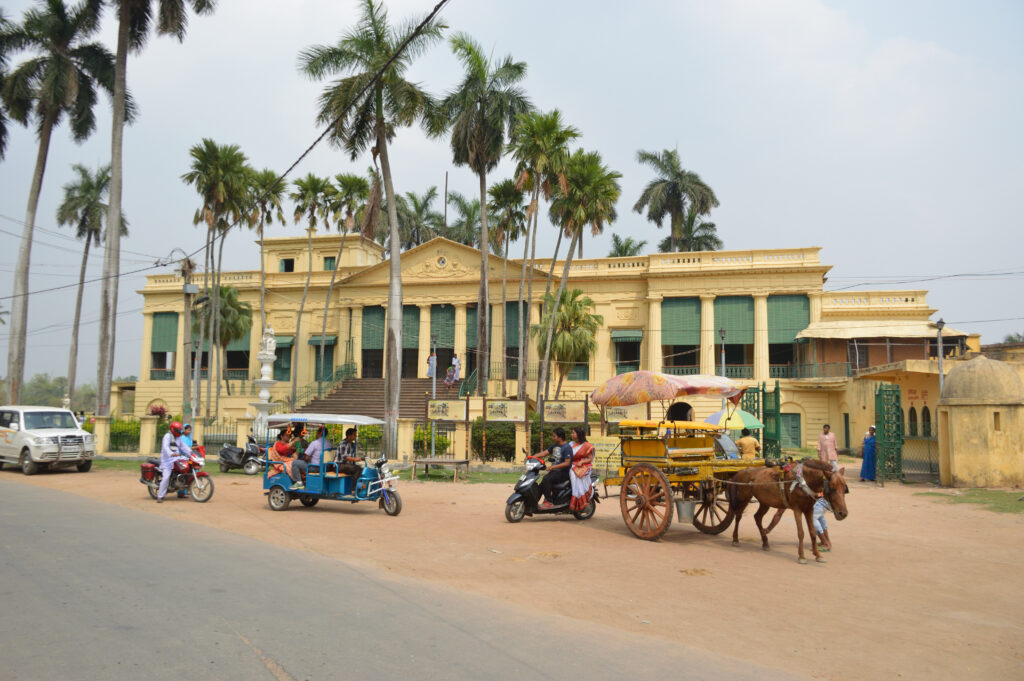
Unlike many traditional Bengali palaces, Nashipur Rajbari carries a strong European influence in its design. Massive Corinthian pillars, wide verandas, decorative arches, and spacious courtyards give the building a regal appearance that resembles a European mansion more than a conventional Indian palace. Walking through the complex feels like stepping into a different era where aristocratic culture, royal ceremonies, and colonial politics shaped everyday life.
Historical Importance
The Nashipur Raj family became highly influential during the final years of the Nawabs of Bengal and later strengthened their position under British rule. Raja Kirtichand Bahadur, who commissioned the palace around 1865, was known for his close association with the British administration and his role in regional politics and trade.
During that period, Murshidabad was already an important administrative and cultural center of Bengal. Although Kolkata had emerged as the British capital, Murshidabad still retained immense historical and economic significance. Zamindar families like the Nashipur Rajs displayed their status through lavish palaces, social gatherings, and patronage of religious and cultural activities.
Nashipur Rajbari became a prominent venue for meetings, celebrations, and interactions between wealthy landlords and British officials. The palace symbolized the changing social order of colonial Bengal, where influential zamindars gained prestige and power under British patronage while continuing many traditional customs of Bengali aristocracy.
Architecture and Design
One of the most striking aspects of Nashipur Rajbari is its impressive neoclassical architecture. The grand entrance lined with towering Corinthian columns immediately catches the attention of visitors. The palace features long corridors, elegant balconies, large halls, and beautifully designed courtyards that once hosted royal events and administrative meetings.
Inside the Rajbari, visitors can still notice traces of its former luxury. Decorative ceilings, antique furnishings, marble flooring, and intricate detailing reveal the refined taste of the Nashipur rulers. The blend of Indian craftsmanship with Western architectural ideas creates a unique visual appeal that sets the palace apart from many other heritage buildings in Bengal.
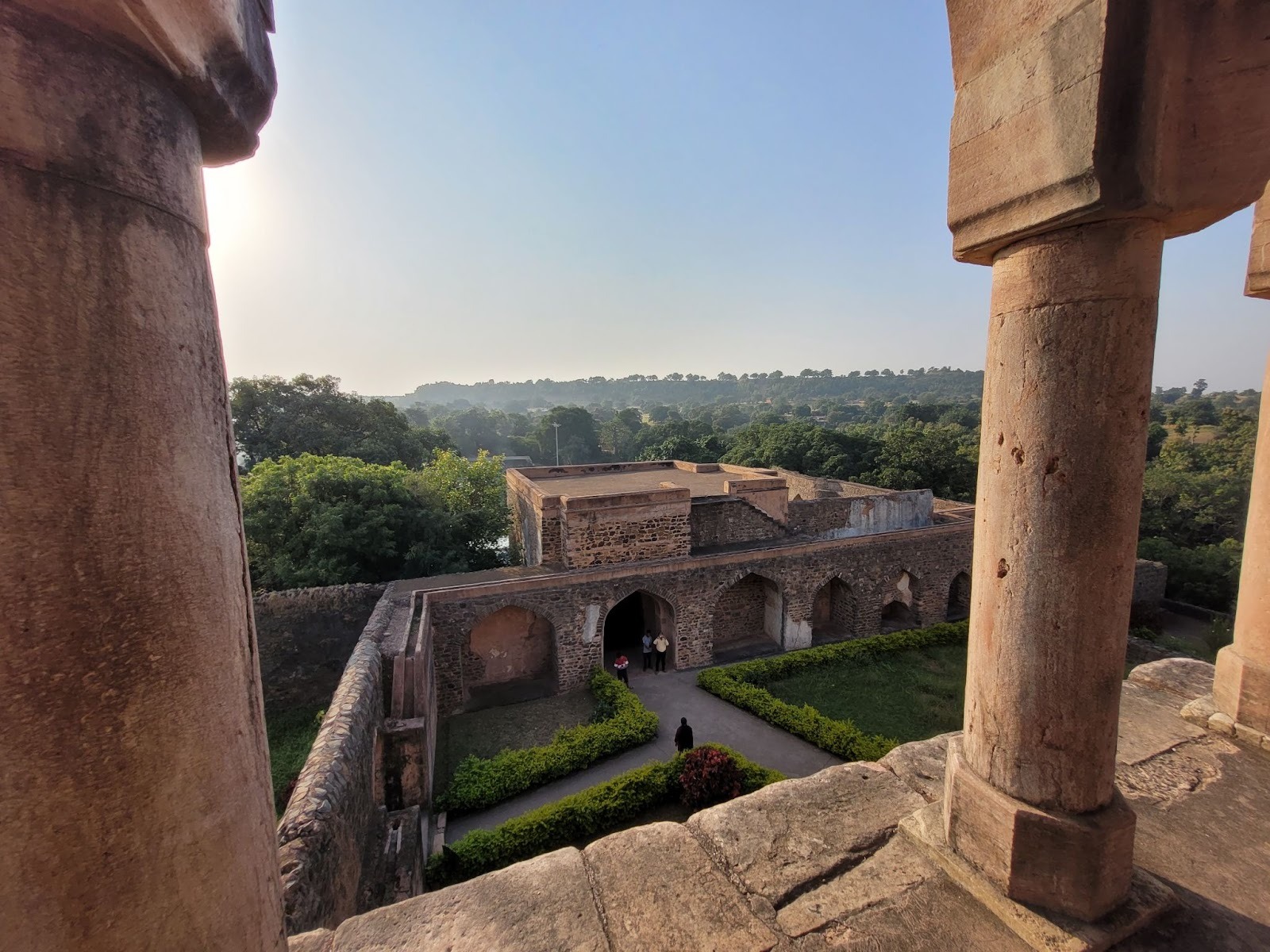
The palace complex also includes temples and sections that were once used for official work and estate administration. Though parts of the structure have aged over time, the overall grandeur and historical atmosphere remain remarkably intact.
Local Atmosphere and Nearby Attractions
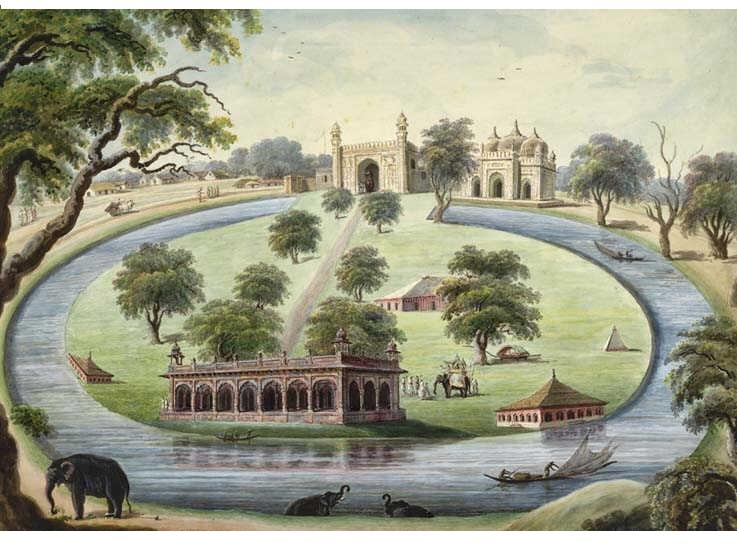
A visit to Nashipur Rajbari becomes even more memorable because of its location in the historic town of Murshidabad. The surrounding area is filled with remnants of Bengal’s Nawabi era, old mosques, palaces, cemeteries, and colonial buildings.
Just a short distance away lies the famous Hazarduari Palace, known for its thousand doors and impressive museum collection. Travelers also often combine their visit with nearby attractions such as Katra Mosque, Motijheel, Kathgola Palace, and Wasif Manzil. Exploring these places together gives a deeper understanding of Murshidabad’s rich political and cultural history.
The Bhagirathi River flowing near the Rajbari adds to the charm of the area. Early mornings and evenings are especially peaceful, with river breezes and views of old heritage structures creating a nostalgic atmosphere that feels far removed from modern city life.
Travel Experience
Visiting Nashipur Rajbari offers a quiet and immersive heritage experience. Unlike heavily commercialized tourist destinations, the palace still retains an old-world character. Visitors can wander through the courtyards, admire the architecture, and imagine the grandeur of royal gatherings that once took place within these walls.
Photography enthusiasts often enjoy capturing the palace’s massive pillars, vintage details, and fading textures that reflect the passage of time. History lovers, meanwhile, appreciate the opportunity to explore a lesser-known but culturally significant landmark of Bengal.
The best time to visit Murshidabad is during the winter months from October to February, when the weather remains pleasant for sightseeing. Many travelers also visit during festivals and local celebrations when the heritage town becomes more vibrant and lively.
How to Reach Nashipur Rajbari
Nashipur Rajbari is located near Lalbagh in Murshidabad district of West Bengal, approximately 2 kilometers from Hazarduari Palace.
By Train
The nearest major railway station is Berhampore Court Railway Station, which is well connected to Kolkata and other cities of West Bengal. From the station, travelers can hire auto-rickshaws, taxis, or local transport to reach the palace.
By Road
Murshidabad is connected by road with Kolkata and nearby towns through state highways. The journey from Kolkata takes around 5 to 6 hours depending on traffic conditions.
By Air
The nearest airport is Netaji Subhas Chandra Bose International Airport in Kolkata. From there, travelers can continue by train or road to Murshidabad.
Local Transport
Within Murshidabad, local transport options such as cycle-rickshaws, toto rides, auto-rickshaws, and taxis are easily available for visiting Nashipur Rajbari and nearby heritage sites.
Nearby Attractions
- Hazarduari Palace (Approx. 3 km)
A grand 19th-century palace famous for its 1,000 doors and museum showcasing Nawabi artifacts, weapons, paintings, and royal heritage. - Nizamat Imambara (Approx. 3 km)
One of the largest imambaras in India, known for its impressive halls, chandeliers, and religious importance in Murshidabad. - Katra Mosque (Approx. 4 km)
A historic Mughal-era mosque built by Nawab Murshid Quli Khan, also housing his tomb and offering rich architectural heritage. - Motijheel Lake & Palace Ruins (Approx. 2 km)
A scenic lakeside area with remnants of Nawabi structures, ideal for photography and peaceful walks. - Kathgola Palace (Approx. 5 km)
A beautiful mansion built by Jain merchants, featuring European-style architecture, gardens, and antique collections. - Wasif Manzil (Approx. 4 km)
A riverside palace-like structure known for its royal architecture and views of the Bhagirathi River.
Google maps
FAQs
1. Why is Nashipur Rajbari famous?
Nashipur Rajbari is famous for its grand colonial-era architecture, historical significance, and association with the influential Nashipur zamindar family of Murshidabad.
2. Who built Nashipur Rajbari?
The palace was built by Raja Kirtichand Bahadur in the mid-19th century during British rule in Bengal.
3. What is the architectural style of Nashipur Rajbari?
The Rajbari is mainly designed in European neoclassical style with large Corinthian pillars, wide verandas, arches, and spacious courtyards.
4. What are the nearby attractions to visit?
Nearby attractions include Hazarduari Palace, Katra Mosque, Motijheel, Kathgola Palace, and Wasif Manzil.
5. What is the best time to visit Nashipur Rajbari?
The best time to visit is between October and February when the weather in Murshidabad is cool and comfortable for sightseeing.
6. Is Nashipur Rajbari suitable for photography?
Yes, the palace is popular among photographers because of its heritage architecture, vintage ambiance, and scenic surroundings near the Bhagirathi River.