Image Source: Devkmaravi
About Kamakhya Temple
Perched on the scenic Nilachal Hill in Guwahati, the Kamakhya Temple is one of the most sacred and fascinating spiritual sites in India. It’s not just a temple—it’s a powerful symbol of devotion, mystery, and ancient traditions. Dedicated to Goddess Kamakhya, a form of Shakti, this temple holds a special place among the revered Shakti Peethas.
What truly sets Kamakhya apart is its deep connection with tantric practices and its unique way of worship. Every year, thousands of devotees make their way here, especially during the famous Ambubachi Mela, which celebrates the goddess’s annual fertility cycle. It’s an experience that’s spiritual, cultural, and deeply rooted in age-old beliefs.
Architecture and Layout
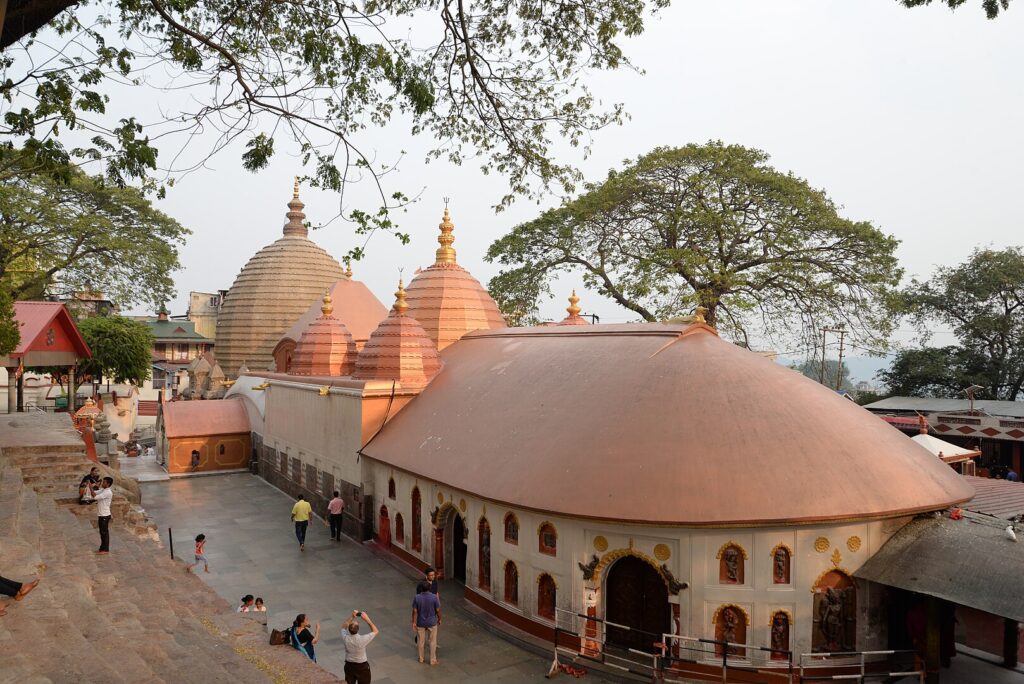
The temple’s architecture is quite striking and unlike most temples you’ll see in India. Built in the Nilachal style, it features a distinctive beehive-shaped dome (shikhara) made of stone. Instead of a typical idol, the sanctum houses a sacred yoni-shaped stone, symbolizing the creative power of the feminine divine.
The temple complex isn’t just one structure—it’s a collection of smaller shrines dedicated to deities like Shiva, Vishnu, and Ganesha. As you walk around, you’ll notice beautifully carved walls, ancient stone pathways, and an overall atmosphere that feels both historic and mystical.
And then there’s the view. From the hilltop, you get sweeping sights of the mighty Brahmaputra River and the city below, which adds a peaceful, almost surreal touch to the visit.
Religious and Cultural Significance
Kamakhya Temple is deeply connected with the idea of feminine energy and creation. It’s one of the most important centers of tantric worship in India, attracting not just devotees but also spiritual seekers from across the world.
The highlight of the year is the Ambubachi Mela, held in June, when the temple celebrates the menstruation cycle of the goddess—a rare and powerful concept in religious practice. During this time, the temple remains closed for a few days and then reopens with grand rituals and celebrations.
Other festivals like Durga Puja and Diwali are also celebrated with great enthusiasm, making the temple a vibrant cultural hub throughout the year.
Travel Experience
A visit to Kamakhya Temple is more than just a pilgrimage—it’s an experience. The journey up Nilachal Hill involves a short climb, either by steps or road, and along the way, you’ll find small shops, local offerings, and glimpses of everyday life around the temple.
Once inside, you can witness daily rituals, soak in the spiritual energy, and explore the various shrines within the complex. The surroundings are peaceful, with nature and history blending beautifully.
If you’re in Guwahati, you can also visit nearby attractions like the Umananda Temple and the Assam State Museum to make the most of your trip.
How to Reach
By Air:
The nearest airport is Lokpriya Gopinath Bordoloi International Airport, about 20 km away from the temple.
By Rail:
Guwahati Railway Station is the closest railway station and is well-connected to major cities across India.
By Road:
Guwahati is easily accessible via national highways like NH27 and NH17. From the city, you can hire taxis, take buses, or use auto-rickshaws to reach the temple comfortably.
Nearby Attractions of Kamakhya Temple
Perched atop Nilachal Hill in Guwahati, Assam, the revered Kamakhya Temple is one of India’s most important Shakti Peethas. Apart from its spiritual significance, the area surrounding the temple is home to several historical, cultural, and natural attractions that can easily be explored during a visit.
1. Umananda Temple
Located on Peacock Island in the Brahmaputra River, Umananda Temple is dedicated to Lord Shiva. Visitors can reach the island by ferry from Kachari Ghat. The scenic boat ride, peaceful surroundings, and beautiful river views make it one of the most popular attractions near Kamakhya Temple.
2. Bhuvaneshwari Temple
Situated on the highest point of Nilachal Hill, this temple is dedicated to Goddess Bhuvaneshwari. The location offers spectacular panoramic views of Guwahati city and the Brahmaputra River, especially during sunrise and sunset.
3. Navagraha Temple
This ancient temple on Chitrasal Hill is dedicated to the nine celestial bodies of Hindu astrology. It is a popular destination for devotees seeking astrological blessings and offers impressive views of the city.
4. Assam State Museum
A treasure house of Assamese history and culture, the museum showcases ancient sculptures, manuscripts, tribal artifacts, weapons, textiles, and archaeological discoveries. It is an excellent place for those interested in learning about Assam’s heritage.
5. Srimanta Sankardev Kalakshetra
This cultural complex celebrates the life and teachings of the great Assamese saint-scholar Srimanta Sankardev. The campus includes museums, open-air theatres, traditional Assamese architecture, and cultural exhibitions.
6. Basistha Ashram
Associated with Sage Vashistha, this serene pilgrimage site lies amidst forested surroundings and small waterfalls. It is a peaceful retreat for spiritual seekers and nature lovers.
7. Assam State Zoo and Botanical Garden
One of the largest zoological parks in Northeast India, the zoo is home to numerous animal species and a rich collection of regional flora. It is a great family-friendly attraction near Kamakhya Temple.
8. Brahmaputra River Cruise
A cruise on the mighty Brahmaputra offers stunning views of Guwahati’s skyline, river islands, and sunset landscapes. Evening cruises are particularly popular among tourists.
9. Ugro Tara Temple
Another important Shakti shrine in Guwahati, Ugro Tara Temple is dedicated to Goddess Tara. The temple holds immense religious significance and is often included in spiritual tours of the city.
10. Pandu Port
Located on the banks of the Brahmaputra, Pandu is known for its historical importance and riverfront views. It also serves as a gateway for river transportation in the region.
Google Maps
FAQs
1. What is special about Kamakhya Temple?
Kamakhya Temple is unique because it worships the feminine power in the form of a yoni-shaped stone rather than a traditional idol. It’s also a major center for tantric practices.
2. When is the best time to visit Kamakhya Temple?
You can visit throughout the year, but if you want to experience something truly unique, plan your trip during the Ambubachi Mela in June.
3. Is there an entry fee for the temple?
No, entry to the temple is free. However, special (darshan) tickets may be available for quicker access.
4. How difficult is the climb to the temple?
The climb is moderate and manageable for most people. You can also reach the top by vehicle if you prefer not to walk.
5. Are there any dress code rules?
There’s no strict dress code, but modest and respectful clothing is recommended as it is a religious place.
6. Can tourists visit Kamakhya Temple?
Yes, both devotees and tourists are welcome. It’s not only a religious site but also an important cultural landmark.
7. How much time should I spend here?
Typically, 2–3 hours are enough to explore the temple complex and attend a (puja), but you can take longer if you want a more relaxed experience.