Image Source: Carlos Macías
Overview
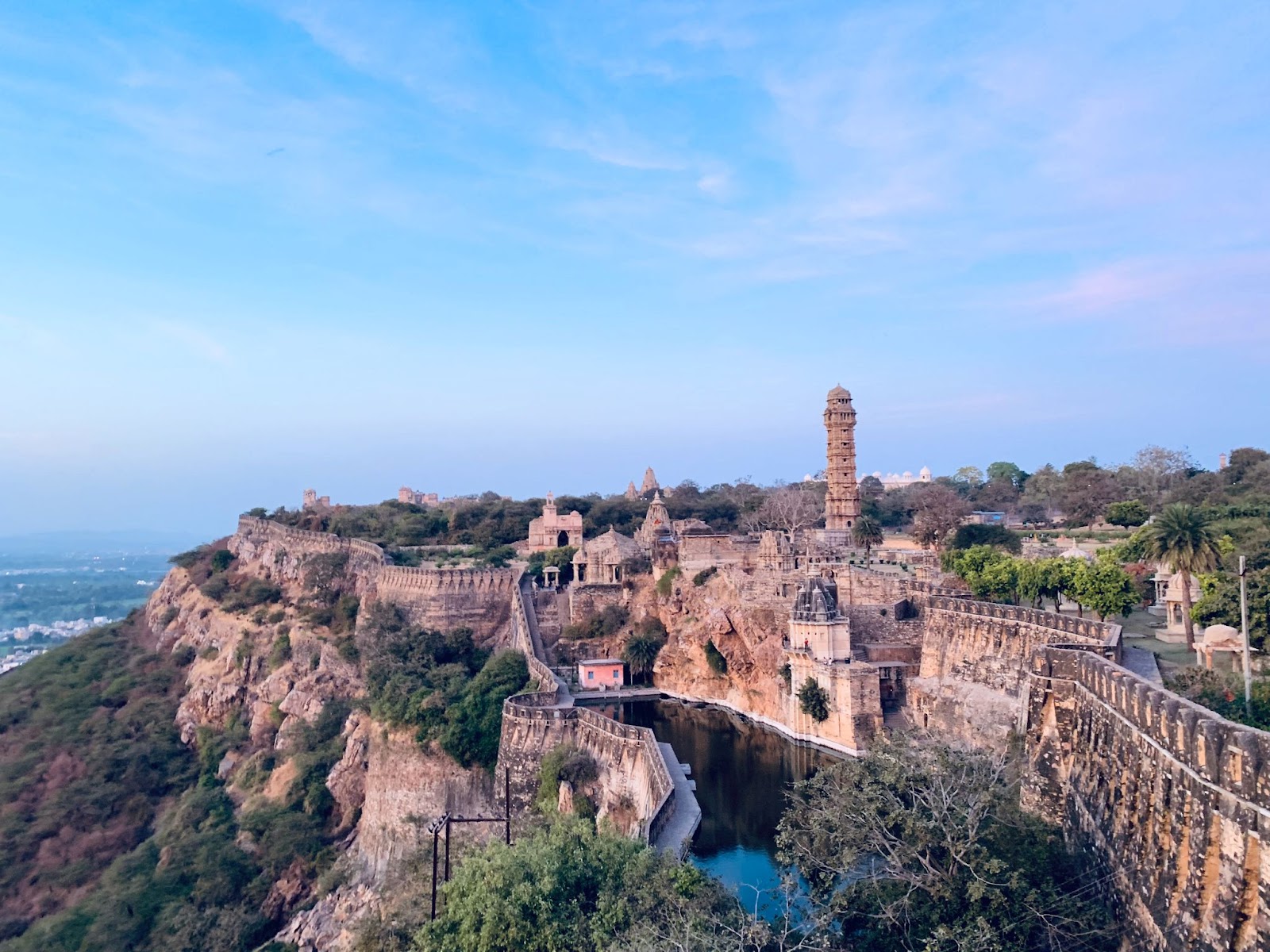
Perched atop a massive hill overlooking the plains of Rajasthan, Chittorgarh Fort is one of India’s most iconic historical landmarks. Known for its tales of bravery, sacrifice, and royal grandeur, this magnificent fort represents the spirit of Rajputana like few other places in the country. As the largest fort in India, Chittorgarh Fort is not just a monument but a living reminder of Rajasthan’s glorious past.
Spread across nearly 700 acres on a 180-meter-high hill, the fort dominates the landscape of Chittorgarh city. Recognized as a UNESCO World Heritage Site as part of the Hill Forts of Rajasthan, it attracts history enthusiasts, architecture lovers, pilgrims, and travelers from around the world. Walking through its gates, palaces, temples, and towers feels like stepping back into an era of kings, queens, and legendary battles.
History of Chittorgarh Fort
The origins of Chittorgarh Fort date back to the 7th century CE when it was built by the Maurya rulers and was known as Chitrakut. In 734 CE, the fort came under the control of Bappa Rawal, the founder of the Mewar dynasty, who established it as the capital of his kingdom.
Over the centuries, Chittorgarh became the center of Mewar’s political and cultural life. The fort witnessed some of the most dramatic events in Indian history, including three major sieges. The first occurred in 1303 when Sultan Alauddin Khilji attacked Chittorgarh. The second came in 1535 under Sultan Bahadur Shah of Gujarat, and the third in 1568 when Mughal Emperor Akbar laid siege to the fort.
These invasions gave rise to stories of unmatched courage. Rajput warriors fought fiercely to defend their homeland, while the women of Chittorgarh performed Jauhar—an act of mass self-sacrifice—to preserve their honor in the face of defeat. The stories of Rani Padmini, Rani Karnavati, and the brave Rajput defenders continue to inspire generations.
Architecture and Layout
The grandeur of Chittorgarh Fort becomes evident long before visitors enter its gates. The fort stretches over a circumference of nearly 13 kilometers and is protected by massive stone walls. Access to the fort is through a winding uphill road that passes through seven imposing gateways, including Padan Pol, Bhairon Pol, Hanuman Pol, Ganesh Pol, Jodla Pol, Laxman Pol, and Ram Pol.
Within its walls lies a fascinating collection of palaces, temples, memorials, reservoirs, and towers. More than 60 historic structures survive today, showcasing the artistic excellence and engineering skills of the Rajput era.
Rana Kumbha Palace
One of the largest structures within the fort, Rana Kumbha Palace was once the residence of the rulers of Mewar. Although much of it now stands in ruins, the palace still reflects the grandeur of medieval Rajput architecture. Several underground chambers, courtyards, balconies, and temples can be seen here. Many historians believe that one of the famous Jauhars took place within this palace complex.
Padmini Palace
Situated near a picturesque lotus pool, Padmini Palace is among the most visited attractions inside the fort. This elegant white structure is associated with the legendary Queen Rani Padmini, whose beauty is said to have inspired Alauddin Khilji’s invasion of Chittorgarh.
The palace offers visitors a glimpse into royal life and provides beautiful views of the surrounding landscape. Whether legend or history, the story of Rani Padmini remains deeply connected to the identity of Chittorgarh.
Fateh Prakash Palace Museum
Built by Maharana Fateh Singh, Fateh Prakash Palace now houses a museum managed by the Archaeological Survey of India. The museum contains an impressive collection of sculptures, weapons, paintings, inscriptions, and artifacts that tell the story of Mewar’s rich cultural heritage.
Visitors interested in Rajasthan’s history will find this museum particularly rewarding.
Vijay Stambh – The Tower of Victory
The Vijay Stambh, or Tower of Victory, is the most recognizable monument within Chittorgarh Fort. Constructed by Maharana Kumbha in the 15th century to celebrate his victory over Mahmud Khilji of Malwa, this nine-storey tower rises approximately 37 meters into the sky.
Intricate carvings depicting Hindu deities, mythological scenes, and royal achievements adorn its walls. Climbing the tower rewards visitors with spectacular panoramic views of the fort and surrounding countryside.
Kirti Stambh – The Tower of Fame
Another remarkable structure is the Kirti Stambh, a seven-storey Jain tower dedicated to Adinath, the first Jain Tirthankara. Built by a wealthy Jain merchant, this beautifully carved tower showcases intricate Jain artwork and serves as an important pilgrimage site for followers of Jainism.
Gaumukh Reservoir
Among the most fascinating features of the fort is the Gaumukh Reservoir. Named after a stone cow’s mouth from which water continuously flows, this reservoir served as a crucial water source during times of siege.
Fed by a natural spring, the reservoir remains filled throughout much of the year and highlights the advanced water management systems developed by the fort’s builders centuries ago.
Temples Inside the Fort
Chittorgarh Fort is home to numerous Hindu and Jain temples that reflect the region’s spiritual heritage.
The Kalika Mata Temple, originally dedicated to the Sun God, is one of the oldest temples within the fort and attracts devotees throughout the year. The Samidheshwar Temple, dedicated to Lord Shiva, is renowned for its beautiful carvings and architectural elegance.
Several Jain temples, including Shringar Chauri, Sat Bis Deori, and Sattaees Devari, showcase exceptional craftsmanship and remain important religious sites for the Jain community.
Best Time to Visit
The ideal time to visit Chittorgarh Fort is between October and March when Rajasthan experiences pleasant weather. During these months, exploring the expansive fort complex is much more comfortable.
Visitors can also attend the annual Jauhar Mela, which commemorates the bravery and sacrifices associated with Chittorgarh’s history.
Timings and Entry Information
Chittorgarh Fort is generally open daily from 9:30 AM to 5:00 PM. Since the fort complex is vast, visitors should allocate at least three to four hours to explore its major attractions comfortably.
How to Reach Chittorgarh Fort
By Air
The nearest airport is Maharana Pratap Airport in Udaipur, located approximately 90 kilometers away. From the airport, taxis and buses are readily available to reach Chittorgarh.
By Train
Chittorgarh Junction is a major railway station connected to cities such as Jaipur, Udaipur, Delhi, Mumbai, Ahmedabad, and Kota. The fort is about 5 kilometers from the railway station.
By Road
Chittorgarh enjoys excellent road connectivity with major cities across Rajasthan and neighboring states. Regular Rajasthan State Road Transport Corporation (RSRTC) buses and private buses operate from Udaipur, Jaipur, Kota, Ajmer, and Ahmedabad.
Nearby Attractions
1. Sanwariyaji Temple
Located around 40 kilometers from Chittorgarh, this famous Krishna temple attracts thousands of devotees and is considered one of Rajasthan’s most revered pilgrimage sites.
2. Menal Waterfall
Often called the “Mini Khajuraho of Rajasthan,” Menal features ancient temples and a spectacular seasonal waterfall, making it a perfect day trip from Chittorgarh.
3. Bassi Wildlife Sanctuary
Nature lovers can visit this sanctuary to spot deer, antelope, migratory birds, and other wildlife amidst scenic surroundings.
4. Nagari Archaeological Site
One of Rajasthan’s oldest historical settlements, Nagari offers fascinating insights into ancient civilizations that flourished in the region.
5. Udaipur
Known as the City of Lakes, Udaipur is just a short drive away and offers attractions such as City Palace, Lake Pichola, Sajjangarh Palace, and Jag Mandir.
Map of Chittorgarh fort
FAQs
1. Why is Chittorgarh Fort famous?
Chittorgarh Fort is famous for its association with Rajput bravery, the legend of Rani Padmini, historic battles, and its impressive architecture.
2. Is Chittorgarh Fort a UNESCO World Heritage Site?
Yes. Chittorgarh Fort is recognized as a UNESCO World Heritage Site under the Hill Forts of Rajasthan.
3. How much time is required to explore the fort?
A minimum of three to four hours is recommended, though history enthusiasts may spend an entire day exploring the fort complex.
4. What is the significance of Vijay Stambh?
Vijay Stambh was built by Maharana Kumbha to commemorate his victory over Mahmud Khilji and is one of the finest examples of Rajput architecture.
5. Can visitors enter the towers?
Access regulations may vary, but visitors can generally view the towers closely and admire their intricate carvings.
6. Is Chittorgarh Fort suitable for family visits?
Yes. The fort is an excellent destination for families, students, photographers, history enthusiasts, and cultural travelers.
7. What is the best season to visit Chittorgarh Fort?
The winter season, from October to March, is considered the best time to visit due to comfortable temperatures and pleasant weather.