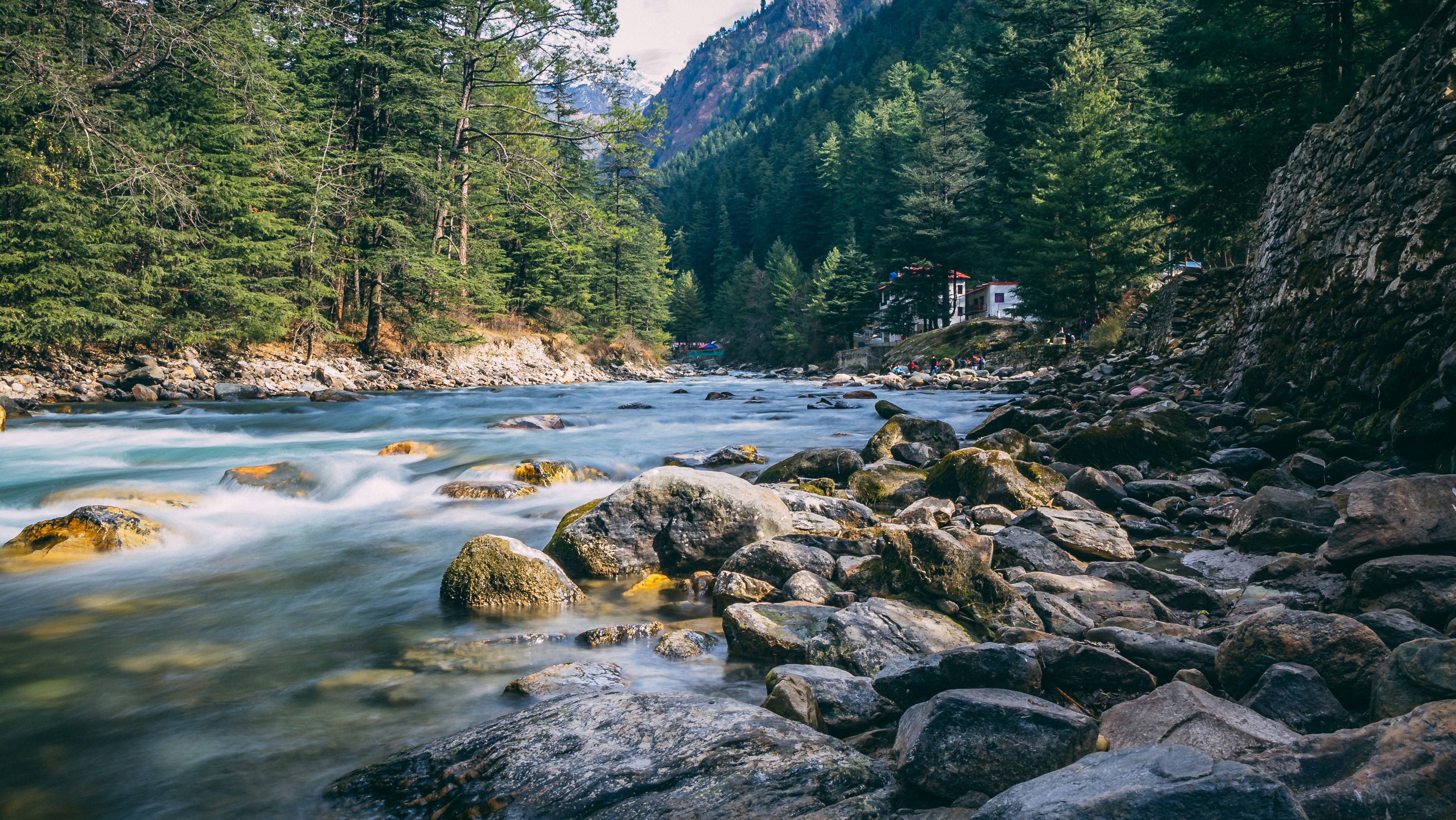
The historic town of Mandi, situated along the Beas River in Himachal Pradesh, is often called “Chhoti Kashi” or “Varanasi of the Hills” because of its concentration of historic temples, stone sculptures and sacred riverfront spaces. Once the capital of the princely state of Mandi, the town developed into an important centre of religion, trade and regional culture.
According to the Himachal Pradesh Tourism Department, Mandi was founded in the early sixteenth century and has more than 80 stone built temples in its historic streets and riverfront areas. Many are dedicated to Lord Shiva, although the town also has important shrines associated with Shakti worship and the royal traditions of the former Mandi kingdom.
The temples are not all identical. Some feature tall stone shikharas and finely carved sculptures, while others are closely associated with local deities, royal patronage and annual religious gatherings. Their locations also reflect the geography of the town, from the old bazaar and river ghats to the slopes overlooking the Beas Valley.
This guide introduces 10 temple sites and shrine groups to help travellers explore Mandi’s religious heritage. A few entries are related to one another, and not every temple lies within the central walking circuit, so check the locations before planning your route.
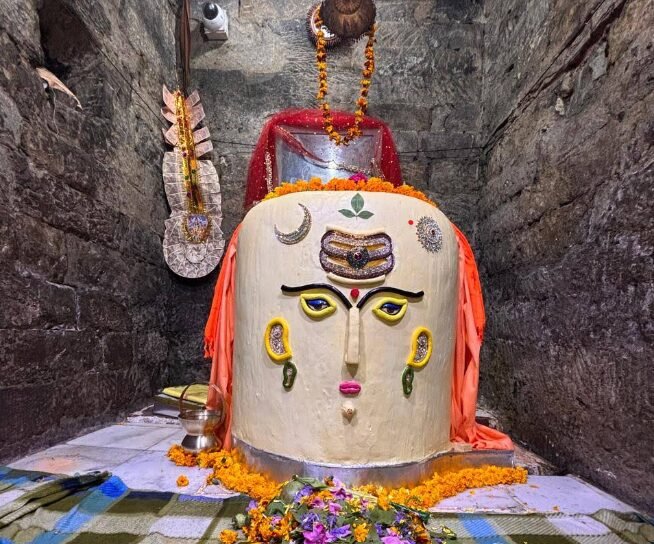
Image Source: Kulwinder Singh/ Google Maps
1. Bhootnath Temple: The Spiritual Heart of Mandi
Deity: Lord Shiva
Location: Chohatta Bazaar, Old Mandi
Bhootnath Temple is among the most important religious landmarks in Mandi. Dedicated to Lord Shiva, it stands in the historic bazaar area and is closely associated with the town’s founding and its identity as Chhoti Kashi.
The temple is traditionally linked with Raja Ajbar Sen, the ruler associated with the establishment of Mandi as a capital in the sixteenth century. Official tourism accounts describe Bhootnath Temple as having been built around the time the town was founded. The exact details of its earliest construction and subsequent alterations should be distinguished from the broader history of the town.
The temple is especially important during the International Shivratri Fair, when the arrival of local deities marks the beginning of the celebrations. Village deities travel to Mandi in decorated palanquins accompanied by devotees and traditional musicians. The gathering connects the town’s main Shiva shrine with the wider religious traditions of the surrounding hills.
Traveller experience
The temple is a convenient starting point for exploring Old Mandi. Its setting among the market streets provides a glimpse of how worship and everyday commercial life coexist in the historic town. Visitors can observe the temple exterior, its entrance and the surrounding square before continuing towards other old shrines.
If you visit during Shivratri, expect larger crowds, processions and temporary market activity. Outside the festival, the experience is generally more suitable for a quiet heritage walk.
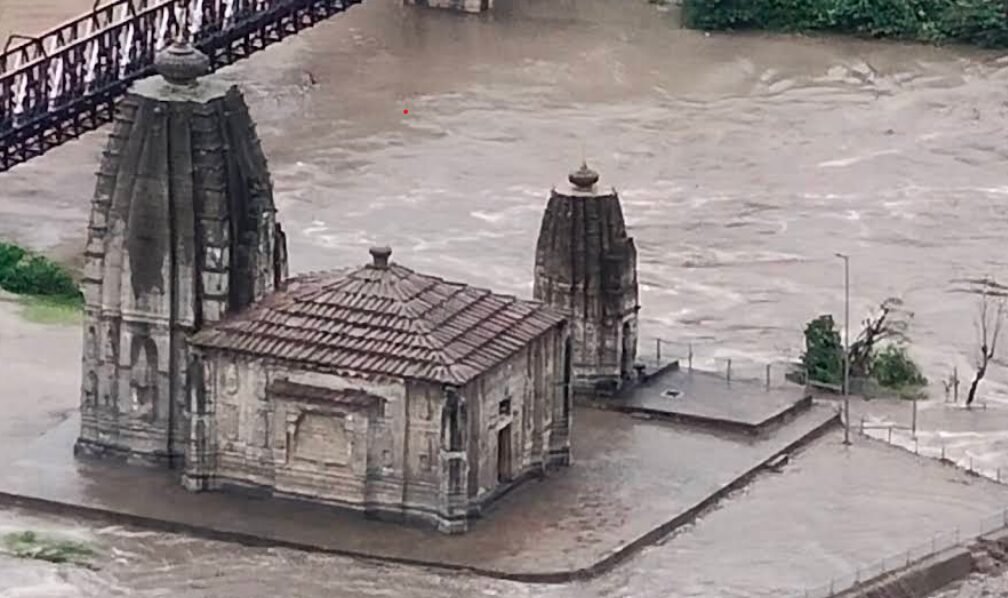
Image Source: Suhani Sen/ Google Maps
2. Panchvaktra Temple: Shiva of the Five Faces
Deity: Panchvaktra Shiva
Location: At the confluence of the Beas River and Suketi Khad
Panchvaktra Temple is one of Mandi’s most distinctive historic shrines. It stands near the meeting point of the Beas River and Suketi Khad, giving it a particularly striking riverside setting.
The temple takes its name from Panchvaktra, meaning the five faced form of Lord Shiva. The shrine houses a five faced Shiva image, and the five faces are associated in Hindu traditions with different aspects of the deity and the cosmic order.
The five elements listed in your original draft—earth, water, fire, air and ether—offer one familiar way to explain the symbolism. However, the five faces of Shiva also have more specific associations in Shaiva traditions, so they should not be reduced to the elements alone.
The temple is known for its stone architecture and carved details. Its position near the river junction also illustrates why Mandi’s religious landscape is so closely connected with the Beas and its tributaries.
Traveller experience
Panchvaktra is worth visiting for both its architecture and its location. The confluence provides a useful geographical reference point when exploring the riverfront, while the temple itself offers an opportunity to appreciate the stonework and traditional design of Mandi’s historic shrines.
The river setting can be particularly attractive for photography, but take care near the banks, especially after rain or when water levels are high. For historical background, consult the official Mandi tourism guide.
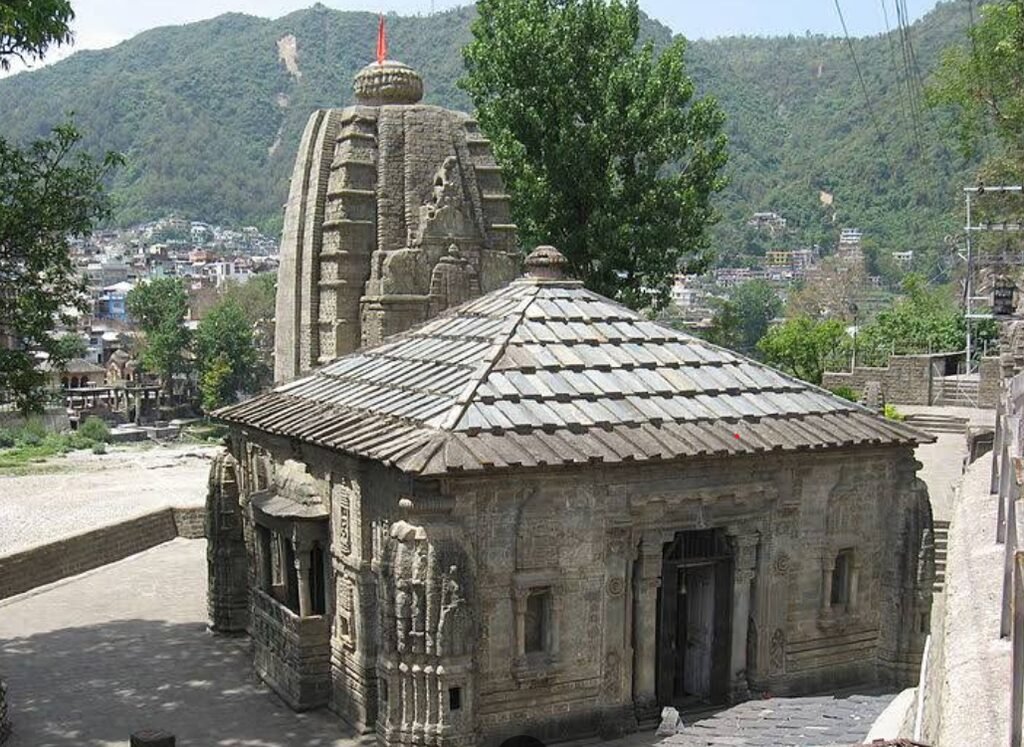
Image Source: Jacques Martin (Djampa)/ Google Maps
3. Triloknath Temple: Lord of the Three Worlds
Deity: Lord Shiva as Triloknath
Location: Purani Mandi, the old quarter of town
Triloknath Temple is another major Shiva shrine in Mandi’s historic core. The name Triloknath means Lord of the Three Worlds, a title associated with Shiva’s cosmic role.
The temple is notable for its stone construction, sculptural details and shikhara style of architecture. Its three faced Shiva image is one of the features associated with the shrine. The carved exterior and traditional temple form make it an important part of Mandi’s architectural heritage.
The temple is also significant for understanding the town’s early history. Mandi’s temples were built and supported under different rulers and patrons, and not all structures necessarily belong to the same period. Some sources associate the Triloknath Temple with the early sixteenth century, but its history should be considered in the context of its architectural features and later changes rather than assuming that every visible element is original.
Traveller experience
Triloknath is a natural stop on a walking tour of Old Mandi. Its historic setting makes it possible to combine temple visits with a look at the older streets and traditional urban layout.
Take time to observe the stone carvings and the overall form of the temple rather than treating it only as a brief worship stop. Visitors should remain respectful of worshippers and follow any restrictions on photography inside the shrine.
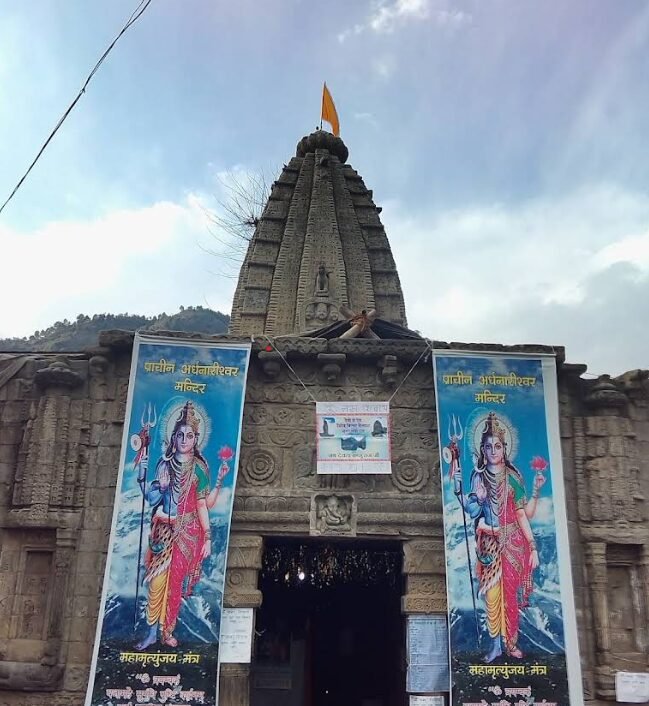
Image Source: Atul Sharma/ Google Maps
4. Ardhanarishwar Temple: The Unity of Shiva and Shakti
Deity: Ardhanarishvara, the combined form of Shiva and Parvati
Location: Samkhetar Street, Mandi
Ardhanarishwar Temple is one of the most distinctive shrines in Mandi because of its association with Ardhanarishvara, a form of the divine represented as half Shiva and half Parvati.
The image symbolises the inseparability of masculine and feminine principles and the complementary forces through which the universe is understood in Hindu philosophy. It is more than a representation of two deities standing together: the combined form expresses the idea that creation and existence depend on the relationship between these aspects of divinity.
The temple is also important from a heritage perspective. Mandi contains several historic stone temples, but a shrine devoted to Ardhanarishvara gives the town a distinctive place in the study of regional Shaiva worship.
Traveller experience
The temple is a worthwhile stop for visitors interested in mythology, iconography and the meaning of Hindu temple images. It can also be included in a walk through the old town, although the route involves moving through streets rather than following one continuous riverside path.
Before visiting, check the exact entrance and local access arrangements. The best experience comes from understanding the symbolism of the deity and the temple’s place within Mandi’s wider religious landscape.
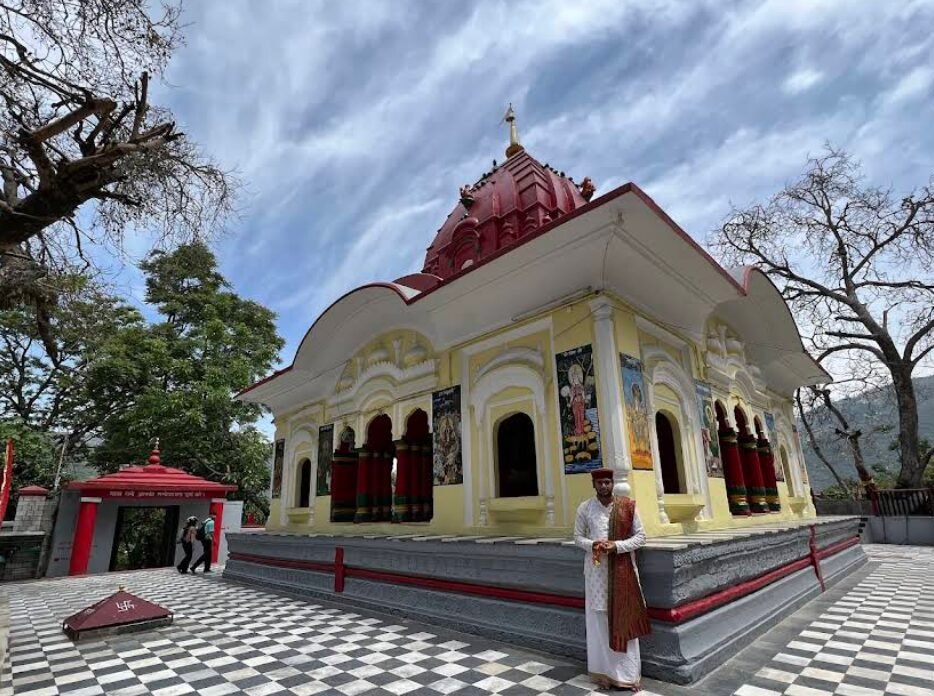
Image Source: Atul Sharma/ Google Maps
5. Tarna Devi Temple: The Hilltop Shrine of Shyamakali
Deity: Goddess Shyamakali
Location: Tarna Hill, overlooking Mandi
Tarna Devi Temple occupies a hill above Mandi and is one of the town’s best known shrines dedicated to the Goddess. It is also called the Shyamakali Temple, a name associated with the form of Kali worshipped here.
The temple is traditionally linked with Raja Shyam Sen, who ruled Mandi in the seventeenth century. Local historical accounts associate its construction with the period around 1659, following a victory involving the neighbouring state of Suket. This history reflects the close relationship between royal patronage, religious devotion and political life in the former hill kingdoms.
The hilltop location distinguishes the temple from Mandi’s riverside Shiva shrines. From the surrounding area, visitors can look across the town and the Beas Valley, making the site both a religious destination and a viewpoint.
Traveller experience
Reaching the temple involves an uphill walk, although road access is also possible. The walk offers a different perspective on Mandi, moving away from the dense market streets towards a more open hillside setting.
Allow extra time if you intend to walk uphill, particularly during hot weather. The temple is also a useful place to appreciate how Mandi’s religious geography extends beyond the riverfront into the surrounding hills.
Important clarification: Tarna Devi Temple and Shyamakali Temple are names for the same principal shrine, not two separate major temples. The distinction matters when planning a temple count or a route.
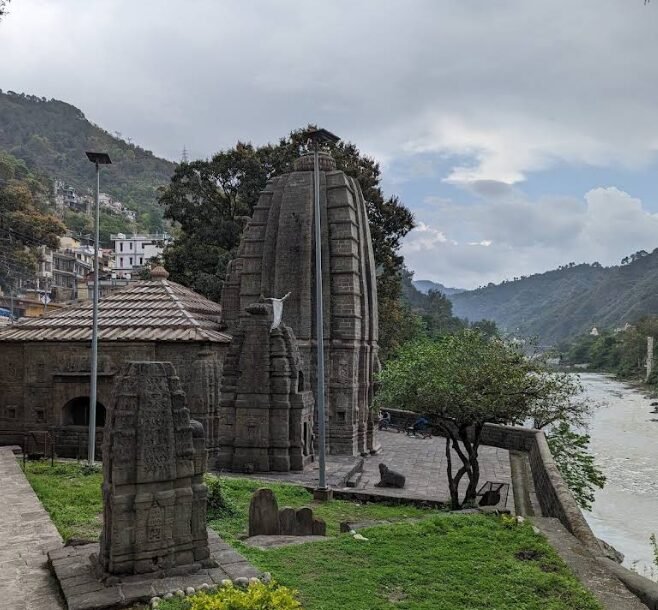
Image Source: VAP PRODUCTION/ Google Maps
6. The Bhootnath Temple Complex and Nearby Shrines
Deity: Primarily Lord Shiva, with associated local religious traditions
Location: Chohatta Bazaar and the surrounding historic area
Bhootnath Temple is not an isolated religious landmark. It forms part of a wider historic landscape of shrines, market streets and sacred places that have shaped Mandi’s identity over centuries.
Smaller shrines and nearby temples reflect the variety of religious traditions found in the town. Some are associated with Shiva, while others honour different deities worshipped by local communities. Their importance lies not only in their architecture but also in the way worship is woven into everyday life.
During the International Shivratri Fair, the relationship between the main temple and the wider network of local deities becomes particularly visible. Deities from surrounding villages arrive in decorated palanquins, accompanied by devotees, musicians and ritual attendants. The fair is a major cultural gathering rather than simply a celebration confined to one temple courtyard.
Traveller experience
Use Bhootnath Temple as a base for exploring the surrounding lanes, but do not assume every small shrine is formally part of a single temple complex. Some have their own names, entrances and local traditions.
If you are interested in the festival, plan for crowds and changes to traffic or pedestrian movement. Outside festival time, the old streets offer a more relaxed opportunity to see how the town’s sacred places fit into its daily life.
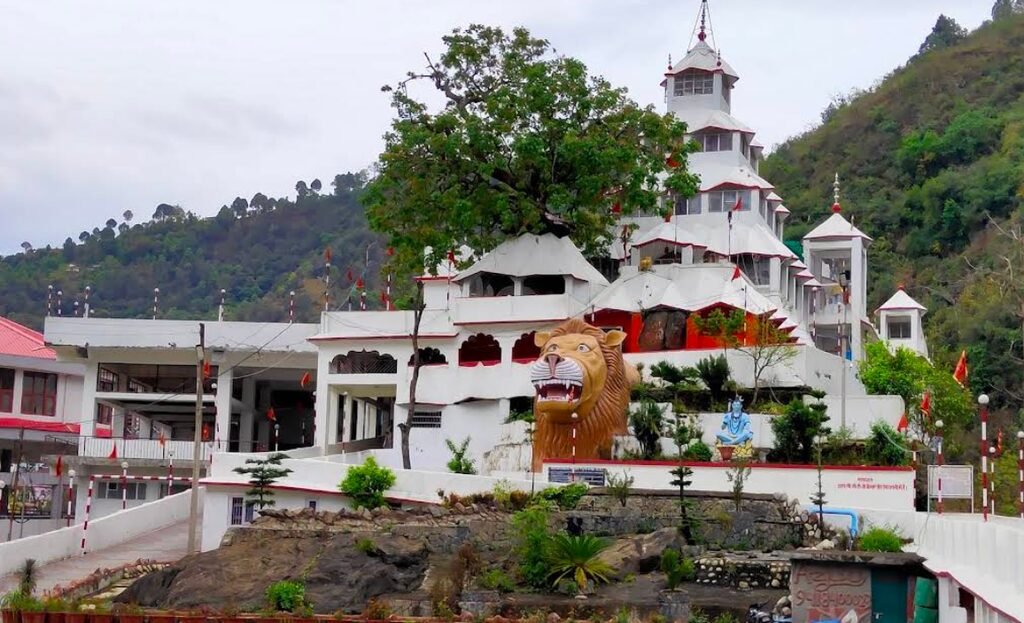
Image Source: LEKH/ Google Maps
7. Bhimakali Temple: The Shakti Shrine at Bheuli
Deity: Goddess Bhimakali
Location: Bheuli, Mandi
Mandi’s Bhimakali Temple is an important shrine dedicated to the Goddess and forms part of the town’s broader Shakti tradition. The district administration lists Bhimakali Temple at Bheuli among Mandi town’s religious landmarks.
This site should not be confused with the much more widely known Bhimakali Temple at Sarahan in the former Bushahr region, which is famous for its distinctive traditional wooden architecture. They are separate temples in different parts of Himachal Pradesh.
The presence of a Bhimakali shrine in Mandi illustrates that the town’s religious heritage is not limited to Shiva worship. Goddess traditions are also an important part of the area’s sacred landscape, alongside temples dedicated to local deities and other forms of the divine.
Traveller experience
Bhimakali Temple can be considered by visitors who want to explore Mandi’s wider religious heritage beyond the best known Shiva shrines. Because it is in Bheuli rather than the central old bazaar, check the route and travel time before including it in a walking itinerary.
Do not assume that the architecture or history of the Mandi shrine is identical to that of Sarahan’s Bhimakali Temple. When describing this temple, keep the two locations clearly distinguished.
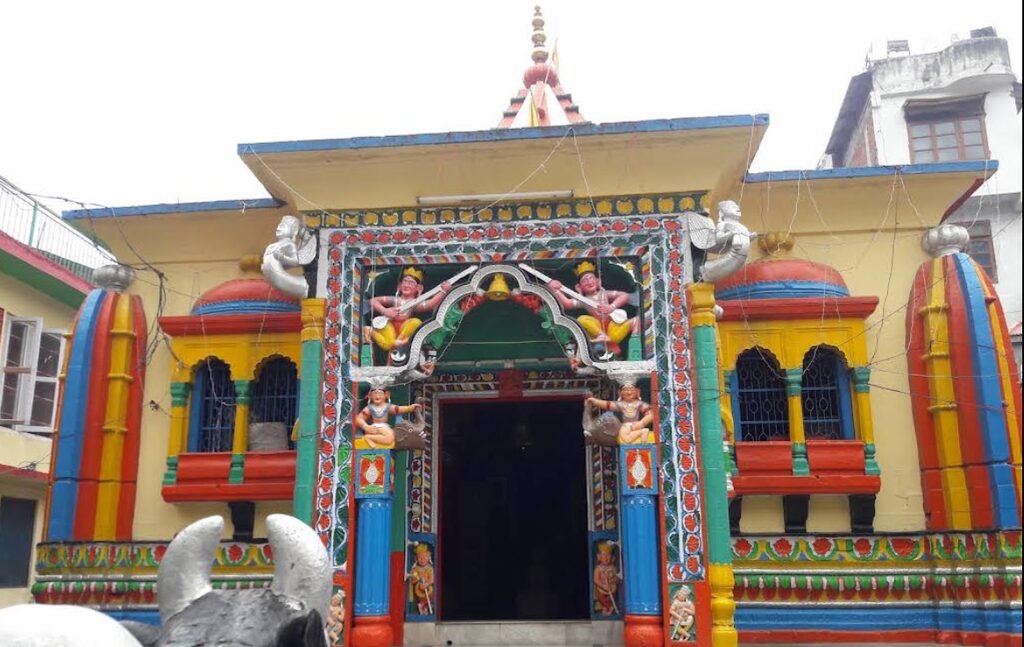
Image Source: Vijay Kumar Kapoor/ Google Maps
8. Ekadash Rudra Temple: The Eleven Forms of Rudra
Deity: Lord Shiva in the form of Ekadash Rudra
Location: Near Hanuman Ghat, Mandi
Ekadash Rudra Temple is a historic shrine associated with Rudra, an ancient and powerful form of Shiva. Ekadash means eleven, and the name refers to the tradition of eleven Rudras found in Hindu religious literature.
Rudra is associated with powerful natural and cosmic forces, while Shiva’s wider religious traditions include themes of destruction, renewal and transformation. The eleven Rudras are described differently in various Hindu texts, so it is more accurate to present the temple as connected with this religious tradition than to assign one universal list of eleven forms.
The temple is included among the historic shrines of Mandi in heritage documentation. A conservation report prepared for the town’s historic precincts also identifies Ekadash Rudra Temple near Hanuman Ghat among the important old temples requiring attention to their architectural heritage.
Traveller experience
The temple is a useful addition for travellers interested in less frequently discussed religious sites. It can be explored alongside the riverfront and other old shrines, depending on the access route and the time available.
Because smaller temples may have limited visitor information, ask locally for the entrance and current access arrangements. As with other historic shrines, avoid assuming that a quiet or modest exterior means the temple has little cultural significance.
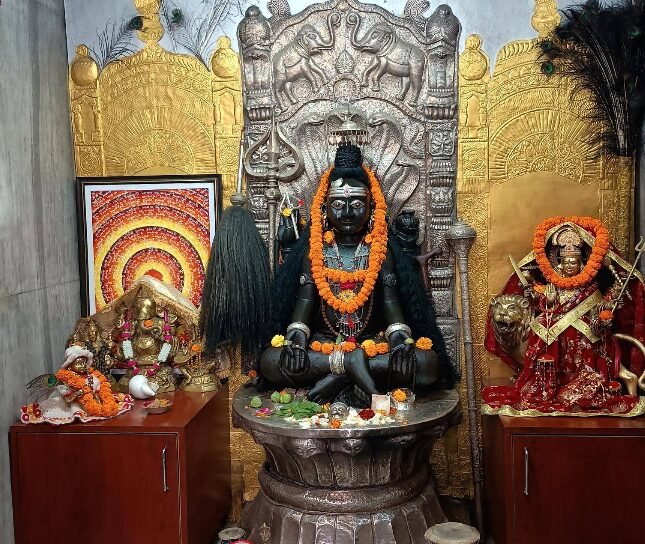
Image Source: Baldev Das/ Google Maps
9. Mahamrityunjaya Temple: Shiva and the Conquest of Death
Deity: Lord Shiva as Mahamrityunjaya
Location: Near the New ITI Bridge area, Mandi
Mahamrityunjaya Temple is one of Mandi’s notable Shiva shrines. The name Mahamrityunjaya is commonly interpreted as the Great Conqueror of Death and is associated with a well known Vedic mantra dedicated to Shiva.
The Mahamrityunjaya mantra is traditionally recited as a prayer for protection, well being and liberation from the fear of death. It has an important place in Hindu worship and is often heard during prayers and religious observances dedicated to Shiva.
The temple is known for its distinctive Shiva image, which is described in local tourism material as showing the deity in a meditative posture. The shrine adds another dimension to Mandi’s Shiva heritage, alongside the five faced form at Panchvaktra and the three faced image at Triloknath.
Claims that the idol possesses healing powers should be understood as matters of faith and devotional belief, rather than scientifically established effects.
Traveller experience
Mahamrityunjaya Temple is worth visiting if you are interested in the different forms in which Shiva is worshipped across Mandi. Its location near the bridge area means you should check the route from the central market before setting out, especially if you are planning to visit several temples on foot.
Take time to understand the meaning of the deity’s name and mantra. This context helps explain why the temple is important to devotees beyond its architectural appearance.
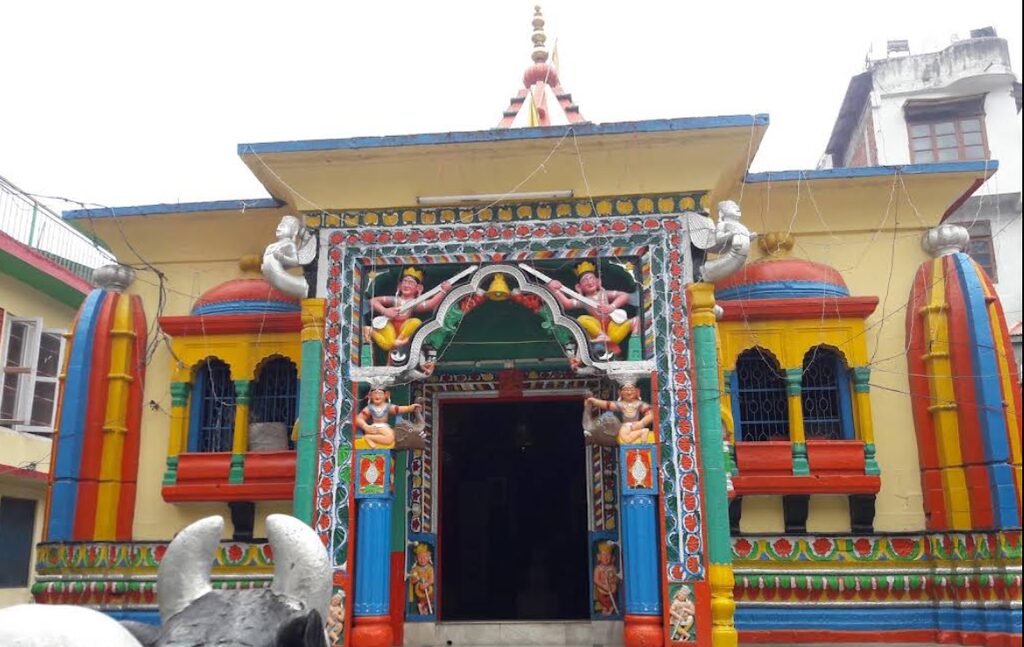
Image Source: Iᔕᕼᑌ KᗩTOᑕᕼ/ Google Maps
10. Kamaksha Devi Temple: A Goddess Shrine in Mandi District
Deity: Goddess Kamaksha
Location: Jaidevi area, Mandi district
Kamaksha Devi Temple is associated with the wider religious landscape of Mandi district and is commonly linked with the Jaidevi area. It is important to distinguish it from the temples within central Mandi town because it is not simply another stop along the old bazaar and riverfront route.
The shrine reflects the region’s continuing traditions of Goddess worship. Temples dedicated to Devi often serve as places for family prayers, local festivals and community gatherings, connecting religious practice with the agricultural and social life of the surrounding villages.
Your original draft associates the temple with Tantric Shakti traditions and prayers for prosperity and fulfilment of wishes. Such interpretations should be presented as religious beliefs or local traditions unless supported by temple-specific historical documentation.
Traveller experience
Kamaksha Devi Temple is better planned as a separate excursion rather than automatically included in a half-day walk through central Mandi. Confirm the exact location, road access and current temple timings before travelling.
For a wider exploration of Mandi district, it can be considered alongside other regional religious destinations, but check distances carefully because the district covers a large and mountainous area
Temple Walking Route: A Traveller Friendly Itinerary
Mandi’s old temples are relatively close together compared with many of the region’s outlying pilgrimage sites, but a route covering every temple in this guide should not be treated as one easy half-day walk. Some sites are on the hillside, some are across the river, and others are outside the central town.
Suggested Route for the Historic Town
Start: Indira Market and Subhash Garden
Begin in the central market area. Indira Market and Subhash Garden provide a useful orientation point, and the nearby clock tower is another historic landmark worth noticing.
Stop 1: Bhootnath Temple
Walk into the old bazaar towards Chohatta Bazaar and visit Bhootnath Temple, one of the central landmarks of Mandi’s religious heritage.
Stop 2: Triloknath Temple
Continue into Purani Mandi to explore the stone temple and its carved architecture.
Stop 3: Ardhanarishwar Temple
Include Ardhanarishwar Temple as another important shrine, noting its distinctive iconography and association with the combined form of Shiva and Parvati.
Stop 4: Ekadash Rudra Temple
Continue towards the Hanuman Ghat area, checking the walking route locally. This stop adds a lesser known Shiva shrine to the itinerary.
Stop 5: Mahamrityunjaya Temple
Depending on your route and walking pace, continue towards the temple near the New ITI Bridge area. Allow extra time if you intend to explore the riverfront as well.
Stop 6: Panchvaktra Temple
Visit Panchvaktra Temple at the confluence of the Beas and Suketi Khad. Its riverside location makes it a fitting stop to end the central temple walk, although the river crossing and return route should be checked on the day.
Take a Separate Ride to Tarna Hill
Tarna Devi or Shyamakali Temple is best planned as a separate uphill excursion. You can walk up if you are comfortable with the climb or use road transport where available. The view over Mandi makes it a rewarding addition to the central-town itinerary.
Plan Bheuli and Jaidevi Separately
Bhimakali Temple at Bheuli and Kamaksha Devi Temple in the Jaidevi area are not interchangeable with central-town sites. Check the exact route and transport arrangements before including them in the same day.
The suggested route is a planning outline rather than a surveyed walking map. Use a current map for street-level directions and check local access conditions.
Why Mandi Has So Many Shiva Temples
Mandi’s identity as Chhoti Kashi developed through the combination of its temples, riverfront setting, royal history and religious traditions. The Beas River and its tributaries form an important geographical backdrop, while the historic town’s streets and ghats contain numerous shrines dedicated to Shiva and other deities.
The former rulers of Mandi supported religious institutions, and temples became centres of worship as well as landmarks of the town’s cultural identity. Their architecture preserves evidence of changing artistic traditions, including stone shikhara forms, carved figures and temple groups built during different periods.
The town’s religious life also extends beyond its permanent structures. Local deities from villages across the district are brought to Mandi during the annual Shivratri Fair, where ritual processions and community gatherings connect the town with the wider region.
The idea that Mandi’s temples form a precisely planned spiritual geometry or sacred mandala is best treated as an interpretation or local belief unless supported by historical evidence. What can be established is that the town’s temples and riverfront have long been central to its religious and cultural identity.
Traveller Tip: Visit During the Mandi Shivratri Festival
If your travel dates are flexible, consider visiting during the International Shivratri Fair, generally held in February or March. The festival brings together local deities from villages across the region, accompanied by decorated palanquins, traditional music, processions and public celebrations.
The gathering is one of the most distinctive cultural experiences in Mandi because it reveals the continuing importance of village deity traditions alongside the town’s historic temples. It is also a busy period, so expect crowds, traffic changes and increased demand for accommodation.
If you prefer a quieter architectural visit, explore the temples outside the festival period. You will have more time to observe the stone carvings, walk through the old streets and appreciate the relationship between Mandi’s temples and the Beas River.
For current festival information and the town’s official temple listings, consult the District Administration of Mandi and Himachal Pradesh Tourism.