Image Source: pexels.com/@stuti/
Introduction
Durga Puja in Chittaranjan Park, popularly known as CR Park, is one of the most distinctive cultural celebrations in Delhi. Every year, the neighbourhood in South Delhi transforms into a lively meeting place for Bengali traditions, artistic pandals, elaborate Durga idols, devotional music, cultural performances and the unmistakable aroma of Bengali food. For a few days, its residential streets take on the atmosphere of a festive Bengali neighbourhood, attracting residents, devotees, photographers, food lovers and visitors from across the National Capital Region.
What makes CR Park particularly interesting is that Durga Puja here is not confined to a single temple or exhibition ground. Several community associations organise their own celebrations at different locations across the neighbourhood. Each pandal has its own identity, artistic presentation, rituals and food stalls, making a walk through CR Park an experience of discovering several celebrations within one locality.
For travellers exploring Delhi during the festive season, CR Park offers a chance to experience Bengali culture without leaving the capital. However, visiting the right pandals, understanding their locations and planning the route can make a substantial difference, especially during the busiest evenings of the festival.
This guide explores the cultural significance of Durga Puja in CR Park, the major pandal locations, what makes the neighbourhood special, how to reach each area and how to plan a practical visit using verifiable sources.
Where Is CR Park, and Why Is It Famous for Durga Puja?
Chittaranjan Park lies in South Delhi, around the Kalkaji and Greater Kailash area. It is widely known as Mini Bengal or Mini Kolkata because of its Bengali community, fish markets, traditional sweet shops, cultural associations and religious institutions. Delhi Tourism itself identifies CR Park as home to the largest Bengali community in Delhi NCR and recommends visiting during Durga Puja and Kali Puja.
The neighbourhood’s Bengali identity developed through the settlement of Bengali families displaced by Partition and the subsequent growth of the East Pakistan Displaced Persons Colony, which later became Chittaranjan Park. Over time, community organisations, local markets and cultural institutions helped preserve Bengali customs in the capital.
Durga Puja became an important expression of that identity. It brings religious observance and public celebration together: families attend rituals, community groups commission idols, artists create temporary architectural installations, and cultural programmes continue alongside the worship.
One important distinction is that CR Park is not a single Durga Puja venue. It is a neighbourhood wide festival circuit, with several independently organised pandals spread across different blocks and community grounds. Academic research on the neighbourhood documents this pattern and identifies established puja sites such as Kali Mandir Society, Cooperative Ground, B Block, Mela Ground, Navapalli, Dakshin Palli, D Block, E Block and Milan Samiti.
The Major Durga Puja Pandals in CR Park
The following locations are a practical starting point for planning a visit. Their descriptions distinguish established venue locations from claims about changing annual themes, because the decoration, idol design, performances and crowd arrangements can differ every year.
Location note: Searchable map links are provided for each venue. The grounds are permanent neighbourhood landmarks, but the exact entrance, queue route and access arrangements may change during the festival.
1. Mela Ground Durga Puja
Location: Bipin Chandra Pal Marg, Block I, CR Park.
Mela Ground is one of the best known stops on the CR Park pandal circuit. Its large community ground provides space for elaborate pandal construction, the Durga idol, festive lighting and seasonal activities. It is a natural choice for first time visitors who want to experience the scale of the neighbourhood’s celebrations.
What makes it special: Its prominent position in the festival circuit, large scale presentation and the surrounding festive atmosphere. Expect considerable crowding during peak evening hours.
How to reach: Take the Magenta Line to Nehru Enclave and continue towards CR Park. From the station, use the map below for the current walking route or follow festival signs and traffic marshals.
Google Maps: https://www.google.com/maps/search/?api=1&query=Mela+Ground+Durga+Puja+CR+Park+Delhi
Venue reference: Delhi Tourism and local venue listings.
2. Cooperative Ground Durga Puja
Location: Cooperative Ground, near the A Block area; map listings also associate the ground with Block J/K.
Cooperative Ground is another established major puja venue. Its history of community celebration and large themed installations makes it an important stop for visitors interested in the artistic side of Durga Puja.
What makes it special: The opportunity to see how a community ground becomes a temporary festival space, combining devotional worship with pandal design, lighting and cultural activities.
How to reach: Nehru Enclave on the Magenta Line is a useful starting point. From there, walk or take an authorised local drop off towards Cooperative Ground. Check the destination pin carefully, as online listings use slightly different block references.
Google Maps: https://www.google.com/maps/search/?api=1&query=Cooperative+Ground+Durga+Puja+CR+Park+Delhi
Venue reference: Local venue listings and research documenting CR Park’s puja sites.
3. B Block Durga Puja
Location: B Block, near Ho Chi Minh Marg, CR Park.
B Block is one of the established community puja sites in CR Park and is often included among the neighbourhood’s principal pandals.
What makes it special: Its reputation for elaborate festival illumination and large scale decoration makes it particularly appealing to visitors who enjoy viewing pandals after sunset. Chandannagar in West Bengal is famous for its decorative lighting traditions, which provide a useful cultural comparison, although the exact design varies by year.
How to reach: From Nehru Enclave, head towards CR Park and follow signs for B Block or Ho Chi Minh Marg. During evening restrictions, expect to complete part of the journey on foot.
Google Maps: https://www.google.com/maps/search/?api=1&query=B+Block+Durga+Puja+Ground+CR+Park+Delhi
Venue reference: Local venue listings and research documenting the established puja network.
4. Navapalli Durga Puja
Location: Pocket 40, CR Park Main Road.
Navapalli, also written Nabapalli, is a community puja associated with Pocket 40. It provides a useful stop for visitors who want to explore beyond the best known grounds and experience the neighbourhood’s block based festival culture.
What makes it special: Community led rituals, decorative pandal work and a setting that reflects the local Bengali cultural identity. Past editions have featured traditional Bengali motifs and themed presentations; the current year’s theme should be checked before visiting.
How to reach: Travel to Nehru Enclave and proceed towards Pocket 40 on CR Park Main Road. The Navapalli Ground map pin is a practical navigation reference.
Google Maps: https://www.google.com/maps/search/?api=1&query=Navapalli+Durga+Puja+Pocket+40+CR+Park+Delhi
Venue reference: Local venue listings and Delhi tourism information.
5. Kali Mandir Society Puja
Location: Block I, Chittaranjan Park, New Delhi 110019.
The Kali Mandir complex is an important Bengali religious and cultural institution in CR Park. It offers a more temple centred perspective on the area’s festival traditions, alongside the larger open ground pandals.
What makes it special: The combination of devotional worship, the temple’s Bengali cultural identity and the wider festival atmosphere. It is a worthwhile stop for visitors interested in the religious dimension of Durga Puja rather than decoration alone.
How to reach: The temple’s official directions identify Nehru Enclave on the Magenta Line as the nearest metro station, approximately a three minute walk from the temple. Follow the official route guidance, while checking for festival day pedestrian diversions.
Official directions: https://crparkkalimandir.org/how-to-reach
Venue and access reference: Chittaranjan Park Kali Mandir Society.
6. Dakshin Palli Durga Puja
Location: Pocket 52, CR Park.
Dakshin Palli is another established puja venue identified in research on CR Park’s festival network. It is worth including when planning a broader pandal hopping route through the colony.
What makes it special: The chance to see another community’s interpretation of Durga Puja, with its own rituals, decorative approach and local participation. Recent visitor guides have also highlighted its traditional presentation and community activities.
How to reach: Navigate to Pocket 52, CR Park, using the destination link below. If travelling by metro, Nehru Enclave is a practical starting point; confirm the best approach on the day.
Google Maps: https://www.google.com/maps/search/?api=1&query=Dakshin+Palli+Durga+Puja+Pocket+52+CR+Park+Delhi
Venue reference: Research on CR Park’s established puja sites and local visitor guides.
7. D Block Durga Puja
Location: D Block, CR Park.
D Block adds another neighbourhood level celebration to the circuit. It is a useful reminder that the festival’s character comes not just from the biggest installations but also from the residents and associations who maintain local traditions.
What makes it special: Its community centred character and the opportunity to experience puja rituals in a more residential setting. Some guides describe its approach as traditional or sabeki, a Bengali term often used for a more conventional style of idol and pandal presentation.
How to reach: Search for D Block Durga Puja in CR Park and follow the local signs from the main roads. It can be combined with nearby stops, depending on the day’s pedestrian access arrangements.
Google Maps: https://www.google.com/maps/search/?api=1&query=D+Block+Durga+Puja+CR+Park+Delhi
Venue reference: Research documenting the established puja sites in CR Park.
8. E Block Durga Puja
Location: E Block, CR Park.
E Block is a further community venue within the neighbourhood’s multi pandal celebration. It is a good addition for visitors who have time to explore beyond the principal grounds.
What makes it special: The combination of worship and community cultural programming. Depending on the annual schedule, visitors may find music, dance or other stage performances alongside the main puja.
How to reach: Use the E Block Durga Puja Ground map pin. During peak hours, approach from the nearest permitted pedestrian entry rather than relying on a car to reach the ground itself.
Google Maps: https://www.google.com/maps/search/?api=1&query=E+Block+Durga+Puja+Ground+CR+Park+Delhi
Venue reference: Local venue listings and research documenting CR Park’s puja sites.
9. Milan Samiti Durga Puja
Location: Community puja site within the CR Park festival network.
Milan Samiti appears among the established puja sites documented in academic research on CR Park. It is worth knowing about when exploring the broader history of the colony’s community associations.
What makes it special: Its place in the network of local organisations that make Durga Puja a shared neighbourhood celebration, rather than an event organised around just one central attraction.
How to reach: Search the exact committee name alongside CR Park before setting out. I could verify the committee’s place in the documented puja network, but not a sufficiently precise current entrance address to recommend a specific walking route.
Google Maps: https://www.google.com/maps/search/?api=1&query=Milan+Samiti+Durga+Puja+CR+Park+Delhi
Venue reference: Academic research documenting the established puja sites in CR Park.
A note on verification: The list above covers established sites, not a guarantee that every venue will operate with identical access, schedules or programming in 2026. Academic documentation is particularly useful for confirming the long standing network of puja sites; official committee announcements and current local traffic advisories are better sources for the exact arrangements in a particular year.
What Makes Durga Puja in CR Park So Special?
The Experience of Walking Through a Bengali Neighbourhood
The most memorable aspect of Durga Puja in CR Park is the way the celebration spreads across an entire residential locality. Instead of visiting one large festival ground and leaving, visitors can move between community pandals, discover different artistic styles and observe how individual associations celebrate the same festival.
This neighbourhood wide character is also reflected in CR Park’s everyday cultural life. Delhi Tourism highlights the area’s Bengali food shops and eateries, including phuchka, jhal muri, ghugni and Kolkata style rolls. During Durga Puja, these familiar food traditions become part of the wider festive experience.
Pandal Architecture and Artistic Creativity
A pandal is a temporary structure built to house the goddess’s idol and create a ceremonial setting for worship. At major Durga Puja celebrations, the design can become an art installation in its own right.
Organisers may draw inspiration from traditional Bengali architecture, temples, historical buildings, folk art, textiles or contemporary social themes. Bamboo, cloth, decorative panels, lighting and locally crafted elements can transform an ordinary community ground into an immersive environment.
The themes are not permanent attractions. They change from year to year, which is why visitors who return to CR Park often find a different visual experience each season.
The Sound of Dhaak and the Rituals of Worship
The sound of the dhaak, a traditional Bengali drum, is one of the defining features of Durga Puja. Its deep, rhythmic beats accompany important moments of worship and contribute to the festival’s distinctive atmosphere.
Visitors may also encounter pushpanjali, the offering of flowers during prayer; aarti, the ceremonial worship with lamps; and bhog, food offered to the goddess and subsequently distributed as prasad.
The most significant moments are not necessarily the most visually elaborate ones. Watching a family participate in anjali or hearing the dhaak during aarti can offer a deeper understanding of why the festival matters to the community.
Durga Puja as a Homecoming
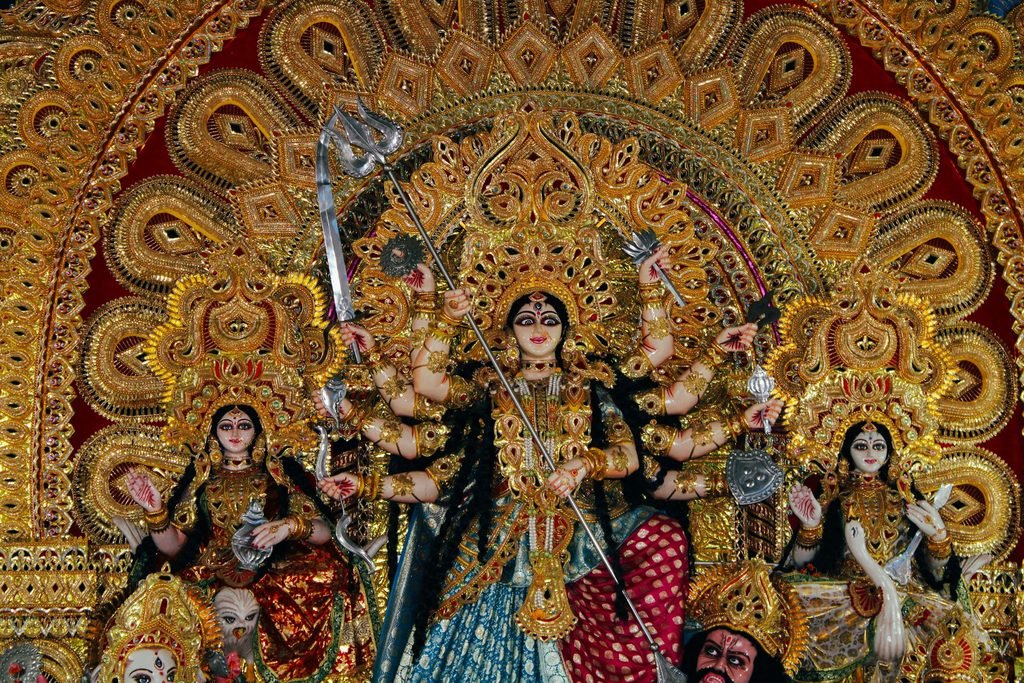
In Bengali tradition, Durga’s arrival is often understood as the homecoming of a beloved daughter. The goddess is worshipped with her children, Lakshmi, Saraswati, Kartikeya and Ganesha, and the days of the festival are filled with both devotion and celebration.
This interpretation helps explain the emotional character of the festival. Durga Puja is not only about the victory of good over evil. It is also associated with family reunions, shared meals, cultural performances and the anticipation of the goddess’s eventual departure.
On Dashami, rituals such as sindoor khela, in which married women apply vermilion to one another and offer it to the goddess, express the emotional farewell that accompanies the end of the celebration. Individual rituals and participation arrangements can vary between committees.
A Festival Open to the Wider City
CR Park’s celebrations attract people who have no family connection to Bengal but want to experience its art, food and traditions. Visitors can observe the pandals, listen to music, explore the neighbourhood’s markets and enjoy the festive atmosphere.
This makes CR Park particularly appealing to travellers interested in Delhi’s cultural diversity. It offers a way to experience a living community tradition rather than simply visiting a monument or a specially constructed tourist attraction.
What Bengali Food Should You Try During Durga Puja?
Food is one of the strongest reasons to visit CR Park during the festival. Delhi Tourism specifically highlights the area’s Bengali food culture and recommends it during Durga Puja and Kali Puja.
Some dishes worth looking for include:
Phuchka: A crisp, filled snack similar to pani puri, commonly served with a tangy, spiced water.
Jhal muri: Puffed rice mixed with mustard oil, spices, vegetables and crunchy additions.
Ghugni: A savoury preparation of dried yellow peas, often topped with onions, chillies and spices.
Kathi rolls: Kolkata style rolls filled with egg, chicken or other fillings.
Mughlai paratha: A rich, stuffed fried flatbread associated with Kolkata’s street food culture.
Fish preparations: Look for Bengali style fish dishes at restaurants and eateries around the neighbourhood.
Mishti: Bengali sweets such as sandesh and rasgulla make a natural finish to a festive food walk.
Not every pandal will offer the same dishes, and temporary stall menus vary. The Bengali markets and established eateries around CR Park provide additional options if you want a fuller meal rather than only street food.
One useful distinction is that bhog and commercial food stalls are not the same thing. Bhog is a religious offering distributed according to the organising committee’s arrangements; food stalls sell snacks and meals to visitors. Ask locally about bhog timings and availability instead of assuming it is served throughout the day.
How to Reach CR Park Durga Puja Pandals
The best way to reach the festival is generally by Delhi Metro, followed by walking. The streets within CR Park are residential and become crowded during the main festival evenings.
By Delhi Metro
The most useful stations to consider are:
Nehru Enclave: Magenta Line. A convenient starting point for the CR Park area and Kali Mandir.
Greater Kailash: Magenta Line. An alternative access point for the wider CR Park and Greater Kailash area.
Kalkaji Mandir: Violet and Magenta lines. Useful if you are connecting from the Violet Line or approaching from the Kalkaji side.
Nehru Place: Violet Line. Another option for reaching CR Park by local transport, subject to the destination and festival restrictions.
The Kali Mandir Society’s official directions recommend Nehru Enclave and describe it as approximately a three minute walk from the temple. That distance applies to the temple, not to every pandal in CR Park. Other grounds will require additional walking or a different approach.
Before leaving, check the route to your chosen pandal on the Delhi Metro’s official journey planner or use the station and destination names in Google Maps.
By Bus, Auto Rickshaw or Taxi
DTC buses serve the broader area around CR Park, while auto rickshaws and taxis can help cover the distance between a metro station and the neighbourhood.
However, a vehicle that can reach CR Park on an ordinary day may not be permitted to enter the same streets during the festival. During the 2026 celebrations, traffic restrictions have been announced for CR Park and Greater Kailash II from October 16 to 20, between 4 PM and midnight. Visitors have been advised to use the Metro and designated drop off points around Nehru Enclave and Greater Kailash.
Check the latest Delhi Traffic Police advisory before travelling, because the restrictions are date specific and can change.
By Private Car
Driving directly to a pandal is generally the least convenient option during the busiest hours. Roads can become congested, parking is limited, and temporary restrictions may prevent vehicles from entering the residential lanes.
If you must drive, check the day’s traffic advisory, park only where permitted and be prepared to walk from outside the restricted area.
CR Park Pandal Hopping Route
If you have only one evening, trying to visit every pandal can turn the experience into a rushed exercise. A better approach is to select a few venues and allow enough time to appreciate the artwork, rituals and food.
Suggested starting point: Nehru Enclave Metro Station.
From there, consider visiting Navapalli Ground, B Block, Mela Ground and Kali Mandir Society, depending on the current pedestrian routes and crowd conditions. Cooperative Ground can be added if time permits.
This is a suggested sequence, not a verified walking itinerary. The grounds are spread across CR Park, and the best order depends on crowd controls, open entrances and the current year’s traffic arrangements. Confirm each leg on the day.
If You Have Two to Three Hours
Focus on two or three nearby pandals rather than covering the entire colony. Mela Ground and B Block are good choices for visitors interested in the larger festival atmosphere. Add Navapalli if its location and pedestrian access fit your route.
If You Have Half a Day
Start earlier and explore a wider selection of community grounds. Include Cooperative Ground and the Kali Mandir complex, then leave time to explore the Bengali food shops or have a meal.
If You Are Travelling with Children or Older Family Members
Visit earlier in the day when feasible, take breaks and avoid getting caught in the densest evening queues. Confirm accessibility, toilets and drop off arrangements before travelling, since facilities differ between venues.
When Is the Best Time to Visit CR Park Durga Puja?
The best time depends on whether you are interested in photography, rituals, food or the liveliest festival atmosphere.
Late morning to afternoon: Best for families and relaxed exploration. Movement is generally easier, although individual ritual schedules vary.
Early evening: A good balance of daylight, lights, food and festive activity.
After dark: Best for pandal design and illumination, but expect potentially much heavier crowds.
Ashtami and Navami: Important religious occasions and some of the busiest visiting periods, with major rituals and a lively festival atmosphere.
Dashami: Known for farewell rituals such as sindoor khela and immersion related traditions, depending on the committee’s programme.
For 2026, the published festival period in CR Park is October 16 to 21. The principal celebrations fall around Ashtami and Navami, while Dashami marks the conclusion.
If your priority is seeing the pandals comfortably, earlier hours are usually more practical than arriving at the busiest point of the evening. If you want the full spectacle of illuminated structures, visit after dark but plan for queues and walking.
Practical Tips for Visitors
- Wear comfortable walking shoes; pandal hopping involves moving between several grounds.
- Carry drinking water, but follow local instructions about bags and entry checks.
- Keep children close in crowded areas and agree on a meeting point if your group gets separated.
- Ask before photographing worshippers at close range, particularly during private or emotionally significant rituals.
- Keep the residential neighbourhood clean and avoid blocking entrances, driveways or emergency access.
- Check current programme announcements before planning around a concert, aarti or bhog.
- Use authorised transport drop off points and do not park on restricted roads.
- Treat the pandals as active places of worship as well as cultural attractions.
Frequently Asked Questions
Which Is the Most Famous Durga Puja Pandal in CR Park?
Mela Ground, Cooperative Ground and B Block are among the most prominent established venues. Which one is best depends on whether you prefer large installations, traditional worship, lighting or the overall crowd atmosphere. Their annual designs and arrangements change.
How Many Durga Puja Pandals Are There in CR Park?
CR Park has multiple community organised pandals. Academic research documents at least nine established puja sites, including Kali Mandir Society, Cooperative Ground, B Block, Mela Ground, Navapalli, Dakshin Palli, D Block, E Block and Milan Samiti. The active number and names can vary between editions.
Is CR Park Durga Puja Free to Visit?
The neighbourhood’s community pandals are generally public festival attractions, but specific entry arrangements can vary. Check the relevant organising committee’s current instructions, particularly for special programmes or controlled access areas.
Which Metro Station Is Closest to CR Park?
Nehru Enclave on the Magenta Line is a convenient station for reaching the neighbourhood, and the Kali Mandir Society identifies it as the nearest station to its temple. Other pandals may be closer to different stations or require a longer walk.
Is It Possible to Visit All the Pandals in One Evening?
It is possible to visit several, but seeing every venue comfortably in one evening may be difficult because of walking distances, queues and traffic controls. Choose a small cluster and allow extra time for food and rituals.
What Is the Best Day for Pandal Hopping?
Saptami, Ashtami and Navami are popular for experiencing the festival at its fullest. They are also among the busiest times. For a more relaxed visit, consider an earlier time of day or a less crowded date within the published festival period.
What Is CR Park Famous for Besides Durga Puja?
CR Park is known for its Bengali community, fish markets, traditional sweets, Bengali restaurants, cultural associations and Kali Mandir. Delhi Tourism specifically recommends the locality for Bengali food and identifies Durga Puja and Kali Puja as particularly good times to visit.
Conclusion
Durga Puja in CR Park is one of Delhi’s most rewarding cultural experiences because it brings together religion, community life, temporary architecture, music and Bengali cuisine in a real residential neighbourhood. Its appeal lies not only in the scale of its best known pandals but also in the variety of smaller community celebrations that give the locality its character.
For a first visit, begin with Mela Ground and B Block, add Navapalli or Cooperative Ground if time permits, and consider Kali Mandir for a more devotional experience. Take the Metro, allow time for walking and verify the current year’s access arrangements before setting out.
Most importantly, approach CR Park as more than a collection of photo opportunities. The pandals are expressions of a community’s traditions and creative energy, and experiencing the festival respectfully is what makes the visit memorable.