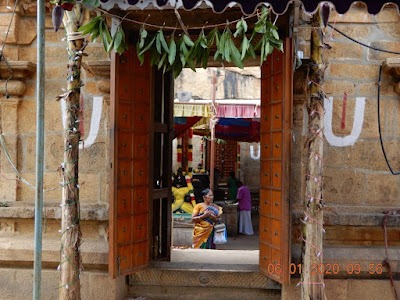
Image source: Indiran Maniapillai
About Malayadipatti Rock Cut Temples
The Malayadipatti Rock Cut Temples are among the finest examples of early rock-cut architecture in Tamil Nadu. Nestled in the quiet village of Malayadipatti in Pudukkottai district, these ancient cave temples beautifully reflect the artistic excellence and spiritual heritage of South India. Carved directly into a rocky hill, the temples are known for their intricate sculptures, ancient inscriptions, and unique blend of Hindu and Jain religious traditions.
Dating back to the 8th and 9th centuries CE, the temples were originally excavated during the reign of the Pallavas and later received patronage from the Pandyas and local rulers. Today, they remain an important archaeological and historical site, attracting history enthusiasts, architecture lovers, and pilgrims alike. Surrounded by peaceful countryside, the temples offer visitors an opportunity to step back in time while enjoying the natural beauty of rural Tamil Nadu.
Historical Significance
The Malayadipatti Rock Cut Temples represent an important phase in the evolution of Dravidian temple architecture. Built during the Pallava period and expanded under the Pandyas, these shrines showcase the transition from simple cave sanctuaries to more elaborate structural temples. The site reflects the coexistence of different faiths, highlighting the religious harmony that flourished in ancient Tamil Nadu.
The temples also preserve valuable inscriptions that reveal details about donations made by local kings, merchants, and devotees. These records provide historians with insights into the social, cultural, and religious life of the region over a thousand years ago.
The Twin Rock-Cut Shrines
One of the most fascinating aspects of Malayadipatti is that it houses two distinct rock-cut shrines on the same hill, each representing a different religious tradition.
Vijayanathar Temple
The Vijayanathar Temple is dedicated to Lord Shiva and is one of the oldest rock-cut Shiva temples in the region. Inside the cave, the Shiva Lingam has been carved directly from the living rock, making it the spiritual centre of the shrine. The temple features beautifully sculpted images of Lord Ganesha, Dakshinamurthy, Durga, and other deities on its walls.
The sanctum (Garbhagriha) and the pillared hall (Mandapa) display classic early Dravidian architectural features. Despite its age, many of the carvings remain remarkably well preserved, showcasing the craftsmanship of ancient sculptors.
Jain Temple (Settipodavu)
Located nearby on the same rocky hill, the Jain cave temple, locally known as Settipodavu, is dedicated to Jain Tirthankaras such as Mahavira and Parshvanatha. The shrine contains finely carved Jain sculptures that reflect the spread of Jainism in southern India during the early medieval period.
One of the site’s most valuable features is its collection of ancient inscriptions, including early Tamil and Tamil-Brahmi scripts. These inscriptions provide important evidence of the Jain community that once flourished in this region.
Architectural Highlights
The Malayadipatti Rock Cut Temples are admired for their simplicity and elegance. Every chamber, pillar, and sculpture has been carved directly into the natural rock without using separate construction materials. The balanced proportions, decorative pillars, and detailed carvings demonstrate the remarkable engineering skills of ancient artisans.
The temples are also notable for preserving both Hindu and Jain monuments within the same complex, making them a rare example of religious coexistence in early South Indian history.
Best Time to Visit
The ideal time to visit the Malayadipatti Rock Cut Temples is between October and March when the weather is pleasant for exploring the hill and surrounding archaeological sites. Early mornings and late afternoons offer comfortable temperatures and excellent lighting for photography. Visitors often combine their trip with other heritage attractions in the Pudukkottai region.
How to Reach
Malayadipatti is located around 40 km from Pudukkottai, approximately 45 km from Tiruchirappalli (Trichy), and about 20 km from Keeranur. The nearest railway station is Pudukkottai Railway Station, which has regular train services from Chennai, Tiruchirappalli, Madurai, and other major cities. The closest airport is Tiruchirappalli International Airport, about 50 km away. From Pudukkottai or Trichy, visitors can hire taxis or use local buses that connect nearby villages. The final stretch to the temples is easily accessible by road, followed by a short walk to the cave shrines.
Nearby Attractions
- Sittanavasal Cave Temple.
- Kudumiyanmalai Temple.
- Viralimalai Murugan Temple.
- Narthamalai Rock-Cut Temples.
- Avudaiyar Koil (Thiruperunthurai).
- Kallanai (Grand Anicut).
- Pudukkottai Government Museum.
- Tirumayam Fort.
- Tirumayam Rock Cut Temple.
- Mukkombu (Upper Anaicut).
Maps
FAQs
1. Where are the Malayadipatti Rock Cut Temples located?
The temples are located in Malayadipatti village in Pudukkottai district, Tamil Nadu.
2. Who built the Malayadipatti Rock Cut Temples?
They were originally excavated during the Pallava period in the 8th–9th centuries CE and later patronised by the Pandya rulers and local chieftains.
3. Which deities are worshipped here?
The complex includes the Vijayanathar Temple dedicated to Lord Shiva and a Jain cave shrine dedicated to Jain Tirthankaras such as Mahavira and Parshvanatha.
4. Why are these temples historically important?
They showcase early Dravidian rock-cut architecture and preserve valuable inscriptions that provide insights into ancient Tamil culture and religious practices.
5. Are the temples maintained by the Archaeological Survey of India?
Yes, the site is protected as an important heritage monument and is preserved for its archaeological significance.
6. Is there an entry fee to visit the temples?
Entry is generally free, but visitors should check for any updated regulations before planning their visit.
7. How much time is needed to explore the site?
Around one to two hours is sufficient to explore both cave temples and admire the sculptures and inscriptions.
8. What is the best season to visit?
October to March is considered the best time due to the cooler and more comfortable weather.
9. Is photography allowed?
Photography is generally permitted for personal use, though flash photography inside the caves should be avoided to help preserve the ancient carvings.
10. Can the Malayadipatti Rock Cut Temples be combined with other heritage sites?
Yes. Visitors often include Sittanavasal, Narthamalai, Kudumiyanmalai, Tirumayam Fort, and Avudaiyar Koil in the same heritage circuit across Pudukkottai district.