Image Source: Northern Trails
About Mud Village
Tucked deep inside the breathtaking Pin Valley of Himachal Pradesh, Mud Village is one of the last inhabited villages near the edge of the spectacular Pin Valley National Park. Sitting at an altitude of more than 3,700 meters, this remote Himalayan settlement is surrounded by dramatic barren mountains, glacial rivers, and wide open skies. Although small in size, Mud Village carries immense ecological, cultural, and trekking importance, making it one of the most fascinating destinations in the Spiti region.
Far away from crowded tourist circuits, Mud offers a rare chance to experience the raw beauty of the Himalayan cold desert. Life here moves slowly and peacefully, shaped by harsh winters, Buddhist traditions, and a deep connection with nature. Travelers visiting Mud often describe it as a place where silence, mountains, and spirituality come together beautifully.
Gateway to Pin Valley National Park
Mud Village serves as the gateway to Pin Valley National Park, one of India’s most ecologically significant cold desert national parks. Spread across nearly 675 square kilometers, the park is known for its rugged terrain, snow-covered peaks, and unique Himalayan biodiversity.
The landscape here is unlike the dense forests seen in many Indian wildlife parks. Instead, Pin Valley is dominated by stark cliffs, rocky slopes, alpine meadows, and icy streams. Despite the harsh climate, the park supports a surprising variety of wildlife and plant species specially adapted to survive in extreme high-altitude conditions.
Rare animals found in the region include the elusive snow leopard, Himalayan ibex, blue sheep or bharal, Tibetan gazelle, and red fox. Bird enthusiasts may also spot Himalayan snowcocks, griffon vultures, and golden eagles soaring above the valley. Because of its fragile ecosystem and rare species, the area attracts wildlife researchers, photographers, and conservationists from across the world.
The valley is also rich in medicinal herbs used in traditional Tibetan and local healing systems. During the short summer season, patches of colorful alpine flowers bloom across the barren landscape, creating a striking contrast against the dry mountains.
A Living Center of Buddhist Culture
Buddhism is deeply woven into everyday life in Mud Village. The local people mainly follow the Nyingma tradition, one of the oldest schools of Tibetan Buddhism. For centuries, Spiti Valley acted as an important cultural bridge between India and Tibet, and traces of that heritage are still visible throughout the village.
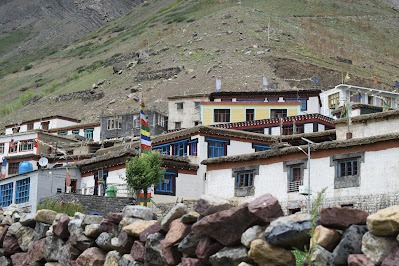
Walking through Mud feels like stepping into a traditional Himalayan Buddhist settlement. Whitewashed mud-brick houses with flat roofs line the narrow paths, while colorful prayer flags flutter in the mountain wind. Mani stones engraved with sacred Buddhist prayers can be seen near pathways and village entrances, reflecting the spiritual atmosphere of the region.
Many elderly villagers can still be seen spinning handheld prayer wheels while chanting mantras softly. The simplicity of life, combined with the spiritual environment, gives Mud a calm and meditative charm that many travelers find unforgettable.
Kungri Monastery – A Spiritual Landmark
A short drive from Mud Village lies the famous Kungri Monastery, one of the oldest monasteries in Spiti Valley. Built in the 14th century, this monastery belongs to the Nyingma sect and remains an active religious center even today.
The monastery is known for its ancient murals, traditional Tibetan architecture, prayer halls, and colorful religious festivals. Visitors often get the opportunity to witness monks performing sacred rituals, chanting prayers, and playing traditional instruments during ceremonies.
The peaceful setting of Kungri Monastery, surrounded by barren mountains and clear blue skies, makes it one of the spiritual highlights of the Pin Valley region.
Mud Village – A Famous Trekking Hub
Mud Village is widely known among trekkers because it serves as the starting or ending point for some of the Himalayas’ most iconic high-altitude treks.
Pin Parvati Pass Trek
The legendary Pin Parvati Pass trek connects the lush green Parvati Valley in Kullu with the barren landscapes of Pin Valley. Rising to an elevation of around 5,319 meters, this challenging trek takes adventurers across glaciers, rocky terrain, alpine meadows, river crossings, and dramatic mountain passes.
The trek is considered one of the toughest and most rewarding Himalayan expeditions, attracting experienced trekkers from around the world.
Bhaba Pass Trek
Another popular adventure route is the Bhaba Pass trek, which begins in Kinnaur’s green Bhaba Valley and descends into the cold desert landscape of Mud Village. One of the most fascinating aspects of this trek is the sudden transition in scenery — from dense forests and grassy meadows to barren mountains and rocky valleys.
Because of these trekking routes, Mud Village has gradually developed a small trekking infrastructure that includes homestays, local guides, camping facilities, and mule services for trekkers.
The Unique Cold Desert Landscape
Mud Village lies within the Himalayan cold desert zone, a region that receives extremely low rainfall throughout the year. Winters here are severe, with temperatures often dropping below -20°C. Heavy snowfall can cut off the village from the outside world for months.
The surrounding terrain resembles parts of Tibet and Ladakh, featuring steep pink, brown, and beige mountains shaped by centuries of erosion. The lack of dense vegetation gives the valley an almost otherworldly appearance.
The Pin River flows through the valley, carving deep gorges and adding life to the dry landscape. Sparse alpine plants such as Caragana and Edelweiss survive in this harsh environment, while the complete absence of thick forests makes the mountains appear even more vast and dramatic.
During sunrise and sunset, the barren cliffs change colors beautifully, creating unforgettable views for photographers and nature lovers.
Stargazing in Mud Village
One of the most magical experiences in Mud Village begins after sunset. Due to its high altitude, thin atmosphere, and almost zero light pollution, Mud is considered one of the best places in India for stargazing.
On clear nights, the sky transforms into a brilliant canvas filled with stars, constellations, and the glowing Milky Way. Travelers often spend hours simply lying under the open sky watching shooting stars pass overhead.
The village has become increasingly popular among astrophotographers, night trekkers, campers, and travelers seeking solitude. The silence of the valley combined with the dazzling night sky creates an experience that feels both peaceful and surreal.
Best Time to Visit Mud Village
The ideal time to visit Mud Village is from June to September when the roads remain accessible and the weather is comparatively pleasant. During these months, trekkers, photographers, and tourists can comfortably explore the valley and nearby monasteries.
Winter visits are possible but extremely challenging due to heavy snowfall and freezing temperatures. However, winter also reveals the valley in its most raw and untouched form.
How to Reach Mud Village
Mud Village is located around 50 kilometers from Kaza, the main town of Spiti Valley. Travelers usually reach Kaza first and then continue by road through the scenic Pin Valley route.
The road journey itself is spectacular, passing through dramatic cliffs, river valleys, suspension bridges, and isolated mountain settlements. Shared taxis, private vehicles, and local buses operate during the tourist season.
Google maps
FAQs
Why is Mud Village famous?
Mud Village is famous for its stunning cold desert landscape, trekking routes, Buddhist culture, stargazing opportunities, and its location near Pin Valley National Park.
Is Mud Village worth visiting?
Yes, Mud Village is absolutely worth visiting for travelers seeking untouched Himalayan beauty, peaceful surroundings, unique culture, and adventure activities like trekking and camping.
Which treks start from Mud Village?
The famous Pin Parvati Pass Trek and Bhaba Pass Trek either start or end at Mud Village.
Can you see the Milky Way from Mud Village?
Yes, Mud Village is one of the best places in India for Milky Way photography because of its high altitude and almost zero light pollution.
How far is Mud Village from Kaza?
Mud Village is located approximately 50 kilometers from Kaza in Spiti Valley.
What is the best time to visit Mud Village?
The best time to visit is between June and September when roads are open and the weather is suitable for travel and trekking.
Does Mud Village have accommodation facilities?
Yes, the village offers basic but comfortable homestays, guesthouses, and trekking accommodations for visitors.