Image Source: Keisuke “Meals Ready” Takahata
About Saspol Caves
Saspol caves in the most underrated yet fascinating heritage site tucked away in the sleepy village of Saspot. Just a short drive from leh these ancient rock-cut caves offer an offbeat experience to travellers. Adorned with vibrant murals, the caves offer a unique glimpse into Ladakh’s Buddhist past.
History of Saspol Caves
The caves were likely associated with a nearby monastery that no longer exists. While today the site is isolated, in ancient times it would have been an active spiritual centre, strategically located along trade and pilgrimage routes.
Located on the western bank of the Indus River, the Saspol caves date back to around the 13th to 15th centuries. Some Scholars suggest it’s of early origin. The caves were used by Buddhist monks as places of meditation and art. During early Buddhist cultural expansion, the site became a center of spiritual and artistic activities that flourished due to influences from Kashmir, Central Asia and Tibet.
Geography
Situated 60 kilometers west of Leh, Saspol is a small village in the Likir tehsil of Ladakh.
The caves are easily recognizable by their reddish cliffs. It’s located on rocky hill just above the village and one must take a short uphill trek of about 15-20 minutes of climbing from the road. The experience of trekking feels like a true adventure.
The ascent is gentle but steep in places, with panoramic views of the Indus Valley unfolding behind you as you climb. The rugged terrain, wind-carved rocks, and remote silence give the impression of stepping into an ancient world.
Ajanta of Ladakh
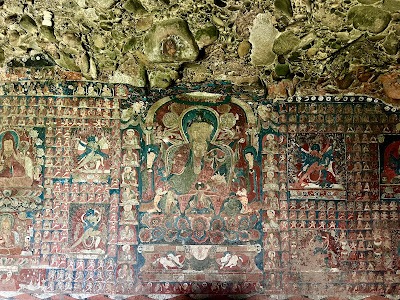
Magnificent murals and paintings on the interior walls of the caves are truly exceptional. These paintings are considered among the most vibrant and well-preserved examples of Buddhist cave art in Ladakh.
The artwork blends Tibetan, Kashmiri, and Central Asian styles. Each cave tells a story through intricate frescoes—depicting Buddhas, Bodhisattvas, wrathful deities, and protective spirits. Natural pigments are used to retain their bold reds, golds, and blues even after centuries.
One of the most notable caves features a massive image of Vairocana (the celestial Buddha) surrounded by smaller Buddhas arranged in a mandala-like pattern. Another shows a fierce deity with flaming hair and a sword—likely a dharmapala (protector of the faith). The details, facial expressions, and decorative patterns reflect a refined artistic tradition.
Though the caves are small and not many in number (there are around 4–5 painted ones), their cultural and historical value is immense. The Saspol Caves are sometimes referred to as the “Ajanta of Ladakh” due to their artistic richness, though they are much lesser known.
Traveler’s Perspective: What Makes Saspol Special?
Unlike the crowded monasteries of Hemis or Thiksey, Saspol offers solitude and mystery. Very few tourists visit these caves, making it a perfect destination for those seeking off-the-beaten-path experiences.
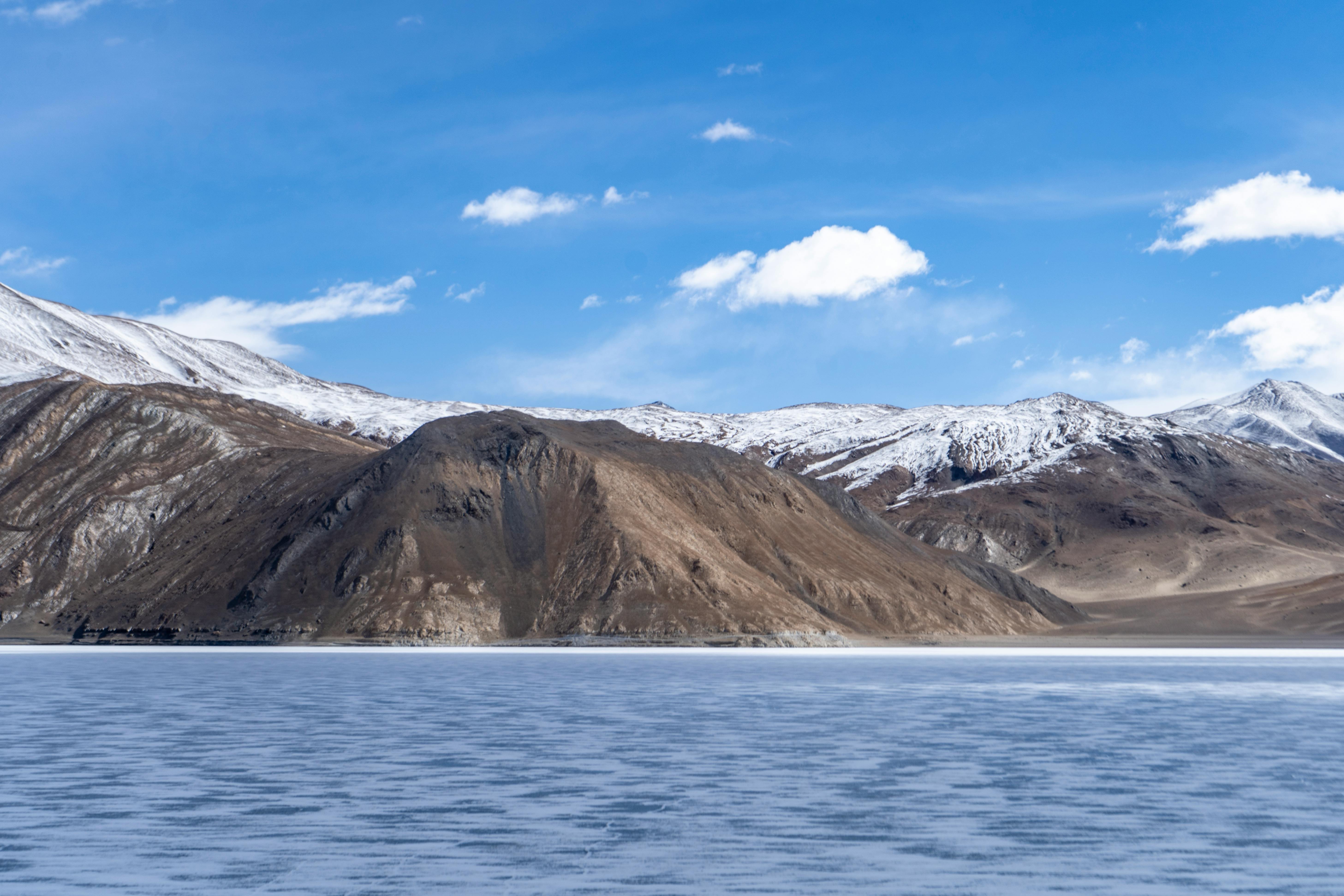
The setting itself is stunning—perched on a rocky outcrop with the Indus River meandering below and snow-capped peaks in the distance. As you sit near the cave entrance with Ladakh’s fierce winds whispering through the cliffs, it’s easy to imagine monks meditating here centuries ago.
Photographers, hikers, and history lovers will find Saspol a delight. It’s also ideal for half-day trips from Leh, especially if paired with nearby attractions like Alchi, Likir, or Basgo Fort.
Do keep in mind that due to preservation concerns, some caves may be , and visitors may need to seek permission from the local administration or ASI (Archaeological Survey of India). A local guide or caretaker may help you gain access and interpret the artwork.
How to Reach Saspol Caves
From Leh:
Saspol is located about 60 kilometres west of Leh, along the Leh–Kargil highway (NH1). It takes around 1.5 to 2 hours by road to reach Saspol village. From there, the caves are a short uphill hike.
By Taxi or Car:
You can hire a taxi or private vehicle from Leh. Many tourists combine Saspol with visits to Alchi Monastery, which is just 10 km away, or Basgo Fort on the same route.
By Bus:
Public transport to Saspol is limited, but shared taxis or JKSRTC buses to nearby villages may drop you close. It’s best to plan transport in advance.
Nearby Attractions
The ancient Saspol Caves are located in the Sham Valley region of Ladakh, near Saspol village, around 60–75 km from Leh. Known for their centuries-old Buddhist murals and cliffside setting, the caves can easily be combined with several fascinating attractions nearby.
- Alchi Monastery – One of Ladakh’s oldest and most celebrated monasteries, famous for its exquisite 11th-century murals, wooden carvings, and Indo-Tibetan artwork. Located about 10 km from Saspol.
- Likir Monastery – A beautiful monastery known for its giant gilded Maitreya Buddha statue and panoramic views of the surrounding valley.
- Basgo Palace – Historic ruins of a former royal palace perched atop dramatic earthen cliffs, offering insights into Ladakh’s medieval history.
- Saspol Chamba – A hidden cultural gem featuring impressive rock-cut Maitreya Buddha statues carved into the cliffs near Saspol village.
- Rizong Monastery – Often called the “Paradise for Meditation,” this peaceful monastery is nestled amidst rugged mountains and is known for its strict monastic discipline.
- Choskhor Temple Complex – An important collection of ancient Buddhist temples featuring remarkable artwork and architecture.
- Magnetic Hill – A popular roadside attraction where vehicles appear to move uphill due to an optical illusion.
- Sangam – The spectacular confluence of the Indus and Zanskar rivers, one of Ladakh’s most photographed natural landmarks.
Best Time to Visit
Visit between May and September, when the weather is warm and roads are clear. Winters are harsh, and the site may be inaccessible due to snow or freezing conditions.
Google Maps
FAQs
1. What are Saspol Caves famous for?
Saspol Caves are renowned for their rare Buddhist murals, ancient meditation chambers, and historic rock-cut cave temples dating back several centuries. The paintings reflect strong Tibetan and Buddhist artistic influences.
2. Where are Saspol Caves located?
The caves are situated on a hillside above Saspol village in Ladakh’s Sham Valley, approximately 60–75 km west of Leh.
3. How difficult is the trek to the caves?
The climb is relatively short but moderately steep. Visitors need to walk along rocky paths and uneven terrain, so comfortable trekking shoes are recommended.
4. What is the best time to visit Saspol Caves?
The ideal time to visit is from May to September when the weather is pleasant and roads remain accessible. Winters can be extremely cold and may make travel difficult.
5. Are guides available at Saspol Caves?
Guides are not always available on-site. Hiring a local guide from Leh or nearby villages can enhance the experience by providing historical and artistic context.
6. How much time is needed to explore Saspol Caves?
Most visitors spend around 1–2 hours exploring the caves, admiring the murals, and enjoying the panoramic views of the Indus Valley.
7. Can Saspol Caves be visited on a day trip from Leh?
Yes. Saspol Caves are commonly included in a Sham Valley day tour along with Alchi Monastery, Likir Monastery, Basgo Palace, Magnetic Hill, and Sangam.
8. Are the caves suitable for children and elderly visitors?
Visitors should note that the path involves a steep uphill walk with loose stones in some sections. While fit travelers can manage the climb comfortably, elderly visitors and very young children should exercise caution.