Image Source: Information Tv
Introduction
A Hindu temple in Kashmir—yes, you have heard it right. In Kashmir, there are a number of Hindu temples that speak about the state’s various histories. Hinduism and Buddhism flourished in the region at times.
Martand Sun Temple in the Anatang district of Kashmir is a beautiful piece of architecture. The temple is located 9 kilometers from Anantnag near Krewa and is also known as “Pandu Koru,” which means “house of Pandavas.” It was created in the 8th century AD in the region of Lalitaditya Muktipida, according to The word “Martand” in Sanskrit means “Surya.” The temple is dedicated to the god Surya. There are many temples in India that have been dedicated to the god Surya. Konark in Orissa and Modhera in Gujarat are in the same league.
Establishment
There are different stories about the establishment of the temple. Some historians argue that the temple foundation was laid by the legendary King Ranaditya in 370–500 ad and built under the Karkota dynasty of King Lalitaditya in 725–756 ad. But one thing is certain: it was standing tall and beautiful until it was attacked by the kind Sikandar Bushikan.
Architecture
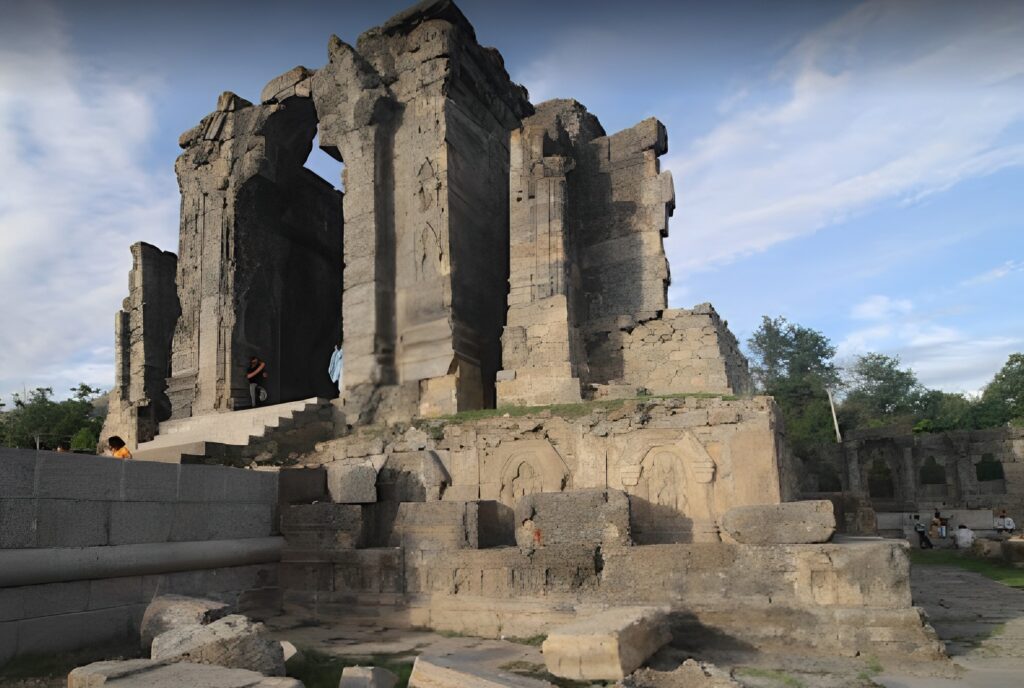
On the plateau, nestled between the Kashmir Valley, which gives the whole thing its appearance, very little can be said about the temple’s beauty. It’s a blend of Chinese, Gupta, and Gandharan forms of architecture. Unfortunately, at present, only the ruins of the temple have been left behind. Unfortunately, it couldn’t survive the wrath of Muslim invaders like Sikand Shah and Jonaraja.
A 220-foot-long and 142-foot-wide columned courtyard surrounded by 84 shrines is the primary center of the temple. According to Hindu architecture, the entrance gate is located on the western side and is the same width as the temple itself, giving it a sense of grandeur. The main shrine in the center of the courtyard was thought to have a pyramidal shape.
The wall of the temple is carved with deities like Vishnu, Ganga, and Yamuna in addition to Surya. Mortar was used to hold limestone blocks together. Historians speculated that King Laitaditya may have enlisted the assistance of a Byzantine architect in the construction. The use of lime mortar became popular in northern India after the rise of the Delhi Sultan in the 13th century.
Invasion
Historians believe that in order to Islamize society, Sikandar pursued realpolitik policies with the help of Sufi saint Mir Muhammad Hamadani and chief counsel Suhabhatta, a brahman neo-convert. Further weather conditions and natural calamities have expedited the process of destruction.

Conservation of Martand Sun Temple
The temple comes under the protection of the Archaeological Survey of India. The government has notified it under the list of centrally protected monuments in the Kashmir Valley under the United Nations World Heritage Convention. The temple will be proposed for Unesco World Heritage Site status in the future.
In the past, the temple has been a part of film shooting
| 1970 | Maa ki aankhen |
| 1975 | Aandhi |
| 2014 | Haider |
How to reach Martand Sun Temple

Road: Rent a taxi from Kashmir to Anantnag. From Anantnag, the temple is situated 9km from Kehribal.

Railway: Station Anantnag on the Banihal and Qazikund railway lines.

Airport: Srinagar airport known as Sheik ul Alam airport is 62 km from Anantnag.
FAQs
1. Where is the Martand Sun Temple located?
The Martand Sun Temple is located near the town of Mattan in the Anantnag district of Jammu and Kashmir. It stands on a plateau overlooking the Kashmir Valley and offers magnificent views of the surrounding mountains and countryside.
2. Who built the Martand Sun Temple?
The temple was built by King Lalitaditya Muktapida of the Karkota Dynasty during the 8th century CE. He is regarded as one of the most powerful rulers in Kashmir’s history.
3. Which deity was worshipped in the temple?
The temple was dedicated to Surya, the Hindu Sun God. “Martand” is one of the ancient Sanskrit names for Surya.
4. Why is the Martand Sun Temple famous?
The temple is famous for its grand architecture, historical significance, and unique blend of Kashmiri, Gandharan, Gupta, and classical architectural influences. It is considered one of the most important ancient monuments in Kashmir.
5. Is the Martand Sun Temple still an active place of worship?
The temple is primarily an archaeological and historical site today. While visitors and devotees occasionally offer prayers, regular temple worship is not conducted as it was in ancient times.
6. What happened to the original temple structure?
The temple suffered significant damage during the late medieval period and now stands in ruins. However, its impressive stone pillars, courtyard, and walls still showcase the grandeur of the original structure.
7. What is the best time to visit Martand Sun Temple?
The best time to visit is between April and October when the weather is pleasant and visitors can enjoy clear views of the Kashmir Valley and surrounding mountains.
8. How much time is needed to explore the temple?
Most visitors spend around one to two hours exploring the ruins, admiring the architecture, learning about its history, and enjoying the panoramic views from the site.
9. Is photography allowed at the temple?
Yes, photography is generally permitted. The temple’s ancient stone architecture and elevated location make it a popular destination for photographers and history enthusiasts.
10. Which nearby attractions can be visited along with Martand Sun Temple?
Visitors often combine their trip with nearby attractions such as Achabal Garden, Kokernag, Verinag, Pahalgam, and Betaab Valley.