Image Source: Rishabhchandan
About Godavari Bridge
The Godavari Bridge, popularly known as the Kovvur–Rajahmundry Bridge, is one of the most remarkable engineering landmarks in Andhra Pradesh. Stretching majestically across the mighty Godavari River, the bridge connects the historic city of Rajahmundry with Kovvur, linking the East and West Godavari districts. For decades, it has served as an essential transportation corridor, carrying both railway and road traffic while also standing as a proud symbol of the region’s growth and connectivity.
Once celebrated as Asia’s longest road-cum-rail bridge, the structure still holds an important place in India’s engineering history and is recognized as one of the country’s longest bridges of its kind. Beyond its practical role, the bridge has become deeply woven into the cultural identity of Rajahmundry. It frequently appears in Telugu films, photography, tourism campaigns, and local artwork, representing the city’s close relationship with the sacred Godavari River.
Architectural Design and Structural Features
The Godavari Bridge is a double-decker truss bridge, designed with remarkable precision for its time. The lower deck carries railway tracks, while the upper deck accommodates road traffic, allowing the bridge to efficiently serve two major modes of transportation simultaneously. This dual-purpose design was considered highly advanced during the period of its construction.
The bridge extends for nearly 4.1 kilometers, making it an impressive feat of civil engineering. Structurally, it consists of multiple steel truss spans, including 27 major spans measuring 91.5 meters each and several smaller spans near the Rajahmundry side. Some sections of the bridge follow a curved alignment, adding to its distinctive appearance.
Its longest span stretches around 300 feet, providing the strength required to withstand the powerful currents and seasonal floods of the Godavari River. Engineers often compare its design style to the famous Grafton Bridge in Australia because of the similarity in truss arrangements and structural aesthetics. Even today, the bridge is admired for its durability and engineering brilliance.
Historical Background and Construction
The construction of the Godavari Bridge was closely linked to India’s infrastructure expansion during the Third Five-Year Plan. At the time, there was an urgent need to improve railway connectivity along the important Chennai–Howrah route. Initially, the project focused mainly on rail transportation, but strong public demand from local communities encouraged planners to add a road deck as well.
The bridge was constructed by Braithwaite, Burn & Jessop Construction Company, a public-sector engineering enterprise under Bharat Bhari Udyog Nigam Limited. Work on the bridge began in the early 1970s and involved extensive planning due to the challenging river conditions and the enormous width of the Godavari.
After years of construction, the bridge was officially inaugurated on 16 August 1974 by President Fakhruddin Ali Ahmed. Its completion marked a major milestone for Andhra Pradesh, significantly improving transportation, trade, and communication between the two Godavari districts. Over time, the bridge evolved from a transport structure into a historic landmark admired by locals and visitors alike.
The Godavari River at Rajahmundry
The Godavari River, often called the “Dakshin Ganga” or “Ganges of the South,” is the largest river in peninsular India. At Rajahmundry, the river spreads across an enormous width of nearly 2.7 kilometers, creating a breathtaking landscape of flowing water, islands, and lush riverbanks.
Near the bridge site, the river divides into channels separated by small islands and sandbars, especially visible during the dry season. During monsoon months, however, the Godavari transforms dramatically, carrying immense volumes of water toward the Bay of Bengal. Engineers had to carefully study the river’s flow velocity, flood levels, and sediment movement before constructing the bridge.
The bridge is located relatively close to the river’s delta region, roughly 60 kilometers upstream from where the Godavari empties into the Bay of Bengal. Because of this strategic location, the bridge plays a crucial role in connecting coastal Andhra Pradesh with inland regions.
Other Bridges Across the Godavari
Rajahmundry is unique because multiple major bridges span the Godavari River in this region, each representing a different era of engineering development.
Old Godavari Bridge (Havelock Bridge)
Built in 1900 during British rule, the Havelock Bridge was the first railway bridge across the Godavari. Constructed using stone masonry piers and steel girders, it remained operational for many decades before being decommissioned. Even today, it is admired for its colonial-era architecture and historical significance.
Godavari Arch Bridge
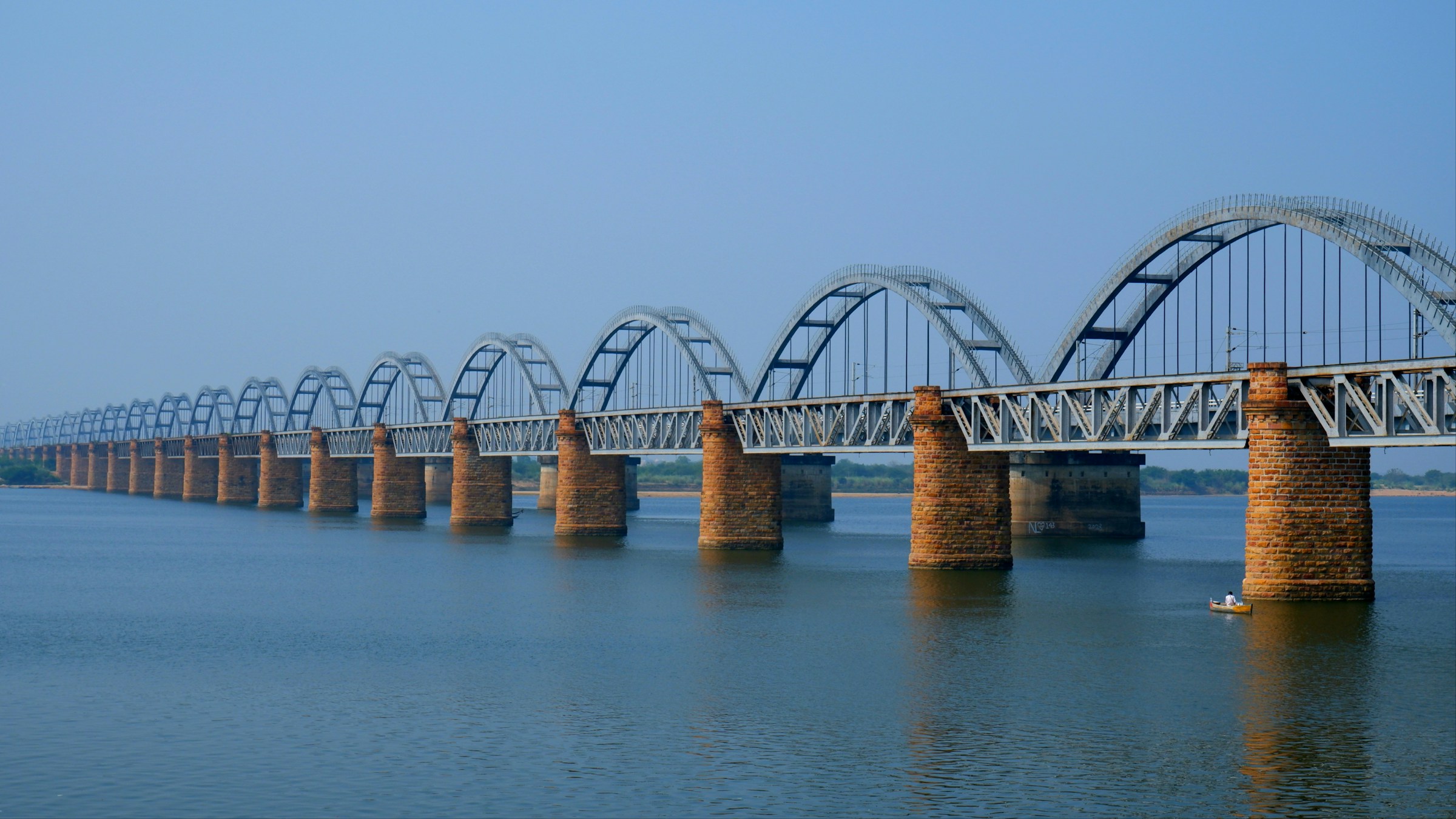
The Godavari Arch Bridge is a modern bowstring arch railway bridge constructed to handle faster and heavier trains. Designed by Hindustan Construction Company, this bridge became operational for passenger traffic in the late 1990s and later emerged as one of India’s most technologically advanced railway bridges.
Fourth Godavari Bridge
To meet rising traffic demands, another modern bridge was opened in 2015. This bridge significantly reduced congestion and improved road transportation between the two districts, reflecting the rapid urban and economic growth of the region.
Cultural Importance and Tourism Appeal
For the people of Rajahmundry, the Godavari Bridge is much more than a transportation structure. It is an emotional and cultural symbol that represents the city’s heritage and identity. During festivals such as Pushkaralu, when millions of devotees gather on the banks of the Godavari, the bridge becomes part of the grand visual spectacle of lights, rituals, and celebrations.
Tourists visiting Rajahmundry often stop near the riverfront to admire the bridge, especially during sunrise and sunset when the steel structure glows beautifully against the sky. Boat rides on the Godavari offer stunning views of the bridge from below, making it a favorite subject for photographers and travelers.
The bridge has also appeared in numerous Telugu films and documentaries, further strengthening its iconic status in South Indian popular culture. Its silhouette against the flowing Godavari remains one of the most recognizable images of Andhra Pradesh.
Best Time to Visit
The ideal time to experience the beauty of the Godavari Bridge is between October and February, when the weather remains pleasant and the river is full after the monsoon season. Early mornings and evenings are particularly scenic, with cool breezes and dramatic reflections on the water.
Visitors during the Godavari Pushkaralu festival can witness the bridge surrounded by vibrant religious activity and cultural events, though the area tends to become extremely crowded during this period.
How to Reach Godavari Bridge
The iconic Godavari Bridge, also known as the Rajahmundry–Kovvur Bridge, spans the mighty Godavari River between Rajamahendravaram (Rajahmundry) and Kovvur in Andhra Pradesh. The bridge is one of the most recognizable landmarks of the Godavari region and offers spectacular views of the river, especially during sunrise and sunset. It is approximately 4.1 km long and serves both road and rail traffic.
By Air
The nearest airport is Rajahmundry Airport, located about 15–18 km from the bridge. Regular flights connect the airport with major cities such as Hyderabad, Bengaluru, and Chennai. From the airport, taxis and app-based cabs are readily available to reach the bridge and riverfront areas.
By Train
The nearest railway station is Rajahmundry Railway Station, situated about 2.5 km from the bridge. Auto-rickshaws, taxis, and local transport can take visitors to the riverfront viewpoints within minutes.
By Road
Rajamahendravaram is well connected by National Highway 16 and state highways to major cities such as Vijayawada, Visakhapatnam, Kakinada, Eluru, and Hyderabad. Visitors can reach the bridge by private vehicle, taxi, or APSRTC bus services operating to Rajamahendravaram and Kovvur.
Nearby Attractions
Travelers visiting the Godavari Bridge can also explore several nearby attractions in and around Rajahmundry:
- ISKCON Temple Rajahmundry.
- Papi Hills and Papikondalu boat cruises.
- Dowleswaram Barrage.
- Kotilingala Revu.
- Godavari riverfront ghats.
- Rallabandi Subbarao Government Museum.
- Pattiseema Temple.
These attractions together make Rajahmundry one of the most culturally rich and scenic destinations in Andhra Pradesh.
Google Maps
FAQs
Why is the Godavari Bridge famous?
The Godavari Bridge is famous for being one of India’s longest road-cum-rail bridges and for its engineering significance. It is also an iconic landmark of Rajahmundry and Andhra Pradesh.
Where is the Godavari Bridge located?
The bridge is located in Rajahmundry, Andhra Pradesh, connecting Rajahmundry with Kovvur across the Godavari River.
When was the Godavari Bridge inaugurated?
The bridge was inaugurated on 16 August 1974 by President Fakhruddin Ali Ahmed.
What type of bridge is the Godavari Bridge?
It is a double-decker truss bridge, carrying railway traffic on the lower deck and road traffic on the upper deck.
How long is the Godavari Bridge?
The bridge stretches approximately 4.1 kilometers in length.
Which river does the bridge cross?
The bridge spans the Godavari River, the largest river in South India.
Can tourists visit the bridge?
Yes, tourists can enjoy views of the bridge from nearby riverbanks, boat rides, and surrounding viewpoints. The bridge area is especially popular during sunrise and sunset.
What is the best time to see the bridge?
The best time to visit is during the winter months from October to February, when the weather is comfortable and the river scenery is at its best.