Image Source: Harjit Singh
About Chandigarh Capitol Complex
The Chandigarh Capitol Complex is one of India’s most remarkable architectural landmarks and a symbol of modern urban planning. Located in Sector 1 of Chandigarh, this iconic complex was designed by the world-renowned Swiss-French architect Le Corbusier and was inscribed as a UNESCO World Heritage Site in 2016. More than just a collection of government buildings, the complex represents a visionary approach to architecture, governance, and city planning.
Spread across nearly 100 acres at the foothills of the Shivalik Range, the Capitol Complex serves as the administrative heart of Chandigarh. It attracts architecture enthusiasts, students, historians, and travelers from around the world who come to admire its unique blend of modernist design and symbolic elements.
The Vision Behind the Capitol Complex
When Le Corbusier was commissioned to design Chandigarh after India’s independence, he envisioned the city as a living human body. In this concept, the Capitol Complex represented the “head” of the city, symbolizing intellect and governance. Sector 17 was imagined as the heart, the Leisure Valley and gardens as the lungs, educational institutions as the mind, roads as the circulatory system, and industrial areas as the city’s working organs.
This innovative planning philosophy helped Chandigarh become one of the most organized and well-designed cities in India, and the Capitol Complex remains the centerpiece of that vision.
Major Structures Within the Capitol Complex
The Capitol Complex consists of three principal government buildings along with several symbolic monuments and landscape features.
High Court Building
Completed in 1955, the High Court was the first structure built within the complex. Its distinctive curved roof resembles a giant parasol, providing shade and protection from the harsh summer sun. The building’s colorful façade and monumental scale make it one of Chandigarh’s most photographed landmarks.
Secretariat Building
Finished in 1958, the Secretariat is an imposing eight-story structure that houses government offices. It is the largest building in the complex and showcases Le Corbusier’s characteristic use of exposed concrete and geometric forms. The massive façade is protected by an egg-crate-like screen that helps regulate sunlight and temperature.
Legislative Assembly
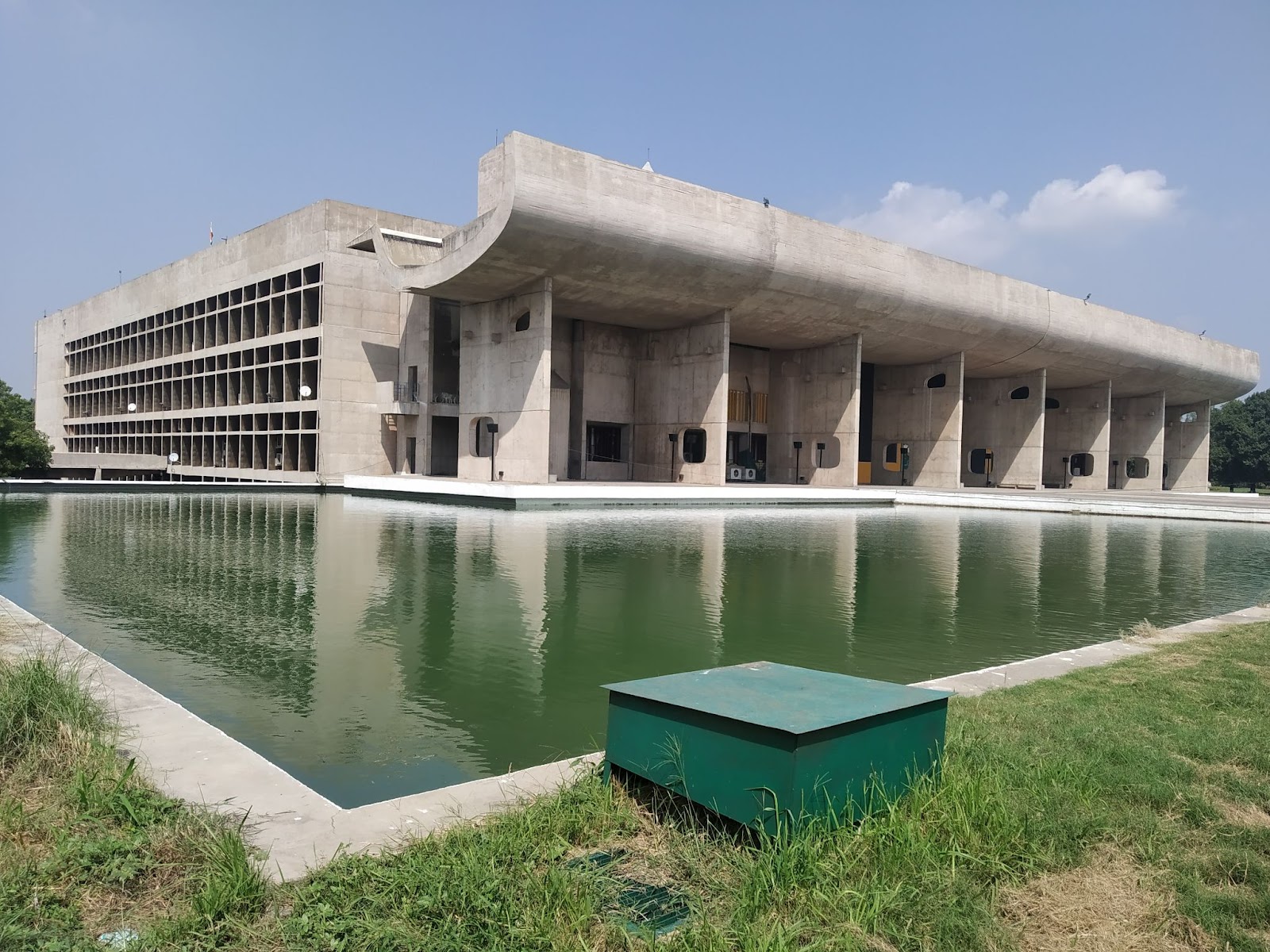
Completed in 1961, the Legislative Assembly is perhaps the most visually striking building in the complex. It features a dramatic hyperbolic roof structure and serves as the meeting place for the legislatures of Punjab and Haryana. The design reflects both functionality and symbolism, emphasizing democratic governance.
Iconic Monuments and Symbols
Beyond the government buildings, the Capitol Complex includes several monuments that add philosophical and artistic meaning to the site.
Open Hand Monument
The Open Hand is the most famous symbol of Chandigarh. Standing tall against the skyline, it represents the idea of “giving and receiving” and symbolizes peace, unity, and openness to new ideas.
Tower of Shadows
This innovative structure demonstrates how architectural design can control sunlight without relying on mechanical systems. It was built as an experimental structure showcasing climate-responsive architecture.
Martyrs’ Monument
Dedicated to the sacrifices made during India’s struggle for independence, this monument serves as a reminder of the nation’s history and resilience.
Geometric Hill
An artificial landscaped mound, the Geometric Hill was designed to complement the surrounding architecture and create visual harmony within the complex.
Architecture and Design Highlights
One of the most fascinating aspects of the Capitol Complex is its bold use of concrete, geometric forms, and monumental spaces. The Assembly building features a roof resembling an inverted umbrella, symbolizing shelter, justice, and protection for citizens. Large open plazas, reflecting pools, and carefully planned sightlines create a sense of grandeur while maintaining simplicity.
Visitors often notice how every structure appears to interact with the surrounding landscape, the distant Shivalik Hills, and the open sky. This relationship between architecture and nature is one of the reasons why the complex is considered a masterpiece of modern architecture.
Visitor Experience
Today, the Chandigarh Capitol Complex is one of the city’s most important tourist attractions. Guided tours allow visitors to explore the architectural significance of the site and understand the vision behind Chandigarh’s creation. Early mornings and winter months are generally the best times to visit, as the weather is pleasant and ideal for photography.
The complex also offers excellent views of the nearby Shivalik Hills, making it a rewarding destination for architecture lovers and casual tourists alike.
How to Reach Chandigarh Capitol Complex
By Air
The nearest airport is Chandigarh International Airport, located about 15–18 km from the Capitol Complex. Taxis and app-based cabs are readily available from the airport.
By Train
The nearest railway station is Chandigarh Railway Station, approximately 10 km away. Auto-rickshaws, taxis, and local buses connect the station to the complex.
By Road
Chandigarh is well connected to major cities such as Delhi, Shimla, Amritsar, and Manali through a network of national highways. Local buses, cabs, and auto-rickshaws can easily take visitors to Sector 1, where the Capitol Complex is located.
Local Transport
Within Chandigarh, visitors can use auto-rickshaws, taxis, app-based ride services, bicycles, and local buses. The city’s wide roads and organized layout make navigation simple and convenient.
Nearby Attractions
Sukhna Lake
Located a short drive from the Capitol Complex, Sukhna Lake is Chandigarh’s most popular recreational destination. Visitors can enjoy boating, lakeside walks, birdwatching, and beautiful sunrise views.
Rock Garden of Chandigarh
Created by Nek Chand, this unique sculpture garden features artworks made from recycled materials, broken ceramics, and industrial waste.
Leisure Valley
A vast green belt running through the city, Leisure Valley offers walking trails, landscaped gardens, and open spaces perfect for relaxation.
Government Museum and Art Gallery
This museum houses important collections related to Indian art, Gandhara sculptures, and the history of Chandigarh’s planning and architecture.
Zakir Hussain Rose Garden
One of Asia’s largest rose gardens, it contains thousands of rose varieties and is especially beautiful during the annual Rose Festival.
Maps
FAQs
Is Chandigarh Capitol Complex a UNESCO World Heritage Site?
Yes. The Chandigarh Capitol Complex was recognized as a UNESCO World Heritage Site in 2016 as part of “The Architectural Work of Le Corbusier.”
Who designed the Chandigarh Capitol Complex?
The complex was designed by renowned architect Le Corbusier, who also played a key role in planning the city of Chandigarh.
What are the main attractions within the complex?
The major attractions include the High Court, Secretariat, Legislative Assembly, Open Hand Monument, Tower of Shadows, Martyrs’ Monument, and Geometric Hill.
Can tourists visit the Capitol Complex?
Yes. Visitors can explore the complex through guided tours and designated visitor areas, subject to security regulations.
What is the best time to visit?
The ideal time to visit is between October and March when Chandigarh experiences pleasant weather.
How much time is required to explore the complex?
Most visitors spend around 1.5 to 3 hours exploring the Capitol Complex and its surrounding attractions.
Why is the Open Hand Monument important?
The Open Hand Monument is Chandigarh’s official emblem and symbolizes peace, reconciliation, and the exchange of ideas.