Image Source: ysirzamiu
Introduction
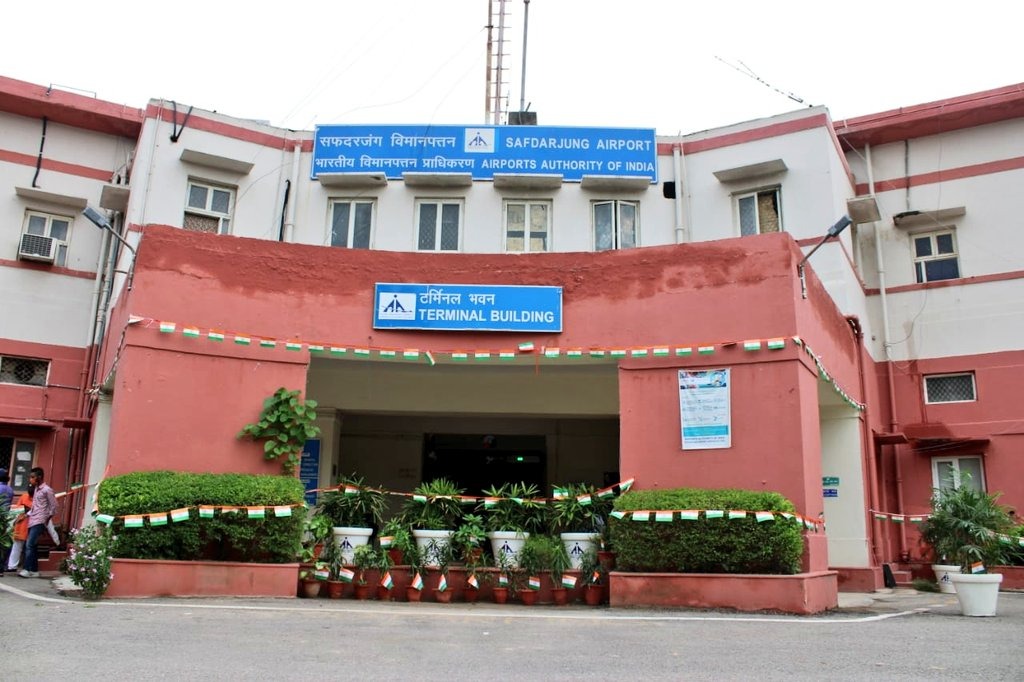
Hidden amid the busy roads and government institutions of central Delhi, Safdarjung Airport is one of the city’s most overlooked historical landmarks. While millions of travelers pass through Delhi every year via Indira Gandhi International Airport, few realize that the capital’s aviation journey began at this modest airfield nearly a century ago.
Established in 1929, Safdarjung Airport was Delhi’s first airport and one of the earliest aviation facilities in India. Originally known as Willingdon Airport, it witnessed the evolution of Indian aviation from the colonial era through independence and into the modern age. Over the decades, the airport served as a military base during World War II, the primary airport for Delhi, a transit point for VVIPs, and an important administrative center for India’s civil aviation sector.
Although commercial flights no longer operate from here, Safdarjung Airport remains a significant part of Delhi’s heritage. Surrounded by historic monuments, government offices, and some of the city’s most prominent neighborhoods, the airport offers a fascinating glimpse into the early days of aviation in India. Today, it continues to house key aviation organizations and stands as a reminder of how air travel in the nation’s capital began long before the rise of modern international airports.
History of Safdarjung Airport
Safdarjung Airport is one of Delhi’s lesser-known historical landmarks, yet it played a significant role in the early development of aviation in India. Located in the heart of New Delhi, near the Safdarjung Tomb and the diplomatic enclave, this airport was once the primary gateway to the nation’s capital.
Established in 1929, Safdarjung Airport—originally known as Willingdon Airport—was the first airport in Delhi and the second airport in India after the famous Juhu Aerodrome in Mumbai. During the British colonial era, it served as an important aviation hub and witnessed the early growth of civil and military aviation in the country.
Safdarjung Airport During the British Era
Before India’s independence, the airport played a crucial role in British aviation operations. During the Second World War, it was used extensively by the British administration and formed part of the South Atlantic air ferry route. Aircraft carrying personnel, equipment, and supplies frequently operated through the airport, making it an important strategic location.
At that time, Delhi was much smaller than it is today, and the airport’s facilities were sufficient for the city’s aviation needs. However, as the capital expanded and air travel became increasingly popular, the limitations of the airport became apparent.
Why Safdarjung Airport Lost Its Importance
By the 1950s and 1960s, Delhi’s population had grown rapidly, and larger aircraft required more advanced infrastructure. Safdarjung Airport’s relatively short runway and limited expansion possibilities made it unsuitable for handling the increasing volume of passenger traffic.
As a result, aviation operations gradually shifted to Palam Airport, which offered better facilities and more space for future development. Palam Airport eventually evolved into today’s Indira Gandhi International Airport, one of the busiest airports in the world.
Once commercial flights were transferred, Safdarjung Airport’s role changed significantly, and it ceased to function as Delhi’s primary civilian airport.
A VVIP Transit Airport
Although commercial aviation activities declined, Safdarjung Airport continued to serve important governmental and administrative purposes. For many years, it functioned as a transit airport for VVIPs and government dignitaries arriving in Delhi.
Political leaders, senior government officials, and visiting dignitaries frequently used the airport. It was also utilized by the Chief Ministers and other senior officials from neighboring states such as Punjab and Haryana for official travel.
Because of its strategic location in central Delhi, the airport remained an important facility despite no longer handling regular passenger flights.
Connection with the Prime Minister’s Residence
One of the most interesting facts about Safdarjung Airport is its connection to the Prime Minister’s official residence.
A specially designated route links the airport to Lok Kalyan Marg (formerly known as 7 Race Course Road or 7 RCR). This route was developed as part of emergency security arrangements, allowing rapid movement in case of extraordinary situations.
This strategic importance has helped preserve the airport’s relevance even after the end of its commercial aviation role.
Role During the Commonwealth Games
During the 2010 Commonwealth Games, the airport grounds found a new purpose. Parts of the airport area were used as parking and logistical support space for visitors attending events at the nearby Jawaharlal Nehru Stadium.
This demonstrated how the large open spaces of the airport could be adapted for public infrastructure needs during major international events.
Aviation Headquarters and Training Institutions
Today, Safdarjung Airport remains an important center for India’s aviation administration. Several key aviation organizations operate from the airport complex and surrounding area.
The headquarters of the Airports Authority of India is located here, overseeing airport management and air navigation services across the country. The airport complex also houses facilities associated with the Indira Gandhi Rashtriya Uran Akademi, one of India’s leading pilot training institutions.
Nearby, the Directorate General of Civil Aviation (DGCA) maintains offices responsible for regulating civil aviation, pilot licensing, aircraft certification, and aviation safety standards throughout India.
Safdarjung Airport Today
Although commercial flights no longer operate from Safdarjung Airport, it remains an important part of Delhi’s aviation heritage. The airport serves as a reminder of the city’s early flying history and the evolution of Indian civil aviation over the last century.
Visitors passing through central Delhi may not immediately notice its historical significance, but aviation enthusiasts and history lovers often regard Safdarjung Airport as one of the most important aviation landmarks in the country.
Nearby Attractions
Safdarjung Tomb
Located just a short distance away, this magnificent 18th-century Mughal mausoleum is often considered the last grand tomb garden built in the Mughal architectural tradition.
Lodhi Garden
A popular green space featuring historic tombs, walking trails, and beautiful landscaped gardens.
India Gate
One of Delhi’s most iconic landmarks, located within a short drive from Safdarjung Airport.
National Rail Museum
A fascinating destination showcasing India’s railway heritage through vintage locomotives and interactive exhibits.
Nehru Planetarium
An excellent place for science enthusiasts, offering astronomy shows and educational exhibits.
Maps
Address: Metro station, Sri Aurobindo Marg, near Jorbagh, Safdarjung Airport Area, Satya Sadan, New Delhi, Delhi 110003
FAQs
1. When was Safdarjung Airport established?
Safdarjung Airport was established in 1929 and was originally known as Willingdon Airport.
2. Was Safdarjung Airport Delhi’s first airport?
Yes, it was the first airport in Delhi and the second airport in India after Juhu Aerodrome in Mumbai.
3. Why did commercial flights stop operating from Safdarjung Airport?
The airport could not accommodate larger aircraft and increasing passenger traffic, leading aviation operations to shift to Palam Airport, now Indira Gandhi International Airport.
4. Is Safdarjung Airport still operational today?
Yes, the airport remains operational for administrative, training, and limited government-related aviation activities, although it does not handle regular commercial passenger flights.
5. What government aviation organizations are located at Safdarjung Airport?
The Airports Authority of India (AAI) has its headquarters here, and offices of the Directorate General of Civil Aviation (DGCA) are located nearby.