If you know or watch Africa, you may have watched the long grasslands of Savanah. Predators like cheetahs hiding in the grassland to prey on deer are a common sight there. What if I told you that there is a reserve in the western part of Gujarat that, while not containing the same predators, does contain the same geographical landscape? Yes, the answer is Rann of kutch.

Geography
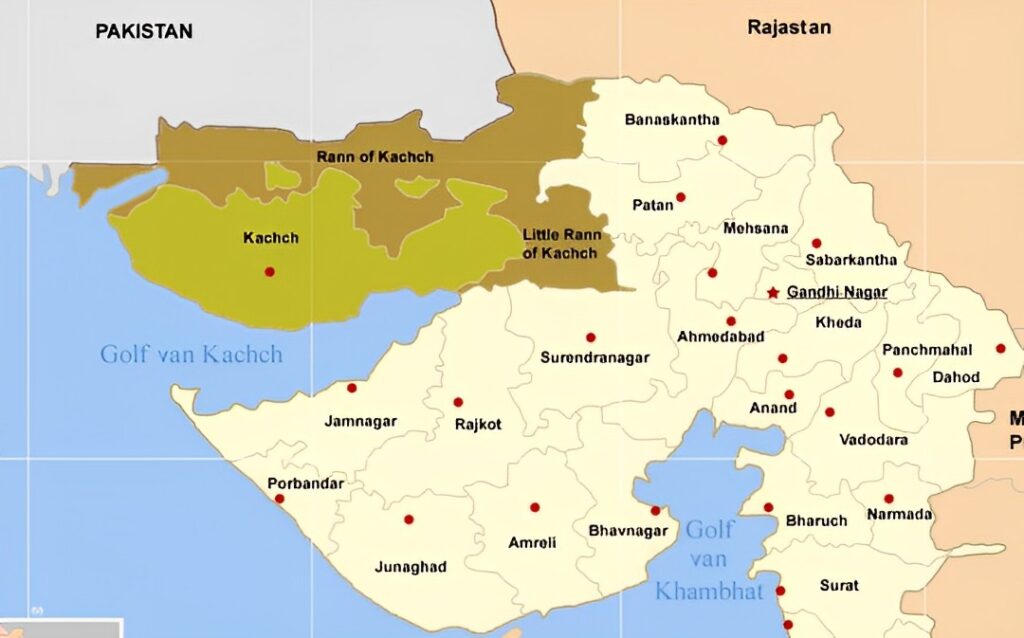
Making a border with Pakistan on the western side The Rann of Kutch is spread over a sprawling area of 26,000 square kilometers. The geographical location of the Rann creates a unique ecological system that supports endemic and epidemic species. The Indus Delta in Pakistan’s Sindh Province, the Thar Desert in the north, the hills of Kutch in the south, and Little Rann of Kutch in the southeast all have a significant impact on the area’s ecology. The unique combination of mangrove and desert vegetation bloom provides a habitat for a variety of animals and plants.
The great Rannnn is a bowl-shaped depression that used to be beneath the Arabian Sea. In the monsoon season, it gets quickly filled with water and turns into a marshy wetland. The LuniLuni river on the eastern side also drained out before reaching the Arabian Sea. A greek traveler Periplus Maris Erythraei once describe the place in his book Rannnn a non-navigable gulf
Fauna
Despite the fragile ecosystem and harsh weather, where temperatures soar in the summer and drop to near zero in the Winter, is home to 50 species of animals. The Rann of Kutch is home to India’s wild asses, nilgai, chinkara, and striped hyenas, as well as a desert wildcat caracal.
Flora
When the plain is flooded by seasonal rivers, many seasonal birds flock to the home Rannn of Kutch. Houbara bastard, lesser flamingo, and lesser florican come looking for the wetlands.

History and Culture Rann of Kutch
Rannn of kutch is home to people since ancient times. Indus Valley civilization flourished in the form of Dholavira, which was used as a major naval port for trade. Many Indologists believed that during the Indus era, Dholavira was a naval archipelago and had an extensive maritime trade system. The Rann of Kutch was a part of both the Mauryan and Gupta empires. The Rann of Kutch was a part of both the Mauryan and Gupta empires.
During medieval times, the Jadeja dynasty ruled the place for 500 years before being defeated by the British. After independence, Rann was part of Kutch state, which went to Gujarat state after linguistic division into Maharashtra and Gujarat.
In 1965, the place brought the two neighboring countries, India and Pakistan, into war. Pakistan began the war on the western end of the great Rann of Kutch, but the British intervened and secured a cease-fire. The United Nations allocated 90% of the area to India and 10% to Pakistan.
Conservation
The government has conserved 76% of the total 20,946 sq km to conserve the earth’s ecological part. It contains the Kutch Wildlife Sanctuary and the Indian Ass Wildlife Sanctuary, both of which were established in 1986 and 1973, respectively. Kutch wildlife sanctuaries cover the great Rann of Kutch, and the Indian Ass Wildlife Sanctuary falls in the little Ran of Kutch.
How to reach Rann of Kutch

Road: Kutch is well connected through the national highway. Many interstate buses also run to Kutch.

Airport: Bhuj airport

Train: Nearest railway station in Bhuj, The ALA Hazrat Express is a train that departs from northern India.
FAQs
1. Where is the Rann of Kutch located?
The Rann of Kutch is a vast salt marsh located in the Kutch District region of Gujarat, near the border with Pakistan.
2. Why is the Rann of Kutch famous?
The Rann of Kutch is famous for its stunning white salt desert, breathtaking full-moon views, unique landscapes, rich cultural heritage, and the annual Rann Utsav.
3. What is the best time to visit the Rann of Kutch?
The best time to visit is between November and February when the weather is pleasant and the salt desert is dry and accessible. This is also when the Rann Utsav is usually held.
4. What is Rann Utsav?
Rann Utsav is a cultural festival organized by the Gujarat government that showcases local handicrafts, folk music, dance performances, traditional cuisine, adventure activities, and luxury tent accommodations.
5. Can visitors see the White Desert throughout the year?
No. The White Desert is best experienced during the winter months. During the monsoon season, large parts of the Rann become submerged in water.
6. Is a permit required to visit the White Rann?
Yes. Indian and foreign tourists generally need a permit to visit the White Rann area near Dhordo because of its proximity to the international border.
7. How can I reach the Rann of Kutch?
The nearest major city is Bhuj, which is connected by rail, road, and air. From Bhuj, visitors can hire taxis or use local transport to reach the White Rann.
8. What are the main attractions near the Rann of Kutch?
Popular attractions include White Rann, Kala Dungar, India Bridge, Kutch Desert Wildlife Sanctuary, and the artisan villages around Bhuj.
9. What wildlife can be seen in the Rann of Kutch?
The region is home to flamingos, pelicans, cranes, desert foxes, and numerous migratory birds. Nearby protected areas also support a variety of desert wildlife.
10. Is the Rann of Kutch suitable for family trips?
Yes. The Rann of Kutch is an excellent destination for families, photographers, nature lovers, and cultural enthusiasts, offering a unique combination of scenic beauty and traditional Gujarati culture.
11. What should visitors wear while visiting the Rann?
Light, comfortable clothing is recommended during the day, while warm layers are advisable during winter evenings, as temperatures can drop significantly in the desert.
12. What are the best experiences at the Rann of Kutch?
Some of the most memorable experiences include watching the sunset over the White Desert, enjoying a full-moon night, attending cultural performances during Rann Utsav, shopping for local handicrafts, and exploring nearby villages and viewpoints.