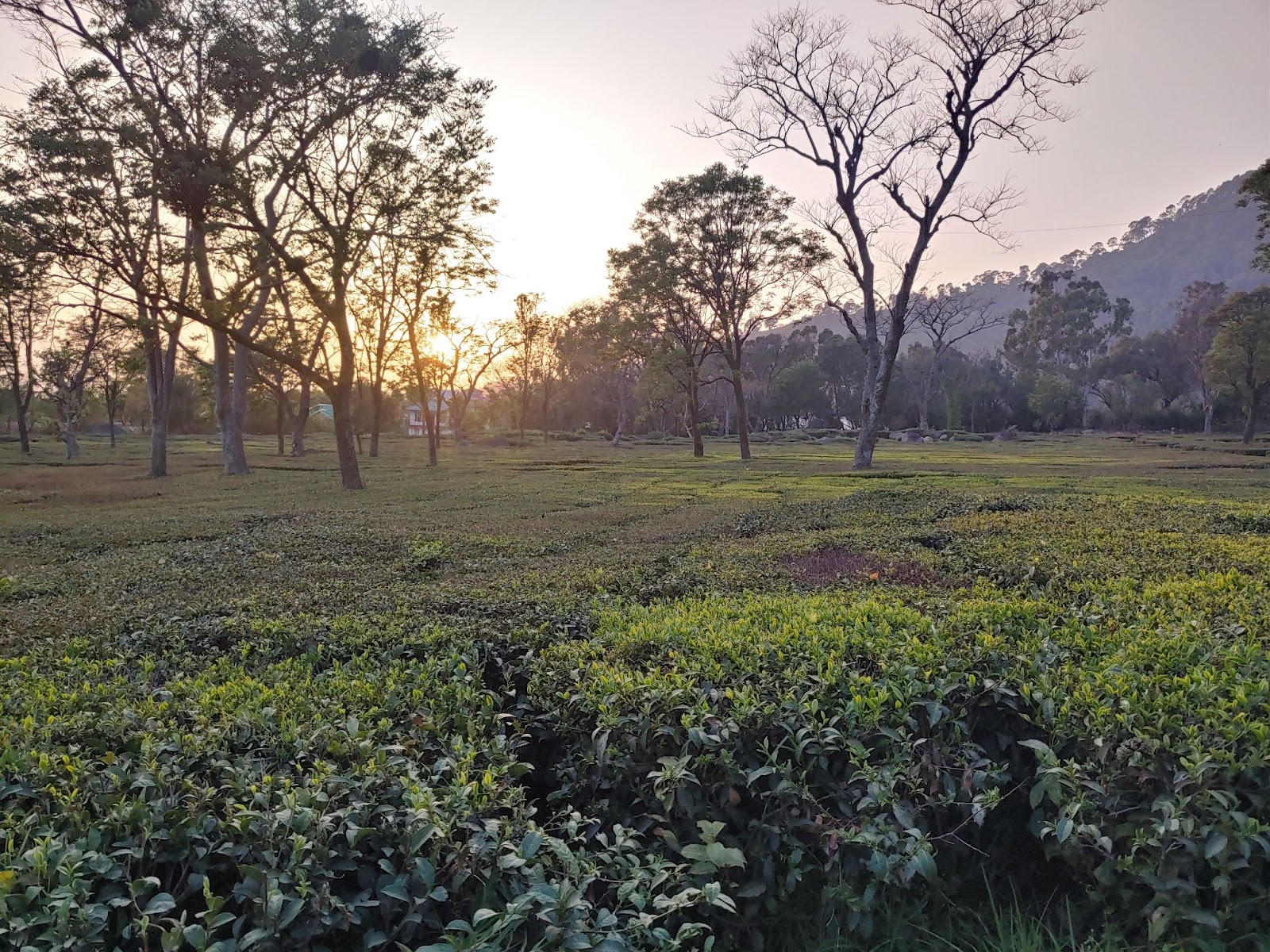
About Palampur Tea Gardens
Nestled in the scenic Kangra Valley of Himachal Pradesh, the Palampur Tea Gardens are among the most beautiful and distinctive tea-growing regions in India. Spread across nearly 1,000 acres of rolling green slopes, these tea estates have earned Palampur the nickname “Tea Capital of North India.” The sight of endless tea bushes stretching across the hills, combined with the cool mountain air and breathtaking views of the Dhauladhar Range, creates an experience that is both relaxing and memorable.
The refreshing aroma of fresh tea leaves drifting through the plantations makes this destination especially appealing to tea lovers and nature enthusiasts. Unlike the crowded tourist spots of Himachal, the tea gardens offer a peaceful environment where visitors can enjoy leisurely walks, photography, and panoramic mountain views.
History of Tea Cultivation in Palampur
Tea cultivation in Palampur dates back to the mid-19th century during British rule. Recognizing the region’s favorable climate, fertile soil, and abundant rainfall, the British introduced tea plantations to the area. One of the key figures behind this development was Dr. Jameson, the Superintendent of the Botanical Gardens in the North-West Frontier Province, who played an important role in establishing the first tea plantations in the region.
In 1849, the British planted Camellia sinensis tea bushes in Palampur. The quality of tea produced here soon gained international recognition. A significant milestone came in 1886 when tea from Palampur won a gold medal at an exhibition in London, bringing global attention to the region’s tea industry.
Although the tea industry faced challenges over the years, Palampur continues to maintain its reputation for producing premium-quality tea known for its delicate flavor and pleasant aroma.
Tea Production and Processing
Today, approximately 1,000 hectares of land in and around Palampur are dedicated to tea cultivation, producing around 850,000 kilograms of tea annually. Several plantations are managed by private owners, while others are maintained by government-supported organizations and research institutions.
One of the most interesting places for visitors is the Palampur Cooperative Tea Factory. Located near the tea-growing region, the factory processes freshly harvested tea leaves from April to November. Visitors can observe various stages of tea production, including plucking, withering, rolling, fermentation, drying, grading, and packaging.
The factory operates under the guidance of the Tea Board of India and serves as an important center for tea processing in the region. Watching the transformation of fresh green leaves into finished tea offers fascinating insight into the craftsmanship behind every cup of tea.
Famous Tea Varieties of Palampur
Palampur produces several renowned tea varieties marketed under popular names such as Darbari, Bageshwari, Malhar, and Bahar. The region is particularly known for its high-quality green tea and orthodox black tea.
The unique combination of altitude, climate, and soil conditions gives Palampur tea its distinctive flavor profile. Due to its excellent quality, a large portion of the tea produced here is exported to international markets, where it enjoys considerable demand among tea connoisseurs.
Best Time to Visit Palampur Tea Gardens
The tea gardens can be visited throughout the year, but the best time is from March to June and September to November. During these months, the weather remains pleasant, the tea bushes appear lush and vibrant, and the views of the Dhauladhar mountains are often crystal clear.
Spring and early summer are especially beautiful, as the plantations are at their greenest and the tea-plucking season is in full swing. The monsoon months transform the landscape into a rich emerald paradise, though occasional heavy rainfall may affect sightseeing plans.
Local Experience and Things to Do
A visit to the Palampur Tea Gardens is much more than simply viewing tea plantations. Visitors can take guided estate walks, interact with local tea growers, learn about tea cultivation techniques, and sample freshly brewed Kangra tea. Many small tea outlets and cafes around Palampur offer authentic local tea tasting sessions.
Photography enthusiasts will find countless opportunities to capture scenic landscapes featuring tea gardens, mountain peaks, traditional Himachali villages, and flowing streams. Early mornings and late afternoons provide particularly stunning lighting conditions for photography.
The nearby countryside is dotted with small temples, pine forests, and charming villages that showcase the region’s rich cultural heritage and traditional Himachali lifestyle.
How to Reach Palampur Tea Gardens
By Air
The nearest airport is Gaggal Airport (Kangra Airport), located approximately 40 kilometers from Palampur. Regular flights connect the airport with Delhi and other major cities. Taxis are readily available from the airport to the tea gardens.
By Train
The nearest broad-gauge railway station is Pathankot, about 115 kilometers away. From Pathankot, visitors can either hire a taxi or enjoy a scenic ride on the famous narrow-gauge Kangra Valley Railway to Palampur.
By Road
Palampur is well connected by road to major cities such as Dharamshala, Kangra, Chandigarh, Delhi, and Pathankot. Regular Himachal Road Transport Corporation (HRTC) and private buses operate to Palampur. The tea gardens are easily accessible from the town center by taxi, auto-rickshaw, or even on foot in some areas.
Nearby Attractions
Saurabh Van Vihar
Located on the banks of the Neugal Khad, this beautiful nature park offers boating facilities, walking trails, and peaceful picnic spots surrounded by pine forests.
Neugal Khad
A popular viewpoint near Palampur, Neugal Khad offers spectacular views of the snow-covered Dhauladhar mountains and is an excellent place to enjoy the natural beauty of Kangra Valley.
Tashi Jong Monastery
Situated a short drive from Palampur, this Tibetan monastery is known for its peaceful atmosphere, Buddhist teachings, and beautiful architecture.
Andretta Artists’ Village
Founded by Irish artist Norah Richards, Andretta is a cultural hub famous for pottery, art galleries, and workshops that attract artists from across the country.
Bir Billing
Located about 30 kilometers from Palampur, Bir Billing is internationally renowned as one of the world’s best paragliding destinations and offers stunning views of the Himalayas.
Baijnath Temple
This ancient Shiva temple, built in the 13th century, is one of the most significant historical and religious sites in the Kangra region.
Maps
FAQs
Is there an entry fee for visiting the Palampur Tea Gardens?
Most tea garden areas can be visited free of charge, though some private estates may require prior permission for guided tours.
Can visitors tour the tea factory?
Yes, visitors can often observe the tea-making process at the Palampur Cooperative Tea Factory, especially during the tea-processing season from April to November.
What is Palampur tea famous for?
Palampur is particularly known for its premium orthodox black tea and green tea, which are appreciated for their delicate flavor and aroma.
How much time is needed to explore the tea gardens?
A leisurely visit usually takes two to four hours, depending on whether you include tea tasting sessions and factory tours.
Which is the best season to visit?
March to June and September to November are considered the best months for visiting due to pleasant weather and lush green landscapes.
Can tea be purchased directly from the gardens?
Yes, visitors can buy freshly processed Kangra tea from local tea outlets, factories, and estate shops in and around Palampur.
Is Palampur suitable for family trips?
Absolutely. The pleasant climate, scenic beauty, easy accessibility, and peaceful environment make Palampur an excellent destination for families, couples, and solo travelers alike.