About Langza Village
Perched at an altitude of around 4,400 meters in the cold desert of Spiti Valley, Langza Village is one of the most fascinating and picturesque settlements in Himachal Pradesh. Surrounded by rugged mountains and vast open landscapes, this remote Himalayan village offers travelers a rare glimpse into the traditional lifestyle of Spiti while showcasing geological wonders that date back millions of years.
What makes Langza truly unique is its ancient connection to the sea. Scientists believe that the entire Spiti region was submerged under the Tethys Sea millions of years ago before the Himalayan mountain range emerged due to tectonic activity. As a result, Langza is renowned for its abundance of marine fossils, including ammonites and other prehistoric sea creatures from the Triassic and Jurassic periods. Fossil enthusiasts and researchers from around the world visit the village to explore this natural treasure hidden high in the Himalayas.
Origin of the Name Langza
There are several local interpretations of the village’s name. According to one popular belief, “Langza” is derived from two words—”La,” meaning mountain pass, and “Za,” associated with pottery. Traditionally, pottery-making has been one of the important occupations of the villagers, and the region is known for its distinctive handmade earthenware. These age-old crafts continue to reflect the cultural heritage of the village.
Life in the Village
Located at the foot of the majestic Chau Chau Kang Nilda Peak, Langza has become a favorite destination for travelers seeking offbeat experiences away from crowded tourist spots. Despite its growing popularity, the village remains small, with a population of fewer than 500 residents.
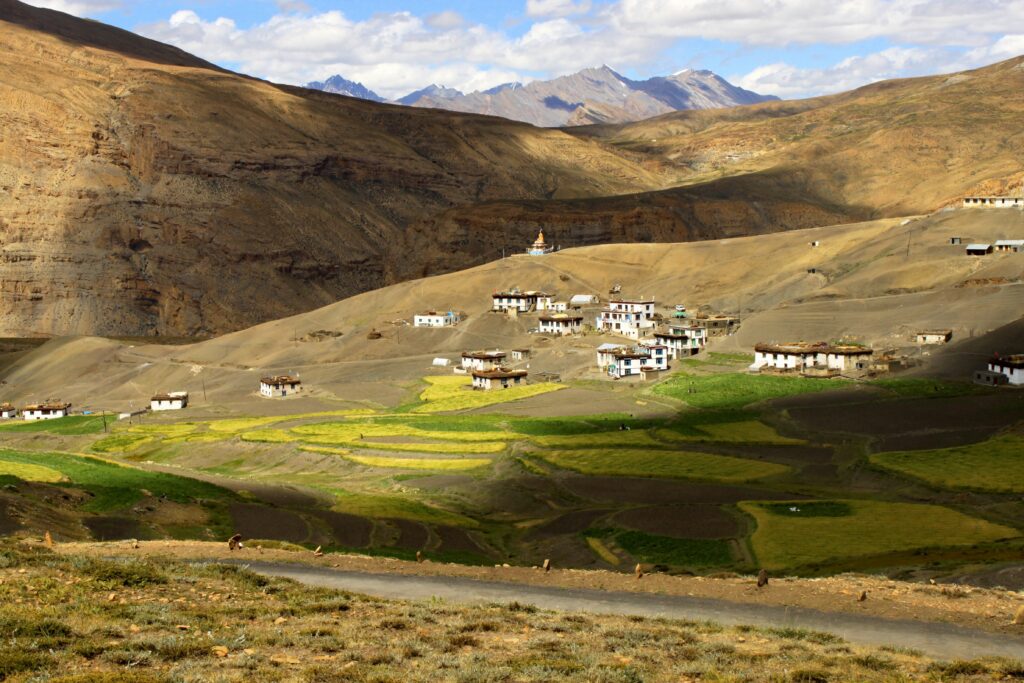
Langza is divided into Upper Langza and Lower Langza, both featuring traditional Tibetan-style mud houses. These homes are specially designed to withstand the region’s harsh climate, providing insulation against freezing winter temperatures that often fall well below zero degrees Celsius. During winter, heavy snowfall blankets the entire village, transforming it into a breathtaking white wonderland while testing the resilience of its residents.
Agriculture in Langza is challenging due to the cold desert climate and limited rainfall. However, a stream originating from the glaciers of Chau Chau Kang Nilda supplies precious water to the village fields. Villagers primarily cultivate hardy crops such as peas, barley, and potatoes during the short summer season.
Wildlife and Natural Beauty
Although the sparse rainfall limits the growth of dense vegetation, the surrounding landscape supports remarkable Himalayan wildlife. The region is home to elusive snow leopards, Himalayan ibex, red foxes, and various high-altitude bird species. The harsh climatic conditions create a perfect habitat for these resilient animals, making Langza an exciting destination for wildlife enthusiasts and photographers.
The village also offers spectacular panoramic views of snow-covered mountains, vast valleys, and dramatic Himalayan terrain. Clear skies and minimal light pollution make Langza one of the best places in Spiti for stargazing and astrophotography.
Langza Buddha Statue
One of the most iconic landmarks of Langza is the magnificent Buddha Statue that overlooks the village. Facing the valley and surrounded by towering mountains, the statue has become a symbol of peace and spiritual protection for the local community.
Many locals believe the statue has been safeguarding the village for centuries. Set against the backdrop of the snow-clad Himalayas, it creates a mesmerizing sight that attracts photographers and spiritual seekers alike. The statue stands near the historic Langza Gompa, an ancient Buddhist monastery that reflects the deep-rooted Buddhist traditions of the Spiti region.
Visitors often spend time here soaking in the tranquil atmosphere, admiring the stunning views, and experiencing the spiritual essence that defines life in this remote Himalayan settlement.
Best Time to Visit Langza Village
The ideal time to visit Langza is between May and October when the roads are accessible and the weather remains relatively pleasant. During these months, travelers can comfortably explore the village, search for fossils, visit nearby monasteries, and enjoy breathtaking views of the surrounding mountains.
Winter visits are possible but are recommended only for experienced travelers, as heavy snowfall and extreme temperatures can make access difficult.
Things to Do in Langza Village
- Explore ancient marine fossils scattered across the surrounding hills.
- Visit the iconic Buddha Statue and Langza Gompa.
- Experience authentic Spitian culture and hospitality.
- Enjoy panoramic views of Chau Chau Kang Nilda Peak.
- Capture stunning sunrise and sunset photography.
- Go stargazing under some of the clearest night skies in India.
- Take short hikes around the village and nearby fossil-rich areas.
How to Reach Langza Village
By Air
The nearest airport is Kullu-Manali Airport (Bhuntar), located approximately 250 km away. From the airport, travelers can hire a taxi or take public transport to reach Kaza and then continue to Langza.
By Train
The nearest broad-gauge railway station is Chandigarh Railway Station, around 520 km away. Another option is Kalka Railway Station, which is well-connected to major Indian cities. From there, travelers can proceed by road to Spiti Valley.
By Road
Langza is well connected to Kaza by a motorable road. Visitors can reach Kaza either through:
- Shimla – Reckong Peo – Nako – Tabo – Kaza Route (generally open throughout the year, subject to weather conditions).
- Manali – Rohtang Pass – Kunzum Pass – Kaza Route (usually open from late May or June to October).
From Kaza, Langza is approximately 16 km away and can be reached by taxi, private vehicle, motorcycle, or local transport.
Local Transportation
Shared taxis frequently operate between Kaza, Langza, Hikkim, and Komic during the tourist season. Renting a motorcycle in Kaza is another popular option for exploring these villages.
Nearby Attractions from Langza Village
Langza is ideally located in the heart of Spiti Valley, making it a great base for exploring some of the region’s most fascinating villages, monasteries, and natural wonders.
Komic Village (8 km)
Known as one of the world’s highest motorable villages, Komic offers breathtaking views of the barren Spitian landscape. The village is home to the historic Tangyud Monastery, one of the highest monasteries in the world. Visitors can experience traditional village life while enjoying panoramic Himalayan vistas.
Hikkim Village (7 km)
Hikkim is famous for housing one of the world’s highest post offices. Travelers can send postcards to friends and family from this unique location. The village also provides stunning views of the surrounding mountains and valleys.
Key Monastery (20 km)
Perched dramatically on a hilltop, Key Monastery is the largest and most important Buddhist monastery in Spiti Valley. Its centuries-old murals, ancient scriptures, and peaceful atmosphere make it a must-visit destination for culture and history enthusiasts.
Kaza (16 km)
The administrative headquarters of Spiti Valley, Kaza serves as the region’s main commercial center. Here, visitors can find restaurants, cafés, hotels, shops, and travel services while exploring local markets and cultural attractions.
Kibber Village (25 km)
One of the highest inhabited villages in the world, Kibber is known for its traditional stone houses and spectacular mountain scenery. It also serves as a gateway to the Kibber Wildlife Sanctuary, home to snow leopards and Himalayan ibex.
Chicham Bridge (30 km)
Connecting the villages of Kibber and Chicham, Chicham Bridge is among Asia’s highest suspension bridges. The bridge spans a deep gorge and offers incredible views, making it a favorite stop for photographers.
Dhankar Monastery (48 km)
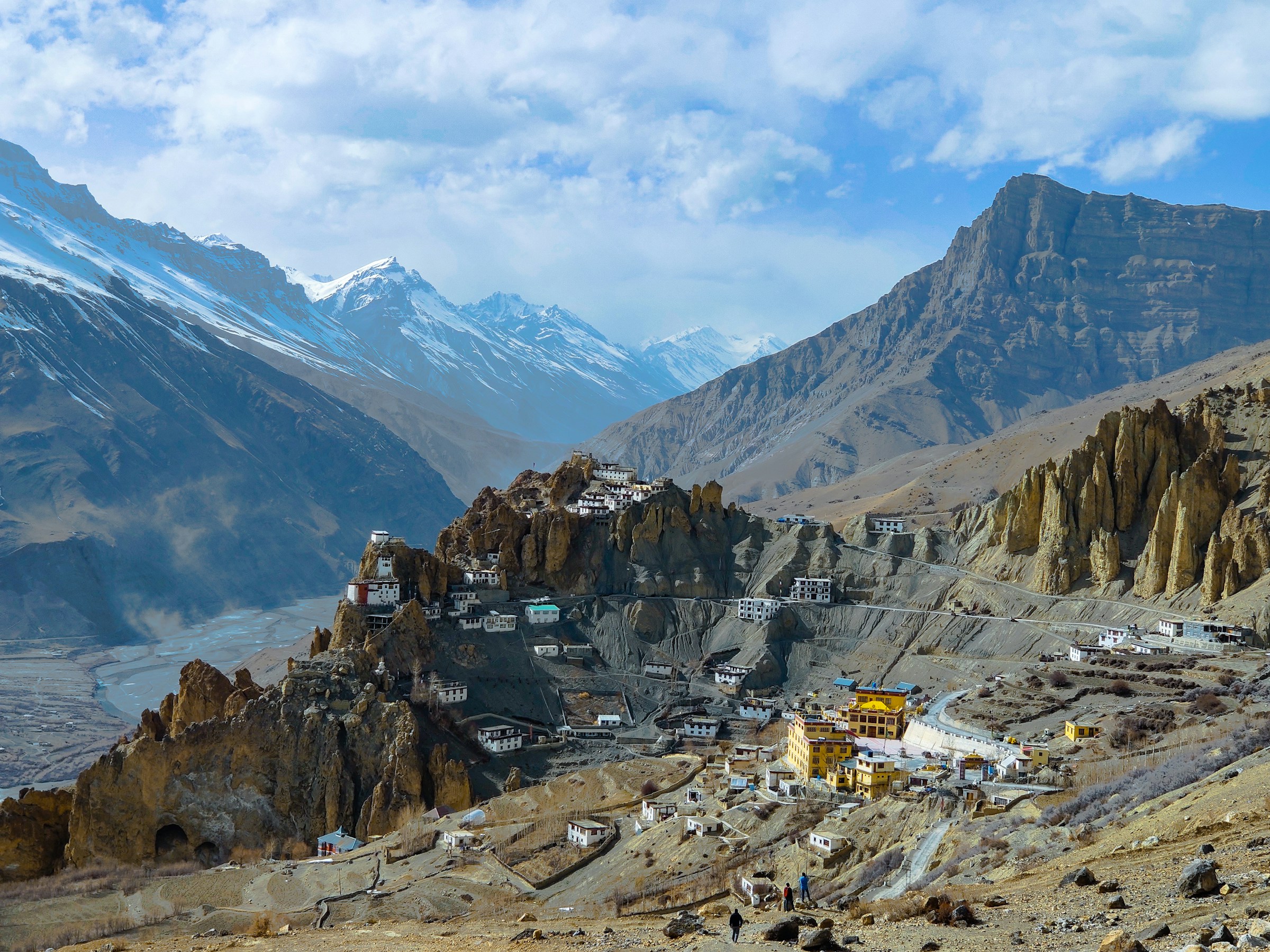
Situated dramatically atop a cliff overlooking the confluence of the Spiti and Pin Rivers, Dhankar Monastery is one of the oldest monasteries in the region and offers breathtaking views of the valley below.
Maps
Located 16 km from Kaza, the village is accessible through 2 sides: Kunzum Pass and Kinnaur Valley.
FAQs
1. What is Langza Village famous for?
Langza is famous for its marine fossils, giant Buddha Statue, traditional Tibetan-style houses, and stunning views of the Himalayas.
2. How far is Langza from Kaza?
Langza is approximately 16 km from Kaza and can be reached in about 30–45 minutes by road.
3. What is the altitude of Langza Village?
Langza is situated at an altitude of about 4,400 meters (14,435 feet) above sea level.
4. Is acclimatization necessary before visiting Langza?
Yes. Due to the high altitude, visitors are advised to spend a day or two in Kaza before heading to Langza to reduce the risk of altitude sickness.
5. Can I stay overnight in Langza?
Yes, several homestays and guesthouses offer comfortable accommodation and authentic local hospitality.
6. What is the best time to visit Langza?
The best time to visit is from May to October when the roads are open and weather conditions are favorable.
7. Is Langza suitable for fossil hunting?
Yes, Langza is known for fossil-rich terrain. However, visitors should avoid removing fossils to help preserve the region’s geological heritage.
8. Does Langza receive snowfall?
Yes, the village experiences heavy snowfall during winter, often remaining covered in snow for several months.
9. Are there restaurants and ATMs in Langza?
Basic food options are available in homestays, but for ATMs, fuel stations, and a wider range of restaurants, visitors should rely on Kaza.
10. Can Langza, Hikkim, and Komic be visited in one day?
Yes, these three villages form the popular “High Village Circuit” of Spiti and can comfortably be explored in a single day from Kaza.