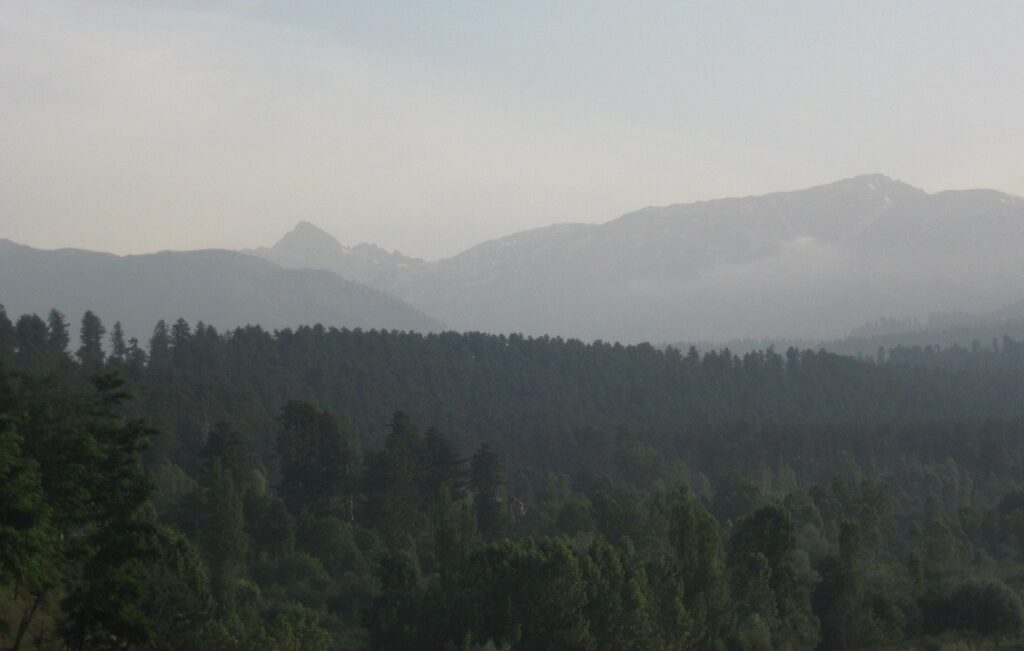
Image Source: Maxx786/ English Wikipedia
About Hirpora Wildlife Sanctuary
Hirpora Wildlife Sanctuary is also known as Heerpora is nestled in the picturesque Pir Panjal range of southern Kashmir. A lesser-known yet ecologically significant protected area is located 70 kilometres south of Srinagar and just 12 kilometres from Shopian town. The Sanctuary is spread over an area of 341 square kilometres and plays a critical role in preserving the unique sub-alpine biodiversity of the region. Crisscrossed by the historic Mughal road, it was established in 1987 and remains one of Kashmir’s important ecological corridors.
Geography and Ecosystem Diversity
You see a fascinating mosaic of landscapes from altitudes of 2,400 to 4,200 meters in Hiropora. The terrain features steep mountain slopes, deep valleys, and lush pastures, shaped by seasonal snow and glacial meltwater. Vegetation types include western mixed coniferous forests dominated by deodar, fir, spruce, and blue pine. Higher up, the terrain transitions into sub-alpine scrub comprising birch, juniper, and wild rose, followed by alpine meadows rich in seasonal flowering herbs.
This varied geography ensures a high degree of ecological complexity, making Hirpora a hotspot for wildlife diversity.
Flora and Fauna
Hirpora is home to several threatened and rare species. Among them, the Pir Panjal Markhor, a wild mountain goat with twisted horns, is one of the most celebrated. Current estimates suggest only about 50 to 130 individuals remain, making its protection a high conservation priority.
Other notable mammals include the Himalayan brown bear, Asiatic black bear, leopard, musk deer, Tibetan wolf, and the elusive Himalayan palm civet. The sanctuary also supports around 130 species of birds, including raptors like the Himalayan griffon and Egyptian vulture. Additionally, colorful and endangered species such as the Kashmir flycatcher, western tragopan, Himalayan monal, and snowy woodpecker are regularly spotted.
Insect biodiversity is another often overlooked gem of Hirpora. Surveys have documented more than two dozen species of butterflies, beetles, bees, and dragonflies, especially abundant during the summer months when the meadows bloom.
Conservation Challenges
Hiropora is facing a serious conservation threat. Major migratory Gujjar and Bakkarwal communities often overgraze the meadows and bring their livestock to the sanctuary. More than 500 herder households set up temporary shelters (locally called dhoks) within the sanctuary, leading to competition for forage, trampling of meadows, and disruption of wildlife movement.
Common problems like illegal construction, deforestation, and firewood collection further stress the fragile ecosystem. The construction of the Mughal Road, a scenic highway that cuts through the sanctuary, has led to habitat fragmentation.
Additionally, electric transmission lines and associated development projects pose barriers to wildlife corridors. Poaching, though limited due to stricter patrols, remains a latent threat.
Conservation efforts
The Jammu and Kashmir wildlife department and conservation organizations like the Wildlife Trust of India (WTI) are taking efforts underway to mitigate these pressures. Anti-poaching patrols, creating livestock-free zones, and engaging local communities in eco-friendly livelihood programs are major initiatives organized in response to those.
Eco-sensitive Measures and Legal Protection
In response to growing anthropogenic pressure, the Indian Ministry of Environment, Forest, and Climate Change declared a 1-kilometre eco-sensitive zone around the sanctuary in recent years.
This regulation restricts certain kinds of development and resource extraction, aiming to strike a balance between human needs and environmental protection.
Travel and Visitor Information
For those interested in ecotourism, bird-watching, or trekking, Hirpora offers an offbeat yet rewarding destination. The best time to visit is from March to November, when the snow has receded and the region is in full bloom. In winter, the sanctuary is blanketed in heavy snow and largely inaccessible.
The nearest major airport is in Srinagar, from where Hirpora can be reached via Shopian and the Mughal Road. Shared taxis and private vehicles are the common means of transport. While there are no formal tourism facilities inside the sanctuary, nearby towns like Shopian offer basic accommodation.
Permits
Visitors should always seek permission from the forest department and adhere to wildlife regulations, as the sanctuary is not developed for mass tourism. Local guides may be available, especially for birding and trekking routes through the peripheral forests.
How to Reach Hirpora Wildlife Sanctuary
Located in the Pir Panjal Range of South Kashmir, Hirpora Wildlife Sanctuary is one of Jammu and Kashmir’s most important protected areas. Spread across approximately 341 square kilometers in the Shopian and Kulgam districts, the sanctuary is renowned for its dense coniferous forests, alpine meadows, rich biodiversity, and the critically endangered Pir Panjal Markhor. The famous Mughal Road passes through the sanctuary, offering visitors breathtaking views of forests, mountains, and wildlife habitats.
By Air
The nearest airport is Sheikh ul-Alam International Airport in Srinagar, located about 70–75 kilometers from the sanctuary. From the airport, visitors can hire taxis to reach Shopian and continue toward Hirpora.
By Train
The nearest major railway station is Jammu Tawi Railway Station. Travelers can proceed by road to Srinagar and then travel onward to Shopian and Hirpora. Rail connectivity within Kashmir is also expanding, with services available to several stations in the valley.
By Road
Hirpora Wildlife Sanctuary is well connected by road and lies along the historic Mughal Road.
- Srinagar to Hirpora: Approximately 70 km
- Shopian to Hirpora: Approximately 12–20 km
- Pulwama to Hirpora: Approximately 50 km
Regular taxis and local transport services are available from Srinagar and Shopian. The drive itself is highly scenic, passing through orchards, forests, and mountain landscapes.
Maps
View Larger Map
FAQs
1. Where is Hirpora Wildlife Sanctuary located?
Hirpora Wildlife Sanctuary is located in the Shopian district of Jammu and Kashmir, along the Mughal Road that connects Shopian to Rajouri and Poonch. Its scenic setting in the Pir Panjal range makes it both ecologically important and visually stunning.
2. What animals can be spotted in Hirpora Wildlife Sanctuary?
The sanctuary is home to several rare and endangered species, including the Hangul (Kashmir stag), Himalayan black bear, leopard, musk deer, and langur. It’s also a great place for birdwatching, with many Himalayan bird species found here.
3. What is the best time to visit Hirpora Wildlife Sanctuary?
The best time to visit is between April and October when the weather is pleasant and wildlife sightings are more likely. Winters can be harsh due to heavy snowfall, which may restrict access.
4. Is permission required to visit the sanctuary?
Yes, visitors may need prior permission from the local forest department, especially for trekking or extended visits. It’s advisable to check regulations in advance.
5. Can tourists do trekking or camping inside the sanctuary?
Trekking is allowed in certain areas with permission, but camping is usually regulated to protect wildlife. Guided visits are recommended for safety and a better experience.