Image Source: Amandeep singh Parihar
About Brammah massif
Hidden deep in the remote eastern region of Jammu & Kashmir, the Brammah massif stands as one of the most dramatic mountain groups in the Indian Himalayas. Located within the vast wilderness of Kishtwar National Park, this rugged cluster of peaks rises sharply above isolated valleys, glaciers, and dense alpine forests. Spread across a protected reserve of more than 2,100 square kilometres, the region remains one of the least explored yet most awe-inspiring mountain landscapes in India.
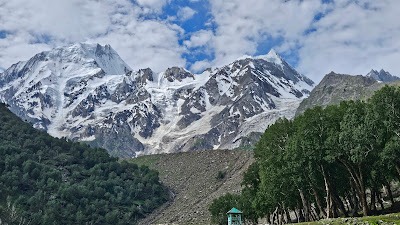
The massif consists of four major peaks arranged from west to east, each carrying its own mountaineering history, geographical identity, and visual character. Towering walls of rock and ice rise abruptly from the surrounding terrain, giving the mountains an intimidating prominence that has fascinated climbers and explorers for decades. Unlike many Himalayan regions that have become increasingly commercialized, the Brammah massif still retains a raw, untouched atmosphere where nature dominates every horizon.
Far beyond being just a collection of summits, the Kishtwar Himalayas represent a world of untamed beauty, geological grandeur, and legendary mountaineering achievements. The region is known for its steep granite faces, hanging glaciers, narrow valleys, and unpredictable weather, making it one of the most technically challenging mountain areas in the Indian Himalayas.
Brammah I – The Iconic Pyramid of Kishtwar
Among all the peaks in the massif, Brammah I is undoubtedly the most famous. Rising to an elevation of 6,416 meters, it is often regarded as one of the most visually striking mountains in the Himalayas. Its sharp pyramidal shape dominates the skyline when viewed from the Kishtwar Valley, creating an almost mythical presence above the rugged landscape.
The peak gained international recognition in 1973 when legendary British mountaineers Chris Bonington and Nick Estcourt successfully completed its first ascent. Their expedition is still remembered as one of the classic Himalayan climbing achievements of the era. Although Brammah I is not the tallest peak in the massif, many climbers and photographers consider it the most beautiful because of its elegant symmetry and dramatic rise from the surrounding valleys.
The mountain is notorious for its difficult terrain, unstable weather, and avalanche-prone slopes. Even experienced mountaineers describe it as a technically demanding climb that requires exceptional endurance and skill.
Brammah II – The Hidden Highest Summit
Standing at 6,485 meters, Brammah II is actually the highest peak in the massif, though it often remains overshadowed by the more photogenic Brammah I. Hidden behind rugged ridges and massive ice formations, the peak possesses a quieter but equally imposing character.
First summited in 1975, Brammah II remains relatively lesser known due to its remote location and the technical challenges involved in reaching it. The mountain is surrounded by steep glaciers and complex climbing routes that make expeditions extremely demanding. Because fewer climbing teams attempt it, Brammah II still carries an aura of mystery and isolation rarely found in modern mountaineering destinations.
Flat Top (Brammah III) – The Plateau Summit
Another important summit in the massif is Flat Top, also known as Brammah III, which rises to approximately 6,103 meters. The mountain received its nickname because of its unusually flat summit plateau, a rare feature in a region dominated by sharp Himalayan peaks.
The first successful ascent of Flat Top took place in 1980. While the climb may not be considered as technically severe as Brammah I, the sheer remoteness of the area adds a serious level of difficulty. Climbers often spend days navigating isolated valleys, glacier systems, and unpredictable weather conditions before even reaching the base of the mountain.
The peak also offers extraordinary panoramic views of the Kishtwar Himalayas, where endless chains of snow-covered ridges stretch toward the horizon.
Arjuna – The Eastern Sentinel
The easternmost peak of the massif is Arjuna, standing at 6,230 meters. First climbed in 1983, the mountain carries a name deeply rooted in Indian mythology, likely inspired by the legendary warrior Arjuna from the Mahabharata.
Compared to the other summits, Arjuna remains relatively unexplored and rarely visited. Its isolated position and steep icy faces give it a striking appearance, especially during sunrise and sunset when the mountain glows in shades of gold and crimson. The peak symbolizes the subtle mythological and spiritual undercurrents that continue to flow through the Himalayan landscape.
Geography and Wilderness of the Region
The Brammah massif lies within one of the wildest corners of the Indian Himalayas. The surrounding terrain is dominated by deep valleys, glacier-fed rivers, alpine meadows, dense conifer forests, and rugged cliffs. Much of the area falls under the protected boundaries of Kishtwar National Park, which is known for its rich biodiversity and fragile mountain ecosystem.
The national park is home to rare Himalayan wildlife, including the snow leopard, Himalayan black bear, musk deer, and Himalayan ibex. Because of the difficult terrain and limited accessibility, large portions of the region remain ecologically pristine.
The climate here is harsh and unpredictable. Heavy snowfall during winter isolates many valleys, while sudden storms and landslides are common during the monsoon season. These conditions have helped preserve the raw wilderness character of the Kishtwar Himalayas.
Mountaineering Legacy of the Brammah Massif
For mountaineers, the Brammah massif represents one of the ultimate challenges in the Indian Himalayas. Unlike popular trekking regions with established infrastructure, Kishtwar remains remote and demanding. Expeditions require careful planning, logistical support, and technical expertise.
Over the decades, the massif has attracted elite climbers from around the world because of its steep granite walls and difficult alpine routes. Many climbers compare the terrain to some of the challenging mountain ranges found in Patagonia and the Karakoram. However, the isolation of Kishtwar makes the experience even more intense and adventurous.
Even today, several ridges and climbing lines in the region remain either rarely attempted or completely unclimbed, adding to the legendary reputation of the massif.
Hudh Mata Temple and Local Culture
Beyond the towering peaks and glaciers, the region also carries a deep cultural and spiritual significance. The ancient Hudh Mata Temple located near Dachhan adds a human and spiritual dimension to the rugged landscape.
For generations, local communities living in these remote valleys have maintained a close relationship with the mountains. Traditional beliefs, seasonal migrations, and folk legends continue to shape life in the region. The temple serves not only as a place of worship but also as a reminder that the Himalayas are deeply woven into the cultural identity of the people who inhabit them.
The surrounding villages preserve a slower, traditional way of life where pastoralism, farming, and mountain traditions remain central to everyday existence.
Best Time to Visit the Brammah Region
The best time to explore the Kishtwar region is generally between June and September, when the snow begins to melt and the mountain passes become relatively accessible. During this period, alpine meadows bloom with wildflowers, rivers flow with glacial meltwater, and the weather is comparatively stable.
However, travel in the region still requires preparation because road conditions can change quickly due to landslides or sudden weather shifts. Winter transforms the area into a heavily snowbound wilderness, making access extremely difficult.
Nearby Attractions to Brammah Massif
The Brammah Massif, one of the most imposing mountain groups in the Kishtwar Himalayas of Jammu and Kashmir, attracts mountaineers, trekkers, and nature enthusiasts with its dramatic peaks, glaciers, and remote wilderness. Located in the rugged landscapes of the Kishtwar region, the massif is surrounded by several equally fascinating natural and cultural attractions that can be explored during a visit to the area.
Kishtwar National Park
Located near the Brammah Massif, Kishtwar National Park is one of the largest protected areas in Jammu and Kashmir. Spread across high-altitude Himalayan terrain, the park is known for its rich biodiversity, including Himalayan black bears, snow leopards, musk deer, and numerous bird species. The park’s alpine meadows, dense forests, and glacial valleys make it a paradise for wildlife lovers and trekkers.
Warwan Valley
Warwan Valley is one of the most scenic and isolated valleys in the Himalayas. Surrounded by towering snow-covered mountains and lush green meadows, the valley is famous for its untouched beauty. Crystal-clear streams, traditional villages, and breathtaking landscapes make it a favorite destination for adventure seekers and photographers exploring the Kishtwar region.
Kishtwar Town
Often called the “Land of Saffron and Sapphire,” Kishtwar Town serves as the gateway to many Himalayan expeditions. Visitors can explore local markets, traditional wooden architecture, and experience the unique culture of the region. The town also provides essential facilities for travelers heading toward the Brammah Massif.
Sinthan Top
Situated on the road connecting Kishtwar and Kashmir, Sinthan Top is a high-altitude mountain pass offering spectacular views of the surrounding Himalayan ranges. During summer, the area is covered with green meadows, while winter transforms it into a snowy wonderland. It is one of the most popular viewpoints in the region.
Marwah Valley
Located near Warwan Valley, Marwah Valley is known for its fertile landscapes, traditional settlements, and stunning mountain scenery. The valley remains relatively unexplored and offers visitors an authentic Himalayan experience away from crowded tourist destinations.
Padder Valley
Padder Valley is famous for its rugged terrain, pristine rivers, and historical significance. The valley is also known for producing high-quality sapphires. Visitors can enjoy beautiful mountain landscapes, remote villages, and opportunities for trekking and nature exploration.
Machail Mata Temple
One of the most revered pilgrimage sites in the region, Machail Mata Temple is situated in the picturesque Padder Valley. Thousands of devotees visit the temple every year during the annual Machail Yatra. The surrounding mountains and river valleys add to the spiritual and scenic appeal of the site.
Chenab River Valley
The mighty Chenab River flows through the Kishtwar region, creating deep gorges and spectacular landscapes. Several viewpoints along the route offer dramatic views of the river cutting through the Himalayan terrain.
Kiyar Valley
Kiyar Valley is a lesser-known destination characterized by alpine pastures, dense forests, and peaceful surroundings. It serves as an excellent location for trekking, camping, and experiencing the untouched beauty of the Kishtwar Himalayas.
Nun Kun Peaks
Although located farther away in the greater Himalayan region, the famous Nun Kun mountain group can be viewed from certain high-altitude areas during clear weather. These majestic peaks are among the most prominent mountains in the western Himalayas and are popular among mountaineers.
Zanskar Region
For adventurous travelers extending their journey beyond Kishtwar, the remote Zanskar region offers dramatic landscapes, ancient monasteries, and some of the most challenging trekking routes in the Himalayas. Historically, several mountain routes connected Kishtwar with Zanskar.
Dachhan Valley
Dachhan Valley is known for its lush forests, traditional mountain villages, and stunning views of the surrounding peaks. The valley offers a glimpse into the unique lifestyle and culture of the people living in the remote Himalayan region.
Kabban Valley
Kabban Valley is another hidden gem near Kishtwar, featuring beautiful streams, dense forests, and scenic meadows. Its peaceful environment makes it ideal for travelers seeking solitude and nature-based experiences.
Google Maps
FAQs
Where is the Brammah massif located?
The Brammah massif is located in the remote Kishtwar region of Jammu & Kashmir within the boundaries of Kishtwar National Park.
Which is the highest peak in the Brammah massif?
Brammah II is the highest peak in the massif, standing at approximately 6,485 meters above sea level.
Why is Brammah I famous?
Brammah I is famous for its striking pyramid-shaped appearance and for its historic first ascent by Chris Bonington and Nick Estcourt in 1973.
Is the Brammah massif suitable for trekking?
The region is extremely remote and rugged. While experienced trekkers and mountaineers may explore nearby valleys, the massif itself is primarily known for technical climbing expeditions.
What wildlife can be found in the area?
The surrounding wilderness supports species such as snow leopards, Himalayan black bears, musk deer, and Himalayan ibex.
What is the significance of Hudh Mata Temple?
Hudh Mata Temple is an important spiritual site that reflects the cultural traditions and religious beliefs of the local mountain communities.
When is the best season to visit Kishtwar?
The ideal time to visit is from June to September, when weather conditions are relatively stable and mountain routes become more accessible.